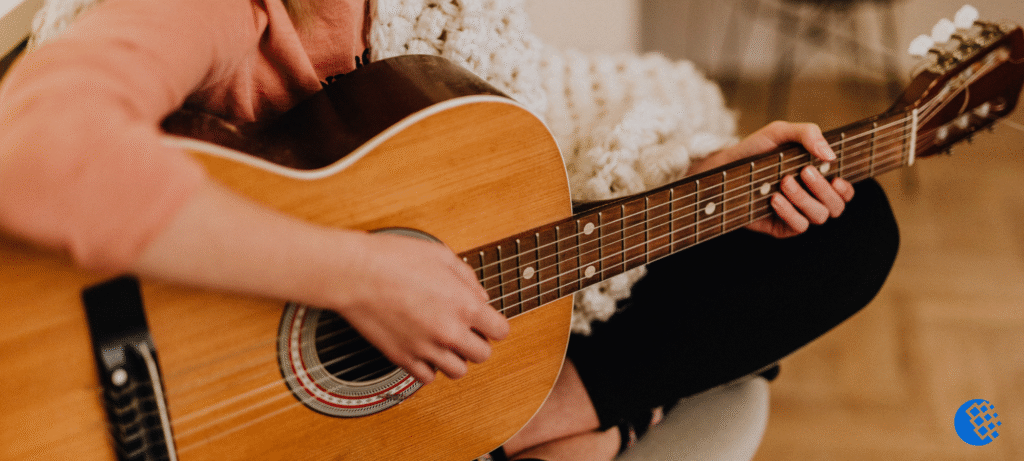
Alright so you’re sitting there scrolling through Instagram at midnight watching some guy play Wonderwall and thinking “I could totally do that.” Then you remember your cousin tried learning guitar for like three weeks before the thing ended up collecting dust in his closet. Now you’re wondering if you’re gonna end up the same way.
Look I’m not here to blow sunshine at you. Guitar is kinda hard, not gonna lie. But its also not rocket science either. The thing is, most people asking “how hard is it” are really asking “am I gonna fail at this” and thats a different question entirely.
Week One Is Gonna Be Rough
Your fingertips are gonna feel like you’ve been pressing them against a cheese grater. I’m serious, this isnt me being dramatic. Those steel strings dont care about your delicate little fingers that have only ever typed on keyboards and scrolled on phones.
When I first picked up a guitar my friend Jake let me borrow, I practiced for maybe twenty minutes before I had to stop because my fingers were legitimately throbbing. I texted him like “dude is this normal or am I doing something wrong” and he just sent back a laughing emoji. Real helpful, Jake.
But heres what nobody mentions in those “learn guitar in 30 days” YouTube videos. After about a week, maybe two if you’re practicing every day, your fingertips toughen up. You grow these calluses and suddenly pressing the strings doesn’t hurt anymore. Its like your fingers level up or something.
The other annoying thing is your hands feel stupid. Like you’re trying to pat your head and rub your belly at the same time, except its your left hand trying to hold down strings while your right hand strums and your brain is going “this is too many things happening.” Super normal though. Your brain just needs time to wire itself for this new skill.
Some Parts Are Easier Than You Think
Okay so guitar has a few things going for it that make it less impossible than other instruments. If you mess up a little bit, it doesnt sound horrible like it would on a violin. You can be kinda sloppy and still sound okay, specially when you’re just doing basic chords.
Also, and this is huge, you can play actual songs really fast. There are songs with like three chords that you can learn in your first week. THREE CHORDS. And they sound like real music, not just some boring practice exercise. That keeps you motivated because you feel like you’re actually getting somewhere instead of just doing scales for six months.
But yeah there’s hard stuff too. Your hands need to get stronger and more flexible, which takes time. Barre chords are these evil things where you press down like four strings with one finger and they’re gonna frustrate you for months probably. Everyone struggles with them, even people who act like they didn’t.
Reading music for guitar is weird too. Most people use something called tablature which is easier than regular sheet music but still takes getting used to. And if you wanna understand music theory to really know what you’re doing, guitar can be confusing because the notes aren’t laid out as obviously as they are on a piano.
So Like, How Long Until I’m Good?
Everyone wants a timeline so lemme break it down based on what I’ve seen with people I know who learned guitar. Within a few weeks, if you’re practicing most days, you can play simple songs. I’m talking campfire type stuff, basic chords, nothing fancy.
Three months in, you’ll probably have like 10 or 15 songs you can play decently. You’re not gonna blow anyone’s mind but you can entertain yourself and maybe some friends who are being nice about it. Your transitions between chords are getting smoother and you’re starting to feel less awkward holding the guitar.
Six months to a year, you’re getting pretty comfortable. New songs don’t take forever to learn, you’ve maybe figured out barre chords or at least you’re working on them, and you might even be messing around with writing your own stuff or improvising a bit.
To get actually good where people listen and think “okay this person knows what they’re doing,” you’re probably looking at a couple years of regular practice. Not like quitting your job to practice 8 hours a day, just consistent practice a few times a week where you’re pushing yourself.
And honestly theres no end point. People who’ve played for 20 years are still learning stuff. That’s kinda cool though because you never get bored, there’s always something new.
Why Most People Practice Wrong
This is where everyone screws up and I did it too for way too long. People spend all their practice time playing the stuff they already know because it feels good and sounds nice. But they avoid the hard parts that actually need work.
I used to play through the easy sections of songs like ten times, then when I got to the tricky part I’d try it once or twice, mess it up, and go back to the easy parts. That’s not practice, that’s just playing. Practice is when you focus on the stuff you suck at until you don’t suck at it anymore.
Like if there’s a chord change that’s giving you trouble, you need to sit there and do just that transition over and over. Not the whole song, just that one part. Its boring and frustrating but that’s how you actually improve. This reminds me of what I was talking about in that world-class grading article, where the quality of focused effort matters way more than just putting in hours.
Another mistake is trying to learn everything at once. You see a video about sweep picking and start working on that, then you see something about jazz chords and switch to that, then you decide you want fingerstyle so you abandon everything else. You end up okay at a bunch of things but not actually good at anything.
Pick one thing, get decent at it, then move on. Way better approach.
What Makes It Less Painful
Getting a guitar that doesn’t completely suck makes a massive difference. You don’t need a $2000 guitar or anything crazy, but you need one that stays in tune and doesn’t have strings that are like a mile away from the fretboard.
My first guitar was this beat up thing from a garage sale and I genuinely thought I was just bad at guitar. Then I tried my friend’s nicer guitar and suddenly everything was easier. The strings were closer to the neck, it stayed in tune, and it actually sounded good when I played it. Night and day difference.
Having some kind of structure helps a lot too. Whether you take lessons with a real person, use an online course, or follow a good book, having someone tell you what to learn in what order is super helpful. Otherwise you’re just randomly watching YouTube videos and you might miss important basics or develop bad habits.
Playing with other people is huge. Even if they’re beginners too, just having someone else there makes you better at keeping time and staying motivated. Plus its way more fun than sitting alone in your room.
And pick songs you actually care about. Don’t just do exercises forever. Learn songs you love. That emotional connection will push you through the parts where you wanna quit.
The Mental Stuff Is The Real Challenge
Learning guitar is maybe 30% physical and 70% mental, honestly. The physical part is just repetition. Your fingers will eventually figure it out. But the mental game is where people actually give up.
You’re gonna hit these walls where you feel stuck and like you’re not getting better no matter how much you practice. Happens to literally everyone. Super frustrating. You’ll think you should be way better than you are, especially if you see other people progressing faster.
Comparing yourself to other people is killer. Everyone learns at different speeds. Some people have advantages you dont know about, like they played piano as a kid so they already understand rhythm and theory. Some people just have more time to practice. Some people pick up certain techniques faster for no obvious reason.
I’ve seen so many people quit right before they were about to figure something out. They’d been working on barre chords for weeks, getting slightly better each time, and they’d give up like right before it clicked. If they’d just stuck with it one more week they would’ve gotten it.
The people who get good aren’t the most talented ones. They’re just the ones who kept showing up even when it sucked and they felt like they weren’t improving.
Its Like Other Stuff You’ve Learned
Think about learning to drive. That was probably overwhelming at first right? Gas pedal, brake, steering, mirrors, other cars, signs, all at once. But now you can drive while talking and eating and barely thinking about it.
Guitar is the same way. Everything feels like too much information at the start. But eventually stuff becomes automatic. Your fingers find chords without thinking. Your strumming hand keeps rhythm naturally. Reading tabs becomes easy.
If you’ve played any sport, that’s probably the closest comparison. You need physical technique, muscle memory, mental focus, and regular practice. Nobody expects to be amazing at basketball after a month but for some reason people think they should master guitar quickly.
Or its like learning another language. At first you’re translating every word in your head and its slow and awkward. Eventually you start thinking in that language and it flows. Guitar is like that, you start thinking in music instead of thinking about individual notes.
Does Talent Matter?
Yeah, talent matters. Some people have better rhythm, more flexible fingers, better ears for music. That’s just real life.
But you know what matters more? Actually practicing and caring about it. I’ve seen talented people who barely practiced stay mediocre forever. And I’ve seen people with zero natural advantages who practiced regularly and got really good.
Talent might make the beginning easier but dedication determines how far you go. Same way that writing something good for school, natural ability helps but the person who actually works on their drafts will do better. This connects to what I wrote about in that academic advisor cover letter thing, where putting in effort matters more than just raw talent.
Also what looks like talent is often just experience. Someone who played piano as a kid already gets rhythm and theory so they pick up guitar faster. That’s not talent, that’s transferred skills. But it looks like talent to everyone else.
When Guitar Really Is Too Hard
I gotta be real with you. Guitar isn’t for everyone and that’s totally fine. If you have bad arthritis or hand injuries that make pressing strings painful, maybe guitar isn’t the right instrument. There are other options that might work better.
If you genuinely hate practicing, like every session feels terrible instead of challenging but satisfying, maybe guitar isn’t your thing. Life’s too short to force yourself through hobbies you actually hate.
But separate “this is hard and frustrating” from “I don’t like this at all.” Hard and frustrating is temporary and normal. Not liking it even when you’re making progress is different.
Some people also mess up by having crazy expectations. If you think you’ll be playing like Jimi Hendrix after a month, you’re setting yourself up to be disappointed. But if you get that its a gradual thing with ups and downs, you’ll probably stick with it.
Should You Actually Do This?
After everything I’ve said, how hard is guitar really? Its challenging enough that you’ll need to put in real work and deal with some annoying moments. But its not so hard that normal people cant do it. Millions of regular people have learned guitar who aren’t musical geniuses.
If you’re willing to practice a few times a week, be patient during the awkward beginning phase, and keep going through the plateaus, you can definitely learn guitar. It wont happen super fast but it will happen if you keep at it.
The real question isnt “is guitar too hard for me” because probably it isn’t. The real question is “do I actually want to play guitar enough to deal with the learning curve?” Only you know that.
But if you decide to try it, remember that everyone who’s good now once completely sucked. Every single person. They all had sore fingers and terrible chord changes and songs that sounded awful at first. They just didn’t quit.
Final Thoughts
Learning guitar isn’t easy but its also not impossible. Its a skill that needs time and practice and patience, just like anything else worth doing. The difficulty is manageable if you dont expect to be perfect immediately and you’re willing to work at it.
What makes it hard isn’t really the physical stuff or the theory. Its the mental challenge of keeping going when progress feels slow. Its making yourself practice when you’d rather do something else. Its working on boring difficult parts instead of just playing fun stuff you already know.
But theres something really cool about making music with your own hands. The first time you play a whole song without messing up, or when you improvise something that sounds good, or when you’re just fooling around and find a chord progression that gives you chills, those moments make the frustration worth it.
You dont have to become famous or play concerts. Even if you only play for yourself at home, having that skill and creative outlet is valuable. Its something that stays with you forever.
So yeah, guitar is hard. But its the good kind of hard that makes you grow and gives you something meaningful. If you’re thinking about it, my advice is simple: just try it. Get a cheap guitar, learn some chords, see how it feels. You might surprise yourself with what you can do when you actually give it a shot. Worst case, you’re out a hundred bucks and you learned something about yourself. Best case, you’ve got a new skill that brings you joy for the rest of your life.