

Translation used to feel like a classroom-bound skill. Heavy textbooks. Long lectures. A lot of theory before any real practice. That model still exists, but it’s no longer the default. Online translation learning has quietly shifted how people enter the field, how they build confidence, and how they actually get work done.
What makes it interesting isn’t just convenience. It’s how closely online learning now mirrors real translation environments. In some ways, it does a better job preparing learners for the work they’ll actually be doing.
Flexibility That Matches How People Actually Learn
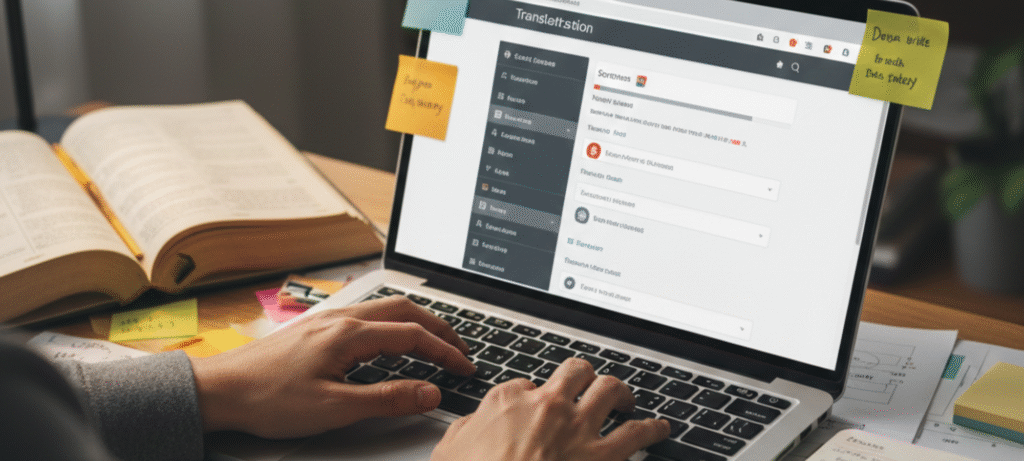
Most people learning translation today aren’t starting from a blank slate. They have jobs. Degrees. Family responsibilities. Sometimes all three at once.
Online translation learning works because it bends around real life instead of demanding that life bend around it. Lessons can be paused, revisited, or skipped when something already feels familiar. That kind of control matters more than it sounds.
In practice, this means learners can move slowly through dense grammar concepts, then speed up when working through applied translation tasks. There’s less pressure to “keep up” and more room to actually understand what’s happening.
Access to Instructors Beyond One Location
Traditional programs are limited by who happens to be nearby. Online translation learning breaks that completely.
Learners can study under native speakers, professional translators, and academic specialists from different countries. That exposure changes how language is understood. Idioms feel more natural. Cultural references start to make sense instead of feeling like trivia.
This kind of distributed expertise reminds me of how academic recognition systems work when they focus on consistent achievement rather than a single exam. A good comparison is the Golden State Seal Merit Diploma, which rewards long-term academic performance instead of one-off results.
Translation learning works best the same way. Gradual exposure. Repeated practice. Long-term improvement.
Lower Cost Without Lower Standards
Cost is often the quiet dealbreaker in education. Online translation learning tends to remove many of the expenses that have nothing to do with learning itself.
No commuting. No relocation. No printed materials that are outdated the moment they’re published.
That doesn’t mean online programs are automatically cheap or low quality. But it does mean learners can choose programs based on content and teaching style instead of just affordability. For many people, that opens doors that were previously closed.
Digital Tools Are Part of the Learning Process
Modern translation is inseparable from technology. Online learning reflects that reality from day one.
Learners regularly work with digital glossaries, translation memory systems, terminology databases, and collaborative platforms. These aren’t add-ons. They’re central to the process.
Learning translation this way feels closer to how professionals actually work. It’s similar to how skill-based courses in other fields focus on applied learning. Even practical programs outside language education, like a structured brow threading course, rely on repetition and hands-on practice rather than theory alone.
Different skills. Same learning principle.
Mental Engagement and Cognitive Benefits
Translation forces the brain to stay alert. It’s not passive reading or memorization. It’s constant decision-making.
Which word fits this context?
Does this sentence carry the same tone?
What cultural meaning is hidden here?
That mental load strengthens memory, attention, and flexibility. Language learning has long been linked to cognitive health, and translation intensifies that effect by requiring constant comparison and adaptation.
Online learning allows people to engage with this process at their own pace, which helps prevent overload while still keeping the mind active.
Career Paths That Extend Beyond Borders
One of the most practical benefits of online translation learning is how directly it connects to work opportunities.
Translation is needed everywhere. Education, healthcare, law, software, media. Online programs often encourage learners to build portfolios early, which makes the transition into paid work smoother.
Many translators today work remotely, serving clients they’ve never met in person. Learning online prepares people for that reality from the start.
Universities like Kent State highlight how online translation education supports diverse career paths while remaining flexible for learners with other commitments.
Cultural Awareness Grows Naturally
Translation isn’t just linguistic. It’s cultural. Online learning environments expose learners to different ways of thinking, speaking, and interpreting meaning.
Through interaction with international instructors and peers, learners start noticing subtleties. Humor. Formality. Emotional tone. These things don’t always show up clearly in textbooks.
Over time, this builds stronger communication skills, not just better translations.
Practice Happens in Real Time
One thing online translation learning does particularly well is feedback. Many platforms allow learners to submit translations, receive corrections, and immediately apply suggestions.
That loop matters. Seeing mistakes while the reasoning is still fresh leads to faster improvement. It’s less about getting a grade and more about refining judgment.
This mirrors professional environments where translators revise, review, and adapt constantly.
Learning That Can Grow Over Time
Translation isn’t something you “finish” learning. Online platforms often reflect that reality by offering advanced modules, updates, and ongoing communities.
As tools change and expectations shift, learners can return to training without starting over. That kind of scalability is difficult to replicate in traditional settings.
For a broader look at how translated learning content supports global education, eLearning Industry explores these dynamics in detail.
People Also Ask
Is online translation learning effective compared to classroom study?
When structured well, online learning can be equally effective, especially when it emphasizes practice and feedback.
Can online translation courses lead to professional work?
Yes. Many working translators today were trained partially or fully online and operate remotely.
Do online translation programs help with language fluency?
They often do, especially when learners engage regularly with applied translation tasks and native speakers.
Frequently Asked Questions
Is online translation learning suitable for beginners?
Some programs are beginner-friendly, while others require prior language knowledge. It depends on the course structure.
How long does it take to become a translator?
Foundational skills can develop within months, but professional-level competence usually takes longer and depends on practice.
Are certificates important in translation?
Certificates can help, but experience, skill quality, and portfolios often matter more.
Final Thought
Online translation learning doesn’t promise shortcuts. It doesn’t remove the complexity of language or the effort required to understand it. What it does offer is access, flexibility, and a learning environment that looks a lot like the real world translators work in every day.
That alignment matters. And for many learners, it’s the reason translation finally feels possible instead of distant.