
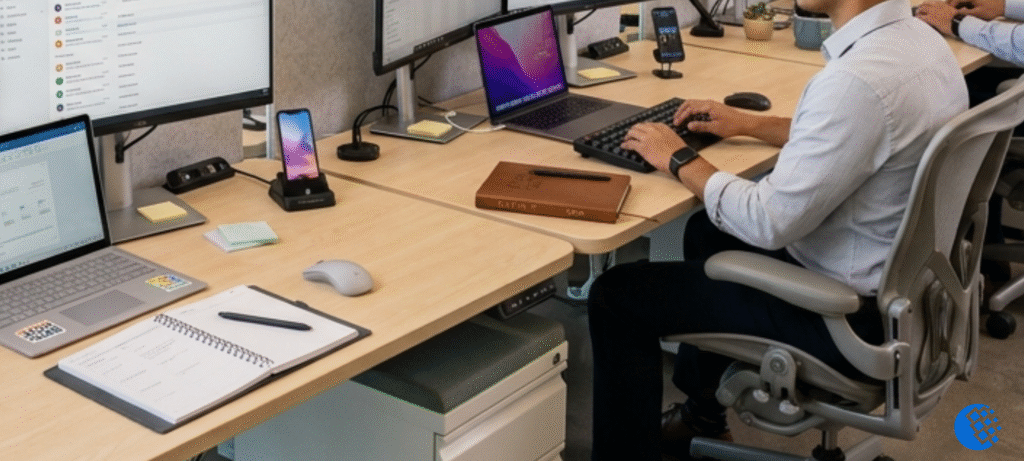
When you hear the term clerical skills, what’s the first thing that pops into your head? For a lot of people, it’s a mental image of a dusty 1980s office with beige filing cabinets and a giant landline phone. But if you step into a high-growth tech startup or a modern medical facility in 2026, you’ll see that the clerical skills meaning has undergone a massive, high-definition upgrade. It is no longer just about “filling out forms.” It is about being the human interface between complex digital systems and real-world results.
In this guide, we aren’t just going to define what is a clerical skill. We are going to look at why these abilities are the actual “secret sauce” of every successful business, how to survive a clerical skills test, and how to talk about these talents so that recruiters actually stop and pay attention.
The True Definition: What are Clerical Skills in 2026?
So, let’s peel back the layers. What are clerical skills in a world where AI can draft emails and software can track expenses? At their core, these are the functional, operational abilities that allow an organization to breathe. If a CEO is the “brain” of a company, the clerical staff is the “nervous system.” They carry the signals.
Clerical work involves the heavy lifting of information management: data entry, record keeping, scheduling, and internal communication. But in 2026, there is a new layer. You have to be a “tool-switcher.” You might start your morning in a specialized CRM (Customer Relationship Management) software, move to an automated billing system, and finish by coordinating a hybrid meeting across three different time zones. These are the skills for clerical success that keep the modern world spinning.
The Evolution: Why “Clerical” Isn’t a Dirty Word
For a while, “clerical” became a bit of a backhanded compliment in the professional world—it was seen as “just” entry-level work. That was a mistake. Today, we realize that without top-tier administrative and clerical skills, the smartest strategy in the world will fail.
Why? Because execution is everything. A company can have a brilliant marketing plan, but if the clerical team loses the lead data or messes up the client’s contact history, that plan is worthless. We are seeing a return to valuing “operational excellence.” Being “good with details” is no longer a soft skill; it is a hard, measurable competitive advantage.
Deep Dive: The Core Pillars of Clerical Excellence
To truly master data integrity and management, we need to break it down into its core components—this isn’t just a jumble of tasks, but a set of precise, methodical disciplines that keep information accurate, organized, and actionable
1. Data Integrity and Management

This is the modern version of filing. But instead of folders, you’re managing databases. This requires a unique mental “logic.” Interestingly, this logic isn’t far off from how machines think. For example, if you understand the basic concept of micromodels in Machine Learning NLP, you’ll grasp how modern office software categorizes and “tags” information. A clerical expert knows that “dirty data” (typos, duplicates) is the enemy of profit.
2. The Art of the “Gatekeeper” (Communication)
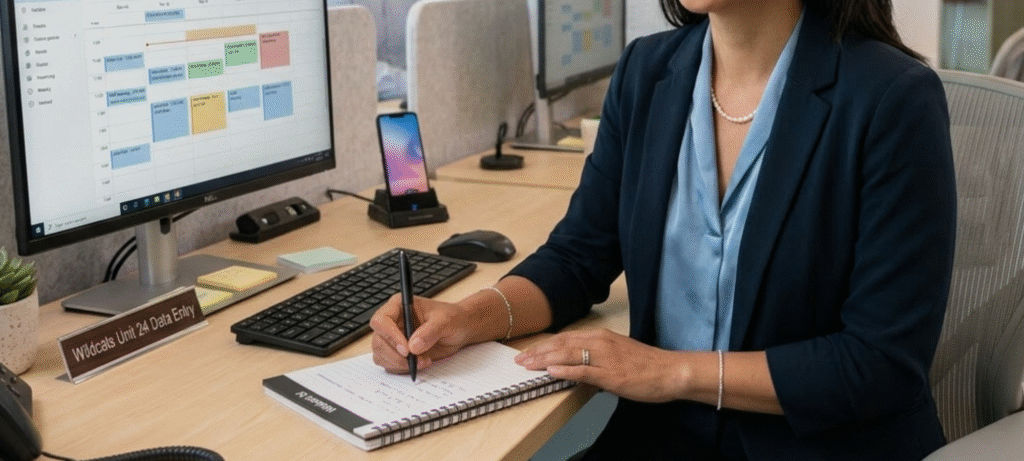
Clerical workers are often the first point of contact. This requires a high level of social intelligence. You have to be polite but firm, organized but flexible. When someone asks what is a clerical skill, they often forget the “verbal” side—the ability to handle a frustrated caller or a confused vendor with grace.
3. Advanced Triage and Scheduling
In 2026, time is the most expensive commodity. A clerical professional doesn’t just “book meetings.” They protect their team’s time. They understand which meetings are “must-haves” and which ones can be handled via a quick update.
How to Improve Clerical Skills: The Professional’s Roadmap
You don’t just “wake up” organized. Learning how to improve clerical skills is a conscious effort. It requires a mix of technical training and habit-building.
- Typing as a Foundation: If you’re still “hunting and pecking” on your keyboard, you’re hitting a ceiling. Aim for 60 to 70 words per minute with 98% accuracy.
- The “Zero-In” Focus: Practice deep work. Clerical tasks like bookkeeping or data entry require a high level of focus. If you’re struggling with the mental stamina for this, believe it or not, the same discipline used in academics can help. Learning how to study for a math exam is actually great training for the “number-crunching” logic required in clerical roles.
- Software Fluency: Don’t just say you know “MS Office.” Learn the automation features. Learn how to link a spreadsheet to a document so the data updates automatically. This is what separates a “clerk” from a “coordinator.”
Facing the Clerical Skills Test
Employers love these tests because they don’t lie. A resume can say “Great at Excel,” but a clerical skills test will prove it in 15 minutes. How do clerical skills tests improve hiring outcomes? They filter out the people who are just “good with computers” and find the people who are “accurate with data.”
Many top-tier companies now use specialized platforms like eSkill to measure a candidate’s data entry speed and accuracy before they even reach the interview stage.
To pass these, you need to practice under a timer. Speed matters, but in the clerical world, accuracy is king. One wrong digit in a social security number or a bank routing code can cause a catastrophe.
How to List Clerical Skills on Resume: The High-Impact Method
Most people make their resume look like a job description. “I did filing. I did phones.” Recruiters hate that. They want to see results. If you’re wondering how to list clerical skills on resume, focus on the “Value-Add.”
When refining your CV, platforms like Indeed suggest using specific software names and measurable achievements to catch a recruiter’s eye.
Example 1 (Administrative Assistant):
- Instead of: “Handled office scheduling.”
- Try: “Optimized executive calendars using Google Workspace, reducing meeting overlaps by 30% and saving 5 hours of team time per week.”
Example 2 (Data Entry Clerk):
- Instead of: “Entered customer data.”
- Try: “Maintained a database of 5,000+ client records with a 99.9% accuracy rate, ensuring seamless billing cycles.”
The “High-Stakes” Clerical Sector: Medical and Emergency
There is a side of clerical work that isn’t talked about enough: the medical field. In a hospital or a clinic, the “clerical” person is the one ensuring that the right patient gets the right treatment at the right time. This is high-pressure work.
Many high-level clerical workers in this field actually take an Emergency Medical Responder Course just to understand the terminology and the urgency of the data they are handling. When you’re documenting a crisis, your “clerical skills” aren’t just about being neat—they’re about being a part of the life-saving chain.
Frequently Asked Questions
What are the 3 most important clerical skills?
In 2026, the “big three” are: Digital Literacy (Software Proficiency), Attention to Detail (Accuracy), and Professional Communication.
How do I prove I have clerical experience?
Use specific examples of software you’ve used and systems you’ve managed. If you’ve worked in an office, mention the volume of work (e.g., “Handled 40+ calls daily”).
Is typing a clerical skill?
Yes, it is the fundamental “input” skill. Without fast, accurate typing, all other clerical tasks take twice as long.
What if I have trouble seeing the screen for long periods?
This is a common issue for clerical workers. Screen fatigue is real. If your eyes are tired, it’s worth asking: how long does an eye exam take? Usually, it’s just 30-60 minutes, and it’s a vital part of your “equipment maintenance.”
Final Thoughts: Embracing the “Fixer” Mentality
At the end of the day, your clerical skills define how reliable you are. In any organization, there is the person who thinks of the ideas and the person who makes them happen. The clerical professional is the one who makes things happen.
By taking pride in your accuracy, mastering the latest digital tools, and understanding the “why” behind the data, you turn a “job” into a specialized career. You become the person the office cannot live without. And in the job market of 2026, being indispensable is the best job security you can have.