When young children take their first steps into a daycare, they are stepping into their very first real social circle outside family life. This early change has a huge impact on how they talk to others, share their things, and figure out big emotions. At home, a toddler is usually the center of attention. Their toys are theirs alone, and their needs get met almost instantly. Moving out of that comfortable home bubble and into a bright room full of energetic peers is a massive milestone for any little one.
This exact transition is where real early childhood socialization actually kicks off. In a warm, well-run learning environment, children aren’t just being babysat. They are actively discovering how to get along with other people. The everyday interactions they experience in these classrooms build a strong mental baseline that shapes their behavioral development for the rest of their childhood.
How Daycare Supports Social Skill Development
The structured play learning you find in early childhood centers gives kids something that is almost impossible to recreate at home: regular, daily peer interaction alongside skilled caregivers who know how to guide them. Spending hours around other kids forces a child to constantly adjust their own social behavior in kids’ settings.
This growth happens quite naturally through a healthy mix of free play and daily classroom routines. If you leave toddlers entirely to themselves, they usually practice what experts call parallel play—meaning they play side-by-side without really interacting. A good daycare setup gently guides them toward cooperative learning — centres like Raising Stars Leppington are built around exactly this structured approach, providing early childhood programs that support social development alongside school readiness in a purpose-designed environment..
Key Benefits of Daycare for Social Skills
Many parents think about early childhood education mostly for early brain development, but the social side of things is a total game-changer. Let’s dive into the core child interaction skills that blossom during these early childcare days.
1. Improves Sharing and Cooperation
Learning to share is a massive hurdle for any toddler. At home, there isn’t much competition for a favorite toy. But in a group learning for kids environment, everything is community property. Children quickly learn that classroom toys are meant for everyone, not just one person. Through daily snack times, art projects, and taking turns with games, they learn how to wait, deal with small delays, and work together on projects.
2. Builds Communication Skills
Chatting and interacting with both peers and teachers helps expand a child’s vocabulary incredibly fast. If a child wants a specific toy or needs to set a boundary, they can’t just look at a parent to fix it. They have to use real words to make themselves understood. This constant effort to speak up, listen back, and read body language builds their peer communication skills and gives them a massive confidence boost.
3. Develops Emotional Intelligence
This is a huge development win that basic parenting articles often skip right over. Being around different little personalities teaches kids how to handle different reactions. By watching their playmates, toddlers start spotting feelings in others. They notice when a friend is upset, mad, or having fun. This early exposure jumpstarts real emotional growth in children and shapes crucial empathy skills, like offering a toy to a sad classmate or cheering when a friend succeeds.
4. Teaches Conflict Resolution
Disagreements are bound to happen when little kids gather. Whether it’s two toddlers pulling on the same toy truck or arguing over who gets to lead the line, daycare is the perfect, safe training ground for working through issues. With a teacher guiding the interaction, kids learn to talk out their frustrations instead of defaulting to pushing, hitting, or biting. They pick up the basics of compromise very early on.
5. Builds Independence and Confidence
Spending a few hours away from mom and dad helps build a healthy sense of self-reliance and early autonomy. Figuring out a classroom, picking what activity to do next, and managing basic things like putting on a coat or washing up helps kids build deep resilience. This growing self-confidence makes moving into kindergarten later feel way less scary.
6. Improves Teamwork Skills
Classroom tasks like building a big block fort, playing group games, or tidying up the shelves teach kids how to collaborate. They see firsthand that when everyone helps out, things get done quickly and the games are much better. This early taste of working as a team is a wonderful trait that helps them out all through school and life.
Real-Life Examples of Social Learning in Daycare
To see how childcare development benefits a child in real life, you just have to watch the quick, tiny moments that happen in a classroom every single day. These little interactions are where the real learning sticks:
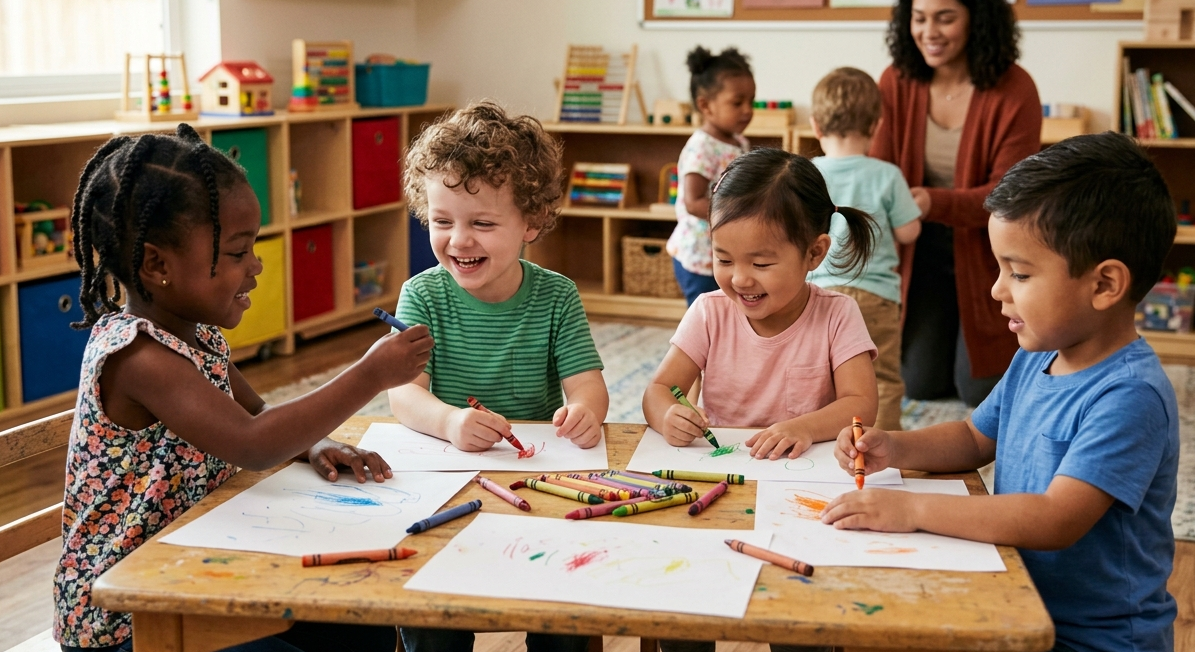
- Sharing Crayons During Art: A child wants a green crayon but notices a friend is using it. Instead of snatching it, they practice emotional regulation, wait a minute, and say, “Can I have that when you’re finished?”
- Waiting Patiently for Snacks: Toddlers learn that their wants aren’t the center of the universe. Sitting and waiting for their plate teaches self-control and physical boundary awareness.
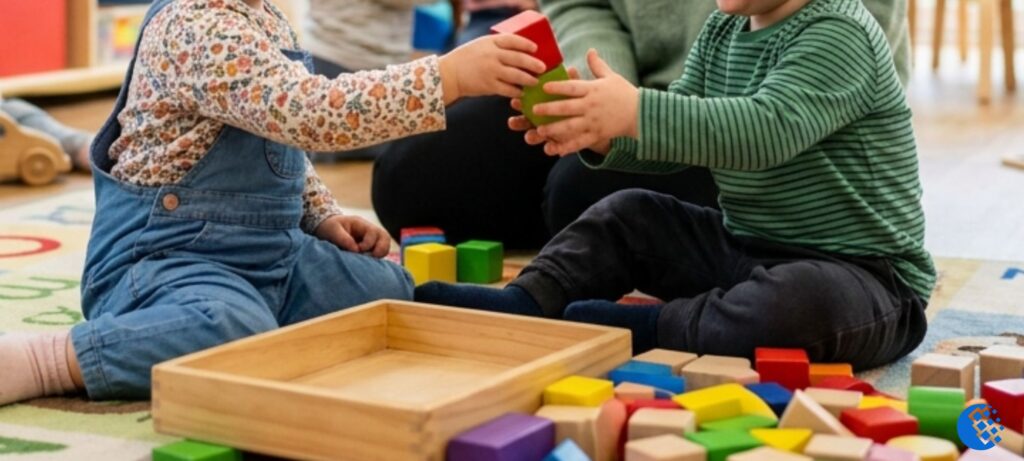
- The Shared Toy Tower: Two kids work together on a block tower. If it falls over, they use collaborative problem-solving to set it up again instead of getting mad or walking away.
- Helping out a Friend: When someone drops a box of colored pegs, another child sits down to help gather them up, showing a real-world flash of empathy.
Why Daycare Social Skills Matter for School Readiness
The real test of early childhood socialization comes when a child enters a formal school environment. School readiness isn’t just about memorizing numbers or letters; it depends heavily on a child’s classroom behavior and how well they can follow directions from an adult.
Kids who head into kindergarten with solid daycare social skills already know how to listen to a teacher, stick to a daily routine, and treat their classmates with respect. They don’t have to waste energy stressing over how a school day works, which leaves them totally free to focus on learning from their very first day.
Age-Based Social Skill Development in Daycare
Social abilities don’t just appear overnight. They grow bit by bit as a child’s brain develops, which is why modern daycare programs organize things around specific growth steps:
| Age Group | Core Social Focus | Typical Classroom Behavior |
| Ages 1–2 | Basic Interaction & Parallel Play | Kids play side-by-side, learning to accept other children nearby without starting a fight. |
| Ages 3–4 | Active Sharing & Group Communication | Real cooperative play starts. Children share things on purpose and use words to say what they need. |
| Ages 4–5 | Teamwork & Advanced Problem-Solving | Kids run complex pretend games, set up rules for play, and figure out small arguments on their own. |
Common Concerns Parents Have
It is completely normal to feel a bit of worry when leaving your child at a center. Let’s look at a few regular parent anxieties with real-world context.
Will my child feel too stressed out without me?
A little separation anxiety early on is totally normal, but it’s a huge step toward building emotional resilience. Before long, kids realize that parents always come back, which actually makes their bond at home stronger while helping them trust other caring adults.
Is daycare too early for a child to socialize?
Even tiny babies and young toddlers get a lot out of being around other kids. Watching peers crawl, walk, and use new words acts as a great form of social modeling that can actually speed up their own physical and developmental steps.
Will my child grow independent too quickly?
Encouraging early independence doesn’t mean your child is going to drift away from you. Instead, it creates a confident kid who feels safe enough to explore new things, knowing they have a warm, loving home to return to every evening.
Final Thoughts
Daycare is much more than just a safe spot for kids while parents are at work. It acts as an essential launchpad where small toddlers transform into kind, talkative, and cooperative individuals. By giving your child these early social opportunities, you are setting them up with the emotional tools and personal confidence they need to step out into the world with absolute ease.
For detailed clinical advice on tracking your child’s early growth and developmental health, feel free to look over the official guidelines provided on the NHS Children’s Health website.
Frequently Asked Questions
Do kids who go to daycare end up with better social skills than stay-at-home kids?
Many studies show that kids who attend quality daycare centers often have great social confidence, excellent speech habits, and an easier transition into school. That said, stay-at-home children can absolutely build wonderful social skills through community playgroups, neighborhood friends, and family interactions.
How does a daycare center help a child learn to talk better?
In a childcare setting, children are constantly surrounded by talking. They listen to teachers, hear their friends chat, and join in on group songs. This talk-heavy environment forces them to use their own words to get what they want, which naturally builds up their vocabulary.
What should I check for in a daycare to ensure healthy social growth?
Look for places that keep group sizes small, focus heavily on open-ended playtime, and use calm, positive methods to handle disputes. Teachers should help kids walk through an argument together rather than just placing someone in a quick time-out.
How long does it usually take for a toddler to adjust to a daycare setting?
Most kids settle into their new school routine within two to four weeks. Staying consistent with the days they attend helps speed this up, because knowing the daily schedule makes children feel safe and secure in their new space.
Can poor sleep affect a child’s social behavior?
Yes, sleep plays a major role in emotional regulation, attention span, and communication skills in young children. Poor-quality sleep may sometimes affect mood, classroom participation, and behavior. In certain situations, parents may also explore medical solutions like CPAP for Sleep Apnea to better understand sleep-related breathing concerns and overall child wellness.