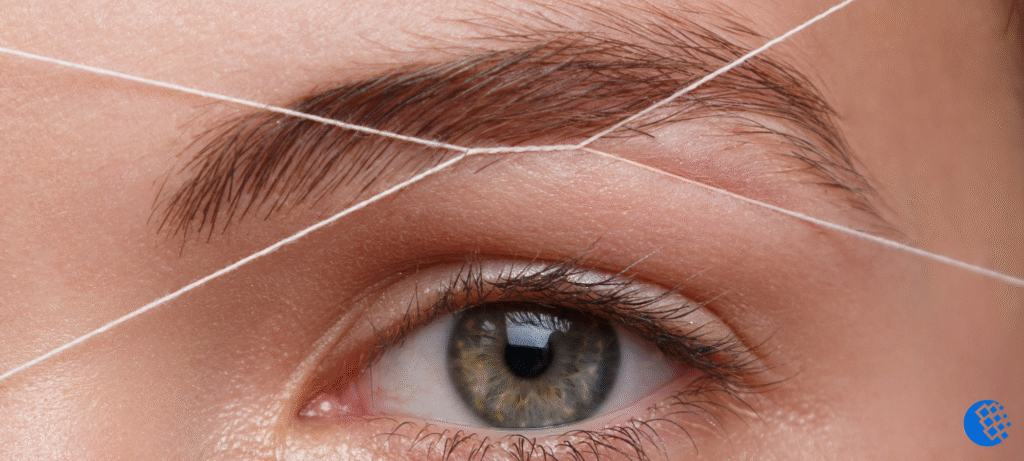
If you’ve ever watched a master technician weave a simple piece of cotton thread into a tool of surgical precision, you know that threading is more than just hair removal—it’s an art form. Brows are arguably the most important feature of the face, and in 2026, the demand for natural, chemical-free grooming is higher than ever.
Entering the beauty world through a brow threading course is one of the most cost-effective ways to start a career. Unlike lash extensions or microblading, which require expensive kits and complex chemicals, threading requires just a spool of thread and a high level of skill.
In this guide, we’ll break down exactly what to look for in a certification program, the techniques you need to master, and how to turn a spool of string into a six-figure business.
Why Choose Threading Over Waxing or Tweezing?
Before you sign up for a course, it’s important to understand why your future clients will be asking for this specific service. Threading has several distinct advantages that make it a “must-have” in any beauty portfolio:
- Precision: Threading allows for the removal of individual hairs or entire rows, creating the sharpest possible brow lines.
- Skin-Friendly: There are no heated waxes or harsh chemicals involved. This makes it the safest option for people on acne medications (like Accutane) or those with sensitive skin.
- Speed: A professional can shape a full set of brows in under 15 minutes.
- Hygiene: A fresh piece of thread is used for every single client, making it one of the most sanitary options in the industry.
What to Expect in a Professional Brow Threading Course
A high-quality brow threading course isn’t just a 10-minute tutorial. To be truly successful and safe, a comprehensive curriculum should cover the following five pillars:
1. The Anatomy of the Brow
You can’t shape what you don’t understand. You will learn about the brow bone structure, hair growth cycles, and how different face shapes (oval, heart, square) require different arch placements.
2. Mastery of the Three Primary Techniques
There isn’t just one way to thread. Most courses will teach you at least two of these:
- The Mouth Method: The most traditional and fastest method. One end of the thread is held in the technician’s teeth to provide tension.
- The Neck Method: An alternative that avoids mouth contact, often used for better ergonomics or hygiene preferences.
- The Hand-Loop Method: Ideal for beginners and often preferred by self-threaders. It uses a “see-saw” motion between both hands.
3. Advanced Brow Mapping
Mapping is the secret to symmetry. You’ll learn how to use a mapping string or a caliper to find the start, the arch, and the tail of the brow. If you’re helping a student with their homework while you study, you might notice that these precise measurements feel a lot like trigonometry and the calculator common core geometry homework—it’s all about finding the perfect angles!
4. Health, Safety, and Sanitation
You will learn about “contraindications”—conditions that mean a client should skip threading (like active sunburn or recent surgery). You’ll also learn how to prep the skin with witch hazel or talc and how to soothe it afterward with aloe vera.
5. The Business of Brows
The best courses include a module on how to price your services, how to take “Instagram-worthy” before and after photos, and how to build a loyal client base.
Online vs. In-Person Training: Which is Better?
In 2026, you have more choices than ever for how you learn. Here is a quick comparison to help you decide:
| Feature | Online Threading Course | In-Person Academy |
| Cost | Usually $50 – $200 | Usually $300 – $800 |
| Flexibility | Learn at your own pace | Fixed schedule (usually 1-2 days) |
| Feedback | Video submissions / Community forums | Real-time instructor correction |
| Supplies | Often requires buying your own kit | Supplies usually included |
| Certification | Digital/Printable Certificate | Accredited Physical Diploma |
If you are a trainer or teacher looking to build your own curriculum, using a Teacher Toolbox can help you organize these complex steps into easy-to-digest modules for your students.
Step-by-Step: The Path to Certification
If you’re ready to start, follow these steps to ensure you’re choosing a path that actually leads to a job:
- Check Local Regulations: In some states (like California or New York), you may need a full esthetician or cosmetology license to thread professionally. In others, a specific threading certificate is enough.
- Verify Accreditation: Look for courses accredited by recognized bodies like the Associated Skin Care Professionals (ASCP) or international equivalents like ITEC or VTCT.
- Practice on “The Thigh”: Most instructors recommend practicing on your own leg hair first. It’s the best way to learn how to control the “twist” and “snap” of the thread without risking someone’s eyebrows!
- Build a Portfolio: Take high-quality photos of your practice subjects. In the beauty world, your portfolio is often more important than your certificate when it comes to getting hired.
People Also Ask (FAQs)
How long does it take to learn eyebrow threading?
You can learn the basic mechanics in about 5 to 10 hours. However, it takes about 3 to 4 weeks of daily practice (at least 30-40 sets of brows) to reach the speed and precision required for a professional salon.
Is threading better than waxing?
For the skin, yes. Threading does not pull the top layer of skin, so there is no risk of “lifting” or burning. For the technician, threading is more profitable because the material costs are nearly zero compared to the cost of wax and strips.
Can I teach myself threading from YouTube?
While you can learn the motion from YouTube, a formal brow threading course is essential for learning hygiene, facial anatomy, and professional insurance requirements. Working near someone’s eyes with a thread carries risks that “self-taught” videos often ignore.
How much do brow threaders make?
Entry-level threaders can make $15-$25 per hour plus tips. If you own your own studio, you can easily clear $60-$100 per hour, as a 15-minute service usually costs between $15 and $30.
The ROI: Is a Threading Course Worth the Money?
Let’s do some quick math. A high-quality online certification might cost you $150. A spool of professional threading cotton (like Organica or Griffin) costs about $5 and can last for 50+ clients.
If you charge just $20 per brow service:
- 8 clients pays off your entire course.
- 1 spool of thread generates $1,000 in revenue.
There are very few skills in the world with a return on investment that high! If you’re looking for more technical resources on skin health and beauty standards, the American Academy of Dermatology offers great insights into why physical hair removal (epilation) is often preferred for acne-prone skin.
Final Thoughts
Starting a brow threading course is a gateway into the massive beauty industry. It’s a skill that can never be automated by a machine and will always be in demand. Whether you want to work in a high-end spa, a busy mall “brow bar,” or start a mobile business from your home, the thread is your most powerful tool.