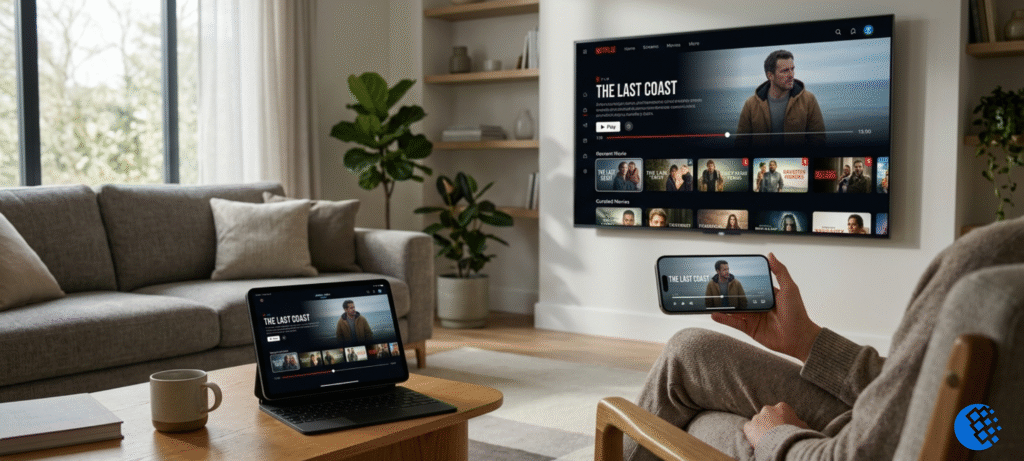
In the span of a single decade the way humanity consumes media has undergone a seismic shift. We have moved from the “appointment viewing” of linear television to a “nomadic viewing” culture. Today’s consumer doesn’t just watch content; they carry it with them. Whether it is a live football match streamed on a smartphone during a morning commute or a high-definition cinematic experience on a 75-inch Smart TV at home the expectation remains the same: instant, high-quality, and uninterrupted access.
This behavioral evolution has birthed the Multiscreen OTT (Over-the-Top) Platform. It is no longer enough to have a functional website or a basic mobile app. To survive in 2026 a media brand must exist as a unified ecosystem that breathes across every digital interface. This guide explores the technical, strategic, and commercial layers required to build a world-class streaming service.
Table of Contents
- Defining the Multiscreen Ecosystem
- How It Works: The Invisible Engineering
- The Strategic “Why”: Business Value Beyond the Screen
- Key Factors for Platform Excellence
- The Great Infrastructure Debate: SaaS vs. Custom Build
- Security and Revenue: The DRM & Monetization Vault
- The Continuity Factor: Solving the Churn Crisis
- Frequently Asked Questions (FAQs)
- Final Thought: Future-Proofing Your Digital Legacy
1. Defining the Multiscreen Ecosystem
At its core a multiscreen OTT platform is a centralized video delivery system that distributes content to various endpoints. Unlike traditional cable which relies on satellite signals OTT travels over the public internet. This allows for a two-way communication stream between the provider and the viewer.
A true multiscreen experience implies that the service is natively optimized for a variety of hardware. This includes Mobile & Tablets (iOS and Android), Web Browsers (Chrome, Safari, Firefox), Living Room Devices (Roku, Amazon Fire TV, Apple TV), and Smart TVs (Tizen, WebOS). Even Gaming Consoles like PlayStation and Xbox are now vital parts of the ecosystem.
The goal is not just presence; it is uniformity. The user should feel the same brand identity and ease of use whether they are swiping on a glass screen or clicking a plastic remote. This level of consistency is what separates professional services from amateur video blogs.
2. How It Works: The Invisible Engineering
Most users think clicking “Play” is a simple command. In reality it triggers a sophisticated sequence of events that happens in milliseconds. Understanding this backend is crucial for anyone looking to launch a stable service.
A. Transcoding and Packaging
High-resolution video files are massive. A single 4K movie can be 50GB. To stream this the platform uses a Transcoder. This software takes the “Master File” and breaks it into dozens of smaller versions with different resolutions and bitrates.
Using Adaptive Bitrate Streaming (ABR) the platform constantly monitors the user’s internet speed. If the Wi-Fi signal wavers the player automatically switches to a lower-quality chunk of video. This prevents the “spinning circle” of death and keeps the user engaged without a total interruption of the stream.
B. The Content Delivery Network (CDN)
Physics is the biggest enemy of streaming. If your server is in New York and your viewer is in Karachi the data has to travel halfway across the world causing latency. A multiscreen platform utilizes a CDN—a network of servers distributed globally. The CDN caches a copy of your video at the “edge” (locations closest to the user). When the user hits play the video is served from a city nearby ensuring lightning-fast start times and reduced server load.
C. The Metadata Heartbeat
Behind every video is a layer of data: titles, descriptions, and user state data. This “heartbeat” tracks exactly where a user stops watching. This data is synced to a cloud-based User Management System. This is the magic that allows you to pause on your phone during a commute and resume on your TV the moment you walk through your front door.
3. The Strategic “Why”: Business Value Beyond the Screen
Why spend the capital to build for five different screens? Because the “Mobile-Only” model is no longer competitive in a saturated market.
Capturing Micro-Moments
People consume media in different modes. There is the “Leaning-In” mode where users watch short clips on a laptop or phone, and the “Leaning-Back” mode where they commit to long-form movies on a TV. If you aren’t on both screens you lose 50% of the potential watch time. For example, many users ask Does YouTube Count as a Social Media Platform because of how it bridges the gap between social interaction and lean-back entertainment.
Higher Lifetime Value (LTV)
Data shows that subscribers who use more than two devices to access a service are 3x less likely to cancel. Multiscreen availability makes your service a “utility” in the user’s life rather than just another app.
Premium Ad Inventory
Advertisers pay a premium for “Big Screen” ads. By having a Smart TV app you can charge significantly more for ad slots (AVOD) because the engagement level on a 65-inch screen is far higher than on a mobile device.
4. Key Factors for Platform Excellence
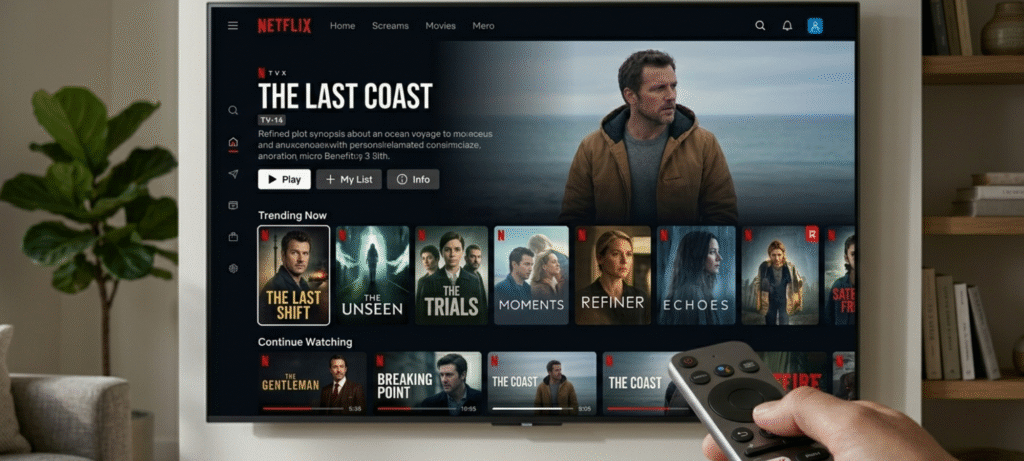
If you are building or buying a platform these four pillars are non-negotiable:
- UI/UX Consistency: The search functionality and navigation menus should be in the same relative place across all apps. Visual language is the silent ambassador of your brand.
- Low Latency for Live: If you are streaming live sports a 30-second delay compared to social media spoilers will ruin the user experience.
- Search & Discovery: As your library grows users face choice paralysis. An intelligent recommendation engine is essential to keep them watching.
- Offline Playback: For mobile users the ability to download content is a top-tier feature, especially in regions with unstable data.
Interestingly, the way these platforms present their mission and values is as important as the tech. Students or new entrepreneurs often look at Manifesto Examples for Students to understand how to clearly communicate a vision for a digital project.
5. The Great Infrastructure Debate: SaaS vs. Custom Build
How you build your platform defines your speed and your budget. Choosing the wrong path can lead to technical debt that lasts for years.
| Metric | White-Label SaaS Solutions | Custom-Built / On-Premise |
| Speed | Launch in 30 days. | 12+ months of development. |
| Cost | Low upfront; monthly fees. | Massive upfront investment. |
| Updates | Automatic feature rollouts. | You pay for every new update. |
| Control | Standardized templates. | Infinite customization. |
| Best For | Mid-market and rapid growth. | Enterprise-level giants. |
6. Security and Revenue: The DRM & Monetization Vault
Without security you don’t have a business; you have a library. Digital Rights Management (DRM) is the technology that encrypts your video stream. Systems like Google Widevine and Apple FairPlay ensure that users cannot illegally screen-record or download your content.
Monetization Models:
- SVOD (Subscription): Recurring monthly revenue (The Netflix model).
- AVOD (Ad-Based): Free for users but paid by brands (The YouTube model).
- TVOD (Transactional): Digital rentals for specific premium movies or events.
- Hybrid: A mix of all three which is currently the most profitable strategy for modern broadcasters.
7. The Continuity Factor: Solving the Churn Crisis
Churn is the percentage of users who cancel their subscription. The primary cause of churn isn’t usually the price; it is friction. If a user has to log in every time they change devices or if they can’t find the show they started yesterday they will eventually leave.
A multiscreen OTT platform solves this by providing a frictionless journey. By syncing profiles, watchlists, and playback positions the platform becomes an invisible companion to the user’s daily life. This seamlessness is the ultimate retention tool.
8. Frequently Asked Questions
Q: Can I start with just a Mobile App and add TV later?
A: You can, but it is technically difficult to switch backends. It is better to choose a multiscreen-ready infrastructure from Day 1 even if you launch the apps in phases.
Q: How many devices can one user log into?
A: Most platforms allow 3–5 registered devices but limit concurrent streams to 1 or 2 to prevent unauthorized password sharing.
Q: Does 4K streaming require a different platform?
A: The platform architecture remains the same but your transcoding and CDN storage costs will increase significantly to handle the larger file sizes.
9. Final Thought: Future-Proofing Your Digital Legacy
We are moving toward a world of “Ambient Computing” where screens are embedded in cars, appliances, and wearable devices. A multiscreen OTT platform is the first step in preparing your content for this future. By decoupling your content from a single device and moving it into a unified secure cloud environment you are building a resilient media brand.
The technical hurdles are high but the reward is a global loyal audience that is always just one “tap” or “click” away from your story.