
Key Takeaways
- Regular watering, especially for young trees, is crucial for their growth.
- Mulching helps retain soil moisture and suppresses weeds.
- Pruning removes dead or diseased branches, promoting healthy growth.
- Protecting trees from pests and diseases ensures their longevity.
- Community involvement in tree care fosters a greener environment.
Maintaining healthy trees is essential for vibrant communities, especially in Union County, NJ. Proper tree care enhances property values, improves air quality, and provides shade during hot summers. For residents seeking professional assistance, New Jersey Tree Professionals offers expert tree service in Union County, NJ. With over 40 years of combined experience, the certified arborists of New Jersey Tree Professionals provide services such as tree removal, pruning, and emergency storm cleanup. As a woman-owned and minority-owned business, they are committed to delivering high-quality service with clear communication.
Watering: The Foundation of Tree Health
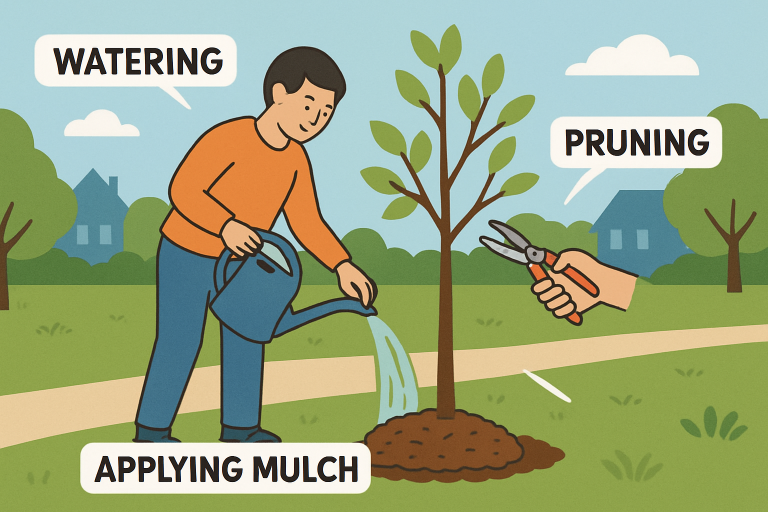
Newly planted trees need regular and careful watering to develop strong, healthy root systems. Experts recommend supplying approximately 20 gallons of water each week, but it’s essential to check the soil first. Dig about six inches down near the tree’s base. If the soil feels dry at this depth, it’s time to water. Avoid overwatering, as consistently soggy soil can lead to root rot and other health issues. Maintaining a balance ensures the tree establishes properly, thrives in its environment, and grows into a resilient, long-lasting addition to your landscape.
Mulching: More Than Just Aesthetic Appeal
Applying mulch around trees offers numerous benefits for tree health and landscape aesthetics. A 2–3 inch layer of mulch helps retain soil moisture, reducing the need for frequent watering, while suppressing weeds that compete for nutrients. As organic mulch decomposes, it enriches the soil with essential nutrients, supporting strong root development. When applying mulch, keep it a few inches away from the trunk to prevent moisture buildup and potential rot. Consistent mulching promotes healthier, more resilient trees and simultaneously enhances the overall appearance and attractiveness of your garden or yard.
Pruning: Encouraging Robust Growth
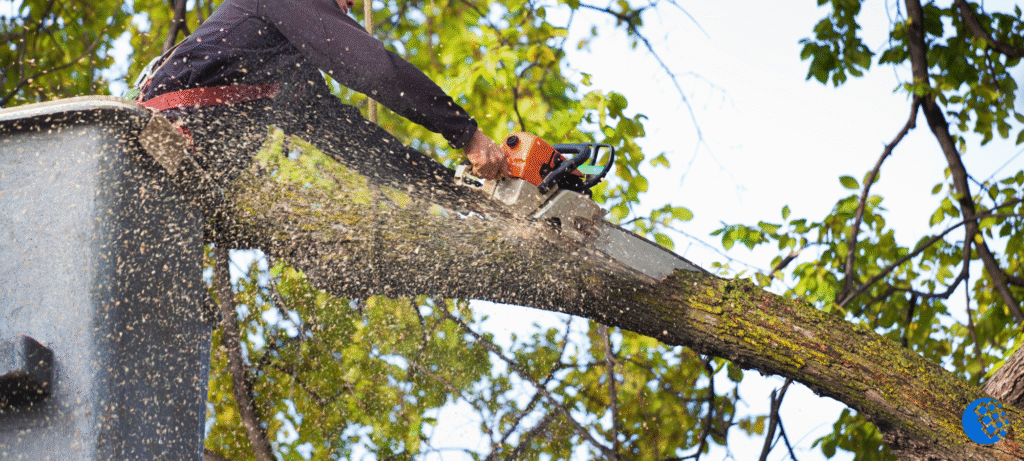
Regular pruning is essential for maintaining healthy trees, as it removes dead, diseased, or damaged branches, enabling the tree to focus energy on vigorous growth and development. Using sharp, sanitized tools ensures clean, precise cuts that minimize stress and reduce the risk of infection. It is essential not to remove more than 25% of a tree’s foliage at one time to avoid weakening its overall health. Proper pruning enhances structural integrity, reduces the likelihood of falling limbs, promotes better air circulation and sunlight penetration, and helps prevent potential hazards around homes and public spaces.
Protecting Trees from Pests and Diseases
Early detection is essential for maintaining healthy trees and preventing severe pest or disease damage. Homeowners should regularly inspect their trees for signs such as discolored or wilting leaves, abnormal growths, or visible insect activity. Prompt attention helps contain problems before they spread and ensures long-term tree vitality. In Union County, consulting experienced tree care providers can make a significant difference. New Jersey Tree Professional offers expert guidance and hands-on services to identify, treat, and manage tree health issues, helping residents protect their landscapes and preserve the beauty and safety of their trees.
Community Involvement: Strengthening Neighborhood Bonds
Engaging in community tree care initiatives not only benefits the environment but also fosters a sense of unity. Programs like the Union County Shade Tree Advisory Board’s free tree giveaways encourage residents to participate in greening their neighborhoods. Such collective efforts lead to healthier, more attractive communities.
Seasonal Care: Adapting to Weather Changes
Trees face unique challenges in each season, requiring proactive care to maintain their health. In winter, heavy snow and ice can weigh down and break branches, potentially harming the tree’s structure. Protect trees by gently brushing off snow and avoiding de-icing salts nearby, as these chemicals can damage roots and soil health. In summer, hot temperatures and dry periods place stress on trees, making adequate watering essential. Deep, infrequent watering helps roots absorb moisture effectively, reducing drought stress. Seasonal awareness and proper maintenance ensure trees remain strong, resilient, and vibrant throughout the year.
Professional Assistance: When to Seek Help
While homeowners can manage routine tree care, certain circumstances demand professional expertise. Diseased, structurally unsound, or heavily pruned trees pose risks beyond typical maintenance. In these cases, consulting a certified arborist is essential to ensure safety and preserve the tree’s health and longevity. A New Jersey Tree Professional brings specialized knowledge, proper equipment, and industry best practices to handle complex tree issues efficiently. By relying on trained experts, property owners can protect their landscape, prevent potential hazards, and promote the long-term vitality of their trees.
FAQs
How often should I water my newly planted tree?
Newly planted trees should receive about 20 gallons of water per week, especially during the first two years. Always check soil moisture before watering to avoid overwatering.
Is mulching necessary for all trees?
While not mandatory, mulching provides numerous benefits, including moisture retention and weed suppression. It’s particularly beneficial for young trees and those in urban settings.
Can I prune my trees at any time of year?
It’s best to prune trees during their dormant season, typically late fall to early spring. However, dead or hazardous branches should be removed promptly, regardless of the season.
What are common signs of tree diseases?
Common signs include discolored or wilting leaves, unusual growths, peeling bark, and the presence of fungi. If you notice any of these symptoms, consult a tree care professional.
How can I get involved in community tree planting programs?
Contact local organizations, such as the Union County Shade Tree Advisory Board or the New Jersey Tree Foundation, to learn about volunteer opportunities and upcoming events.
By following these tips and staying proactive, residents of Union County can ensure their neighborhoods remain green and vibrant for generations to come.