
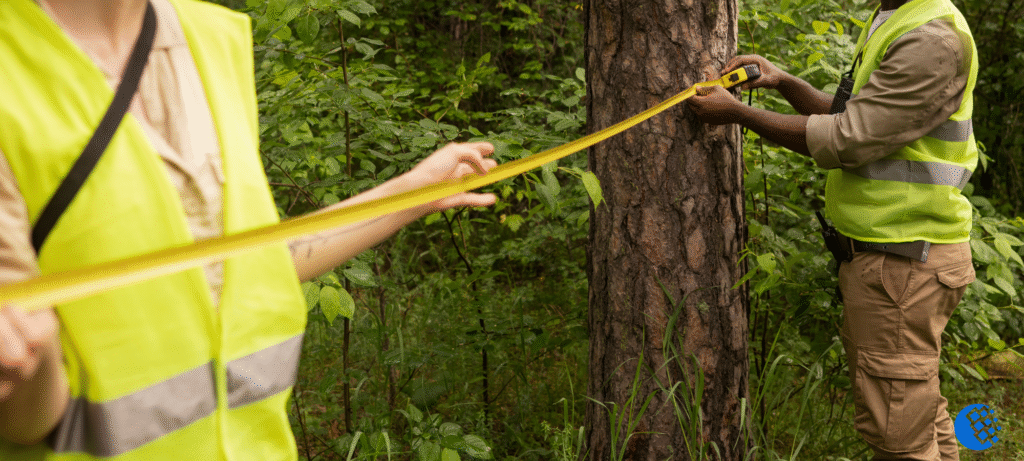
Trees are easy to take for granted. They stand tall for decades, sometimes generations, quietly doing their thing. But when something goes wrong disease, decay, structural weakness — the signs are often subtle at first. That’s where tree health assessment and inspection services become essential.
A professional tree inspection isn’t just someone glancing at branches and saying “looks fine.” It’s a structured evaluation of a tree’s biology, structure, environment, and risk level. And honestly, waiting until a tree looks sick is usually waiting too long.
In this guide, we’ll walk through what tree health assessments involve, why they matter, what arborists actually look for, and how regular inspections can save property owners serious money (and stress).
What Are Tree Health Assessment and Inspection Services?
Tree health assessment and inspection services are professional evaluations performed by trained arborists to determine:
- The overall health of a tree
- Signs of disease or pest infestation
- Structural stability and risk factors
- Root health and soil conditions
- Environmental stress impacts
- Potential hazards to people or property
Unlike basic tree trimming or maintenance, inspections focus on diagnosis and prevention.
Certified arborists often follow guidelines set by organizations like the International Society of Arboriculture, which establish industry standards for evaluating tree risk and health.
Why Tree Inspections Are More Important Than Most Property Owners Realize
Many homeowners call a tree service only when:
- A branch falls
- Leaves turn brown unexpectedly
- A storm causes visible damage
- A neighbor complains about overhang
But by that point, damage may already be advanced.
Early Detection Prevents Expensive Problems
Tree health issues often begin internally — fungal decay, root rot, internal cavities. From the outside, the canopy may still appear healthy.
Routine inspection helps identify:
- Internal decay before structural failure
- Root instability before uprooting
- Pest infestation before widespread spread
- Nutrient deficiencies before canopy decline
The USDA Forest Service emphasizes that early diagnosis significantly improves the success rate of tree preservation treatments.
What Does a Tree Health Assessment Actually Include?
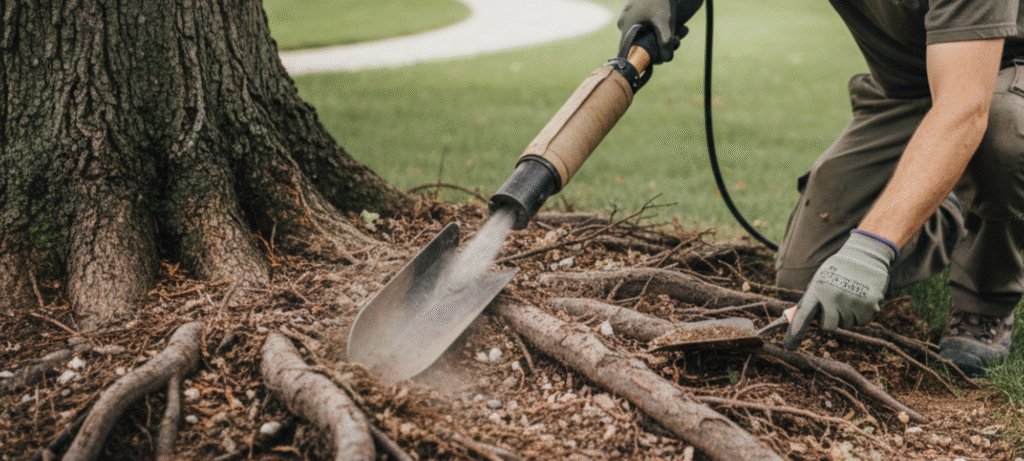
A professional tree inspection is methodical. It’s not random. Arborists evaluate multiple layers.
1. Visual Canopy Inspection
They check:
- Leaf color and density
- Dead or dying branches
- Uneven growth patterns
- Early leaf drop
- Fungus on limbs
Leaves often reveal nutrient stress or disease early.
2. Trunk and Structural Evaluation
The trunk tells a story. Arborists look for:
- Cracks or splits
- Cavities
- Decay pockets
- Leaning angle changes
- Bark abnormalities
Even small vertical cracks can indicate internal stress.
3. Root Zone Examination
Roots are the foundation. Issues here are serious.
Professionals assess:
- Soil compaction
- Surface root damage
- Construction impact
- Water drainage problems
- Fungal growth near base
Root failure is one of the leading causes of tree collapse.
4. Risk Assessment
If a tree is near:
- A house
- Driveways
- Power lines
- Play areas
- Public roads
A formal risk rating may be assigned. This evaluates the probability of failure and potential impact severity.
Levels of Tree Assessment Explained
People often hear terms like “Level 1” or “advanced assessment” and feel confused. Here’s a simple breakdown.
Level 1 Tree Assessment
Basic visual inspection from ground level.
Used for general condition checks and early identification of obvious issues.
Level 2 Assessment
More detailed inspection.
May include binocular evaluation, probing for decay, minor testing tools.
Level 3 (Advanced) Assessment
Involves specialized equipment such as:
- Sonic tomography
- Resistograph drilling
- Air-spade root investigation
Used when structural integrity is uncertain or high-value property is involved.
Common Tree Health Problems Identified During Inspections
Tree health assessment and inspection services frequently detect:
- Fungal decay (heart rot, root rot)
- Pest infestations (borers, aphids, beetles)
- Bacterial infections
- Nutrient deficiencies
- Girdling roots
- Soil compaction damage
- Storm-related structural stress
Interestingly, many trees appear “fine” visually but show early stress signals upon closer inspection.
Warning Signs You Should Schedule a Tree Inspection Immediately
If you notice any of these, don’t wait:
- Mushrooms growing near the base
- Sudden leaning
- Cracks after storms
- Large dead branches
- Hollow sound when trunk is tapped
- Soil heaving around roots
Even if you’re unsure, a professional evaluation provides peace of mind.
How Often Should Trees Be Inspected?
There isn’t a universal rule, but general guidance:
- Residential properties: Every 1–3 years
- High-traffic commercial areas: Annually
- After major storms: Immediately
- Construction nearby: Before and after project
Mature trees over 20 years old benefit from more regular monitoring.
Cost of Tree Health Assessment and Inspection Services
People Also Ask this frequently.
Costs depend on:
- Number of trees
- Size and height
- Risk level
- Required testing
- Location
Basic inspections may range from modest service fees, while advanced diagnostic testing increases pricing.
However — compare that to the cost of:
- Emergency tree removal
- Roof repair
- Liability claims
- Property damage
Preventative inspection is usually far less expensive long-term.
Tree Health Assessment vs Tree Removal Consultation
These are not the same thing.
Tree removal consultations focus on deciding whether a tree should be removed.
Tree health assessments focus on:
- Preservation
- Treatment
- Risk mitigation
- Long-term stability
Removal is sometimes necessary — but many trees can be saved with early intervention.
The Role of Certified Arborists
Anyone can trim a branch.
Not everyone can diagnose structural decay.
Certified arborists undergo training and ongoing education. They understand:
- Tree biology
- Soil science
- Disease pathology
- Risk assessment methodology
When hiring inspection services, always confirm credentials.
Commercial and Municipal Tree Inspections
Tree health assessment and inspection services are especially important for:
- Schools
- Hospitals
- Apartment complexes
- Parks
- Government buildings
- HOA communities
In these cases, liability risk is significant. Regular documentation also helps demonstrate due diligence in case of legal claims.
Benefits of Routine Tree Inspections
Let’s simplify it.
Regular inspections provide:
- Early disease detection
- Improved tree longevity
- Increased property safety
- Lower emergency costs
- Stronger landscape health
- Better property value
It’s similar to preventative healthcare — small checkups prevent major problems.
People Also Ask (FAQs)
How much does it cost to get a tree survey?
Costs vary based on tree size, location, and inspection depth. Basic visual assessments are more affordable, while advanced testing adds cost. However, preventative inspections typically cost less than emergency removal or property damage repairs.
How do you assess the health of a tree?
Professionals examine leaves, trunk condition, branch structure, root stability, soil conditions, and signs of pests or decay. In some cases, diagnostic tools are used to measure internal wood integrity.
What is a Level 1 tree assessment?
A Level 1 assessment is a visual inspection from ground level. It identifies obvious hazards, disease symptoms, and structural concerns without advanced equipment.
What is an arborist assessment?
An arborist assessment is a professional evaluation conducted by a trained tree specialist. It includes health analysis, structural evaluation, and risk rating for safety planning.
Choosing the Right Tree Health Assessment and Inspection Services Provider
Before hiring:
- Verify certification
- Ask about inspection levels offered
- Request sample reports
- Confirm insurance coverage
- Ask about treatment follow-up options
A good provider doesn’t just point out problems — they explain solutions clearly.
Final Thoughts on Tree Health Assessment and Inspection Services
Trees are long-term investments. They shade homes, improve air quality, increase property value, and create natural beauty. But they’re living organisms — and like anything alive, they require monitoring.
Professional tree health assessment and inspection services help detect invisible problems before they become dangerous. They reduce liability, prevent costly damage, and extend the life of valuable trees.
If you haven’t had your trees evaluated in the last couple of years, it might be time. Waiting until something falls isn’t really a strategy — it’s a gamble.
And when it comes to large trees near homes, driveways, or public spaces… that gamble isn’t worth it.
You can find us here: Easygrader