

If you have gone looking for the best scented candles for studying, focus and concentration, you have probably noticed the same handful of names keep showing up: rosemary, peppermint, lemon. There is a reason those three dominate the conversation, but there is also more to the picture than most candle shop blogs bother explaining.
Bottom line first, since that is usually what people actually want. If you are choosing one candle for studying, rosemary is a sensible starting point for revision and memory heavy work. Peppermint is better when you are fighting afternoon fatigue, while lemon or citrus works well for a fresh start. For long evening sessions, cedarwood or sandalwood offers a quieter, more grounded fragrance that will not compete for your attention the way a sharp mint or citrus scent will.
Quick Comparison of Study Candle Scents
| Candle scent | Best for | Scent profile | Best time | Focus style |
|---|---|---|---|---|
| Rosemary | Memory and revision | Herbal, sharp | Morning or afternoon | Active focus |
| Peppermint | Mental fatigue | Cool, minty | Afternoon | Refreshing |
| Lemon | Starting a session | Bright, citrusy | Morning | Fresh |
| Eucalyptus | Mental reset | Fresh, herbal | Afternoon | Clear headed |
| Cedarwood | Long reading | Warm, woody | Evening | Steady focus |
| Sandalwood | Long sessions | Earthy, warm | Evening | Calm focus |
| Lavender | Relaxation | Soft, floral | Night | Wind down |
How to Choose the Best Candle Scents for Studying
Every scent below is judged against the same handful of questions: does it have a reasonable case for supporting alertness or memory, how distracting is it likely to be during long work, what time of day it fits best, what kind of study task it suits, and how strong the fragrance tends to be. Personal preference and basic candle safety were weighed in as well, because a scent you dislike is a distraction no matter what a study says, and a candle you cannot burn safely is not a candle you should keep lit for hours.
The Best Scented Candle Scents for Studying, Focus and Concentration
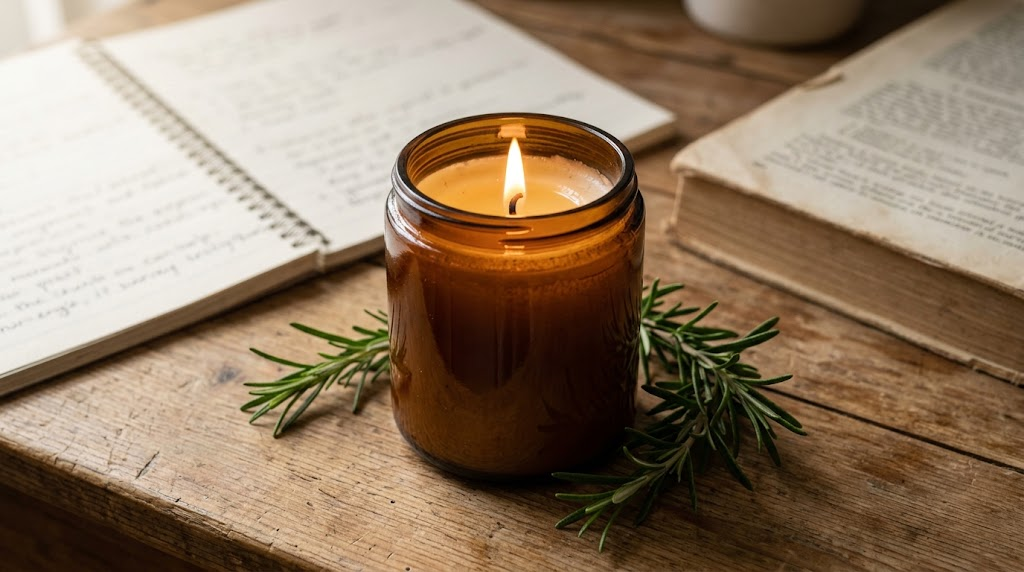
Rosemary
Rosemary is one of the more interesting options for memory-focused study sessions, mainly because aroma-exposure research has looked into its relationship with memory and alertness. That is a big part of why it comes up so often in this exact search. It is herbal and a little sharp, not a scent that fades quietly into the background, which can actually help when you are trying to stay engaged with material you need to remember rather than skim once.
For a look at how to pair a scent like this with a routine that actually holds up past the first week of a semester, Easygrader’s guide to secret study tips is worth a read alongside this one.
Peppermint
Peppermint is the scent people reach for around that specific mid afternoon slump. It is cool and crisp, and lighting it mid session genuinely feels like hitting a small reset button. It does not need to burn the whole time, mostly just when the fog rolls in.
Lemon, Orange and Grapefruit
Lemon, orange and grapefruit are popular choices when you want a bright, fresh-feeling study environment, especially at the start of a study block you have been putting off. Something about a citrus smell makes a room feel more awake, and a task feel slightly less dreadful to begin.
Orange and grapefruit make a reasonable substitute if lemon feels too sharp or medicinal for your taste. The practical rule here is simple. Pick the citrus profile you actually enjoy, because a fragrance you find unpleasant becomes its own distraction regardless of what any study says about the category.
Eucalyptus
Eucalyptus has a sharper, fresher profile than citrus, so some people genuinely prefer it when they want their study space to feel particularly fresh rather than just bright. It works especially well if your study space happens to double as your everyday living space too.
Cedarwood and Sandalwood
Cedarwood and sandalwood are woody, earthy scents that don’t really try to energize you so much as keep you steady. For a long reading or writing session where you’d rather not have a fragrance competing for attention, either one tends to sit quietly in the background instead of demanding notice the way mint or citrus will.
Lavender
Lavender deserves an honest caveat here. It’s a relaxation scent first, and a focus scent a distant second, if we’re being fair about it. It genuinely helps with winding down after a session or easing pre-exam nerves, but if the actual goal is staying alert through a two-hour block, it’s probably not the right tool for that particular job.
Coffee
Coffee is worth mentioning too, mainly because it comes up so often in candle discussions around study spaces. The smell is tied to alertness and familiarity for a lot of people, simply through association more than anything chemical. It’s worth being clear, though — smelling coffee isn’t the same thing as drinking it. A coffee-scented candle won’t deliver any actual caffeine, and it’s best thought of as a mood cue rather than a stimulant.
What Does the Research Actually Say?
Because smell is so closely tied to the brain systems involved in memory and emotion, a familiar scent can shift your mood or attention pretty quickly. Research on rosemary, peppermint, and lemon has looked into how these aromas affect attention and memory-related tasks, and honestly, results vary quite a bit depending on the specific scent, its concentration, and how it’s actually released into the room.
One distinction worth keeping in mind: evidence about a fragrance or essential oil doesn’t automatically prove that a scented candle containing that same fragrance produces the same effect. A candle changes how the aroma gets released compared to an essential oil diffuser or a direct exposure study, and commercial products vary a lot in fragrance concentration and formulation. So really, treat a candle as a pleasant, low-effort addition to a study environment — not some proven performance tool.
Personal preference matters more than most articles admit, too. A scent you dislike is more likely to distract you than help you, no matter what a controlled study found in a lab setting far removed from your actual desk.
For anyone who wants to look past candle marketing and read something grounded in actual research, the National Center for Complementary and Integrative Health’s overview of aromatherapy is a solid, credible starting point.
What Scent Is Best for Focusing?
There is no universally proven best scent for focus. Rosemary and peppermint are popular choices for alertness-oriented study sessions, while lemon and other citrus scents may suit people who prefer a brighter environment. The best option is ultimately the fragrance you find pleasant without it becoming distracting, since a scent working against your own preference is unlikely to help no matter what a study claims.
Which Scent Should You Choose for Which Study Task?
If you are tired, peppermint. If you are memorizing something, rosemary. If you cannot get started, lemon or citrus. If you are reading for hours, cedarwood. If you are writing late at night, sandalwood. If you are anxious before an exam, lavender. If you are mentally foggy, eucalyptus. Matching the scent to the actual task tends to work better than picking one favorite and burning it for everything.
Are Candles Good for Studying?
Reasonably, yes, mostly through consistency and mood rather than any guaranteed cognitive boost. A candle helps build a repeatable ritual and a pleasant environment, and some research suggests certain aromas may influence attention and mood. It is a supporting habit though, not a replacement for sleep, breaks, or an actual plan for the material you need to learn.
Candles vs. Essential Oil Diffusers
Diffusers offer more control over intensity and skip the open flame entirely, which matters for long sessions where you would rather not think about a candle burning unattended. Candles bring warmth and a small ritual element a diffuser does not really replicate. Neither is objectively better for studying. Pick based on your space and which one you will actually use consistently, since consistency is doing more of the work here than the delivery method.
How Strong Should a Study Candle Be?
Noticeable, not demanding. That’s the balance to aim for. A study candle’s whole point is sitting quietly in the background — it shouldn’t fill the room with something you can’t ignore. Catch yourself thinking about the smell more than your notes? That’s your sign. Either it’s too strong, or it’s sitting too close to your desk. Across the room usually beats right next to your laptop, every time.
Building a Study Ritual Around a Candle
The scent itself matters less than most people think. What actually matters is the habit built around it. Light it five, maybe ten minutes before you sit down — give the room time to settle into the fragrance first. Smell ties in pretty directly with the brain’s memory and emotion systems, so a familiar study scent can, over time, just become part of the routine. Doesn’t matter what it’s doing chemically. That association alone is worth building. When the session’s done, blow it out. Small signal. You’re finished.
If you are building out a fuller study setup beyond candles, Easygrader’s roundup of the best online study tools is a solid next stop.
How to Choose a Candle for Studying
A few practical details matter more here than people usually expect. Soy wax burns cleaner and cooler than paraffin, which is genuinely worth considering if you’re sitting close to the candle for hours at a stretch. Beeswax burns slowly and carries a faint, honey-like scent of its own — one that can either complement or compete with the fragrance oil, depending on how strongly scented it is. Cotton wicks burn predictably enough, while wooden wicks add a soft crackle some people find calming and others find, honestly, a bit distracting.
For a normal study block, you don’t actually need to keep a candle burning the entire session. Light it for part of the time — especially at the start, while you’re settling in — and put it out whenever you step out of the room, even briefly. A candle meant for short bursts doesn’t need the same lifespan as one built to burn through a full afternoon, so it’s worth matching the jar size to how often you’ll actually use it.
A Note on Fragrance Sensitivity
Not everyone should be reaching for a strongly scented candle in the first place, and it is worth saying plainly rather than skipping past. Some people get headaches or feel foggier, not clearer, around strong fragrances. Shared study spaces, poor ventilation, and the presence of pets or young children around an open flame are all reasons to go lighter on scent or skip a candle altogether in favor of a diffuser or nothing at all. If a scent has ever triggered a headache or discomfort for you before, that is worth taking seriously over any claim about its supposed benefits for focus.
Candle Safety While Studying
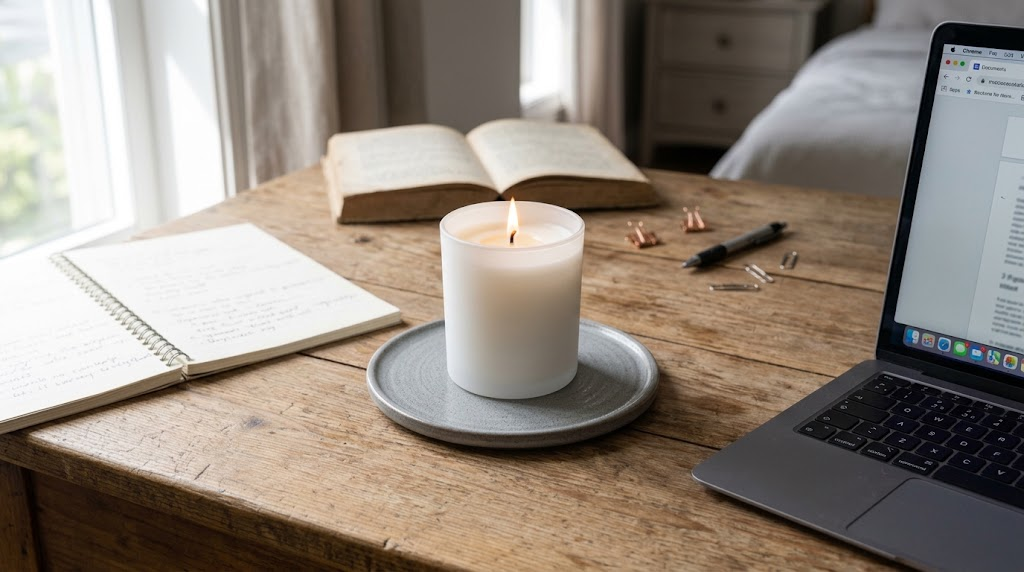
Keep it well away from books, papers, and anything else flammable. Use a stable, heat-resistant surface, and never leave it burning unattended — especially during a long session where you might step away and genuinely lose track of time. Keep it clear of curtains and laptop vents, put it out before leaving the room, and make sure the space actually has reasonable ventilation. If you already know you’ll be gone for stretches during a study session, a diffuser is honestly the safer choice over an open flame.
Common Mistakes With Study Candles
Burning a candle too close to a laptop or desk lamp means heat competes with electronics and the scent hits too strong, too fast. Switching scents every single session defeats the ritual building effect, since consistency is what trains your brain to link a smell with focus in the first place. And leaning on the candle to do work that sleep, breaks and a real study plan should be doing is probably the biggest mistake of all. A pleasant smell can support a good habit. It cannot replace one.
Frequently Asked Questions
What are the best scented candles for studying, focus and concentration?
Rosemary, peppermint and lemon are the most commonly recommended, with cedarwood and sandalwood as calmer options for longer sessions.
Are candles good for studying?
They can help, mainly through building a consistent ritual and a pleasant environment, though they support a study routine rather than replacing one.
What candle scent is good for studying?
Rosemary for memory heavy revision, peppermint for an afternoon slump, and lemon or citrus for starting a session.
Which scented candles are best for studying?
There is no single best option. Rosemary, peppermint, lemon, eucalyptus, cedarwood and sandalwood each suit different tasks and times of day.
How strong should a study candle be?
Noticeable but not distracting. If the smell pulls your focus away from your notes, it is too strong.
Before making a candle part of a regular study routine, it is worth a quick read of the National Fire Protection Association’s candle safety guidance.
Final Thoughts
No candle turns a genuinely difficult study session into an easy one, honestly. That still comes down to sleep, breaks, and an actual plan for the material you’re working through. But the best scented candles for studying, focus and concentration can still help set the tone: rosemary for memory work, peppermint for the slump, citrus to get moving, cedarwood or sandalwood for the long haul. Pick whatever fits the task, keep it in the background, and let it do a small, honest job — not an impossible one.