

An organization can be understood as a system because its people, processes, resources, technology, and departments all depend on one another. A decision made in one part of the organization can create effects somewhere else entirely, often in ways managers don’t notice until much later.
The basic idea is actually pretty simple: an organization takes in inputs people, money, information, materials, technology transforms them through internal processes, and produces outputs like products, services, revenue, and customer experiences. Feedback from customers, employees, suppliers, and the wider market then helps the organization figure out what to adjust next.
This is essentially what it means to view an organization as a system. Instead of treating departments as isolated units, the systems approach looks at how the parts actually interact, how problems move through the organization, and how the organization responds to changes happening in its environment.
What Does “Organization as a System” Really Mean?
Thinking of an organization as a system flips the question. Instead of “who messed up,” you start asking “what’s connected to what.” A change in staffing, a new supplier, a shift in customer expectations none of it stays neatly contained to the department where it started. It travels through the organization the way water travels through connected pipes, quiet and unnoticed, until something downstream finally backs up.
This way of looking at organizations has shaped management thinking for decades, W. Edwards Deming’s work among them, since he pushed for understanding interconnected processes instead of pinning blame on individual workers for problems the system itself had created. That basic insight check the structure before you go hunting for someone to blame still holds true.
How an Organization Works as a System: Inputs, Processes, Outputs and Feedback
Most organizations can be understood through the same basic input, process, output, and feedback model, regardless of their size or industry.
| Component | What It Means | Example |
|---|---|---|
| Inputs | Resources entering the organization | People, money, information, materials, technology |
| Processes | Activities that transform inputs | Production, communication, decision making |
| Outputs | What the organization produces | Products, services, revenue |
| Feedback | Information used to adjust the system | Reviews, complaints, sales data |
| Environment | External forces affecting the system | Customers, competitors, regulators |
Inputs are whatever the organization needs to function, including employees, capital, technology, raw materials, and the knowledge sitting in people’s heads. Inputs are not only physical. Market signals and customer requirements count too.
Processes, sometimes called throughputs, are the actual work. They include decisions, communication, production steps, and customer interactions. This is where inputs get transformed into something useful.
Outputs are what the world sees, such as the finished product, completed service, or customer experience. Outputs are countable and immediate, which is exactly why organizations tend to focus on them and overlook what comes next.
Feedback is information the system needs in order to correct itself. Complaints, satisfaction scores, sales dips, and employee turnover can all provide useful feedback. Ignore it long enough, and small problems can become much harder to trace back.
It is also worth separating outputs from outcomes. An output is what the system produces, such as 10,000 units shipped in a quarter. An outcome is what actually happens as a result, such as whether customers were satisfied enough to return.
An organization can hit every output target and still lose the outcome that matters most, repeat business, if quality slips somewhere along the way.
The Basic Organizational System Model
It helps to picture the model as a loop rather than a straight line:
Environment → Inputs → Processes → Outputs → Outcomes → Feedback → Adjustment
Take a software company. Customer requirements, funding, employee skills, and technology enter as inputs. Teams transform those inputs through research, design, development, and testing.
The output is new software, while customer usage, support tickets, reviews, and revenue provide feedback that shapes the next development cycle. The organization is not running a straight assembly line. It is running a loop that keeps learning from itself.
Why Organizations Are Considered Open Systems
In practice, organizations are generally treated as open systems rather than completely closed ones, mainly because they’re constantly exchanging resources, information, and feedback with whatever’s around them.
That’s why organizations often get described as open systems in the first place. They’re always trading resources and information with customers, suppliers, competitors, regulators, and the broader economy — it never really stops.
A restaurant that ignores rising ingredient costs, shifting customer tastes, or a new competitor opening across the street isn’t being focused. It’s being blind.
The Organizational Environment
The environment is not just background noise. It becomes part of the decision making system itself.
It typically includes:
- Customers
- Competitors
- Regulators
- The broader economy
- Labor markets
- Technology changes
- Suppliers
A new regulation can force a process to change overnight. A competitor’s price cut can force a strategy rethink within a week.
Supplier relationships belong in that external environment as well — supplier quality, reliability, and communication all feed directly into what happens inside the organization. Something as small as a delayed shipment, or a quality slip upstream, and before long it’s turning into a customer complaint downstream.

Strong supplier relationships are one of the clearest examples of how the external environment feeds directly into internal performance.
Organizations as Systems of Interconnected Subsystems
An organization is not one single system. It is a system made of smaller systems.
A subsystem is a smaller system within the larger organization, such as:
- HR
- Finance
- Marketing
- Operations
- IT
Each one runs its own version of inputs, processes, outputs, and feedback.
HR takes in workforce needs, runs recruiting and training as its process, and produces trained employees as its output. Those employees become an input for operations.
Operations turns them, along with materials, into finished goods, which become inputs for sales. Sales generates revenue and customer data, which becomes feedback for finance and strategy.
Nothing in that chain sits alone.

Organization as a System Example
Seeing the model applied across different types of organizations makes it easier to recognize in practice.
Manufacturing Organization
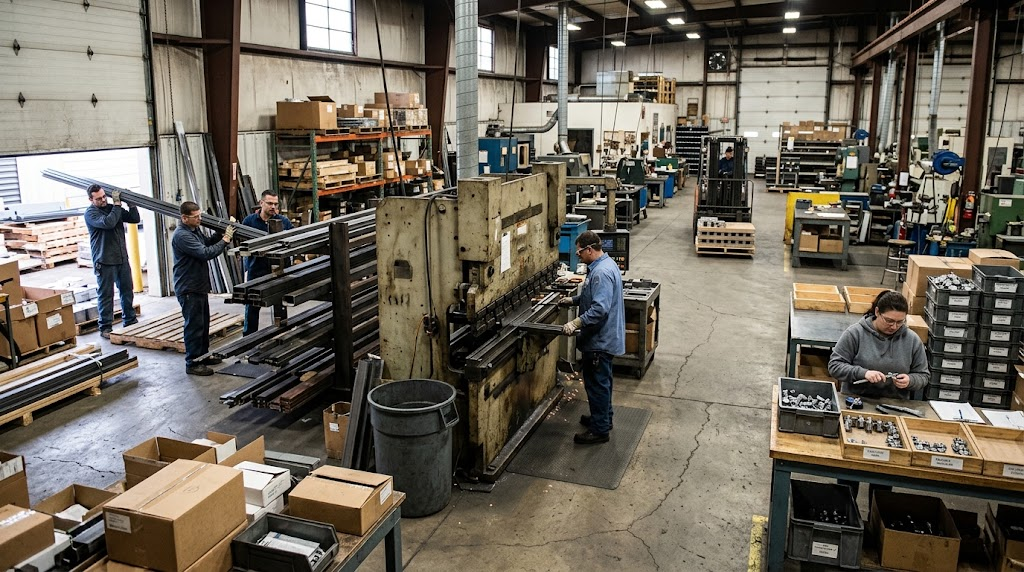
A furniture manufacturer’s inputs are lumber, hardware, skilled labor, and machinery. Its processes are cutting, assembly, quality checks, and shipping coordination.
Its output is finished furniture and revenue. Its feedback comes from return rates and retailer complaints.
When returns spike because of scratched finishes, a systems minded manager does not just retrain the packing team. They check whether the issue started upstream, perhaps with a supplier or an overdue machine.
Service Organization
A hotel’s inputs include employees, rooms, technology, and bookings. Its processes are reservations, housekeeping, and guest support — the stuff running quietly behind the scenes.
Its outputs are completed stays, while its outcomes come down to guest satisfaction and repeat bookings.
If reviews start slipping, the cause could be delayed housekeeping or a staffing shortage somewhere in the mix. Funny thing is, the guest experiences the hotel as one single system, even though it’s actually managed department by department behind the scenes.
Software Organization
A software company’s inputs are customer requirements and developer talent.
Its processes are design, coding, and testing. Its output is the product itself. Its outcome is whether customer retention and revenue actually improve.
Usage data and support tickets feed back into the next release cycle.
Business Organization as a System
Marketing promises a delivery date. Operations cannot hit it because a machine broke down the previous week. Customer service takes the heat for both. Finance eventually notices refunds eating into the margin.
Sales, operations, finance, and customer service are not isolated units.
A problem in one department can create consequences across the wider organization, even when that department did nothing wrong.
Organizational Systems in Strategic Management
In strategic management, viewing the organization as a system helps leaders connect business goals with people, processes, resources, and external conditions instead of setting strategy for one department in isolation.
Leadership sets a goal, such as expanding into a new market. That goal travels downward. Strategy decides the approach, structure decides who owns each piece of it, roles get defined, and processes get built or adjusted.
Skip any one of those links and the goal can remain a slide in a presentation instead of becoming real work.
Core Characteristics of an Organizational System
Interdependency
No department produces value entirely on its own. One team’s output is often another team’s input.
Synergy
Coordinated teams can produce more value than the same people working in isolation.
Environmental Interaction
The organization is constantly shaped by, and shaping, what is happening outside its walls.
Holistic Problem Solving
Instead of asking who to blame, systems thinking asks what structure allowed the problem to happen.
Adaptability
Organizations that survive changing markets are built to adapt rather than remain completely rigid.
Components of an Organizational System
The input, process, output, and feedback model explains how an organization operates. Its broader components explain what the system is made of.
These include:
- People
- Structure
- Processes
- Technology
- Culture
- Strategy
- Resources
None of these operate independently. Change the technology, and culture may eventually shift too. Change the structure, and communication patterns may change with it.
An organization is also a social system because people, relationships, communication, and shared expectations influence how work actually gets done.
Two companies can have nearly identical technology and formal structures but perform very differently because their cultures and informal relationships differ.
Formal and Informal Organizational Systems
Every organization runs on two systems at once.
The formal system is documented. It includes roles, reporting lines, policies, and official decision making authority.
The informal system is everything else — relationships, unofficial communication channels, and the workplace habits that never made it onto paper.
An employee might officially report to one manager, but honestly, they often rely on a completely different colleague for the information that actually gets their job done.
A well-designed formal structure can still stall out if the informal network quietly discourages people from speaking up.
Organizational Boundaries
Every system needs a boundary, even a fuzzy one that part doesn’t really change.
Inside it sit the employees, departments, and technology the organization directly controls. Outside it sit suppliers, customers, competitors, and regulators forces the organization can nudge and influence, sure, but never fully control.
That boundary is not sealed. Resources and information cross it constantly, which is exactly why the organization functions as an open system.
Organizational Structure as Part of the System
Structure is one piece of the bigger system, not the whole picture.
A functional structure groups people by specialty.
A matrix structure has dual reporting lines.
Divisional structures split the organization by product or region.
Flat structures reduce middle management layers.
Hierarchical structures use a clear top down chain of authority.
None of these structures is automatically correct. The right choice depends on what the rest of the system actually needs.
Organizational structure is only one component of the wider organizational system.
Organizational System vs. Organizational Structure
| Organizational System | Organizational Structure |
|---|---|
| The whole organization, including people, processes, technology, culture, and strategy | One part of the organization focused on roles and reporting lines |
| Focuses on how different parts interact | Focuses on how authority is arranged |
| Dynamic and constantly changing | Usually more formally defined |
| Answers “How does the organization function?” | Answers “Who reports to whom?” |
Organizational System vs. Design vs. Systems Thinking
These terms get used interchangeably, but they are not the same.
Organizational structure is the formal roles and reporting relationships.
Organizational system is the interconnected web that actually makes the organization function.
Organizational design is the deliberate process of shaping those elements toward specific goals.
Systems thinking is the way leaders analyze the relationships, feedback, and consequences running through all of it.
Systems thinking is the lens, not the object being examined.
Efficiency vs. Effectiveness in an Organizational System
Efficiency asks whether resources are being used well.
Effectiveness asks whether the organization is actually getting the result it wanted.
A call center answering 100 calls an hour is efficient. If every call ends in an unresolved complaint, the system is not effective.
Chasing efficiency alone can sometimes make effectiveness worse.
Unintended Consequences and Feedback Loops
A company cuts customer service staff to reduce costs. Payroll drops, exactly as planned.
But response times climb, complaints pile up, and customer retention quietly erodes over the following quarters.
Nobody decided to lose customers. One decision simply rippled through parts of the system that nobody was watching.
Common Systems Patterns in Organizations
Several patterns appear often enough to be recognizable.
Shifting the burden occurs when a quick fix hides a symptom while the underlying cause continues getting worse.
Fixes that fail occur when an intervention helps temporarily but creates a delayed consequence that brings the problem back.
Success to the successful occurs when resources continue flowing to a team that is already performing well, potentially starving other teams.
Limits to growth occur when expansion continues until some constraint, such as capacity, talent, or demand, slows it down.
Leverage Points in Organizational Systems
Not every problem needs a complete overhaul.
Sometimes the highest impact fix is small, such as changing an incentive, improving information flow between two teams, or shifting a single goal.
The concept of leverage points is closely associated with systems thinker Donella Meadows. Her work on places to intervene in a system explains where a small, well aimed change can produce a disproportionately large result.
If customer complaints are rising, hiring more agents treats the symptom. Fixing the confusing process that actually generates those complaints may address the deeper problem.
Time Delays and Cause and Effect in Organizations
Cause and effect in an organization rarely happen on the same day.
A company might roll out training in January and expect results by February. If productivity has not changed by the second week, someone may declare the program a failure.
Training effects can take months to appear.
Judging a system change too early is one of the common mistakes in management.
Why Organizational Systems Fail
Most breakdowns trace back to a relatively short list:
- Unclear accountability
- Poor communication between departments
- Conflicting incentives
- Weak feedback loops
- Outdated processes
- A strategy that was announced but never translated into structure or day to day work
Rarely is it one dramatic failure. Usually, several small disconnects compound quietly.
Systemic Problems vs. Individual Problems
Systems thinking does not mean nobody is ever accountable.
If one employee makes a rare error despite clear training, individual accountability may be appropriate.
If dozens of employees keep making the same mistake, the system deserves a closer look first.
The real question is whether the organization created conditions that make an error likely to happen again.
Organizational Resilience as a System Property
A resilient organization is not simply one that survives a crisis. It is one capable of absorbing disruption and still delivering on what matters most.
Resilience can come from:
- Diversified suppliers
- Cross trained employees
- Reliable information flow
- Effective feedback mechanisms
It is rarely located in one department. It emerges from how the parts respond together when normal conditions stop being normal.
How to Build or Improve an Organizational System
1. Define the Purpose and Goals
Determine what the organization is actually trying to achieve.
2. Map Roles and Responsibilities
Identify who owns what and who is accountable.
3. Map the Major Processes
Understand how work actually moves from start to finish.
4. Set Up Communication and Decision Paths
Determine who needs to know what information and how quickly they need it.
5. Build Performance Measures and Feedback Loops
Identify what data can show whether the system is working.
6. Review and Adjust Regularly
A system that never gets revisited can slowly drift out of sync with reality.
This is where continuous improvement matters for every organisation. A system needs regular review because people, processes, technology, and external conditions continue changing.
Why Viewing an Organization as a System Actually Matters
Leaders who apply systems thinking can catch bottlenecks earlier because they are watching connections instead of only department reports.
They can communicate across silos more effectively and, when something breaks, look for structural causes instead of immediately searching for a scapegoat.
There is a limit, however. Systems can become complicated, and feedback loops can take months to surface.
Systems thinking is a better lens, not a guarantee.
Systems Thinking vs. the Traditional View
| Traditional View | Systems View |
|---|---|
| Departments handled separately | Departments seen as connected |
| Failures attributed to individuals | The structure behind failures is examined |
| Quick, isolated fixes | Long term, connected solutions |
| Static organizational view | Dynamic, evolving view |
If you have ever sat through a meeting where everyone agreed on a fix, applied it, and watched the same problem resurface three months later, that is often a traditional fix applied to a systems problem.
Frequently Asked Questions
What is an organization as a system?
An organization as a system is a way of understanding a business as a network of connected inputs, processes, outputs, and feedback loops rather than a collection of separate, unrelated departments.
What are the four main components of an organization as a system?
The four main components are inputs, processes, outputs, and feedback. Resources enter the organization, are transformed through work, produce results, and those results provide information that can influence future decisions.
Why is an organization considered an open system?
An organization is considered an open system because it constantly exchanges resources and information with the outside world, including customers, suppliers, competitors, regulators, and the broader economy.
What is an example of an organization as a system?
A manufacturing company is a simple example. Raw materials and labor enter the organization, production and quality checks happen in the middle, finished goods come out, and customer feedback influences what happens next.
What is the difference between organizational structure and an organizational system?
Organizational structure is one part of the organization and focuses mainly on reporting lines, roles, and authority. The organizational system is the broader picture, including structure, people, processes, culture, technology, and strategy.
What are subsystems in an organizational system?
Subsystems are smaller systems within the larger organization. HR, finance, operations, marketing, and IT can each function as subsystems with their own inputs, processes, outputs, and feedback.
What is a leverage point in an organizational system?
A leverage point is a specific place within a system where a targeted change can create a much larger effect. Examples include changing incentives or improving information flow between departments.
What are the types of organizational systems?
Organizational systems can be classified in different ways, including open and closed systems, formal and informal systems, and systems made up of interconnected subsystems such as HR, finance, and operations. Most modern organizations function as open systems because they constantly interact with their external environment.
What is an organization as an open system?
An organization as an open system continuously exchanges resources, information, people, money, and feedback with its external environment. Customers, suppliers, competitors, regulators, and economic conditions can all influence how the organization operates.
How does the systems approach help in strategic management?
The systems approach shows how goals, people, resources, processes, technology, and external conditions influence one another. This helps leaders consider how a strategic decision may affect the organization as a whole rather than focusing on one department in isolation.
Final Thought
Viewing an organization as a system changes how problems are understood.
Instead of treating departments, employees, processes, or technologies as isolated pieces, the systems approach looks at how they influence one another.
The core model is straightforward: organizations take in inputs, transform them through processes, produce outputs and outcomes, and use feedback to adjust what happens next.
Because organizations are open systems, those adjustments are also shaped by customers, suppliers, competitors, technology, regulations, and wider economic conditions.
The real value of systems thinking is not simply understanding how an organization is structured. It is understanding why a change in one part of the organization can create consequences somewhere else entirely.
That perspective helps leaders identify root causes, coordinate departments, and make better long term decisions.