
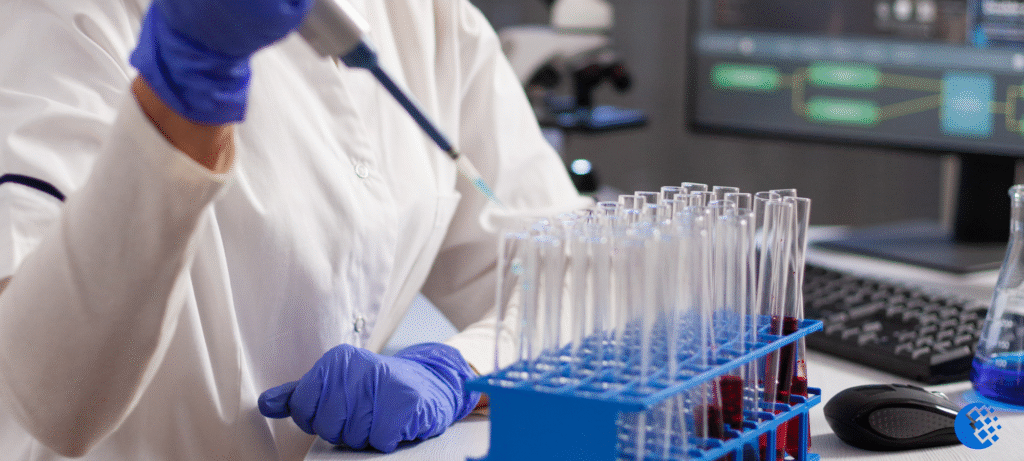
In vitro ADME can predict drug candidate success to a meaningful degree because it reveals how a compound is absorbed, distributed, metabolized, and excreted before costly animal studies or clinical trials begin. These studies help teams identify liabilities such as poor permeability, rapid metabolic clearance, low solubility, transporter interactions, and CYP inhibition early enough to improve or stop a program. While no laboratory panel can guarantee clinical success, in vitro ADME provides decision-ready evidence that strongly influences candidate selection and risk assessment. When used alongside pharmacology, physicochemical profiling, and safety assays, it improves the probability that the most balanced molecules advance. For drug developers, the value is practical: fewer late-stage failures, faster optimization cycles, and a clearer understanding of whether a candidate has development potential.
Why Drug Developers Evaluate ADME Early
The role of ADME in modern drug discovery decisions
ADME evaluation now sits at the center of discovery strategy because potency alone rarely predicts whether a molecule can become a viable medicine. Drug developers need compounds that reach the target tissue, remain in circulation long enough to act, avoid problematic metabolism, and clear in a manageable way. Early in vitro ADME data helps teams rank compounds using measurable properties such as metabolic stability, protein binding, permeability, and solubility. These results guide medicinal chemistry by showing which structural features improve exposure and which introduce risk. They also support project triage by identifying molecules with favorable developability profiles. In modern decision-making, ADME is not a secondary screen; it is a core filter that shapes which candidates deserve further investment and optimization.
Why early prediction matters for candidate selection
Early prediction matters because many development failures begin as recognizable liabilities in discovery. A compound with excellent target activity may still fail if it is rapidly metabolized, poorly absorbed, or likely to cause drug-drug interactions. In vitro ADME studies expose these weaknesses when chemistry changes are still practical and budgets are still manageable. That timing improves candidate selection by helping researchers prioritize molecules with balanced potency, exposure, and safety-related properties instead of advancing the strongest biochemical hit alone. Early prediction also reduces cycle time because teams can design follow-up analogs around clear property targets. By narrowing the field to compounds with stronger pharmacokinetic prospects, developers improve resource allocation and increase the likelihood that a selected candidate can progress through preclinical development.
How In Vitro ADME Studies Predict Drug Development Potential
Key ADME parameters that influence candidate success
Several in vitro ADME parameters strongly influence whether a drug candidate is likely to succeed. Solubility affects formulation options and oral exposure, while permeability indicates whether a compound can cross biological membranes efficiently. Metabolic stability in liver microsomes or hepatocytes helps estimate clearance and duration of action. Plasma protein binding informs the unbound fraction available for pharmacologic effect. CYP inhibition and induction studies highlight potential drug-drug interaction risks, and transporter assays reveal whether uptake or efflux may limit exposure or drive tissue distribution. Together, these measurements create an early pharmacokinetic picture of the molecule. Candidates with balanced values across these parameters generally offer better development potential than compounds that show a single strength but multiple liabilities likely to affect dosing, exposure, or safety.
Connecting laboratory results with clinical development outcomes
In vitro ADME predicts development outcomes by linking laboratory behavior to the factors that determine human pharmacokinetics and clinical usability. Compounds with low permeability and poor solubility often struggle to achieve consistent oral absorption. Molecules with high intrinsic clearance in microsomes or hepatocytes frequently require higher or more frequent dosing, which can complicate development. Strong CYP inhibition signals possible interaction issues that may narrow clinical utility or require additional studies. Transporter findings can explain limited tissue exposure or unexpected disposition patterns. These connections do not make in vitro ADME a perfect forecast, but they provide a reliable basis for risk ranking and candidate comparison. When interpreted with chemistry and pharmacology data, laboratory results help predict which molecules are more likely to support acceptable exposure, dosing, and tolerability in development.

Improving Candidate Selection With Integrated In Vitro ADME Strategies
Combining ADME data with other drug evaluation approaches
The strongest candidate selection decisions come from integrating in vitro ADME with other discovery data rather than viewing it in isolation. Potency, selectivity, physicochemical properties, in vitro safety findings, and preliminary pharmacokinetic modeling all add context to ADME results. A compound with moderate metabolic stability may still be attractive if it shows exceptional potency, low off-target risk, and a feasible dosing strategy. Likewise, excellent permeability may not compensate for poor selectivity or problematic toxicity signals. Integrated evaluation helps teams understand tradeoffs and choose molecules with the best overall profile, not just the best individual metric. It also improves communication across chemistry, biology, DMPK, and project leadership by creating a shared framework for advancement decisions. This balanced approach leads to more defensible candidate nominations and fewer surprises later.
How specialized in vitro ADME services support better decisions
Specialized In vitro adme services support better decisions by delivering standardized assays, experienced interpretation, and data that can be compared across programs. High-quality service providers help teams assess solubility, permeability, metabolic stability, plasma protein binding, CYP interaction potential, and transporter effects using validated methods and fit-for-purpose study designs. That consistency is especially valuable when timelines are tight or internal capacity is limited. Expert interpretation can also distinguish between manageable liabilities and true advancement risks, helping teams focus chemistry effort where it matters most. In addition, specialized support often improves data integration by aligning ADME outputs with pharmacokinetic modeling and developability goals. For sponsors seeking efficient progression, these services turn individual assay results into actionable guidance that strengthens candidate selection and reduces uncertainty during early development planning.
Conclusion
Yes, in vitro ADME can predict drug candidate success in a practical and decision-relevant way. It does not guarantee clinical outcomes, but it reliably identifies many of the properties that determine whether a compound can achieve useful exposure, acceptable dosing, and a manageable risk profile. By evaluating solubility, permeability, metabolic stability, protein binding, enzyme interactions, and transporter effects early, drug developers can remove weak candidates sooner and improve stronger ones faster. The greatest value comes when ADME findings are interpreted alongside pharmacology, safety, and chemistry data. That integrated view supports smarter candidate selection and better use of development resources. For early discovery teams, in vitro ADME is one of the most effective tools for predicting which molecules are genuinely worth advancing toward preclinical and clinical development.