

Education is changing fast, but honestly, it isn’t always for the better. Even as we move deeper into 2026, many schools and corporate training systems are still clinging to rigid digital platforms that treat every single learner like a carbon copy of the next. At first, this massive shift to digital looked like progress, but it actually birthed a new problem—students are now expected to warp their learning styles to fit the software, rather than the software adapting to them.
This is exactly the gap that custom edtech apps are filling. Instead of forcing a thousand different minds into one “standard” box, these tools are built from the ground up based on actual classroom behavior and the messy, non-linear reality of how people actually learn.
Why Traditional Tools are Falling Behind
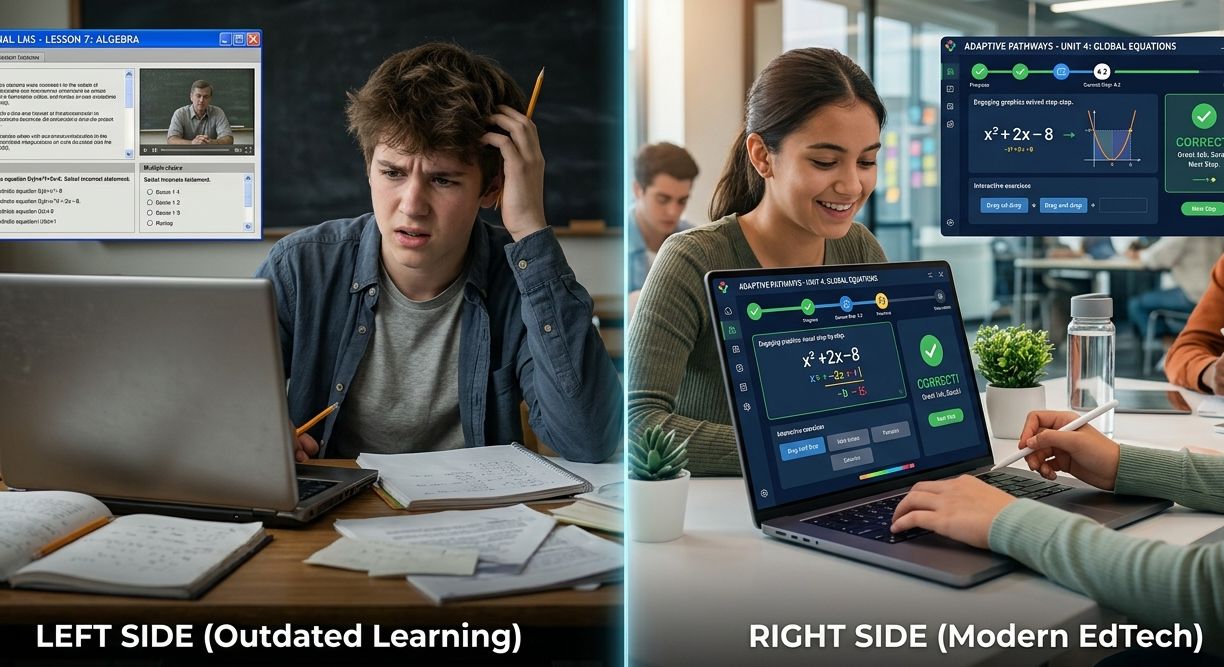
Most off-the-shelf learning platforms were designed for convenience, not pedagogy. The goal was simple: one system to rule them all—every school, every subject, every age group. But as any teacher will tell you, learning is never that straightforward.
A student struggling to isolate variables in a math problem might need the granular, step-by-step logic found in the lesson 3.4 solving complex 1-variable equations answer key, while another student might grasp the same concept instantly through a 3D visual simulation. Generic platforms just can’t handle that level of nuance. They either move too fast, leaving students confused, or too slow, leaving them bored—both of which kill the drive to learn.
The Benefits of Customizing EdTech Apps for Specific Needs
The philosophy behind a specialized build is refreshingly simple: technology should be invisible. It shouldn’t be a hurdle the student has to jump over. Whether it’s a tutoring platform or a high-level corporate training tool, the structure needs to be unique to the use case.
Instead of a generic interface, custom builds are shaped by:
- Natural Learning Behavior: How students actually interact with content.
- Instructor Style: Matching the digital experience to the teacher’s unique voice.
- Subject Complexity: A history app shouldn’t function like a chemistry lab.
Why 2026 Demands Personalization
In today’s world, attention is the most expensive commodity. With distractions just a notification away, personalization isn’t a “premium feature” anymore—it’s the foundation of modern education.
A smart custom edtech app functions like a 24/7 personal tutor. It adjusts difficulty on the fly, recommends extra practice in weak areas before the student even realizes they are stuck, and tracks real progress instead of just a flat letter grade. This is where true engagement happens.
Logic Over Graphics: What Customization Really Means
Many people think personalizing software is just about picking a nice font or adding a school logo. That’s a very surface-level view. Real customization happens in the “brain” of the app—the logic.
For example:
- Math Apps: Prioritizing scratchpad logic and instant error correction.
- History/Social Studies: Using narrative storytelling or visual aids, similar to a Boston Massacre easy drawing style of explanation, to make memory retention feel effortless.
- Corporate Training: Focusing on skill-mapping and industry certifications.
The Strategic Value of a Custom Native Mobile App Development Firm for EdTech
We have officially moved past the era where learning was tied to a desk. In 2026, the phone in a student’s pocket is their primary classroom. This shift is why many institutions now exclusively seek out a custom native mobile app development firm for edtech.
Native apps—those built specifically for iOS or Android—offer a much smoother experience. They provide better offline support for students in areas with patchy internet and much stronger security for sensitive data. When an app is slow or laggy, the student checks out instantly. Native development prevents that friction.
Features That Matter in the Real World
In a real classroom, you don’t need a hundred bells and whistles. You need a few things that work perfectly every time:
- Adaptive Paths: The system “learns” the student and changes the roadmap automatically.
- Clean Dashboards: Teachers need to see who is struggling in five seconds, not five minutes.
- Interactive Simulations: Keeping hands-on learners engaged.
- Offline Access: Crucial for equity in rural or under-connected areas.
- Instant Feedback: Because waiting three days for a grade means the learning moment has already passed.
Ownership vs. Subscription
Schools are finally waking up to the fact that subscription software is a money pit. As student numbers grow, those per-user fees become unsustainable. With a custom build, the institution owns the engine. This leads to better long-term cost control, full data ownership, and a platform that scales without adding “bloatware” features you’ll never use.
Prioritizing Intuitive User Experiences
At the end of the day, education is about the connection between teaching and understanding, not just lines of code. Students want clarity; teachers want to teach, not manage complex software. Modern systems are designed to make instructors more effective, not replace the personal touch of a guide. It turns a piece of software into a supportive environment that encourages curiosity rather than frustration.
Furthermore, the shift toward personalization aligns with global goals for inclusive and equitable quality education, ensuring that every learner, regardless of their background, has access to tools that fit their pace. This attention to detail transforms a simple digital tool into a truly empowering academic resource that supports the growth of both the student and the institution.
Final Thoughts
The future of education isn’t about adding more “stuff” to a screen. It’s about making the tools we have smarter, more intuitive, and deeply personal. Custom solutions represent a move away from the rigid systems of the past toward a more flexible, student-centered world. When you build technology around the actual experience of learning, it doesn’t just happen—it thrives.