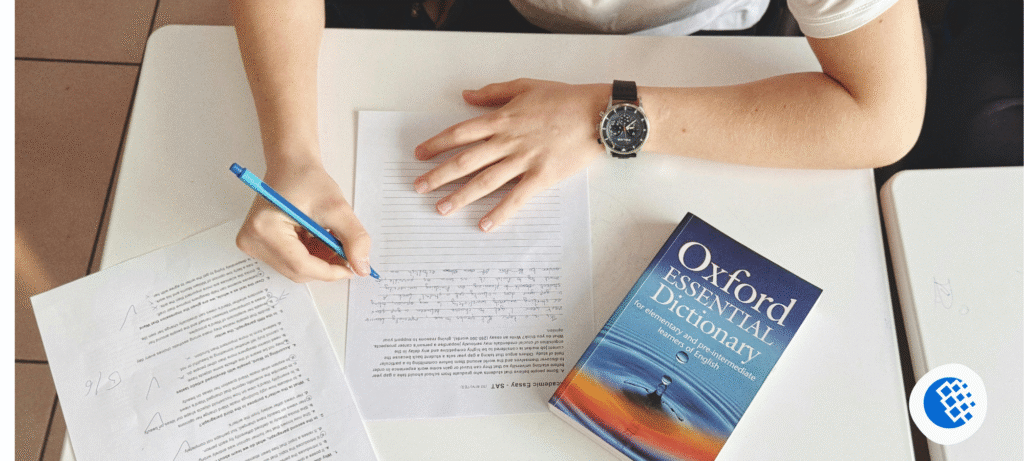
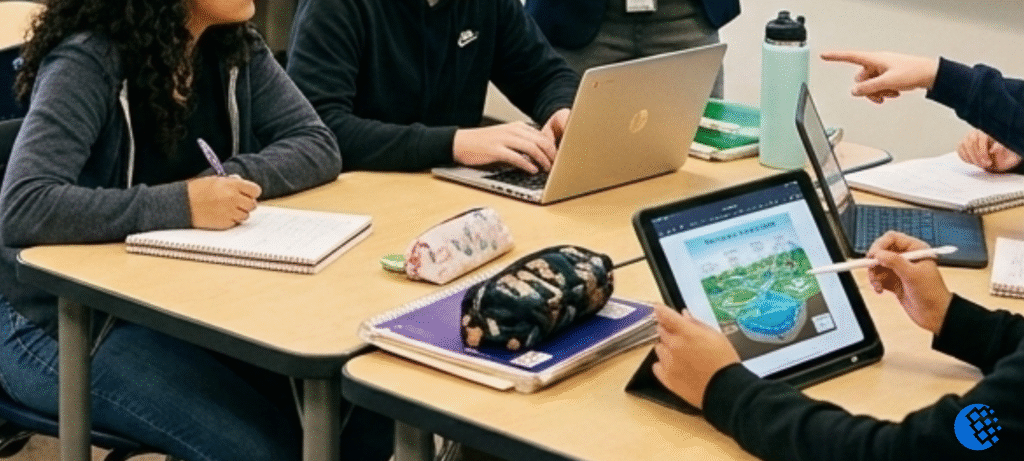
If you step into a modern classroom today, you won’t just see rows of desks facing a chalkboard. You are more likely to see a chaotic, vibrant blend of digital and physical workspaces. The rigid, lecture-heavy templates of the past are crumbling, and frankly, it is about time. The real shift, however, isn’t being dictated by a handful of tech-giant executives in boardrooms; it is being shaped by a decentralized, global community of education technology (EdTech) influencers. These individuals are the essential “middlemen” of our time—the ones translating complex algorithms into lessons that actually land with a teenager in a classroom.
Who Are These Influencers, Anyway?
Let’s be honest: the term “influencer” usually brings to mind people showing off lifestyle products on social media. But in EdTech, the definition is vastly different. An EdTech influencer is an observer, a critic, and a guide. They might be a high school science teacher blogging about the ethical pitfalls of generative AI, or a university researcher dissecting how data privacy laws actually impact student outcomes.
They don’t just have “followers.” They have peers. They trade insights through podcasts, messy Twitter (X) threads, academic journals, and conference panels. Their goal is simple: helping the rest of us understand not just which tech is trending, but which tech will actually help a student learn.
Why We Need Them More Than Ever in 2026

We have hit a point where technology is not just an elective—it is the floor upon which the entire school system stands. By 2026, the reliance on digital infrastructure is absolute. But with that reliance comes danger. Influencers act as our filters.
- Busting the “Shiny Object” Syndrome: It is so easy for school boards to throw money at the newest, flashiest gadget. Influencers are the ones who speak up and say, “Wait, does this actually improve learning, or is it just distracting?”
- The Translation Layer: Silicon Valley speaks in code and jargon. Teachers speak in the reality of 30 kids in a room, half of whom are hungry and the other half who are distracted. Influencers translate the former into the latter.
- Fighting the Digital Divide: The most important work these leaders do is pushing back against inequality. They are the ones demanding that as we build these high-tech classrooms, we don’t leave the schools that can’t afford top-tier Wi-Fi in the dust.
The Pioneers Setting the Pace
When we look at who is actually moving the needle, a few names keep surfacing as essential voices in the global discourse:
- Aditi Avasthi (Embibe): She’s not just talking about AI; she’s using it to map the “knowledge gaps” that students often don’t even know they have. It’s about precision learning rather than a “one size fits all” lecture.
- Cindy Mi (VIPKid): She proved that the physical walls of a school were never really necessary for quality education. By connecting students across continents, she showed us that human connection can happen perfectly well over a fiber-optic cable.
- Daphne Koller (Coursera): Long before everyone was talking about online learning, she was pioneering the MOOC movement. Her work fundamentally forced universities to rethink who they were actually serving—only those who could afford campus life, or the whole world?
- Priya Lakhani (CENTURY Tech): Lakhani is a vital voice because she frames AI as a “copilot.” She’s not interested in removing the teacher; she’s interested in removing the paperwork so the teacher can actually teach.
The Current Landscape: Three Shifts That Matter
If you pay attention to the most respected voices in the field right now, they aren’t talking about “computers in the classroom” anymore. They are talking about:
1. From Passive Consumption to Active Dialogue
For years, EdTech meant “watch this video and answer a multiple-choice question.” That’s dead. We are moving toward AI-led dialogues. Imagine a student asking a bot to explain a math concept, but the bot isn’t just reciting a textbook—it’s adapting its tone, its pace, and its examples specifically for that student. Influencers are the ones teaching us how to build these conversations rather than just lecturing.
2. AR and VR: Leaving the Textbook Behind
Augmented Reality (AR) used to be a gimmick. Now, it is a surgical tool for the mind. When an influencer shows a teacher how to use AR to visualize a 3D model of a complex engine or a human heart, the “lightbulb” moment for the student happens in seconds, not hours of reading.
3. The New Ethics of Data
This is the boring but critical part. Influencers are currently obsessing over AI governance. Who owns the student data? Is the algorithm biased? If we are going to integrate these systems, we have to protect the kid, not just the company’s profit margin.
The Reality Check: Hurdles We Can’t Ignore
It is not all progress and smooth transitions. The influencers who are worth their salt are also the ones being brutally honest about the failures.
- The Burnout Cycle: We keep giving teachers more tech, but we aren’t giving them more time. Every time we implement a new “efficiency tool,” we often just add another login, another dashboard, and another layer of stress. Influencers are finally pushing back, calling for systems that actually integrate rather than just stack.
- Access is Still King: We can talk about AI tutors and VR headsets all day, but if a student can’t get reliable internet at home, the gap just gets bigger. This remains the biggest failure of modern EdTech.
- Humanity First: The most consistent message from the best voices is this: Technology should enhance the teacher-student relationship, not mediate it. If you are using a screen to avoid talking to a human, you are doing it wrong.
Connecting the Dots: Learning as a Whole System
The principles we see in digital EdTech aren’t actually that different from other structured learning environments. We see similar logical challenges in Educational Trips to Boston, where safety, logistics, and group management are paramount. If you think about the complexity of planning a large-scale student excursion, you realize that the same organizational “systems thinking” applies to digital classrooms. Similarly, even something as basic as School Bus Rules for Students highlights how structured, reliable systems can influence behavior and safety from a young age—a foundation that EdTech tries to mimic in a digital space.
People Also Ask
- Who are the top EdTech influencers to follow? It varies by sector, but journals like EdTech Digest and EdTech Magazine provide a great pulse on the industry, featuring leaders across K-12 and Higher Education.
- How do teachers use AI without turning into robots? The consensus is clear: Use the machine for the “robotic” work (grading, data entry, planning) so the human has more time to do the emotional, mentorship work that machines can never touch.
- Why is AR still a big deal? Because it turns abstract, “invisible” concepts (like physics or anatomy) into tangible, interactive objects. It bridges the gap between the page and the real world.
Final Thoughts
We are not in a race against the machines. If you view technology as a competitor to the teacher, you’ve already lost. The most influential voices in this space are the ones reminding us that education is a deeply human, messy, and imperfect endeavor.
Technology is merely the ladder. It isn’t the destination. The work of these EdTech influencers is vital because it prevents us from staring at the ladder instead of climbing it. As we push forward into the latter half of the decade, the best tools will be the ones that are invisible—the ones that fade into the background and simply let the teacher and student get back to the actual business of learning.