

For most people, a job is just a paycheck. But for a teacher, it’s a calling. It’s those early mornings spent prepping lesson plans and those late afternoons staying back to help a student finally “get” a difficult concept. You’ve poured years into your education, survived the stress of certification exams, and dedicated your heart to the classroom. Then, out of nowhere, you receive a notice that puts everything at risk. It might start with a misunderstood comment, a frustrated parent’s email, or a sudden change in school policy that you didn’t see coming.
When your professional reputation—and your ability to earn a living—is on the line, an educator license defense lawyer isn’t just a legal representative; they are your most critical ally. These specialists understand that for an educator, a license isn’t just a piece of paper; it’s your entire identity. Losing it can mean the sudden, painful end of a career you spent a lifetime building.
What Does an Educator License Defense Lawyer Actually Do?
You might wonder why a general attorney won’t suffice. The reason is that education law is a unique beast. State education boards operate under a specific set of administrative rules that don’t always mirror the standard courtroom experience. An educator license defense lawyer lives and breathes these regulations.
When a teacher’s credentials are questioned, the state board usually launches an investigation. This isn’t a friendly chat; it’s a formal process where every word you say can be used against you. A defense lawyer steps in to handle the “heavy lifting”:
- Deconstructing the Complaint: They look past the emotional language in a complaint to find the actual legal allegations.
- Drafting Strategic Responses: They ensure your written explanation is professional, legally sound, and doesn’t accidentally admit to things you didn’t do.
- Standing by You in Hearings: If the board decides a disciplinary hearing is necessary, your lawyer is the one presenting evidence and cross-examining witnesses on your behalf.
- Navigating the Interview: They coach you on how to answer investigators’ questions without falling into common verbal traps.
- Fighting for Your Livelihood: Their goal is always to prevent the total revocation or suspension of your license.
One of the biggest mistakes teachers make is waiting too long. Investigations move at a lightning pace, often requiring responses within just a few days. Professional legal advice is most valuable the moment that first letter arrives.
Why Good Teachers Get Investigated
It is a common myth that only “bad” teachers face license reviews. In reality, some of the most dedicated educators find themselves in the crosshairs due to the high-pressure environment of modern schooling.
The “Misconduct” Umbrella
Misconduct is a broad term that boards use for everything from classroom management issues to allegations of inappropriate boundaries. Even if an accusation is completely fabricated, the board is legally required to investigate. It’s a gut-wrenching experience to have your character questioned after years of service.
The Hidden Trap of School Policy
Every district has a mountain of fine print. Sometimes, a teacher violates a minor policy regarding student safety or grading purely by accident. While it might seem like a small internal issue, once it hits the licensing board, it becomes a formal legal threat.
Personal Life vs. Professional License
In many states, what you do on your own time can follow you into the classroom. A DUI, a domestic dispute, or other criminal charges outside of school can trigger a mandatory review of your teaching fitness. A lawyer helps bridge the gap, arguing that a personal mistake shouldn’t disqualify you from your professional calling.
The Power of a Parent’s Complaint
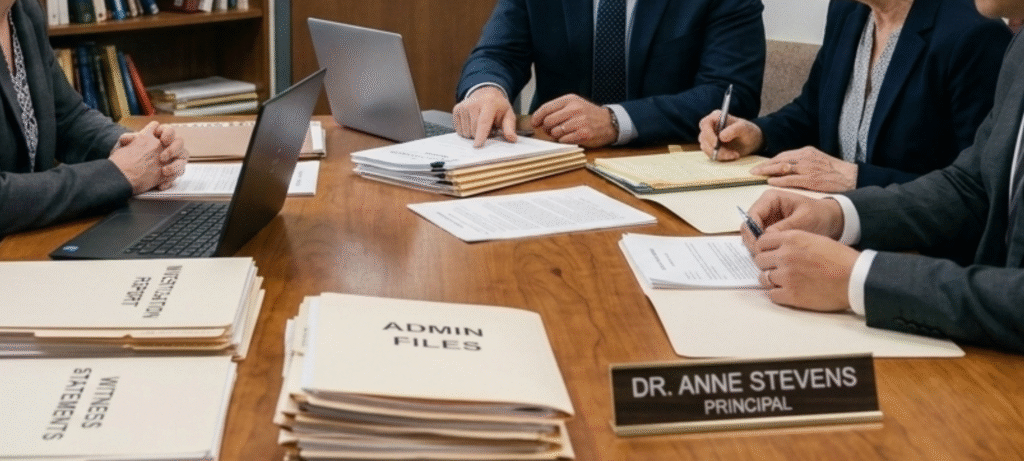
We’ve all dealt with “difficult” parents, but sometimes a misunderstanding over a grade or a disciplinary choice leads a parent to contact the state board directly. When the school-level resolution fails, legal defense becomes your only shield.
How the Investigation Process Unfolds
If you’ve never been through it, the process feels like a black box. Understanding the steps can help take some of the fear out of the unknown:
- The Filing: A complaint is submitted by a parent, administrator, or even a colleague.
- The Triage: The board does a preliminary review to see if the complaint even has merit.
- The Hunt for Evidence: Investigators start digging. They’ll pull your emails, look at classroom logs, and interview anyone involved.
- The Response: This is where you (and your lawyer) submit your side of the story.
- The Final Decision: If the board isn’t satisfied, a disciplinary hearing is held.
The outcomes can vary wildly. You might walk away with a dismissed case, but you could also face a formal warning, probation, or the permanent loss of your credentials.
Why You Shouldn’t “Self-Defend”
As a teacher, your instinct is to be helpful and honest. You might think, “If I just explain what happened, they’ll understand.” Unfortunately, investigators aren’t always looking for the “truth”—they are looking for policy violations.
A statement you think sounds like an explanation might actually be an admission of guilt in the eyes of the board. An educator license defense lawyer acts as a filter. They make sure your response is accurate but protected. They help you avoid:
- Submitting “too much” information that opens new cans of worms.
- Missing a deadline that results in an automatic loss.
- Misinterpreting a legal question that leads to a wrong answer.
Proactive Steps to Shield Your Career
While you can’t prevent every complaint, you can make yourself a “harder target” by following these professional habits:
- Digital Boundaries: Never, ever text or private message students on non-school platforms. It is the #1 way teachers get into trouble today.
- The “Paper” Trail: Keep your own records of difficult parent meetings or classroom incidents.
- Safety First: When you are supervising high-risk activities—like an Educational Trip to Boston or managing School Bus Rules for Students—stick to the district’s safety manual like glue. If an accident happens and you followed the rules, you are much safer.
When to Make the Call
If you feel like you’re being “targeted,” don’t wait for the official letter. You should reach out to an educator license defense lawyer the moment you are:
- Placed on administrative leave.
- Asked to sign a statement about an “incident.”
- Notified of a board investigation.
Choosing the right lawyer is about more than just a search result. Look for someone who understands the National Education Association (NEA) guidelines and knows the local board members. They should be responsive and understand the emotional toll this takes on you.
Final Thoughts
No teacher starts their day thinking they’ll need a lawyer. But in today’s educational climate, protecting your license is just as important as knowing your subject matter. Your career is worth defending.