
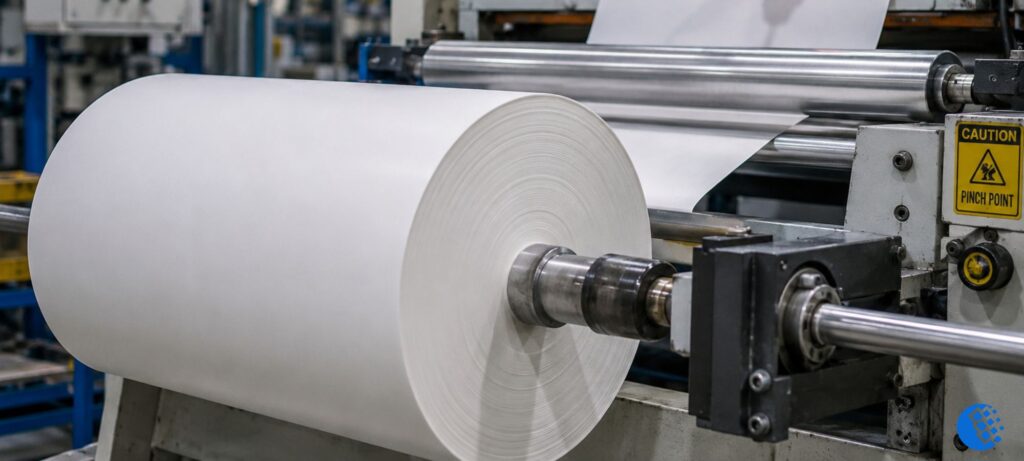
As industries worldwide seek more sustainable packaging solutions, paper-based materials have emerged as a leading alternative to plastic packaging. However, paper alone often lacks the moisture, grease, and vapor resistance needed for many commercial applications. This challenge has driven innovation in coating technologies, particularly through the development of water-based emulsions, which provide functional barrier protection while supporting recyclability and environmental goals.
Emulsion chemistry has become a critical component in the transition toward sustainable packaging. By combining performance, process efficiency, and environmental responsibility, modern emulsion coatings help manufacturers meet increasing consumer and regulatory demands for greener packaging solutions.
Understanding Emulsion Chemistry
An emulsion is a stable mixture of two immiscible substances, typically oil and water, where one liquid is dispersed as microscopic droplets within the other. In coating applications, emulsions allow hydrophobic materials such as waxes, polymers, and resins to be dispersed in water, creating coatings that can be applied easily to paper substrates.
The science behind emulsion chemistry involves carefully balancing surfactants, particle size distribution, and formulation stability. These factors determine how well a coating performs once applied, influencing properties such as:
- Water resistance
- Oil and grease resistance
- Vapor barrier performance
- Adhesion to paper surfaces
- Printability
- Heat sealability
The ability to fine-tune these characteristics makes emulsion technology highly versatile for modern packaging applications.
Why Sustainable Packaging Requires Advanced Coatings
Paper packaging offers significant environmental advantages, but it faces limitations when exposed to moisture, oils, and challenging storage conditions. Food packaging, shipping containers, and consumer goods packaging often require additional protection to maintain product integrity.
Historically, polyethylene (PE) coatings have been widely used to provide these barriers. While effective, PE-coated paper can create recycling challenges because separating the plastic layer from the paper fibers is often difficult and costly.
This has led manufacturers to explore alternative coating technologies that deliver comparable protection while preserving the recyclability of paper packaging. Water-based emulsion coatings have emerged as one of the most promising solutions.
The Role of Water-Based Emulsion Coatings
Modern water-based emulsions provide a sustainable approach to enhancing paper packaging performance. Because water serves as the primary carrier, these coatings can reduce reliance on solvent-based systems while supporting lower environmental impact during production.
Once applied and dried, emulsion coatings create a functional barrier that helps protect paper packaging from:
- Liquid penetration
- Oil and grease migration
- Humidity exposure
- Vapor transmission
- Surface contamination
This protection extends the usability of paper packaging across a wide range of industries, including food service, e-commerce, industrial products, and consumer goods.
Moisture Barrier Performance
Moisture resistance is one of the most important requirements for paper packaging. Excess moisture can weaken paper fibers, reduce package strength, and compromise product quality.
Through carefully engineered emulsions, manufacturers can create coatings that form continuous protective films on paper surfaces. These films help prevent water absorption while maintaining the flexibility and appearance of the packaging material.
The effectiveness of moisture barriers depends on factors such as:
- Polymer selection
- Wax content
- Particle morphology
- Coating weight
- Drying conditions
Advancements in emulsion chemistry continue to improve moisture resistance without sacrificing recyclability.
Oil and Grease Resistance for Food Packaging
Food packaging presents unique challenges because oils and fats can quickly penetrate untreated paper. Traditional solutions often relied on plastic laminates or fluorochemical treatments.
Water-based emulsion technology offers a more sustainable alternative by creating barrier layers that resist grease migration while maintaining food-contact compliance requirements. This capability is especially important for:
- Fast-food packaging
- Bakery products
- Frozen foods
- Takeout containers
- Snack packaging
As regulations and consumer expectations evolve, emulsion-based coatings are helping manufacturers develop safer and more environmentally responsible packaging options.
Vapor Barrier Protection
Water vapor transmission can significantly affect product shelf life, particularly in food and consumer goods packaging. Effective vapor barriers help maintain freshness, texture, and product quality.
Modern emulsion coatings can be engineered to reduce vapor transmission rates while preserving the recyclability characteristics of paper substrates. By optimizing polymer structures and coating formulations, manufacturers can achieve barrier performance suitable for a variety of packaging environments.
This balance between protection and sustainability is one of the key advantages of emulsion chemistry.
Supporting Recycling and Repulpability
One of the most significant benefits of water-based emulsion coatings is their ability to align with recycling infrastructure. Unlike certain plastic laminates, many emulsion-coated papers can be designed to meet repulpability requirements, allowing fibers to be recovered during the recycling process.
Commercially, manufacturers continue to advance this technology. For example, IGI Wax develops water-based emulsion coatings for paper and corrugated packaging applications, with products engineered to meet repulpability and recyclability standards while delivering moisture, oil, and vapor barrier performance that helps address some of the limitations associated with traditional PE-coated paper packaging.
As sustainability targets become increasingly ambitious, repulpable coating technologies are expected to play an even larger role in packaging design.
Manufacturing Advantages of Emulsion Technology
Beyond environmental benefits, emulsion coatings offer practical advantages for packaging manufacturers.
Improved Processing Efficiency
Water-based systems can often be integrated into existing coating operations with minimal disruption. They are compatible with various application methods, including:
- Rod coating
- Blade coating
- Gravure coating
- Flexographic coating
- Spray application
Reduced Environmental Impact
Water-based formulations typically contain lower levels of volatile organic compounds (VOCs) than solvent-based alternatives, contributing to cleaner production processes and improved workplace conditions.
Customizable Performance
Emulsion chemistry allows formulators to tailor coatings to specific end-use requirements. This flexibility enables manufacturers to achieve desired performance characteristics without overengineering the packaging structure.
Future Trends in Sustainable Packaging Coatings
The future of sustainable packaging depends heavily on innovation in material science. Researchers and manufacturers continue to explore new approaches to enhance barrier performance while improving recyclability and reducing environmental impact.
Key trends include:
- Bio-based emulsion technologies
- Advanced recyclable barrier systems
- PFAS-free grease-resistant coatings
- Lightweight packaging structures
- Improved compostable coating formulations
- Enhanced fiber recovery during recycling
As these technologies mature, water-based emulsion coatings are expected to become an increasingly important component of circular packaging systems.
Conclusion
Emulsion chemistry has transformed the way manufacturers approach sustainable paper packaging coatings. By enabling the dispersion of protective materials in water-based systems, modern emulsions provide effective moisture, grease, and vapor barriers while supporting recyclability objectives.
As businesses seek packaging solutions that balance performance with environmental responsibility, water-based emulsion technologies continue to demonstrate their value. Their ability to protect products, enhance paper functionality, and align with recycling goals positions them as a critical innovation in the future of sustainable packaging.