
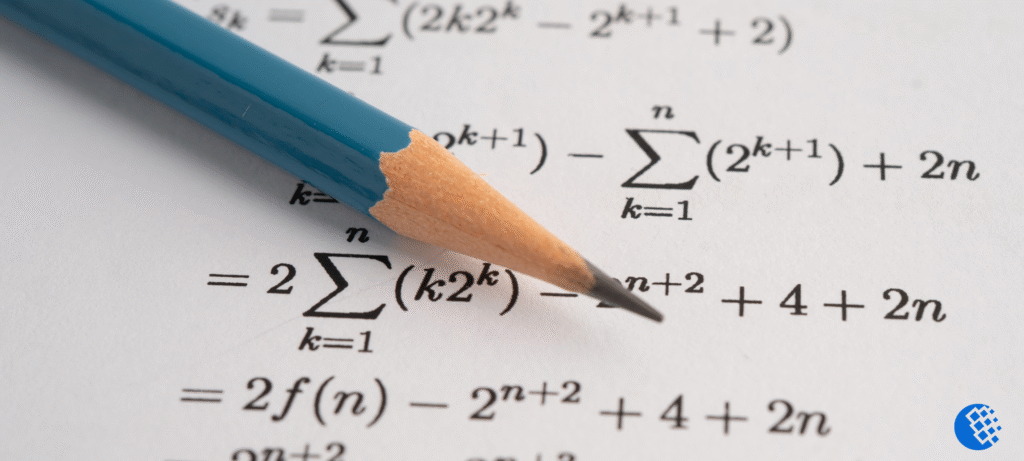
There is a specific kind of dread that sets in when you realize your math finals are just around the corner. We’ve all been there—staring at a notebook full of symbols that look more like ancient hieroglyphics than actual logic. If you are currently spiraling and wondering how to study for a math exam, the first thing you need to do is put down the highlighter. Math isn’t a history chapter; you can’t just read it until it sticks. It is a physical skill, much like playing an instrument or a sport. You have to “do” math to learn math. Whether you have weeks to prepare or you are stuck trying to figure out how to study for a math exam the night before, the secret lies in active problem-solving and strategic resource management.
The Realistic Timeline: Managing the Crunch
Ideally, you want to give your brain time to form the neural pathways required for complex calculus or algebra. However, life happens, and sometimes you find yourself searching for how to study for a math exam in 2 days. If you are in this “crunch zone,” you have to stop trying to learn every single detail. You need to become a triage surgeon for your grades.
- Day 1: The Core Foundation. Focus on the “big ticket” items. Usually, 20% of the concepts cover 80% of the exam marks. Don’t waste three hours on a niche formula that appeared once in a footnote.
- Day 2: The Refinement. This is for practicing the variations. If you know the basic formula, how does the teacher try to “trick” you? Look for problems that combine two different concepts into one.
If you are even further behind and looking for how to study for a math exam in one day, your strategy changes to “Survival Mode.” In this scenario, your goal is to memorize the most common templates. You might not fully understand “why” the derivative moves that way, but you need to know “how” to move it to get the partial credit.
Active Practice Over Passive Reading
The biggest mistake students make when learning how to study for a math exam in two days is rereading their textbook. Your brain is excellent at tricking you into thinking you understand something because it looks “familiar.” When you read a solved example, you think, “Yeah, that makes sense.” But the second you face a blank page in the exam hall, that confidence vanishes.
To move beyond passive reading, use interactive platforms like Khan Academy, which force you to solve problems step-by-step rather than just looking at the answers.
To combat this, use the Blank Sheet Method. Take a problem you’ve already seen, cover the solution, and try to solve it from scratch. If you get stuck, look at one line of the solution, then cover it back up and try to finish. This builds the “muscle memory” of the steps. Math is less about the final answer and more about the “recipe” or the algorithm you use to get there.
Leveraging Digital Tools and Resources
In 2026, we have more tools than ever to bridge the gap in our understanding. If a specific concept like “Dynamic Placement” or “NLP Logic” is stumping you, look for specialized guides. For instance, understanding how data is structured can actually help your logical flow in math, similar to how researchers look at micromodels in Machine Learning NLP to simplify complex systems.
Furthermore, if your math exam is a prerequisite for a technical field, remember that your communication of these numbers matters. For those heading into medical or rescue services, the stakes of calculation are much higher. You can see how this applies in high-pressure environments by looking at an Emergency Medical Responder Course, where math and quick thinking save lives.
For a deep dive into specific cheat sheets and common exam mistakes, Paul’s Online Math Notes provides professional-grade tutorials that clarify complex topics like calculus and trig.”
The Night Before: Damage Control
If you are currently in the middle of learning how to study for a math exam the night before, your priority is sleep and a “Cheat Sheet.” Even if you aren’t allowed to take a formula sheet into the room, writing one out is a powerful mnemonic device.
- Write out the “Trigger” words. For example, when a word problem says “at least,” it means an inequality ($\geq$).
- Sketch the Graphs. Visualizing the shape of a function ($x^2$ is a “U”, $x^3$ is an “S”) can help you catch silly mistakes during the test.
- The “Formula Dump.” The second you are allowed to start the exam, flip to the back page and write down every formula currently in your head. This clears your “mental RAM” so you can focus on solving the problems without worrying you’ll forget a square root or a minus sign.
People Also Ask (FAQ)
Is it possible to pass a math exam by studying in one day?
Yes, but it requires extreme focus. You must skip the theory and jump straight into “Pattern Recognition.” Find the five most common types of problems that appear on past exams and learn the step-by-step method for each.
Why do I understand math in class but fail the exam?
This is usually due to “Passive Learning.” You understood the teacher doing the work, but you didn’t do enough work yourself. You need to practice under a timer to simulate the stress of the exam room.
Should I stay up all night to study?
Never. Math requires high-level cognitive function. A tired brain will make “simple” errors, like $2 + 3 = 6$. It is better to know 70% of the material with a fresh brain than 100% of the material while sleep-deprived.
How long does an eye exam take if I’m struggling to see the board?
If you find yourself squinting at math problems, the issue might not be the numbers, but your vision. Generally, how long does an eye exam take is about 30 to 60 minutes, and it could be the best “study tip” you ever get.
Final Thoughts: The Mindset of a Mathematician
Ultimately, learning how to study for a math exam is about building confidence through repetition. Math isn’t a talent you are born with; it’s a language you learn to speak. Don’t get discouraged by a wrong answer—each mistake is just a data point showing you where your logic has a “bug.”
By starting early, focusing on practice problems instead of reading, and using your resources wisely, you can turn that dread into a sense of accomplishment. Treat the exam like a puzzle to be solved rather than a monster to be feared. You’ve got this!