
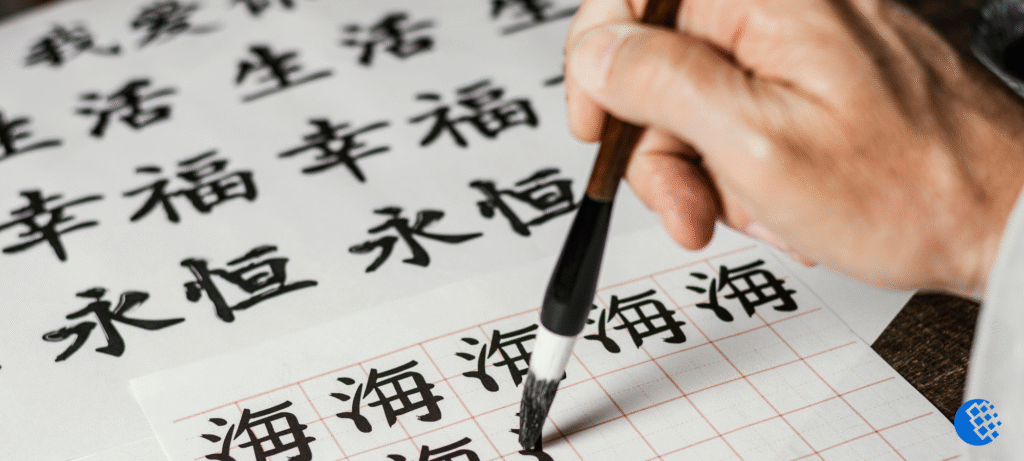
Want to read K-drama titles, order real Korean food without guessing, and talk with native Korean speakers? It all starts with the Korean alphabet called Hangul. In just a few focused hours, you can go from “looks like squiggles” to confidently reading and saying Korean words.
Why the Korean Alphabet is the Best Place to Start
The Korean writing system (the official writing system of South Korea) is one of the clearest scripts in the world. Unlike Chinese characters, Hangul was designed on purpose to match the Korean sounds of the spoken language. That means most successful language learners can pick it up fast, and learning Hangul unlocks a huge advantage in listening, reading, and vocabulary.
Quick wins you’ll get when you learn Korean alphabet:
- Read menus, packaging, and street signs in South Korea (or Korean texts online).
- Recognize loan words and common Korean words from K-pop and dramas.
- Improve your listening skills and pronunciation when you speak Korean.
What Hangul is and How it Works
Hangul is the modern Korean script made of hangul characters that form syllable blocks. Each block is usually: initial consonant + vowel (+ optional final consonant). These are called syllable blocks or Korean syllable blocks, and they’re the heart of how you read and write Korean.
- Hangul alphabet letters: there are 24 basic Korean alphabet letters (14 basic consonants + 10 basic vowels).
- Hangul vowels include simple vowels and vowel combinations (basic vowels → vowel combination).
- Hangul consonants include basic consonants, double consonants (also called tense consonants), and Korean aspirated consonants.
Because letters form blocks, you learn to read whole Korean syllables — not just one letter at a time. Once you can spot the pattern, reading Hangul sounds like a superpower.
The vowels
Hangul vowels are easier than they look. Here are the common sets you’ll see:
Single vowels (basic vowels) — with what each sounds like in English:
- ㅏ – sounds like a in father
- ㅑ – sounds like ya in yacht
- ㅓ – sounds like eo
- ㅕ – sounds like yeo
Other vowels:
- ㅗ ㅛ ㅜ ㅠ (each with a vowel sound you’ll learn quickly)
- Vowel combinations: e.g., ㅐ, ㅔ, ㅘ, ㅚ (these are vowel combination results — practice listening to the vowel sounds).
Tip: Say each Korean vowel out loud, as hearing the vowel sounds helps you remember them faster.
The consonants
Consonants are grouped in useful ways:
- Basic consonants (like ㄱ, ㄴ, ㅁ, ㅅ) — practice their sounds.
- Hangul consonants with aspiration: called aspirated consonants (e.g., ㅋ, ㅌ, ㅍ) — these are breathier; they’re often called aspirated consonants in textbooks.
- Double consonants (Korean double consonants / tense consonants) like ㄲ, ㄸ, ㅃ — they sound tighter.
- Final consonant (Batchim): many blocks have a final consonant — it changes how words link together and how the final consonant sounds.
Examples that show how a letter sounds like an English approximation are great for beginners. For instance, ㄱ at the start of a word sounds like a hard “g” (but in the middle it often sounds like a softer “k”).
How Syllable Blocks Form
Form syllable blocks by combining letters: an initial consonant + vowel → you’ll see neat square blocks like 한, 글, 가. Because Hangul groups letters into syllable blocks, once you know the building blocks, you can read whole Korean syllables at a glance.
Practice:
- Spot the initial consonant, then the vowel, then check if there’s a final consonant.
- Reading Hangul becomes faster as your brain recognizes the block shapes.
Practical Learning Plan
Follow this short, focused plan to learn Hangul quickly and actually remember it:
- Hour 1 — Learn basic vowels and sounds: practice ㅏ ㅑ ㅓ ㅕ and ㅗ ㅛ ㅜ ㅠ — say each one out loud (sounds like…).
- Hour 2 — Add basic consonants: learn the basic consonants and a few examples of common Korean words.
- Hour 3 — Make syllable blocks: form Korean syllables and read simple words.
- Hours 4–5 — Practice with listening: use audio recordings, practice speaking, and test with flashcards or an Anki deck.
- Daily habit: 10–30 minutes a day — practice writing (practice writing strokes with correct stroke order) and reading short Korean texts.
Tools and methods that help:
- Audio recordings to tune your ear and Korean pronunciation.
- An app or printable worksheets for practice writing.
- A language partner or native speakers for feedback and to practice speaking.
- Online resources, Korean books, and short Korean texts for real exposure.
- Online Korean Alphabet Course, like those from 90 Day Korean. This course is designed for beginners, allowing you to progress at your own pace. It is specifically tailored to help you read and write Korean, understand Korean letter sounds and syllable blocks, and apply even the trickiest Hangeul pronunciation rules with confidence. In just 3–5 hours, you can learn to read menus, signs, and song lyrics.
Why This Method Works
Old methods that rely on rote memorization make it easy to forget. A fun and effective way uses images, stories, and sound to connect hangul characters with memorable cues. When you match hangul letters to sound and meaning and practice reading real Korean words, you make lasting memory links — the same strategies used by many successful language learners.
FAQs
Q: How long will it take to learn the Korean alphabet?
A: Most learners can read and write basic Hangul in 3–5 hours. To feel comfortable reading common Korean texts and signs, plan on a few days of practice or 2–4 weeks of short daily sessions.
Q: What will I be able to do after I learn Hangul?
A: You’ll read Korean syllables, pronounce hangul sounds more accurately, recognize Korean vocabulary and common Korean words, and start to read menus or simple social media posts.
Q: Are the Hangul vowels and consonants hard?
A: No — hangul vowels and hangul consonants are systematic. Some sounds (aspirated consonants, double consonants) need practice, but they’re learnable with listening and repetition.
Q: What’s the best way to practice?
A: Mix reading with audio. Practice writing (practice writing correct stroke order), use an Anki deck, try short dialogues with a language partner or native Korean speakers, and enroll in an online Korean alphabet course.
Ready to get started?
If you want a clear, guided plan to learn Hangul fast — including audio, worksheets, and memory tricks — try Hangeul Made Easy by 90 Day Korean. It’s a focused course that helps learners read and write Hangul with speed and confidence.