

You wake up, check your phone, and instead of “school closed,” you see something different:
“Today will be an e-learning day.”
At first, it sounds like a day off. It’s not. Not really.
If you’re trying to understand what is an e learning day, think of it as school that doesn’t happen inside a school building. You stay home, but the work still shows up. Assignments, instructions, sometimes even live classes — just through a screen instead of a classroom.
And honestly, the first time most students experience it, it feels a bit confusing.
Table of Contents
- What is an E Learning Day? (In Real Terms)
- Why Schools Started Using E-Learning Days
- How an E-Learning Day Actually Works
- What is an E Learning Day Like for Younger Students?
- The Technology Side (Where Things Sometimes Break)
- E-Learning Day vs Snow Day (The Honest Comparison)
- Are E-Learning Days Actually Effective?
- Common Problems Students Face
- Simple Tips That Actually Help
- How This Connects to Real Learning Skills
- What Experts Say About E-Learning
- FAQs
- Final Thoughts
What is an E Learning Day? (In Real Terms)
On paper, the definition is simple:
An e-learning day is a remote school day where students complete lessons online instead of attending in person.
But real life is messier than definitions.
Sometimes the internet is slow. Sometimes instructions aren’t clear. Sometimes students delay everything until the evening and then panic a little.
Still, the idea behind it is straightforward — don’t lose a school day just because something unexpected happens.
Why Schools Started Using E-Learning Days
A few years ago, bad weather meant one thing: a snow day. No classes. No work.
Sounds great, right?
The problem came later.
Those missed days had to be added back. That meant shorter holidays, longer school years, and schedules getting pushed around.
E-learning days quietly solved that.
Instead of pausing everything, schools just shift the classroom online. Learning continues, calendars stay intact, and no one has to sit in school in late June making up for snow in January.
Not perfect, but practical.
How an E-Learning Day Actually Works
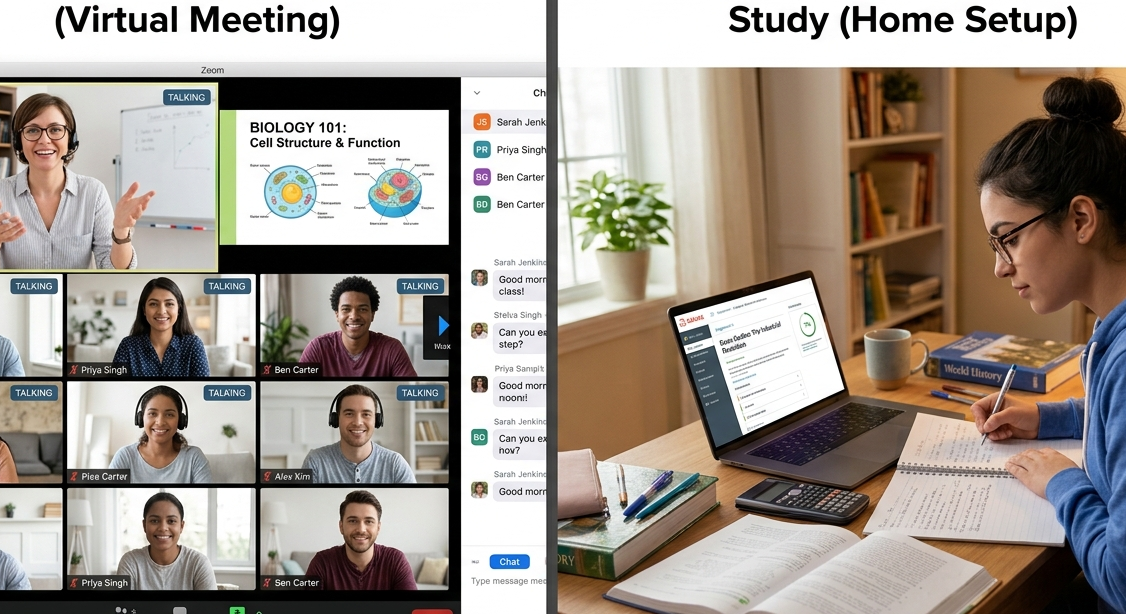
This is where expectations and reality sometimes don’t match.
There are usually two ways schools handle it:
1. Live (Synchronous) Learning
You log in at a specific time.
Teacher is there. Class is happening.
It feels structured, but also a bit rigid. If your connection drops, you miss things.
2. Flexible (Asynchronous) Learning
This is more common.
Teachers post work in the morning, and you complete it anytime during the day.
Some students love this. Others… not so much.
Because flexibility can easily turn into procrastination.
What is an E Learning Day Like for Younger Students?
For younger kids, it’s handled differently.
You can’t expect a 7-year-old to sit in front of a screen all day. It just doesn’t work.
So teachers mix things up:
- Short online tasks
- Reading from physical books
- Small activities at home
Sometimes it’s as simple as:
“Read for 20 minutes and tell me one thing you learned.”
It’s lighter, more flexible, and honestly, more realistic.
The Technology Side (Where Things Sometimes Break)
In theory, all you need is:
- A device
- Internet
- Access to a platform
In reality, this is where problems show up.
Shared devices. Weak signals. Forgotten passwords.
Schools try to solve this, but it’s not always smooth.
And when tech fails, even simple assignments start feeling frustrating.
E-Learning Day vs Snow Day (The Honest Comparison)
Let’s be real for a second.
Snow days feel better.
No responsibilities. No deadlines.
E-learning days? They require effort.
| Snow Day | E-Learning Day |
|---|---|
| Feels like a break | Feels like school at home |
| No structure | Needs self-discipline |
| Fun (mostly) | Productive (if done right) |
But from a school’s perspective, the choice is obvious.
Are E-Learning Days Actually Effective?
This depends more on the student than the system.
Some students:
- Finish everything early
- Stay organized
- Use the time well
Others:
- Delay work all day
- Rush everything at night
- Learn very little
So yes, e-learning days can work — but only if students meet them halfway.
Common Problems Students Face
No need to sugarcoat it. These happen a lot:
- “I didn’t understand the instructions”
- “The internet wasn’t working”
- “I forgot to check the portal”
- “I’ll do it later” (and later never comes on time)
Most of these aren’t technical problems. They’re habit problems.
Simple Tips That Actually Help

Nothing fancy. Just practical things that work:
- Start early, even if you don’t feel like it
- Don’t stay in bed while studying (it never works)
- Finish the hardest task first
- Take short breaks, not endless ones
That’s it. Small changes, big difference.
How This Connects to Real Learning Skills
E-learning days quietly build skills most students don’t notice right away.
Things like:
- Managing your own time
- Working without constant supervision
- Staying focused without pressure
These matter later.
For example, when you start working on structured writing tasks like essays, these habits become important. If that’s something you’re working on, this guide on how to write an argumentative essay? can help you build that skill step by step.
And if you’re thinking long-term — maybe even about working in education or leadership — systems like this are part of bigger changes in learning. That’s explored further in education specialist degree, especially how education is shifting toward digital models.
What Experts Say About E-Learning
Education systems worldwide are slowly moving toward flexible learning models.
Organizations like UNESCO and OECD have both emphasized the importance of digital access and adaptable learning environments.
That doesn’t mean everything should go online.
But it does mean this approach isn’t going away anytime soon.
FAQs
What is an e learning day in simple words?
It’s a school day where students stay home and complete work online instead of going to school.
Do students have to attend?
Yes, in most cases. Work still needs to be completed.
Is it the same as homeschooling?
Not really. The school still provides everything — teachers, lessons, grading.
Final Thoughts
So, what is an e learning day?
It’s not a holiday. It’s not traditional school either.
It’s somewhere in the middle — a system that tries to keep learning going even when things don’t go as planned.
Some days it works well. Some days it doesn’t.
But over time, most students figure it out. And once they do, it becomes just another part of how modern education works.