

I’ve met people who could barely spell “strategy” running circles around MBA graduates. Not because they were secretly brilliant. Because they showed up on time, every time. They listened when others talked. They stayed an extra twenty minutes when something wasn’t finished. Nothing fancy. Nothing gifted about it.
That’s what the famous 10 things that require zero talent list is actually saying. It’s not a motivational poster. It’s a quiet observation about what actually moves the needle in real life — and why so many naturally talented people still end up stuck.
Whether you’re a student, an employee, an athlete, or someone just trying to stop getting in their own way — these habits are worth taking seriously. Because unlike talent, every single one of them is your choice.
What Are the 10 Things That Require Zero Talent?
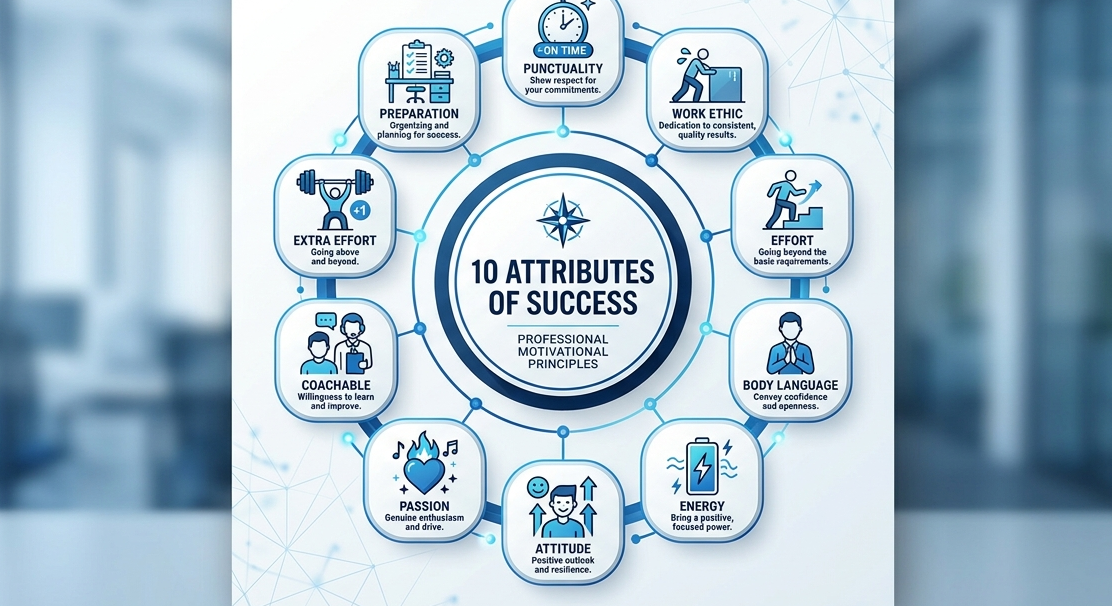
Quick Answer: The 10 things that require zero talent are being on time, work ethic, effort, body language, energy, attitude, passion, being coachable, doing extra, and being prepared. These aren’t personality traits you’re born with. They’re daily decisions. Anyone can make them starting right now.
The Complete 10 Things That Require Zero Talent List
Going through this list is easy. Actually looking at your own behavior while reading it — that’s where most people get uncomfortable.
1. Being on Time
The Simplest Form of Respect
My old manager used to say: “If you’re on time, you’re late.” Annoying to hear at 7am. Impossible to argue with over time.
Punctuality isn’t about being uptight. It’s about telling people — without words — that you took their time seriously. That you planned ahead. That you’re the kind of person who can be counted on before the work even starts.
Late people aren’t always lazy. But they are always communicating something, whether they mean to or not.
If you want one habit that instantly shifts how people perceive you — this is the lowest-effort, highest-return one on the list. Show up early. Even by five minutes. Do it consistently for a month and watch how differently people treat you.
Tip: Don’t aim to arrive “on time.” Aim to arrive ten minutes before. The buffer isn’t for show — it’s protection against everything that will go wrong on the way.
2. Work Ethic
Consistency Is Boring. It’s Also Undefeatable.
John Smoltz pitched in the major leagues until he was 42. He’ll be the first to tell you it wasn’t arm strength that kept him there — it was the stuff he did every single day that nobody watched. The ice baths. The film study. The shoulder work at 6am before anyone else arrived.
Talent gives you a starting point. Work ethic decides how far past it you go.
The honest truth is that most talented people are inconsistent. They show up big when it feels good and coast when it doesn’t. The person with a relentless daily work ethic just keeps adding up small wins. After a few years the gap is embarrassing.
Tip: Pick your most important task each week and give it a fixed, non-negotiable time slot. Not “when I get to it.” A real block on your calendar that you protect like a client meeting.
3. Effort
The One Variable That’s Always Yours
You can’t control whether the economy tanks. You can’t control a difficult client or a bad manager. But how much of yourself you bring to the work in front of you? That’s always yours.
There’s a version of working where you’re physically present but mentally coasting. Most people know exactly what that feels like. The problem is everyone around you can sense it too.
Full effort is rare enough that when people see it, they remember it. It’s also the fastest way to actually get good at something. Full presence, even for short periods, produces more growth than passive repetition ever does.
Tip: Find one task where you’ve been going through the motions. Commit to giving it your real attention for ten straight working days. The result will not be what you expected.
4. Body Language
You’re Always Saying Something
Most people don’t realize how much they communicate before they speak. Posture, eye contact, the direction you’re facing, what you do with your hands — it all registers with the people in the room before a single word comes out.
Research from The University of Virginia shows that physical posture affects not just how others perceive your confidence, but how confident you actually feel. Slumping doesn’t just look like disengagement. It creates it.
Walk into a room with your shoulders back and your attention forward. Look at whoever’s speaking. Stop touching your phone. These are not complicated. They’re just ignored by most people because nobody explicitly grades them.
Tip: Next meeting — phone face-down, sit upright, look at whoever’s talking. That’s the whole adjustment. Try it once and see what changes.
5. Energy
Rooms Feel the Person Who Walks In
There’s a type of person who walks into a difficult meeting and somehow makes it feel more manageable. And there’s the type who walks in and makes everything heavier. The difference is almost never about rank or intelligence.
Positive energy isn’t performing enthusiasm. It’s just refusing to add weight to situations that already have enough of it. Coming in focused. Staying forward-looking. Choosing solutions over complaints — especially on the hard days.
Teams run on this stuff. Leaders watch for it constantly. And it requires zero talent. Just a decision made before you walk through the door.
Tip: For one week, cut the morning complaints entirely. Replace them with one specific, actionable observation per meeting. Watch your standing in the room shift without saying another word about it.
6. Attitude
The Trait That Either Multiplies or Cancels Everything Else
I’ve watched people with genuinely impressive skills get quietly sidelined — not because their work was bad but because nobody wanted to work with them. Attitude isn’t soft. It has direct professional consequences.
Tom Bilyeu built Quest Nutrition from scratch into a billion-dollar company. Ask him what mattered most and he won’t say talent. He’ll say the story you tell yourself about your own potential. That’s just another name for attitude.
Growth mindset means treating failure as information, not verdict. It means asking “what do I do differently?” instead of finding someone to blame. It means staying curious when you’re wrong instead of getting defensive.
That’s a choice. Every single time.
Tip: When something goes wrong, write down one thing you’d change in your own approach. Not the situation. Not what someone else should have done. What you would do differently.
7. Passion
You Don’t Need Talent to Care
People who care about their work make different decisions than people who don’t. They read the extra article. They send the follow-up. They redo the draft instead of submitting the first version. None of that is talent. It’s just caring whether the outcome is good.
Gary Vaynerchuk has been saying this for years — the people who consistently outperform their talent level are almost always the ones who want it more. Not smarter, not more gifted. More invested.
Passion is available to anyone willing to connect their daily work to something that actually matters to them. You don’t wait to feel it. You build it by caring about small things on purpose.
Tip: Write down one reason your current work matters beyond the paycheck. Come back to it on the days you want to coast.
8. Being Coachable
Ego Is the Most Expensive Habit in the Room
When someone gives you feedback, the natural reaction is to defend yourself. Explain the context. Point out what they’re missing. It feels automatic. It also quietly closes doors.
Being coachable means catching that impulse and replacing it with genuine curiosity. Not fake agreement — actual interest in what they’re seeing that you’re not. It requires separating your work from your identity, which is harder than it sounds and more valuable than almost any skill.
Managers invest deeply in people who take feedback seriously. If you implement suggestions quickly and visibly, you’ll get more coaching, more opportunities, and more development than colleagues with twice your natural ability who can’t take criticism.
Tip: Next time you get critiqued, just say “Thanks — I’ll fix that.” Then actually fix it before the next check-in. Two steps. That’s the entire habit.
9. Doing Extra
The Gap Between Employed and Indispensable
Every job has a description. Meeting it keeps you employed. It doesn’t make anyone think of you when a new opportunity comes up.
Doing extra isn’t staying late for show or working yourself into the ground. It’s noticing the broken process before it becomes a crisis. Helping a teammate who’s drowning without being asked. Flagging something a manager hasn’t seen yet. Taking the disorganized folder system and fixing it because obviously it’s slowing everyone down.
People who do this get labeled “leadership material” not because someone decided to reward them, but because the behavior looks exactly like what leaders do. None of it is complicated. Most people just don’t bother.
Tip: Find one thing that’s slightly broken or disorganized in your workplace this week. Fix it without announcing it. Then do it again the following week.
10. Being Prepared
What Talent Actually Looks Like From the Outside
Watch someone handle a tough question in a client meeting with complete calm — no fumbling, no “uh, let me get back to you on that.” Easy to assume they’re just sharp. Usually they just did their homework. They anticipated the questions, read the background, ran through scenarios beforehand.
Preparation looks like talent from the outside because most people don’t prepare well. When you’re the exception, you stand out in a way that gets misattributed to natural ability. Fine. Let them think that.
Preparation also eliminates performance anxiety better than any confidence hack ever will. When you know your material cold, there’s simply less to be afraid of.
Tip: Spend the last fifteen minutes of every workday planning the next morning. Never walk into anything cold.
Why Hard Work Often Beats Talent
There’s a pattern you see across sports, business, and academics: talented people who rely on the gift eventually plateau. Consistent people keep climbing long after.
Talent opens the first door. Character decides what you do once you’re inside.
When someone with average ability commits to the 10 things that require zero talent as daily defaults — not occasionally, but consistently — they steadily outpace competitors who assumed natural gifts were enough. This isn’t feel-good fiction. It shows up in the data across every high-performance environment you care to look at.
How Successful People Build These Habits
None of these habits arrive automatically. They get built through repetition and honest self-assessment. High performers track their own behavior — not obsessively, but intentionally. They notice when preparation has slipped or attitude has been off. Then they adjust.
Structured environments make this clearer. The advantages and disadvantages of e-learning show exactly why — without external accountability keeping you on track, you either build internal discipline or you fall behind. That internal accountability, once real, translates directly into professional performance.
10 Things That Require Zero Talent Poster and Printable Resources
Because these habits are fundamental to building high-performance culture, you’ll find this list posted in schools, offices, locker rooms, and community centers across the world.
- 10 things that require zero talent poster: Many organizations hang large versions of this list in breakrooms and team spaces as a daily visible reminder that performance is a choice, not a birthright.
- 10 things that require zero talent printable and 10 things that require zero talent pdf: Coaches, teachers, and managers frequently create downloadable PDF checklists so students, athletes, and employees can track behaviors like punctuality, preparation, and attitude as measurable daily habits.
What Employers Value More Than Talent
Technical skills get you the interview. Soft skills get you the promotion. This isn’t a hunch — LinkedIn’s annual workplace data consistently shows that coachability, attitude, and teamwork rank among the primary factors in advancement decisions, often above raw technical ability.
A highly skilled employee who creates friction, ignores feedback, or drains the energy of the people around them is a liability. A reliable, coachable person who keeps improving is an asset worth developing. Organizations that build cultures around these zero-talent habits consistently outperform those that just recruit for intelligence.
                  ┌─────────────────────────────────────┐
                  │    WHAT EMPLOYERS ACTUALLY VALUE    │
                  └─────────────────────────────────────┘
                                     │
         ┌───────────────────────────┼───────────────────────────┐
         ▼                           ▼                           ▼
┌─────────────────┐         ┌─────────────────┐         ┌─────────────────┐
│ ACCOUNTABILITY  │         │   TEAMWORK &    │         │ PROFESSIONAL    │
│ Owning your numbers│      │  COLLABORATION  │         │   REPUTATION    │
│ and your mistakes│         │ Elevating the   │         │ Becoming the    │
│ without pointing│         │ output of the   │         │ person everyone │
│ fingers.        │         │ entire team.    │         │ can rely on.    │
└─────────────────┘         └─────────────────┘         └─────────────────┘
Top leadership figures like Molly Fletcher have frequently shared how professional athletes and high-level corporate directors scale their careers entirely based on these unteachable operational foundations rather than raw skill sets.
Additional Habits That Require No Natural Gift
The original list covers the essentials. If you want to expand into a broader selection, like a 20 things that require zero talent checklist, here are ten more behaviors that cost nothing and earn genuine respect:
- Practicing Kindness — Basic human decency toward everyone around you builds goodwill that lasts longer than any single achievement.
- Active Listening — Fully hearing someone before forming your response is rarer than it should be.
- Honesty — A reputation for telling the truth is one of the most durable professional assets there is.
- Showing Gratitude — Acknowledging a teammate publicly costs nothing and means something real.
- Patience — Staying calm during delays and difficult conversations protects the energy of everyone around you.
- Curiosity — Asking genuine questions keeps you learning and signals engagement to the people watching.
- Basic Respect — Treating everyone equally regardless of job title is rarer than it should be and noticed more than people admit.
- Focus — Putting the phone away and giving a task your full attention is a competitive advantage right now.
- Reliability — Always delivering what you promised, on time. Simple and increasingly rare.
- Cleanliness — Keeping your workspace organized shows basic awareness of the people you share an environment with.
Check this => Small Habit to Feel More Connected to Your Community
Frequently Asked Questions
What are the 10 things that require zero talent?
The ten habits are being on time, work ethic, effort, body language, energy, attitude, passion, being coachable, doing extra, and being prepared. None of them require natural gifts or inherited intelligence — every one is a daily choice.
Why do people say success requires zero talent?
Because sustained success runs on consistency, not brilliance. Natural ability creates early advantages but daily habits — punctuality, preparation, and full effort — are what carry performance through difficult periods and over long timelines.
Can zero-talent habits improve your career?
Without question. Employers prioritize reliability, a growth mindset, and strong work ethic when making advancement decisions. Employees who practice these behaviors build professional reputations that outlast and outperform raw talent.
What are 20 things that require zero talent?
Beyond the original ten, additional zero-talent habits include kindness, active listening, honesty, gratitude, patience, curiosity, respect, focus, reliability, and maintaining a clean workspace. All available to anyone willing to practice them deliberately.
What are 10 things that take 0 talent but get you 100 respect?
The phrase 10 things that take 0 talent but get you 100 respect refers directly to this same core set of choices. Showing up early, maintaining confident body language, arriving fully prepared, and receiving feedback without defensiveness will earn you consistent respect from peers and leaders in any professional environment.
Why is being coachable so important for career advancement?
Because it shows that your growth matters to you than your ego. When managers see feedback being implemented quickly and without resistance, they invest significantly more in developing that person — accelerating career growth far beyond what natural ability could produce on its own.
Are these traits important for students?
Completely. Being prepared, bringing full effort, and staying coachable in academic environments build the exact same habits employers value most. Students who develop these early carry a genuine advantage into every professional environment they enter.
Can talent be replaced by hard work?
In most practical environments, yes. Talent without discipline produces inconsistent results. Consistent effort and preparation — regardless of natural ability — build compounding improvement that eventually surpasses ungoverned talent.
Final Thoughts: Character Always Wins
Talent is a good thing to have. Opens doors. Creates opportunities. Gives some people a real head start. But the world is full of talented people who built nothing lasting because they skipped the part that actually mattered.
The 10 things that require zero talent put the outcome in your hands. You control whether you’re on time. You control the effort you bring. You control whether feedback makes you better or just makes you defensive.
That’s not a small thing. While most people are waiting to feel motivated, talented, or ready — the ones choosing to be prepared, coachable, and consistent are already building something real. You don’t need to wait for talent.
You just need to outwork it.