Every organisation depends on tools and equipment to carry out daily operations. Whether it is a school transporting audiovisual resources, a university moving laboratory instruments, a photography business carrying expensive cameras or an IT company relocating networking equipment, protecting valuable assets should always be a priority. Equipment that is damaged during transport does not simply result in repair costs. It can interrupt projects, delay learning activities and reduce productivity across an entire organisation.
While businesses often invest considerable time selecting the right equipment, far less attention is sometimes given to how those items will be stored and transported. Generic storage boxes may seem like a cost-effective solution initially, but they often fail to provide the level of protection required for valuable or delicate equipment. As technology continues to play a larger role in education, business and industry, purpose-built protective storage has become increasingly important.
Understanding why specialist transport solutions matter is valuable for students, educators and professionals alike. It demonstrates how planning, organisation and long-term thinking contribute to protecting investments while improving operational efficiency.
Understanding Why Tailored Protection Matters
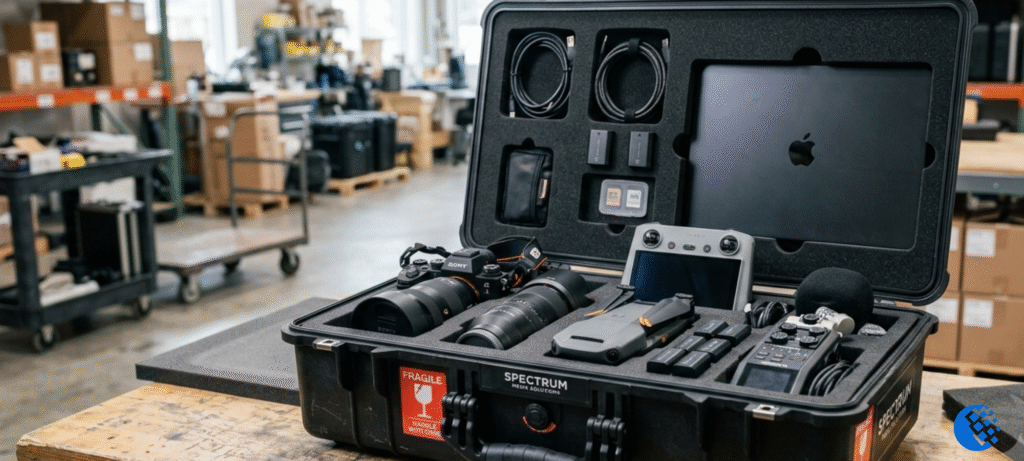
Different types of equipment require different levels of protection. A camera system, scientific instrument or specialist audio device each has unique dimensions and vulnerabilities that generic storage containers cannot always accommodate. Investing in a professionally designed custom flight case enables organisations to protect valuable equipment with a solution that is built around its exact specifications, reducing movement during transport while improving safety, organisation and long-term reliability.
Tailored protective cases often include precision-cut foam inserts that hold equipment securely in place. This prevents components from shifting while being transported and reduces the risk of scratches, impacts or internal damage. Accessories such as cables, batteries, chargers and documentation can also be stored within dedicated compartments, making it easier to organise equipment and prepare for each task.
This structured approach benefits organisations that regularly move equipment between different locations. Staff spend less time checking inventories or searching for accessories, allowing them to focus on delivering their work efficiently.
Learning the Value of Risk Management
One of the most important lessons in business and education is understanding how to reduce unnecessary risks. Every organisation faces potential challenges, but careful planning often prevents small problems from becoming significant disruptions.
Transporting equipment without suitable protection introduces avoidable risks. Items may be damaged by vibration during travel, accidental impacts while loading vehicles or exposure to dust and moisture. These incidents can lead to costly repairs, delayed projects and unexpected downtime.
Purpose-built protective cases help reduce these risks by providing durable external construction combined with carefully designed interiors that absorb shocks and minimise movement. While no storage solution can eliminate every possibility of damage, reducing exposure to common transport hazards significantly improves equipment longevity.
This practical example highlights the importance of preventative planning, a principle that applies across education, business and many other professional environments.
Supporting Education and Practical Learning
Educational institutions increasingly rely on specialist equipment to support teaching and learning. Science laboratories contain sensitive instruments, media departments use professional cameras and editing equipment, while technology classrooms often include valuable computing hardware.
Many schools and universities also share resources between departments or campuses, making secure transportation essential. Protective cases help preserve equipment while ensuring it remains available for future classes and practical demonstrations.
Students preparing for careers in engineering, media production, healthcare or information technology also benefit from understanding how organisations manage valuable assets. Equipment protection forms part of wider discussions surrounding workplace safety, operational efficiency and responsible resource management.
By observing these practices within educational settings, learners gain practical knowledge that supports future professional development.
Improving Organisation in Everyday Operations
Organisation plays a significant role in both academic and professional success. Whether managing classroom resources or preparing equipment for a customer visit, clearly structured storage simplifies daily operations.
Protective cases contribute to this organisation by providing dedicated storage locations for every component. Instead of transporting equipment across multiple containers, everything required for a particular task can remain together within a single protective unit.
This approach reduces preparation time while making it easier to identify missing items before leaving a location. Teams can work more efficiently because they know exactly where equipment is stored and can access it quickly whenever required.
The benefits become even more noticeable for organisations managing multiple projects simultaneously. Standardised storage systems help maintain consistency while supporting better inventory control across departments.
Protecting Long-Term Investments
Specialist equipment often represents a substantial financial investment. Cameras, testing devices, audio systems, medical equipment and technical instruments can require significant budgets, making proper protection an important consideration.
Replacing damaged equipment not only affects finances but may also interrupt important work. Delays caused by repairs or replacement purchases can influence customer satisfaction, project schedules and educational activities.
High-quality protective storage extends equipment lifespan by reducing exposure to everyday hazards associated with transportation. This contributes to better value for money over time while supporting more reliable day-to-day operations.
For organisations operating within fixed budgets, preserving existing assets often proves more economical than repeatedly replacing damaged equipment.
Sustainability Through Better Equipment Care
Sustainability increasingly influences purchasing decisions across many industries. Businesses and educational institutions alike are seeking ways to reduce waste while making better use of existing resources.
Protecting equipment effectively supports these objectives by extending product lifespan and reducing unnecessary replacements. Durable transport solutions often remain in service for many years, allowing organisations to continue using valuable equipment without avoidable damage shortening its operational life.
This approach aligns with broader sustainability goals by reducing electronic waste and encouraging responsible asset management. Rather than replacing equipment prematurely, organisations maximise the value of existing investments through careful protection and maintenance.
Small improvements in equipment care can therefore contribute to both financial savings and environmental responsibility.
Looking Ahead
Technology will continue transforming education, business and professional services. As organisations become increasingly dependent on specialist equipment, protecting those assets during storage and transport will remain an important operational priority.
Purpose-built protective cases demonstrate how thoughtful planning can improve efficiency, reduce risk and preserve valuable resources. They support better organisation, enhance workplace productivity and contribute to responsible asset management across a wide variety of industries.
The principles behind effective equipment protection extend beyond storage alone. They encourage careful planning, preventative thinking and long-term decision-making that benefits organisations of every size. Whether in a classroom, laboratory, creative studio or commercial workplace, understanding the value of proper equipment care is a practical lesson that continues to grow in importance.
By investing in appropriate protection from the outset, organisations can reduce avoidable costs, improve operational reliability and ensure valuable equipment remains ready to support future projects, learning opportunities and business success.