
Three Russian apps went on my phone before a trip a while back. Two came off within the week. One had beautiful lesson design and basically no speaking practice — pretty, but useless if you actually need to talk. The other buried me in grammar tables before I’d even learned to say “hello.” So here’s my honest take on Russian language learning apps: the one with the most downloads on the App Store isn’t necessarily the one that’ll work for you.
Quick answer: It really comes down to what you need right now. Duolingo is fine if you’re brand new and just want a daily habit going. Babbel and Rocket Russian handle grammar better. Tandem is where you go once you actually want to talk to someone. And if vocabulary keeps slipping out of your head, Anki’s spaced repetition is what most long-term learners fall back on eventually. Most people, honestly, end up running two apps at once rather than picking just one.
Why One App Rarely Covers Everything
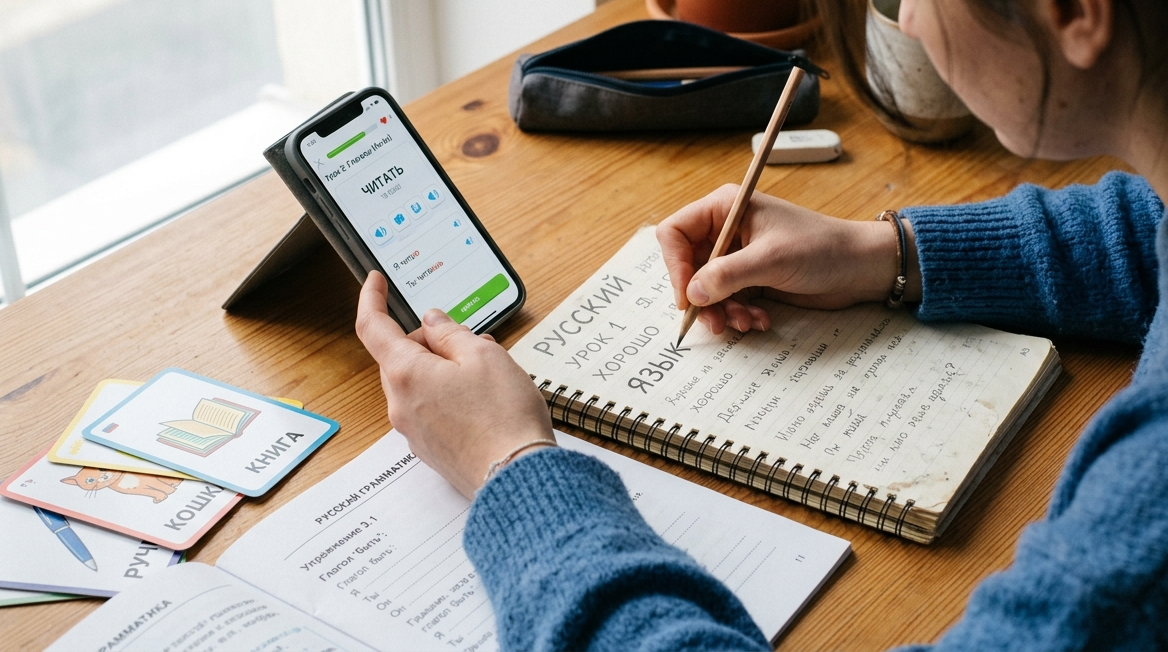
Russian isn’t kind to beginners. Between the Cyrillic alphabet, case endings that change depending on grammatical role, and verb aspects that simply don’t exist in English, there’s a lot going on. A mistake I see people make constantly is expecting a single app to somehow handle reading, speaking, listening, and grammar all in one package. It doesn’t happen. The learners who actually get somewhere tend to run two or three tools side by side — something for daily habit, something for grammar, and something for real conversation.
Best Russian Language Learning Apps, Compared
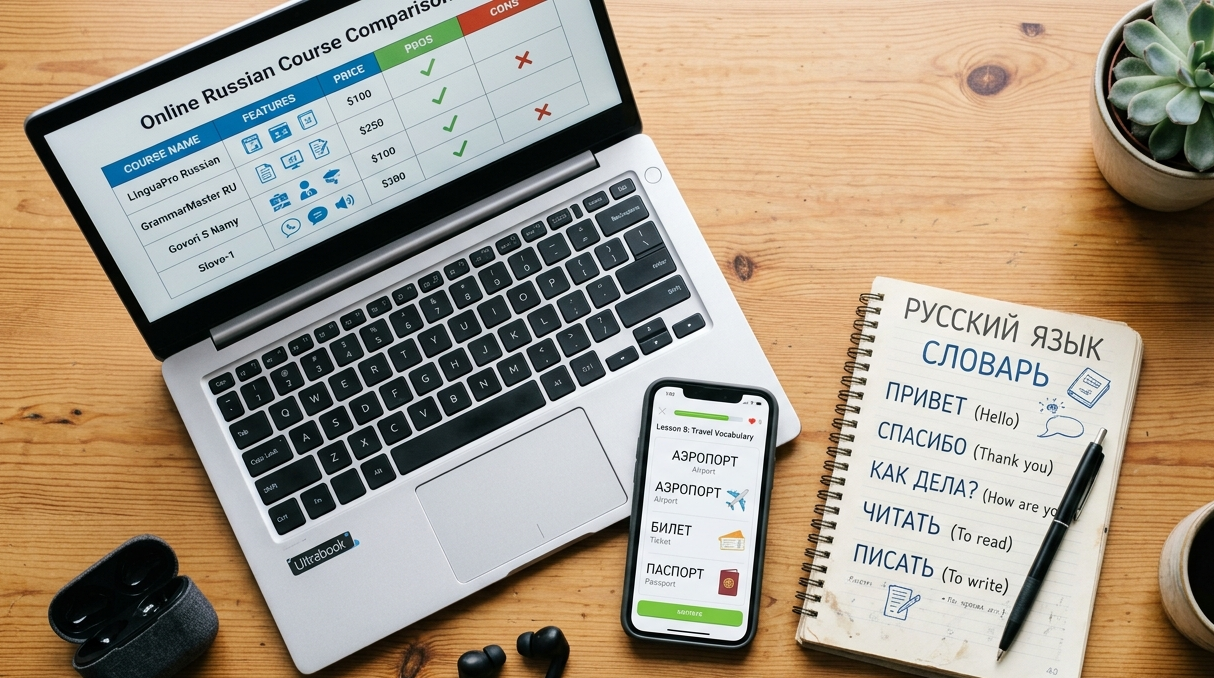
| Goal | Best App | Free Option? |
|---|---|---|
| Absolute beginners | Duolingo | Yes |
| Structured grammar | Rocket Russian | No |
| Speaking practice | Tandem | Yes |
| Vocabulary retention | Anki | Yes |
| Cyrillic alphabet | Drops | Limited |
| Audio/podcast learning | RussianPod101 | Limited |
| Immersion via TV/film | LingoPie | No |
| Reading practice | LingQ | Limited |
Duolingo
Free, gamified, five minutes a day if you’re consistent. As a first step into Cyrillic, it’s about as painless as it gets. But don’t expect grammar depth here — it’s built for pattern recognition, not explanation. Good habit-builder. Not a full course.
Babbel
Costs money, but you’re learning through actual dialogue instead of disconnected flashcards. If your goal is holding a real conversation soon rather than just recognizing words, this one pulls ahead of Duolingo pretty quickly.
Rocket Russian
Heavier on grammar explanation and audio drills. This is the app people reach for once they’ve got basics down but keep stumbling on case endings — which, if you’ve studied Russian for more than a week, you already know is basically everyone.
Pimsleur
Audio only, no reading involved. You listen, you repeat. Works great in a car or on a walk. Not great if you want the Cyrillic script reinforced alongside pronunciation, since there’s barely any visual component.
Memrise
Vocabulary practice through spaced repetition and short native-speaker video clips. Decent as a supplement. On its own, it won’t teach you sentence structure — that’s just not what it’s built for.
Busuu
There’s a free tier with grammar explanations, plus something most paid apps skip entirely: actual feedback from native speakers on things you write. Worth checking out — a fair number of people on Reddit’s r/russian mention this specifically as underrated.
LingQ
Built around reading real Russian material and picking up vocabulary from context rather than scripted lessons. Makes more sense once you’re past the total-beginner stage.
RussianPod101
Short audio and video lessons from real instructors — good for a commute. The interface feels a bit dated next to newer apps, but the lesson content itself is still solid.
Tandem and HelloTalk
Both connect you with native speakers for text, voice, or video chat. This is genuinely where speaking confidence gets built. No app on its own gets you comfortable holding a live conversation — you need actual back-and-forth with a person.
Drops and FunEasyLearn
Illustration-heavy, built specifically around the alphabet and early vocabulary. A solid warm-up before diving into grammar-focused apps.
Anki
Not Russian-specific at all, but still the go-to for building your own flashcard decks with spaced repetition. Once Duolingo or Drops stop feeling challenging, this is usually where people land next.
If you’ve used apps for other subjects before, the same reasoning holds up here too. The piece on Best Learning Apps for Adults breaks down how to judge any learning app by fit instead of popularity — useful if Russian isn’t the only thing you’re trying to learn right now.
Can AI Tools Help You Learn Russian?
Worth talking about, since it’s actually happening. ChatGPT, Google Gemini, and Claude weren’t designed for language learning specifically, but a lot of learners now lean on them for grammar explanations, correcting sentences, or low-stakes conversation practice. They’re not a substitute for a real app or a real person — but for asking “why does this case ending change here” at midnight when no tutor’s around, they’re genuinely handy.
Which Russian App Teaches the Cyrillic Alphabet Best?
Drops and FunEasyLearn get recommended most often for this — both lean on visual association rather than pure memorization drills. Duolingo eases you into Cyrillic gradually too, if you’d rather not add a separate app just for the alphabet.
Best Free Russian Language Learning Apps

Duolingo, Anki, Memrise, and Busuu’s free tier will get you further than you’d expect without spending a cent. RussianPod101 has some free lessons too, though the bulk of it sits behind a paywall. The honest catch with free apps is depth — great for building a habit, thinner on structured grammar.
How to Choose the Right App for Your Goal
- Trip coming up? Pimsleur or Babbel — both push spoken phrases over grammar theory.
- Talking with Russian-speaking family? Tandem or HelloTalk, since actual conversation matters more here than app drills.
- Prepping for university-level Russian? Rocket Russian or LingQ, stronger on grammar and real reading material.
- Just curious, no real pressure? Duolingo or Drops. Free, low commitment, good way to find out if you even enjoy this before committing further.
How These Apps Were Evaluated
Lesson structure mattered most here — specifically whether speaking practice was actually built in, not just vocabulary drills dressed up as “speaking.” Pricing, offline access, and how each app gets talked about in learner communities like Reddit’s r/russian also factored in, since people there tend to be pretty blunt about what worked and what flopped. App Store and Google Play ratings were checked too, though a high star rating alone never decided anything on its own.
Common Mistakes Learners Make
Sticking with one app and expecting fluency to just show up eventually — that’s probably the biggest one. Russian’s grammar is complicated enough that most people genuinely need more than a single tool. Putting off speaking practice until “later” is another trap, since bad pronunciation habits get harder to unlearn the longer they sit. A few more worth mentioning: skipping the alphabet early and leaning on transliteration instead, never going back to review old vocabulary, and jumping between apps every couple of weeks instead of sticking with one long enough to actually notice progress.
A Simple Four-Week Starting Plan
Week 1: Learn the Cyrillic alphabet with Drops or Duolingo — ten to fifteen minutes a day is plenty. Week 2: Build a base of around 100 common words, backed up with Anki flashcards. Week 3: Start basic conversational phrases through Babbel or Pimsleur. Week 4: Add listening practice through RussianPod101, and if you’re feeling ready, try a first exchange on Tandem.
Pacing it out like this tends to beat downloading everything at once and burning out by day four. It’s roughly the same idea the American Council on the Teaching of Foreign Languages pushes when they talk about steady proficiency milestones instead of cramming.
Frequently Asked Questions
What’s the best Russian language learning app?
Honestly, it depends on what you need. Duolingo works for beginners, Rocket Russian for grammar, Tandem if speaking is the priority.
Are free Russian language learning apps worth it?
Yes, especially at the start. Duolingo, Anki, and Busuu’s free tier cover a lot before a paid plan becomes necessary.
Can I learn Russian using only an app?
You’ll get a decent foundation, but real fluency usually needs speaking with an actual person — an app like Tandem or in-person practice.
Which app teaches the Cyrillic alphabet best?
Drops and FunEasyLearn are built around it specifically. Duolingo introduces it gradually too.
How long does it take to learn Russian through an app?
Depends on consistency, mostly. Most people notice real progress after several months of daily practice, not a few weeks.
Can adults realistically learn Russian from scratch?
Yes — age isn’t the real obstacle people assume it is. Consistency and speaking practice matter far more than when you started.
Which Russian app works offline?
Duolingo, Pimsleur, and Rosetta Stone all let you download lessons for offline use, handy for travel or commuting.
Which app has native speaker interaction?
Tandem and HelloTalk are built for exactly this — connecting you directly with native Russian speakers.
Is Duolingo enough on its own?
For a first step, sure. For actual fluency, most people end up adding a grammar app or speaking practice alongside it.
Which app is best for a trip to Russia?
Pimsleur and Babbel, since both focus on practical spoken phrases rather than deep grammar.
How much do Russian learning apps typically cost?
Somewhere around $10 to $15 a month for most subscriptions, though Duolingo and Anki both have fully free versions.
Which app has AI-based practice?
None of the Russian-specific apps are AI-native just yet, but tools like ChatGPT and Gemini get used alongside them more and more for extra practice.
Final Thoughts
After going through this many Russian language learning apps, one thing stands out — consistency wins over picking the “perfect” app almost every time. A huge course library means nothing if the app gets deleted within a week. Pick whichever one matches what you actually need right now — habit, grammar, or speaking — put in ten or fifteen minutes daily, and add a second tool once the first one starts feeling too easy. If you’ve built vocabulary this way for another language before, the approach in AP Spanish Language Vocabulary covers similar ground that carries over well to Russian too.