

Most writers can start a story. The hard part, the part that separates a story someone remembers from one they forget by lunch, is knowing how to end a short story so it actually lands. I’ve read plenty of submissions where the plot was solid, the voice was strong, and then the ending just… trailed off, or explained itself into the ground, or tacked on a twist that didn’t earn its place. None of those are fatal mistakes exactly, but they’re the difference between a story that stays with a reader and one that doesn’t.
Quick answer: the best way to end a short story is to stop shortly after the emotional climax, resolve the internal conflict rather than every plot thread, and close on something specific — an image, a line of dialogue, a small action — that reflects how the character has changed. Readers rarely remember explanations. They remember moments.
Before getting into the fifteen techniques below, it’s worth mentioning something adjacent: a lot of the instinct for a strong ending actually develops the same way essay-writing instincts do, through repeated practice with structure and reflection. If you’re working with a student on longer-form writing, this breakdown of the “why” major essay covers a related skill — building toward a purposeful conclusion instead of just running out of things to say.
Key Takeaways
- Endings carry maximum weight: Endings do the heaviest lifting in short fiction relative to their length.
- A flexible toolbox, not a rigid checklist: The techniques aren’t a checklist to run through—they’re a toolbox to pick from based on what a specific story actually needs:
- Full-circle imagery: Suits stories built around change.
- Cliffhangers: Suit suspense-driven plots.
- Bittersweet endings: Suit almost everything in between.
- The universal rule is restraint: What holds across nearly all strong endings is stopping close to the climax, trusting the reader, and closing on something specific rather than something explained.
Why Short Story Endings Matter More Than People Think
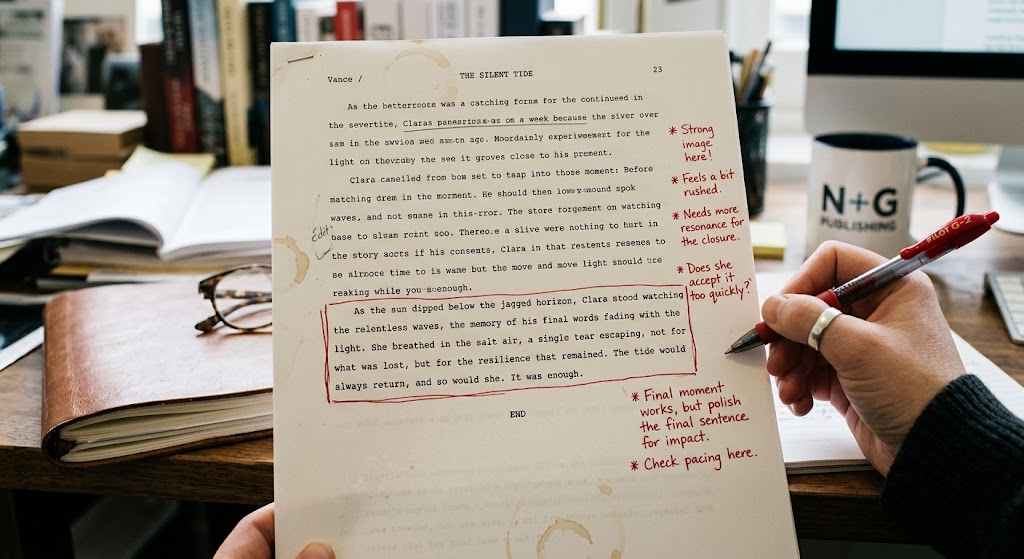
A weak opening loses a reader in the first paragraph. A weak ending loses them after they’ve already invested ten minutes, which somehow feels worse. The ending is what a reader carries out of the story — it’s what they quote to a friend, what they remember six months later, what makes them seek out the writer’s next piece. Novels have room to recover from a soft landing because there’s so much material surrounding it. Short stories don’t have that luxury. The compression that makes short fiction work also means the final lines carry disproportionate weight.
There’s also a craft reason endings matter this much: a short story’s theme often only fully resolves in the last few sentences. Readers have been holding a question since page one — will this character change, will this loss mean anything, was this all for nothing — and the ending is where that question gets its answer. Get it right and the whole piece retroactively feels tighter. Get it wrong and even a strong middle section starts to feel aimless in hindsight.
How to End a Short Story: A Step-by-Step Framework
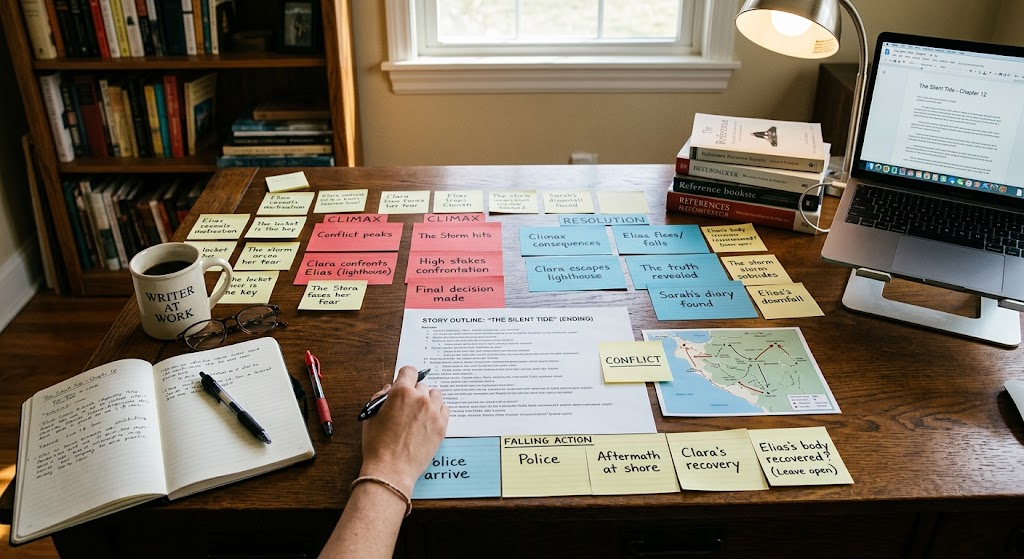
Here’s the process I’d actually walk a writer through, in order:
- Finish shortly after the climax. Once the central conflict peaks, the story’s job is nearly done. Lingering too long after the climax is one of the most common ways an ending goes soft.
- Resolve the emotional conflict, not necessarily every plot thread. Readers forgive an unresolved subplot far more easily than they forgive an unresolved emotional arc.
- Cut the explanation. If a sentence exists purely to tell the reader what the story meant, it usually doesn’t belong. Trust the preceding pages to have done that work already.
- Reinforce the theme without naming it outright. The best endings feel thematically inevitable without ever using the word “theme” in disguise.
- Leave the reader with something specific. A vivid final image or a precise line of dialogue outperforms a vague, poetic close almost every time.
Writers who are still developing this instinct — figuring out how long a scene needs to breathe before it’s actually finished — often benefit from thinking about it the same way they’d think about any developing writing skill; timing and pacing instincts build with repetition, which is part of why the age writers typically develop fluency is such a gradual, individual process rather than a fixed milestone.
15 Ways to End a Short Story
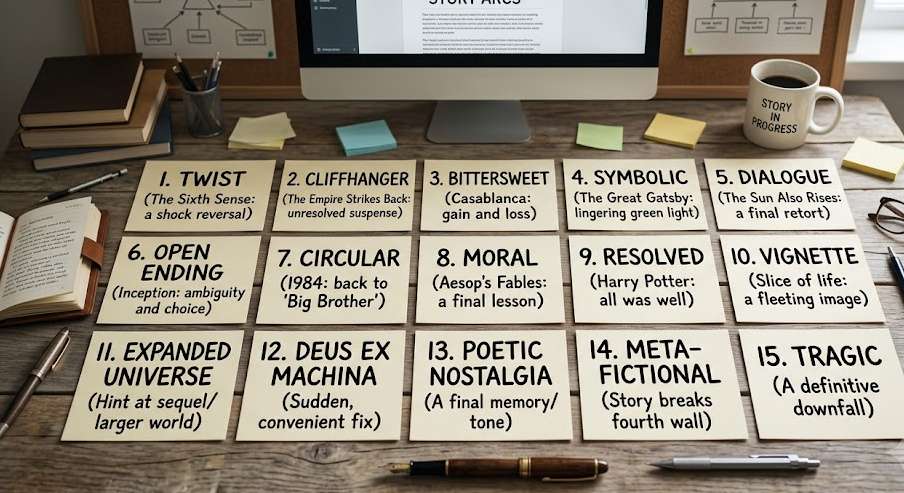
Not every technique fits every story. Part of the craft is matching the ending’s mechanism to the story’s tone.
1. The Full-Circle Ending. Connect the final scene to a specific image or phrase from the opening. A story that begins with a character staring through a cracked window and ends with them looking through a newly repaired pane doesn’t need to explain the character’s growth — the mirrored image does the work.
2. The Emotional Realization (Epiphany). A quiet, internal shift where the character — and by extension the reader — suddenly understands the weight of what’s happened. This works best when it’s underplayed rather than announced.
3. The Plot Twist. A genuine reversal of what the reader believed to be true. Risky if it isn’t seeded earlier; a twist with no groundwork reads as a cheat rather than a surprise.
4. The Symbolic Image. Ending on an object or image that carries the story’s emotional weight without stating it directly — a photograph blowing away in the wind to close a story about letting go, for instance.
5. The Dialogue Ending. Closing on a single line of spoken dialogue, often ambiguous or understated, can land harder than any amount of narration.
6. The Cliffhanger. Cutting off before resolution, leaving the reader in active suspense. Works well in thriller or mystery fiction; feels unfinished in most literary or character-driven pieces.
7. The Bittersweet Ending. A loss in one area paired with a gain in another. This tends to feel more emotionally honest than a fully happy resolution, and it’s one of the more durable techniques across genres.
8. The Hopeful Ending. Not the same as a happy ending — hope implies uncertainty is still present, just with a plausible path forward.
9. The Tragic Ending. Earns its power from inevitability. A tragic ending that feels arbitrary rather than earned tends to frustrate rather than move a reader.
10. The Flash-Forward. Jumping ahead weeks, months, or years to show consequence without dragging out the immediate scene. Useful for showing the long-term weight of a decision.
11. The Quiet Ending. No dramatic beat at all — just a small, ordinary moment that carries outsized meaning because of everything that preceded it.
12. The Open Ending. Deliberately unresolved, trusting the reader to sit with ambiguity. Works best in literary fiction where the questions raised matter more than the answers.
13. The Circular Ending. Related to the full-circle technique but structural rather than imagistic — the story’s final line echoes its opening line almost word for word.
14. The Moral Ending. A conclusion that implies a lesson without stating it as one. The line between this and over-explaining is thin, and it’s worth erring toward subtlety.
15. The Surprise Ending. Distinct from a plot twist in that it reframes the entire story’s meaning rather than just reversing an expectation — think of the classic O. Henry style reveal.
How to Write a Good Ending to a Short Story
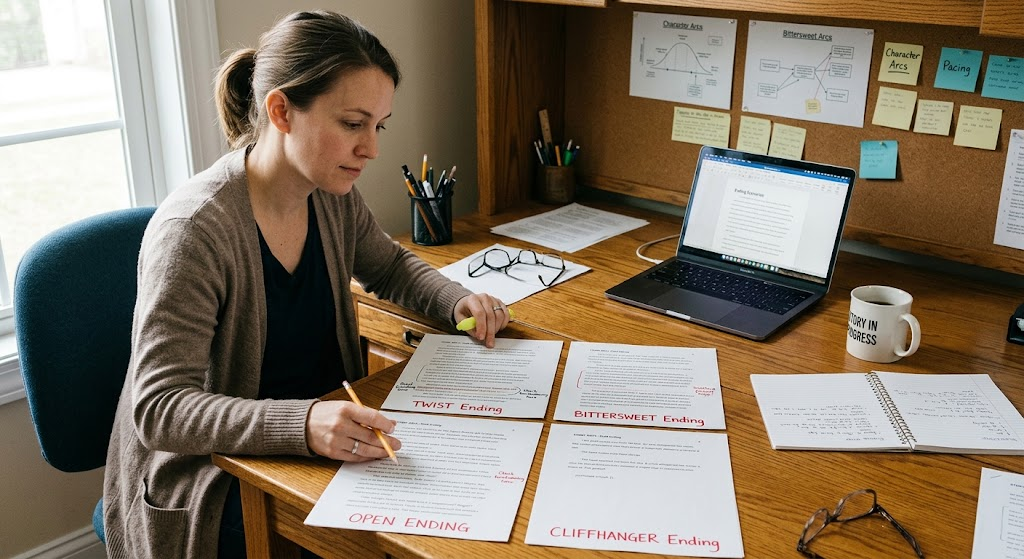
Learning how to write a good ending to a short story comes down to four things working together: character growth that’s been earned across the preceding pages, a theme that resolves without being stated outright, stakes that were genuinely at risk, and a final sentence strong enough to stand alone. That last point deserves attention on its own — the final sentence of a short story is arguably the single most-scrutinized line in the entire piece, since it’s the one readers linger on before closing the page.
A useful test: read the final paragraph in isolation, stripped of context. Does it still carry emotional weight? If it only makes sense buried inside the surrounding explanation, that’s usually a sign the ending is leaning on exposition instead of earning its impact through the scene itself.
How to End a Short Story with a Cliffhanger
A cliffhanger works when the story genuinely benefits from unresolved tension — mystery and thriller fiction lean on this naturally, since suspense is often the point of the genre rather than a side effect of it. It tends to fail in literary or character-driven fiction, where readers expect emotional closure even if plot closure is optional.
The mechanics matter here more than the genre. A cliffhanger needs to interrupt at a moment of genuine consequence, not an arbitrary stopping point. Ending a mystery story right as the detective opens the final envelope works because the suspense has been built deliberately toward that exact beat. Ending a story mid-scene simply because the word count ran out reads as unfinished rather than intentional, and readers can usually tell the difference.
How to End a Short Horror Story
Horror endings run on a slightly different logic than most other genres, because ambiguity itself often is the scare. Psychological horror tends to benefit from unanswered questions — did the event actually happen, or was it the character’s unraveling mind? Supernatural horror, by contrast, often wants a final scare beat: a last-line reveal that recontextualizes everything the reader just experienced.
The common thread across both approaches: restraint. Over-explaining a horror ending — detailing exactly what the monster was, exactly why the haunting happened — tends to drain the fear rather than satisfy curiosity. Shirley Jackson’s endings are frequently held up as a model here precisely because she trusted ambiguity over explanation.
How to End a Short Story: Examples Across Genres
Romance: a couple who spent the story avoiding a conversation finally sits down together — the story ends before the conversation itself, on the quiet certainty that it will finally happen.
Horror: a character who’s spent the story insisting nothing is wrong finally looks in a mirror and doesn’t recognize what looks back — the story ends there, mid-reaction.
Fantasy: a young mage who’s been running from their power finally lets a small, controlled spell happen on purpose — nothing dramatic, just a door opening that was closed the whole story.
Mystery: the detective solves the case, but the story ends on their private doubt about whether justice and the law actually mean the same thing here.
Drama: a father and estranged son share one wordless moment — a shared task, nothing said — that says more than any conversation could have.
Science fiction: a colonist looks back at Earth for the last time through a viewport, and the story ends on that image rather than on any dialogue.
Children’s stories: a child who spent the story afraid of the dark finally turns off the light themselves, without being told to.
Literary fiction: a woman rereads a letter she’s read a hundred times, and for the first time, folds it back up without crying.
Common Mistakes Writers Make with Endings
- Over-explaining. Summarizing what the reader already understood insults their intelligence and drains tension out of a scene that should be doing emotional work, not narrating it.
- Adding new conflicts. The climax is over. Introducing a fresh complication after that point reads as the writer not knowing when to stop, not as depth.
- Rushing the landing. Endings need room to breathe just as much as any other scene — compressing the resolution into a single rushed paragraph undercuts everything built up to that point.
- Deus ex machina. A resolution that arrives from nowhere, unearned by anything in the preceding story, breaks trust with the reader even if it technically “solves” the plot.
- Predictable twists. A twist telegraphed too early stops being a twist and starts reading as a plot hole the character somehow missed.
- Overly tidy happy endings. When a neatly resolved happy ending contradicts the tone the story has built, it can feel dishonest rather than satisfying.
- A weak final sentence. Given how much scrutiny the last line receives, a flat or generic closing sentence undermines an otherwise strong story disproportionately.
Best Story Ending Types Compared
| Ending Type | Best For | Emotional Effect |
|---|---|---|
| Twist | Mystery, suspense | Surprise |
| Cliffhanger | Thriller, serialized fiction | Suspense |
| Bittersweet | Literary fiction | Reflection |
| Happy | Romance | Satisfaction |
| Tragic | Drama | Emotional impact |
| Circular | Literary fiction | Closure |
| Open | Literary, experimental fiction | Ambiguity |
Common Mistakes and Better Alternatives
| Mistake | Better Alternative |
|---|---|
| Explaining everything | Trust the reader to infer meaning |
| Introducing new conflict | Resolve the existing conflict fully |
| Weak last line | Close on a vivid, specific image |
| Rushed ending | Slow down once the climax has passed |
Expert Tips for Sticking the Landing
Read the ending aloud before calling it finished — a sentence that looks fine on the page often reveals an awkward rhythm the moment it’s spoken. If a final paragraph feels like it’s explaining too much, try cutting it entirely and see whether the story actually needs it; more often than not, the paragraph above it was already doing the real work. Focus on emotional resonance over information — readers rarely remember what happened in precise detail, but they remember how a story made them feel. And treat the last line with the same care as the first: it’s the sentence most likely to be reread, quoted, or remembered long after the rest of the story fades.
Writers who study craft seriously often return to Freytag’s Pyramid or the broader three-act structure as a reference point for where an ending should sit relative to the climax — not as a rigid formula, but as a useful check against endings that either arrive too early or drag on too long after the story’s real work is finished. Writer’s Digest and Literary Hub both publish regular craft essays specifically on ending mechanics, and they’re worth following if this is a skill you’re actively developing rather than picking up once for a single story.
Frequently Asked Questions
How do you end a short story?
Stop shortly after the emotional climax, resolve the character’s internal conflict rather than every plot detail, and close on a specific image or moment rather than an explanation of what it all meant.
What is the best ending for a short story?
There’s no single best type — the right ending matches the story’s tone and genre. Bittersweet and circular endings tend to work across the widest range of literary fiction, while twists suit mystery and suspense.
How long should a short story ending be?
Usually just a paragraph or two once the climax has resolved. An ending that stretches on for several pages after the central conflict peaks tends to dilute the impact rather than deepen it.
How do you end a horror short story?
Lean into ambiguity for psychological horror or a final scare beat for supernatural horror, and resist the urge to explain exactly what happened — unanswered questions are often what makes horror endings linger.
Should every short story have a twist?
No. A twist only works when the story’s structure and genre call for it. Forcing a twist into a character-driven or literary piece often undermines the emotional arc the story spent its length building.
Can a short story end without a conclusion?
Yes — open endings are a legitimate and common technique, especially in literary fiction, provided the emotional or thematic question at the story’s center has still been meaningfully explored.
What makes a story ending memorable?
Specificity. A precise image, a particular line of dialogue, or a small, concrete action tends to stay with readers far longer than a vague or abstract closing statement.
How do you write a final sentence?
Write it as if it needs to stand entirely on its own, disconnected from the paragraph before it. If it carries emotional weight in isolation, it’s likely doing its job.
Bringing It Together
Knowing how to end a short story isn’t really a separate skill from knowing how to write one — it’s the same instinct for pacing, restraint, and emotional honesty applied to the final few lines instead of the whole piece. Purdue’s Online Writing Lab remains one of the more reliable academic references for craft fundamentals like structure and resolution if you want a grounded starting point beyond genre-specific advice, and organizations like Poets & Writers publish ongoing craft interviews with working authors that go deeper into how experienced writers actually approach their final drafts. The techniques above — full circle, epiphany, symbolic image, bittersweet close, and the rest — aren’t rules so much as options, and the right one depends entirely on what the story has been building toward all along. If you’re working through this with a student who’s still developing longer-form structure more broadly, the major essay guide covers a closely related skill worth revisiting alongside fiction craft.