A drop is over in a fraction of a second. The inspection that follows is almost always the same: turn the phone over, check the glass, look for a crack, feel relieved.
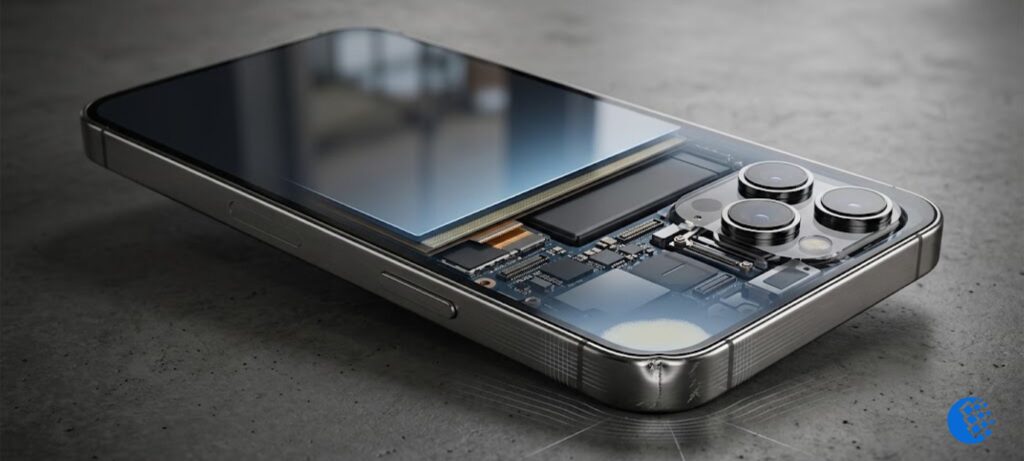
The glass is where damage becomes visible. It is not where the damage happens. Force enters the phone at the point of impact and travels through the entire chassis before anything breaks, and the components in its path are far more delicate than the screen.
You can see the evidence of this in a fault people report constantly. A white spot in iPhone screen thread refers to a pale patch after a drop, with no crack anywhere near it. The glass held. Something underneath it did not. That is the whole story of a drop in miniature: damage happens in layers, and the surface is the last place to show it.
Here is what actually happens inside, following the force from the moment of impact.
Key Takeaways
- Force travels through the frame, so damage lands far from the impact point.
- Corner landings are the worst case, not flat ones.
- Displays are layered, so they can be damaged without cracking.
- Microscopic solder cracks explain faults that appear weeks later.
- A dropped phone can lose water resistance even with no visible damage.
What a Drop Actually Does
It Is the Stop, Not the Fall
Nothing is damaged by falling. Damage happens when the falling stops.
That distinction explains why drops behave so unpredictably. A hard, unforgiving surface stops the phone almost instantly, and all the energy has to go somewhere in that instant. A softer surface spreads the same stop over a longer moment and a lower peak.
This is why the same drop from the same height onto carpet and onto tile are not the same event at all. Height is the number people quote. The landing surface matters more.
The Frame Conducts the Shock
The metal band around the edge of an iPhone is structural. It holds the device together and gives it rigidity.
That same rigidity makes it an efficient conductor of impact energy. Force arriving at one corner does not remain there. It travels through the frame and reaches assemblies at the opposite end of the phone within the same instant.
This is the single most useful thing to understand about drop damage. It explains why a phone that landed on its bottom-left corner develops a fault in a component at the top right.
Why Corners Are the Worst Case
A flat landing spreads the impact across the whole back or front of the phone. A corner concentrates every bit of it into a tiny area.
Corners are also crowded. Several delicate assemblies sit close to them, so the concentrated force lands exactly where the fragile parts are.
The Display Is Not a Single Sheet
Most people picture one piece of glass. A modern display is a stack of bonded layers, and each one can be damaged on its own.
The Layers, Simply
There is the outer glass you touch. Beneath it, the layer that detects your finger. Beneath that, the panel that produces the image. Behind that, backing and support structures.
They are bonded together, which is why the entire assembly is replaced as a single unit. It is also why damage can sit invisibly in the middle of the stack.
How a Screen Breaks Without Cracking
Compression is the mechanism. The stack gets squeezed, layers deform or separate slightly, and the outer glass survives the whole process without a mark.
That is where pale patches, dark blotches, and dead touch zones come from. The phone looks perfect and does not behave perfectly, which is a confusing combination until you know the display is layered.
Why Symptoms Sometimes Take Days
Separation between layers can progress after the initial impact rather than completing at the moment of the drop.
A patch that was too small to notice on day one becomes obvious by the end of the week. Nothing new happened. The original damage simply finished developing.
The Camera Assembly Is Designed to Move
Almost everything inside a phone is meant to stay exactly where it is. The camera is the exception.
Stabilisation hardware holds lens elements in a suspended assembly so they can shift to counteract your hand shaking. That suspension is deliberately delicate, because a stiff one would not work.
An impact can loosen the mount holding it. The result is a faint knock when the phone moves, sometimes with softness or blur in photographs that were sharp last month.
That knock is constantly attributed to the speaker, and people pay for speaker repairs that change nothing. If the noise appears when you move the phone and disappears when it sits still, audio hardware is not the suspect.
The Audio Path Runs Through the Board
A speaker is the visible end of a longer chain. Behind it sit connectors, flex cables, and circuitry that drives the whole thing.
Any link in that chain can fail while the others survive. A speaker module can be in perfect condition and produce nothing, because the connection or the driving circuit took the impact instead.
This explains a symptom that confuses many people. When someone finds the iPhone speaker grayed out during a call, meaning the control is visible but completely inert, that is not really a speaker symptom. An unresponsive control means the system is not detecting a working audio route at all, which points to the path rather than to the component at its end.
It also explains why cleaning the grille fixes some audio faults instantly and does nothing whatsoever for others.
The Logic Board and the Cracks You Cannot See
This is the part that explains the mysteries.
Solder Joints Under Stress
Chips do not sit loosely on the board. They connect through hundreds of tiny solder joints, each one a small structural link carrying both signal and physical load.
An impact can crack one of those joints at the microscopic level without separating it. Under a microscope, there is a hairline flaw. Electrically, everything still works.
Why This Produces Intermittent Faults
A partially cracked joint continues to conduct until something briefly opens it. Heat expands the surrounding material. Flex from squeezing the phone shifts it. Vibration nudges it.
The connection breaks for a moment, the fault appears, and then everything settles and works again.
This is why some post-drop faults are so maddening. The phone misbehaves at home, works perfectly at the repair counter, and starts again on the way back. Nobody is imagining it, and no technician is being careless. The fault is genuinely intermittent by nature.
Connectors That Unseat Slightly
Boards inside a phone connect to each other through small pressure-fit connectors. An impact can shift one slightly without fully disconnecting it.
The symptoms look exactly like a failed component. This is a large part of why diagnosis beats guessing, and why a shop that reseats and tests before quoting a replacement is worth finding.
The Battery Deserves Its Own Section
Everywhere else in this article, the stakes are cost. Here they are safety.
Lithium cells are soft, layered, and sit directly behind the back of the phone with very little between them and the outside world. An impact can deform a cell internally with no external sign at all.
Watch for these afterwards:
- Any swelling, or a screen or back panel that no longer sits flush in the frame
- Unusual heat during normal use or charging
- Sudden, dramatic loss of charge capacity
- A phone that has developed a slight rock when placed on a flat table
If any of those appear, the guidance is consistent and worth following exactly. Stop using the phone and stop charging it. Keep it away from bedding, paper, and anything else flammable. Do not press on it, bend it, or attempt to remove anything. Get it assessed professionally, and mention the drop when you do.
Battery damage is rare after a typical drop. It is also the one outcome where waiting to see what happens is a genuinely bad idea.
The Seals Are Adhesive, and Adhesive Fails Quietly
Water resistance in a phone comes from gaskets and adhesive bonding the display and back panel to the frame.
An impact can break that bond without leaving any visible sign. The phone passes every test you could think to run. It looks immaculate. And then it fails the first time it meets heavy rain, months later, with no obvious connection to the drop that caused it.
Worth knowing for the same reason: any repair that opens the phone breaks that seal too. Whether the factory-level resistance comes back depends entirely on how carefully it is resealed.
The Sensors Depend on Staying Aligned
The sensor array at the front of the phone works by projecting a pattern and reading it back. That process depends on components sitting in a precise geometric relationship with each other.
Shift that geometry slightly and recognition does not fail outright. It becomes unreliable, working most of the time and refusing occasionally for no apparent reason.
The proximity and ambient light sensors live in the same crowded strip of the phone, which is why they sometimes go wrong together.
Why Some Faults Take Weeks to Appear
Delayed symptoms are the norm rather than the exception, and each one has a mechanism behind it.
| Fault | Why it shows up later |
| Spreading hairline crack | Stress concentrates at the existing flaw and extends it |
| Intermittent Face ID | Alignment shifts gradually under normal handling |
| Bright patch on the display | Layer separation continues after the impact |
| Random restarts | A cracked solder joint opens under heat |
| Water damage | A broken seal only matters once water arrives |
| Battery problems | Cell damage develops across charge cycles |
What This Means in Practice
Test the phone after a drop even when nothing looks wrong. The visible damage is the least representative evidence available, and its absence proves very little.
Write down the date. The gap between impact and symptom is exactly what makes a later conversation about a claim or a warranty difficult, and a note costs nothing.
Do not dismiss a symptom because weeks have passed. The mechanisms above take weeks by design.
And when two faults appear around the same time, assume a shared cause before assuming coincidence. Force travelled through the whole phone. It is entirely normal for it to leave more than one mark.
Final Thoughts
The crack is the part of a drop you can see, and it is a poor summary of what happened.
Force entered through a corner, travelled the frame, passed through layered assemblies, crossed pressure-fit connectors, and went around a soft lithium cell, all in less time than it took you to react. Any of those can carry damage that surfaces later.
Once you know the path, the strange delayed symptoms stop looking random and start looking exactly like what they are.
FAQs
Can a drop damage my phone if the screen does not crack?
Yes, routinely. The display is layered, and the internal components sit in the force path whether or not the glass gives way.
Why did a problem appear a month after I dropped my phone?
Cracks spread, layers separate, connections loosen, and cell damage develops over charge cycles. Delay is the normal pattern, not the odd one.
Is a short drop onto carpet safe?
Safer, certainly. Carpet lengthens the stop and lowers the peak force. It is not a guarantee, particularly for a corner landing.
Can a drop break water resistance?
It can, invisibly. Seals are adhesive, and adhesive can fail without any external sign.
Should I worry about the battery after dropping my phone?
Not usually, but check for swelling, heat, and a phone that no longer sits flat. If you see any of those, stop using it and get it looked at.