Most people who walk into their first Brazilian Jiu-Jitsu class have never grappled with anyone in their life, and that’s completely normal. Coaches see it every day. Nobody expects you to know the difference between guard and mount, or to know what your training partner means when they ask if you want to roll.
That said, picking up a few basic terms and ideas beforehand really does take some of the nerves out of it. If you’re looking into the things to learn before your first BJJ class, the good news is you don’t need to memorize techniques or binge hours of YouTube instructionals. You mostly just need to understand how tapping works, recognize a handful of positions, know the basic etiquette, and show up in the right clothes with the right mindset.
Quick answer: Before your first BJJ class, learn what “tap,” “roll,” and “drill” mean, get familiar with basic positions like guard, mount, and side control, understand your gym’s hygiene rules, and find out whether your class is Gi or No-Gi. That’s genuinely enough to walk in prepared.
Do You Need Experience Before Your First BJJ Class?
No. A good academy expects complete beginners to walk through the door.
Honestly you don’t need any of that stuff people worry about, wrestling background, other martial arts, being flexible, being in shape. None of it. A decent coach handles the basics for you and just lets you mess around and figure it out yourself.
The thing that actually matters, and I mean actually, is just showing up and being willing to listen. Ask dumb questions if you have them. You’re gonna feel clumsy, like really clumsy, because your body’s doing stuff it has never done before in its life. So when you forget which way your hips are supposed to go mid roll, that’s not you failing. That’s just Tuesday for a white belt.
Your first class isn’t a test. Nobody’s grading you. It’s just you showing up and seeing what this whole thing even is.
Essential Things to Learn Before Your First BJJ Class
You don’t need to know how to submit anyone before you’ve even stepped on the mat. What actually helps is understanding a few concepts so you can follow along with what your coach and training partners are saying.
1. Understand What “Tap” Means
Tapping is probably the single most important thing to understand before your first class.
If you get caught in a submission, you tap your partner, tap the mat, or just say “tap” out loud. Your partner should let go the moment they feel or hear it.
There’s nothing embarrassing about tapping. It’s a completely normal part of training, and even experienced practitioners tap all the time when they get caught in something they can’t escape safely.
As a beginner, tap early. There’s no reward for gritting through unnecessary pain.
2. Know What “Rolling” Means
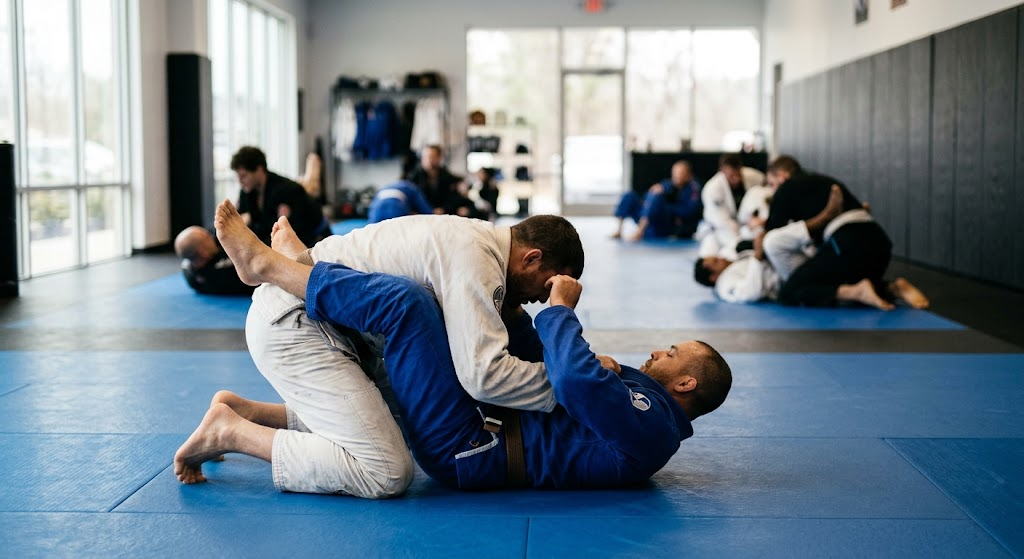
“Rolling” is just the BJJ word for live sparring.
Unlike drilling, where you and your partner are cooperating to practice a move, rolling is where both people actually try to use what they’ve learned against real resistance.
Not every first class has rolling in it. Some beginner programs ease you into it right away in a controlled way, others hold off until you know a few basic positions and escapes.
Either way, knowing the word ahead of time saves you from standing there confused when someone asks, “Want to roll?”
3. Understand Drilling vs. Rolling
These two aren’t the same thing, and mixing them up is a classic beginner mistake.
Drilling means running through a technique with a partner over and over. The point is to learn the movement, not to “win” against your partner.
Rolling is live, meaning both people are actually trying to use their skills against each other.
So say your coach teaches a basic guard pass. You’d spend a few minutes drilling that pass cooperatively with your partner. Later, during a roll, that same partner might actively fight to stop you from pulling it off.
As a beginner, don’t turn drilling into a strength battle. Let your partner get their reps in too, and focus on actually understanding the movement instead of muscling through it.
4. Learn the Basic BJJ Positions for Beginners
You don’t need to master any of these before class. Just knowing the names makes instruction way easier to follow.
| Position | What It Means | Beginner Focus |
|---|---|---|
| Guard | Controlling an opponent from underneath using your legs | Stay calm and build useful frames |
| Closed Guard | Your legs are locked around your opponent | Keep your posture and control the distance |
| Open Guard | Your legs aren’t locked around the opponent | Use your legs and frames to manage distance |
| Mount | You’re on top of your opponent’s torso | Keep your balance and protect yourself |
| Side Control | One person controls the other from the side | Create space and work toward an escape |
| Half Guard | One of your legs is trapped between your opponent’s legs | Work toward recovering full guard |
| Back Control | One person controls the opponent from behind | Protect your neck and prevent escapes |
| Turtle | A defensive position on hands and knees | Protect yourself and look for a safe way out |
| Knee-on-Belly | One person places a knee across the opponent’s torso | Manage the pressure and create space |
The important part is recognition. If your coach says “start from side control,” you should at least have a rough idea of what that looks like.
5. Learn a Few Foundational Movements
BJJ classes lean on a handful of basic movements during warm-ups and instruction. It’s worth knowing these by name:
- Shrimp or hip escape: moving your hips away from your opponent to create space
- Bridge or upa: driving your hips upward to help with movement or an escape
- Technical stand-up: a controlled way of getting up off the ground while staying protected
- Breakfall: landing safely when you fall
- Shoulder roll: a rolling movement used in some drills and escapes
You don’t have to practice these at home before your first class. Your instructor will walk you through them and correct your form as you go.
6. Learn a Small BJJ Vocabulary
You’re going to hear a lot of unfamiliar words in your first few sessions. You don’t need to memorize the whole list, but these are worth knowing:
- Sweep: reversing your position from underneath and ending up on top
- Submission: a technique meant to make someone tap
- Escape: a movement that gets you out of a bad position
- Frame: using your arms, legs, or body to create space
- Base: a stable body position that’s hard to move or sweep
- Posture: keeping a strong, useful body alignment
- Open mat: informal training time where students practice or roll on their own
- Positional sparring: live practice that starts from a specific position
Knowing these words won’t make you good overnight, but it’ll make your first few classes a lot easier to keep up with.
What You Don’t Need to Learn Before BJJ
It’s just as useful to know what you can skip worrying about.
Before your first class, you really don’t need to memorize:
- Advanced submissions
- Complicated guard systems
- Leg-lock techniques
- Competition scoring
- Every BJJ belt level
- Brazilian Portuguese terminology
- Dozens of YouTube techniques
- A complete self-defense system
Watching a couple of beginner videos for context is fine, but you don’t need to show up with a technical game plan in your head.
Your coach might teach something differently than what you saw online, and that’s okay. For your first few sessions, listening to your instructor will get you further than trying to copy a video move-for-move.
Safety Rules to Know Before Your First Class
BJJ involves a lot of close physical contact, so safety matters from day one.
The core rules are simple:
- Tap when you need to.
- Let go immediately when your partner taps.
- Don’t crank a submission harder than necessary.
- Don’t use uncontrolled strength.
- Speak up if something hurts.
- Follow your instructor’s directions during drills.
- Don’t slam or throw training partners recklessly.
- Don’t train if you’re sick or dealing with a skin issue that could spread.
Hygiene actually matters a ton in grappling, mostly because you’re stuck in prolonged skin-to-skin contact with people and sharing the exact same mats with everyone else in class. Researchers who’ve looked into skin infections among wrestlers and grappling athletes have found that hygiene and prevention habits genuinely make a real difference in these kinds of environments.
BJJ Mat Etiquette for Beginners
You don’t have to know every tradition walking in, but a few etiquette basics go a long way.
- Arrive clean and ready to train
- Keep your fingernails and toenails trimmed
- Take off rings, watches, earrings, and other jewelry
- Don’t walk onto the mats in outdoor shoes
- Wear clean training clothes
- Pay attention when the instructor is demonstrating
- Don’t talk over a demonstration
- Tap your partner clearly when you’re submitting
- Let go the instant your partner taps
- Ask questions when something doesn’t click
Some academies have their own traditions, like bowing when you step onto the mat. Just follow whatever your academy teaches instead of trying to learn every custom in advance.
What to Wear to Your First BJJ Class
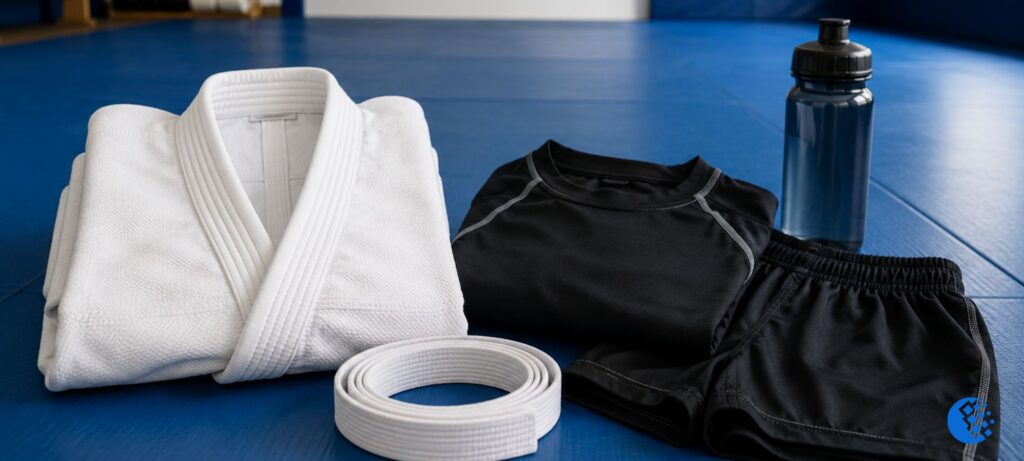
The big question here is whether your first class is Gi or No-Gi.
Gi
The Gi is the traditional BJJ uniform, usually a jacket, pants, and a belt.
Some academies will loan you a Gi for your trial class, others expect you to bring your own from day one.
No-Gi
No-Gi training typically means a fitted rashguard or athletic shirt paired with grappling shorts or compression gear.
Either way, ask the academy ahead of time what they require.
Steer clear of clothing with:
- Zippers
- Metal clasps
- Hard buttons
- Loose pockets
- Anything that could scratch or snag on your training partner
You don’t need to drop money on specialized gear before you even know if you’ll enjoy it.
What Should You Bring?
A simple first-class bag can include:
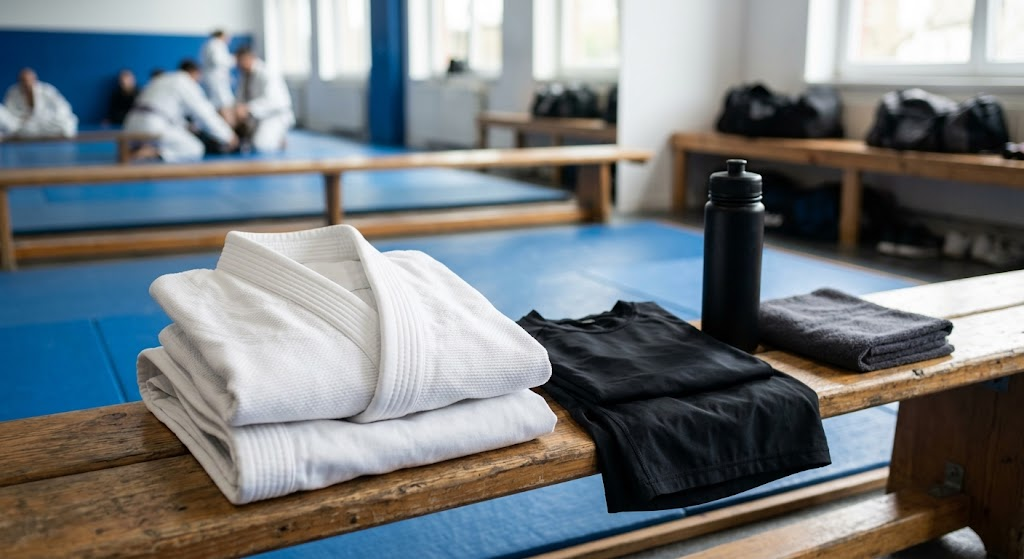
- Water bottle
- Small towel
- Clean change of clothes
- Flip-flops or slides
- Whatever Gi or No-Gi gear is required
- Deodorant or basic hygiene supplies
- A mouthguard, if your academy suggests one
The one thing that really matters is clean gear.
What Should You Eat Before Your First BJJ Class?
You don’t need a special diet for your first class.
A normal, fairly light meal an hour or two beforehand works well for most people. Try not to show up starving, but also don’t eat a huge meal right before class. Rolling around on the ground with a full stomach isn’t pleasant.
Drink water steadily through the day rather than chugging a bottle right before class.
This isn’t a competition, so there’s no need to experiment with supplements or a fancy pre-workout routine.
Honestly, knowing these small things to learn before your first BJJ class matters more than people expect. The practical prep is often what makes the day feel easy instead of stressful. There’s no need to overthink it beyond that, though.
How Early Should You Arrive?
Showing up 10–15 minutes early is a solid rule of thumb.
That gives you time to:
- Check in
- Change clothes
- Find the changing area
- Stash your belongings
- Meet the instructor
- Confirm whether the class is Gi or No-Gi
- Let the coach know you’re brand new
Arriving early also takes away that rushed, out-of-breath feeling of sprinting in right as class starts.
What Should You Tell Your Coach?
Keep it simple:
“It’s my first BJJ class.”
That one sentence gives your instructor everything they need to know to keep an eye on you.
You should also mention anything that might affect your training, like an old injury or a movement you’re not comfortable with.
And if you don’t understand a technique, ask. Nobody expects you to remember everything after seeing it once.
What Actually Happens During a First BJJ Class?
Every academy runs things a little differently, but a typical beginner class tends to follow a pattern like this:
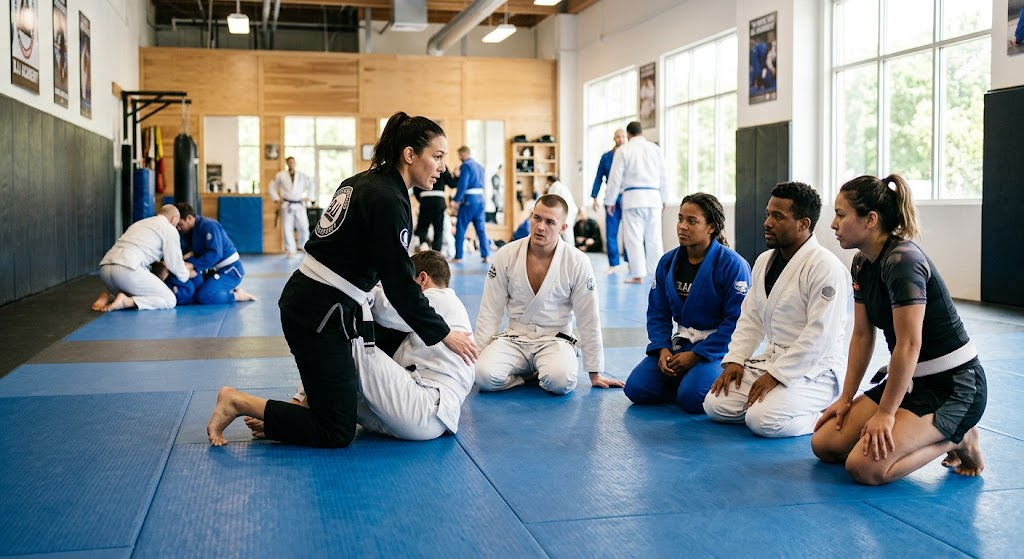
1. Warm-Up: The class often kicks off with movements like shrimping, bridging, technical stand-ups, or other mobility drills.
2. Technique Instruction: The instructor shows one or more techniques. Watch closely, then try to copy the movement with a partner.
3. Drilling: You run through the technique several times, usually swapping roles with your partner.
4. Positional Sparring or Rolling: Some academies work in controlled positional practice or light rolling. Others skip live sparring in a first class entirely.
5. Cool-Down: Class often wraps up with stretching, a quick chat, or another light exercise.
Don’t stress if the whole sequence feels like a blur the first time. Your brain is processing brand-new movements while your body is doing something it’s never done before, and that’s a lot at once.
How Long Is a First BJJ Class?
Most BJJ classes run somewhere around 60 to 90 minutes, though a beginner or trial class might be shorter depending on the academy. A typical session covers a warm-up, some technique instruction, drilling, and sometimes positional sparring or rolling at the end. If you’re going in for a trial class, it’s worth asking the academy how long the session usually runs so you can plan the rest of your day around it.
Should You Roll on Your First Class?
There’s no single right answer here.
Some academies welcome or even encourage controlled rolling for total beginners. Others prefer you learn the basic movements and safety rules first.
If you do end up rolling, don’t treat it like a fight.
Your goal should be to:
- Stay controlled
- Keep breathing
- Listen to your partner
- Skip the unnecessary force
- Tap when you need to
- Actually learn from what happened
There’s no bonus points for surviving a submission you should’ve tapped out of.
Is BJJ Physically Hard for Beginners?
Honestly, yes, it can be.
Your first few classes might leave you more wiped out than you expect, simply because your body isn’t used to these movements yet. Grip fatigue, tired hips, a racing heart rate, and general soreness are all pretty normal for new students.
You don’t need to get fit before you start. Training itself builds that fitness over time.
There’s also a growing body of research looking at martial arts and exercise that points to real physical and psychological benefits from regular participation.
If you’re still weighing whether martial arts fits your budget, our guide to the cost of martial arts classes might help.
10 BJJ Beginner Tips and Common Mistakes
Just about every first-timer makes a few of these. It’s normal, so don’t beat yourself up over it. These BJJ beginner tips can help you spot the mistakes early and skip a bit of the awkward phase.
- Trying to win instead of learn
- Using way too much strength
- Holding their breath
- Refusing to tap
- Ignoring hygiene
- Not paying attention during demos
- Comparing themselves to experienced students
- Going too hard during drilling
- Being afraid to ask questions
- Expecting to understand everything after one class
The good news? These mistakes tend to fade out naturally as you get more comfortable on the mats.
What If You’re Nervous About Your First BJJ Class?
Feeling nervous before your first class is completely normal, and almost everyone shows up with some version of it. You don’t know the people yet, the terminology is new, you’re not sure what the routine looks like, and you have no idea what’s actually going to happen once you step on the mat.
Tell the instructor you’re new the moment you walk in. Most coaches will pair you with someone experienced who can walk you through the first few drills at your pace. You’re not there to impress anyone. Your only real job on day one is to listen, learn, and get comfortable being a beginner.
What If You Get Submitted Over and Over?
You probably will, a lot actually.
That’s not proof you’re bad at this. The people submitting you have years of reps in understanding position, pressure, timing, and leverage that you simply haven’t built yet.
Your first goal isn’t to submit anyone. It’s to understand what’s actually happening to you.
Every time you get caught, ask yourself:
- Where did the position break down?
- Did I leave space open?
- Did I forget to protect my neck?
- Did I stop moving?
- Did I miss a chance to escape?
Those questions get more useful the more experience you build.
What If You Forget a Technique?
Don’t panic. This happens to everyone, constantly.
Watch the next demo carefully. Ask your partner to walk you through the first step again. Still stuck? Ask the coach.
It’s always better to ask a basic question than to spend ten minutes drilling the wrong movement.
Even experienced students need an extra demonstration sometimes. You’re in good company.
How to Choose a BJJ Academy
If you haven’t picked a school yet, don’t just go by price or how close it is to home.
A beginner-friendly academy should have:
- Clear instruction for beginners
- Clean mats
- Solid hygiene standards
- Coaches who communicate with respect
- Controlled training environment
- A welcoming vibe
- Trial classes or an intro option
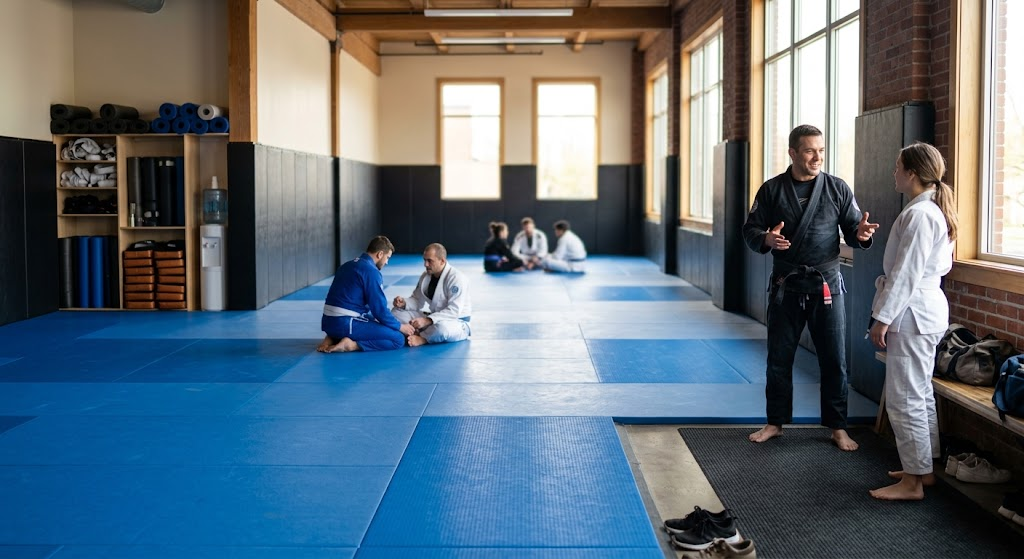
You should feel completely fine asking questions before you even sign up.
BJJ Academy Red Flags
Watch out for:
- Students getting mocked for tapping
- Coaches brushing off safety concerns
- Partners refusing to release submissions
- Dirty or poorly kept mats
- Beginners thrown straight into hard, uncontrolled sparring
- Heavy pressure to buy expensive gear right away
- A culture where ego matters more than learning
If you’re also weighing BJJ against other martial arts, our guide to Krav Maga breaks down how that more strike-focused style compares to grappling.
What Should You Do After Your First Class?
Keep it simple.
Shower as soon as you reasonably can, change out of your sweaty clothes, and actually wash your training gear instead of letting it sit in a bag.
You might feel sore in places you don’t normally notice, like your hips, forearms, shoulders, or neck. That’s usually just your body adjusting to unfamiliar movement, nothing to worry about.
Try not to judge the whole experience off one class. Give yourself a handful of sessions before deciding whether it’s for you.
How to Prepare for Your First BJJ Class
The best way to prepare for your first BJJ class is to keep things simple. Get a decent night’s sleep, shower before you head out, trim your fingernails and toenails, wear clean clothes, bring water, and try to arrive 10–15 minutes early. Most of all, don’t try to cram advanced techniques beforehand. Your first session is really just about getting used to the environment and picking up the basics.
First BJJ Class Checklist
Before Leaving Home
- Trim your fingernails and toenails
- Shower
- Pack clean training clothes
- Remove jewelry
- Confirm Gi or No-Gi
- Bring water
At the Academy
- Arrive 10–15 minutes early
- Introduce yourself
- Tell the coach you’re new
- Listen during demonstrations
- Ask questions
- Follow the academy’s etiquette
After Class
- Shower
- Change out of sweaty clothes
- Wash your training gear
- Hydrate
- Jot down what you learned
- Give yourself time to recover
BJJ Terminology for Beginners: Quick Glossary
| Term | Meaning |
|---|---|
| Tap | A signal that you want a submission to stop |
| Roll | Live BJJ sparring |
| Drill | Repeated practice of a technique |
| Sweep | Reversing a position from underneath |
| Submission | A technique designed to force a tap |
| Escape | Getting out of an unfavorable position |
| Frame | Using part of your body to create space |
| Base | A stable position that helps prevent being moved |
| Posture | Maintaining useful body alignment |
| Open Mat | Informal training or practice time |
| Positional Sparring | Live practice beginning from a specific position |
Frequently Asked Questions
What Are the Most Important Things to Learn Before Your First BJJ Class?
The most important things to learn before your first BJJ class are what tapping means, how drilling is different from rolling, the names of the basic positions, and your academy’s safety and etiquette rules. You don’t need to know any advanced techniques going in.
Do I need experience before my first BJJ class?
No. Beginners are expected to walk in with little or no grappling background.
What should I do before my first BJJ class?
Shower, trim your nails, wear clean clothing, confirm whether the class is Gi or No-Gi, bring water, and try to arrive around 10–15 minutes early.
Should I watch BJJ videos before my first class?
A few beginner videos can give you useful context, but don’t feel like you need to memorize anything. Your instructor will teach you the fundamentals in class.
Should beginners roll on their first day?
Depends entirely on the academy. Some ease beginners into controlled rolling right away, others wait until you’ve learned basic movements and safety procedures first.
Can I start BJJ if I’m out of shape?
Yes. You don’t need to be in great shape before you start. Your fitness will build up as you train.
Is it normal to be nervous before your first BJJ class?
Completely normal. Most beginners feel some nerves simply because they don’t know what to expect. That usually fades once the environment starts feeling familiar.
What should I eat before BJJ?
A normal, light meal one to two hours before class works well for most people. Just avoid training right after a big meal.
How early should I arrive?
Around 10–15 minutes early is a good default, unless your academy tells you otherwise.
What happens when you tap in BJJ?
Your partner releases the submission immediately. Tapping is a completely normal part of training, and it’s what keeps practice safe for everyone.
How long does it take for BJJ to feel less overwhelming?
There’s no set timeline, but a lot of beginners start feeling more at ease after a handful of classes, once the basic positions and vocabulary become familiar.
What’s the difference between drilling and rolling?
Drilling is controlled, cooperative technique practice. Rolling is live sparring, where both partners are actually trying to use their skills against each other.
Conclusion
You don’t need to walk into your first BJJ class already knowing how to grapple — that’s really not the point. Honestly, the real prep is way simpler than people think: understand what tapping means, recognize a few basic positions, know the difference between drilling and rolling, follow basic mat etiquette, and find out what clothing your academy requires. That’s really the core of the things to learn before your first BJJ class, and it’s genuinely not much to carry in your head.
Everything else comes with time on the mat.
Show up early, listen to your coach, tap when you need to, ask questions when you’re lost, and don’t stress about looking like a beginner — because you are one, and honestly, that’s completely fine. At the end of the day, the things to learn before your first BJJ class are just the concepts that help you feel safe and understand what’s going on around you. The actual skills? Those come once you start training.