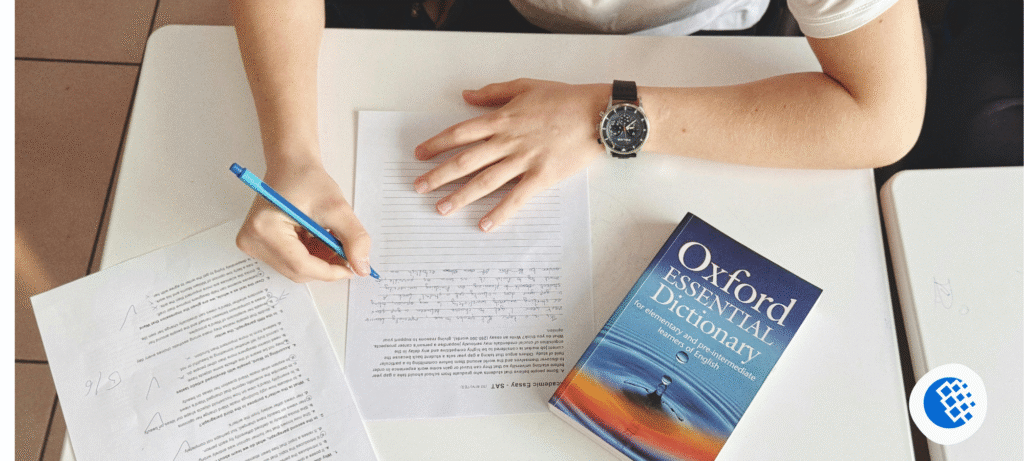

Ask most people about handwriting cursive or print and which one’s “better,” and they’ll want a clean answer. Real life doesn’t hand you one. Real life doesn’t hand you one. Print is usually easier to read and easier to pick up in the first place. Cursive can end up faster and more comfortable, but only once someone has actually put in the practice. Most adults never consciously choose either one; they just drift toward whatever combination feels natural, and that’s a perfectly reasonable place to land.
This piece goes through what actually separates the two styles, where each one has a genuine edge, and how to think about the question whether you’re picking a style for yourself, helping a child through it at school, or writing a note in a memory book you want someone to be able to read in thirty years.
Quick Answer: Handwriting Cursive or Print?
If clarity matters most, go with print. It’s usually easier for unfamiliar readers to decode, and it’s what most beginners learn first. If you’re already comfortable joining letters and you write a lot by hand, cursive can genuinely save time. For everyday life, the honest answer is that most people use a bit of both without ever formally deciding, and there’s nothing wrong with that.
What Is the Difference Between Cursive and Print Handwriting?
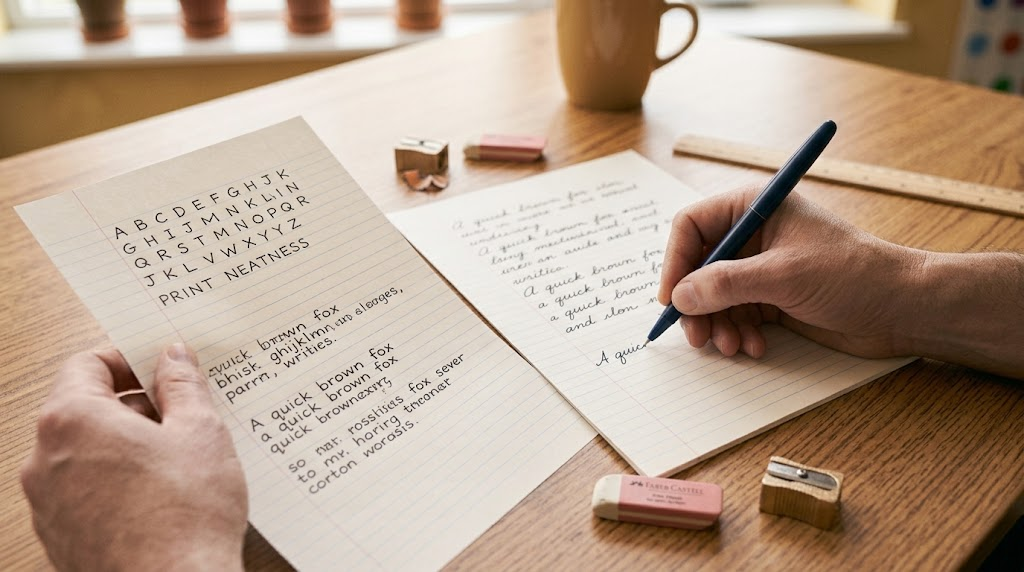
The distinction is simpler than it sounds, and it mostly comes down to how the letters are formed and connected. Print keeps each letter separate, while cursive lets the writing flow from one letter into the next. Once you see the two styles side by side, the difference is pretty easy to spot.
What Is Print Handwriting?
Print, sometimes called manuscript handwriting, keeps every letter separate. The pen lifts after each one. That’s exactly why schools tend to teach it first: it lines up with the letters children are already seeing in books, so reading and writing reinforce each other instead of feeling like two different systems.
What Is Cursive Handwriting?
Cursive links letters into one continuous stroke, or at least most of them, most of the time. Instead of that repeated lift-and-place motion print relies on, the hand just keeps moving across the page. That’s really where cursive’s reputation for speed comes from, though it’s worth saying now, that speed only shows up once the writer’s actually built the muscle memory for it. A first-year cursive student isn’t writing faster than a confident print writer. Not even close, honestly.
Print vs Cursive Handwriting: Key Differences
| Feature | Cursive | |
|---|---|---|
| Letter formation | Separate letters | Connected letters |
| Learning curve | Usually easier at the start | Takes more coordination and practice |
| Readability | Generally easier to scan quickly | Depends heavily on the writer’s fluency |
| Speed | Can be slowed by repeated pen lifts | Can be faster once the writer is fluent |
| Writing flow | More stop-start | More continuous |
| Personal style | Moderate | Often more distinctive |
| Good for beginners | Yes, usually the starting point | Usually introduced later |
| Forms and applications | Works well | Less practical |
| Personal notes and letters | Fine | Often preferred |
None of that adds up to one column being the “winner.” It depends on what you’re writing and who has to read it afterward.
Benefits of Print Handwriting
Print earns its reputation honestly, for a handful of reasons that hold up in practice.
It’s easy to read. Separated letters give a reader clear breaks to work with, which is exactly why forms, labels, and anything meant for a stranger to decipher default to print almost automatically.
It’s easier to learn. There’s no connection pattern layered on top of the letter shape, so a beginner has one thing to master instead of two.
It matches what kids are already reading. Since print looks like the text in picture books and on screens, it reinforces letter recognition instead of introducing a second visual alphabet a child has to learn from scratch.
It tends to hold up better under pressure. Rushed print often stays more legible than rushed cursive, since there’s less that can go visually wrong when the letters aren’t relying on each other to stay connected, though a lot still comes down to the individual writer.
Benefits of Cursive Handwriting
Cursive isn’t just tradition. It has real, practical upsides for people who’ve actually learned it well.
Speed is the obvious one. Fewer pen lifts and a continuous motion can shave real time off long writing sessions, though again, that only kicks in once the movements are automatic rather than something the writer is still consciously working through.
Some writers find it more comfortable. The continuous motion can feel gentler on the hand over a long stretch than the constant start-stop rhythm of print, though this varies from person to person and isn’t a universal rule.
Spacing can feel more natural. Because the letters are physically joined, cursive sometimes avoids the uneven gaps that show up in rushed print, though this really comes down to the individual writer’s skill rather than the style itself.
It reads as personal. Cursive still carries a kind of individuality that print doesn’t, which is a big part of why it’s stuck around for signatures and handwritten letters even as day-to-day writing has moved toward print and typing.
Is Cursive Faster Than Print?
Yes, cursive can be faster than print, but honestly, that word “can” is doing a lot of heavy lifting in that sentence. The speed advantage comes from continuous motion and fewer pen lifts, and that advantage just doesn’t exist, not really, for someone who hasn’t practiced enough to make the connections automatic.
Put a fast, confident print writer next to someone who learned cursive in third grade and hasn’t used it since, and the print writer will very likely win. Fluency is the actual variable here, not the style itself.
Is Print Easier to Read Than Cursive?
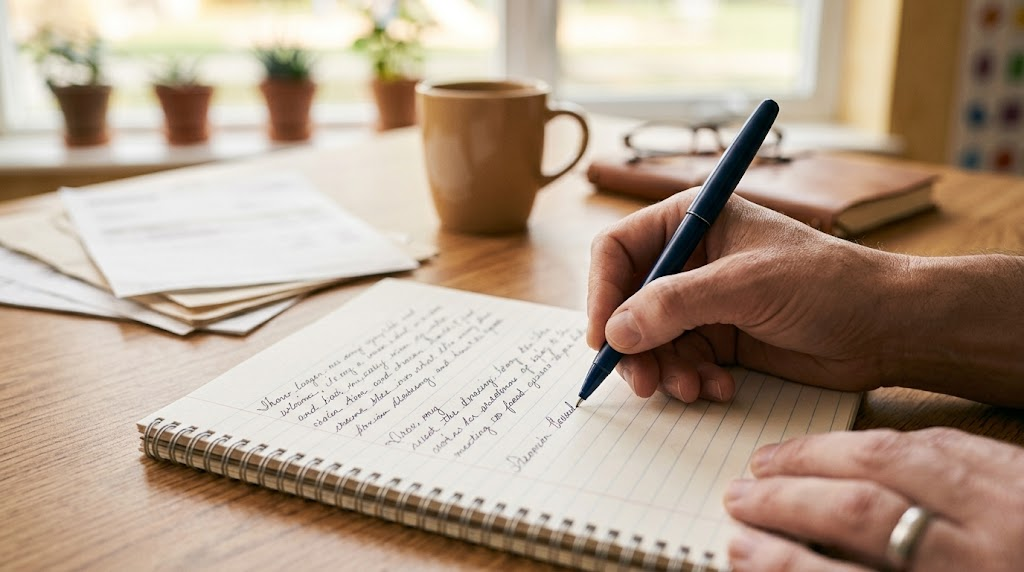
In general, yes, mostly because each letter stands on its own and doesn’t depend on the letters around it to hold its shape. But “in general” is doing real work in that sentence too. Sloppy print can be just as frustrating to read as sloppy cursive, and a fluent, well-formed cursive hand can be perfectly clear, especially to a reader who’s used to reading it.
Readability comes down to consistency, spacing, and how practiced the writer actually is, more than which style they happened to choose.
What Does Research Say About Cursive vs Print?
Handwriting isn’t just a motor skill, and it isn’t just a cognitive one either. Honestly, it’s both at once, which is part of why it’s genuinely more complicated to study than it looks on the surface. Writing by hand draws on working memory, motor planning, and visual-motor coordination all at the same time, and how automatic that process feels changes how much mental effort is left over for the actual writing task, things like spelling or organizing a sentence. Researchers looking at handwriting and written composition, including work summarized by Berninger and colleagues, have pointed to this link between handwriting fluency and how much working memory is actually left over for the content of what’s being written.
When handwriting becomes automatic, whether that’s print or cursive, fewer cognitive resources go toward the physical act of forming letters, which frees up attention for the content itself. That idea shows up pretty consistently in handwriting research reviewed by groups such as the National Institutes of Health, which has looked at handwriting as part of broader research on fine motor development in children. What isn’t well-supported, though, is the claim you sometimes see online that cursive specifically boosts memory, intelligence, or brain development in some way print doesn’t. That’s an overreach, honestly, and it’s not a conclusion serious handwriting research actually backs. The real summary here is that fluency in either style helps, and no study cleanly establishes one style as globally superior to the other.
Handwriting Cursive or Print: Which Is Better for Learning?
For learning specifically, the style matters less than how automatic it eventually becomes, honestly. A student who has to think consciously about forming every letter, in either print or cursive, ends up with less mental bandwidth left for spelling, sentence structure, or getting their ideas down before they lose the thread entirely. That’s really the more useful question for anyone thinking about handwriting instruction, not “which style is smarter,” but whether the chosen style is comfortable, legible, and automatic enough that it stops getting in the way of the actual writing task.
That’s also why so many literacy specialists avoid picking a side. It’s less about the letters themselves and more about whether a learner can get to the point where handwriting fades into the background. If you’re curious how this fits into the bigger picture of literacy development, our piece on how language skills grow from first reading to advanced understanding covers that progression in more depth.
Is Cursive or Print Better for Children?
The right answer shifts depending on where a child actually is developmentally.
For Young Children
Early handwriting instruction is mostly about basic letter formation and recognizing letters at all, and print supports that directly because it mirrors what kids are seeing in the books they’re learning to read. This is why print almost always comes first.

For Older Students
Once a child has solid letter formation down, the question becomes more about what actually helps them keep up: speed, confidence, legibility under classroom time pressure. Some students take to cursive quickly and genuinely write faster once they’ve got it. Others stay more comfortable and more legible sticking with print, and there’s no reason to push them off it just because cursive is “next” on a curriculum.
For Children Who Struggle With Handwriting
For kids dealing with fine motor difficulties, or a condition like dysgraphia, handwriting can be genuinely tiring in a way that’s just not obvious from the outside. The added coordination cursive demands can actually make that fatigue worse rather than better. In these situations, staying with print longer, and easing off the pressure to “graduate” to cursive fluency, is often just the more useful path. Bringing in typing or other assistive technology alongside handwriting practice can take some of that pressure off too, without cutting the child out of writing altogether.
Is Cursive or Print Better for Exams?
For exams, the right style is whichever one you can write quickly while still keeping it legible enough for someone else to grade. That’s a narrower question than “which style is better” in general, because speed without legibility doesn’t actually help you.
A few things that make a real difference under exam conditions:
- Practice under an actual timer beforehand. Handwriting speed and neatness both change once the clock is running, and it’s better to find that out before the real thing.
- Skip the decorative flourishes. Anything that adds visual flair but slows the pen down is working against you in a timed setting.
- Stick with one style through the answer. Switching between print and cursive mid-response usually hurts readability more than either style would on its own.
Can You Mix Cursive and Print Handwriting?
Yes, and honestly, most adults already do this without ever thinking of it as a decision. A hybrid style, printed capital letters with cursive-leaning lowercase, or cursive on some letters and not others, is extremely common and not a sign that someone is doing handwriting “wrong.”
In practice, that mixing usually looks something like this: print for headings and anything meant to be scanned quickly, a looser semi-joined style for personal notes or journaling, straight print for forms and anything official, and cursive, or something close to it, for letters and signatures. You don’t owe one style consistency across every kind of writing you do. Most people naturally shift depending on the situation, and that flexibility is more of a feature than a flaw.
Print or Cursive Handwriting: Which Is Better for Different Situations?
| Situation | Better choice |
|---|---|
| Learning to write | |
| Filling out forms | |
| Job or school applications | |
| Quick personal notes | Cursive or hybrid |
| Long handwritten work | Cursive, if you’re fluent |
| Exams | Whichever is fastest while staying legible |
| Personal letters | Cursive or hybrid |
| Memory books | Either, or a mix |
| Young children first learning | Usually print |
| Personal signatures | Cursive |
Cursive or Print Handwriting in a Memory Book for Grandchild
This question comes up more than you’d think, especially around gifts and keepsakes meant for a grandchild, and it deserves a direct answer rather than a vague one.
Cursive for Personal Touch
Cursive tends to carry more sentimental weight in something like a memory book. For a lot of grandparents, it’s simply how they’ve always signed cards and written letters, and that personal character is part of what makes the entry feel like it came from them specifically.
Print for Readability
If the memory book is meant to be read now, or years down the line by a child who may not have been taught cursive at all, print is the safer bet. Fewer schools teach cursive today than a generation ago, so leaning entirely on cursive risks the entry being harder for that child to read later in life.
Why a Combination Can Work
A common middle ground is writing the main message in print, so it stays legible no matter who’s reading it, and adding a short cursive signature or line underneath for that personal touch. It keeps the practical and sentimental sides both covered instead of forcing a choice between them. If you’re putting together a bigger project rather than a single note, our guide to building end-of-year memory books covers the format side of that in more detail.
The short version: pick whichever represents your natural handwriting while staying something the child can actually read. Sentimentality matters, but so does whether anyone can decipher it decades from now.
Which Handwriting Style Should You Use?
| If your priority is… | Consider |
|---|---|
| Clear communication | |
| Learning handwriting from the start | |
| Fast personal notes | Cursive |
| Journaling | Either |
| Memory books or keepsakes | Either, or a combination |
| Forms and applications | |
| Personal letters | Cursive or a hybrid |
| Exams | Whatever you can write fastest while keeping it legible |
| Personal expression | Cursive |
| Comfort and consistency | Whatever you can manage without straining |
How to Improve Either Cursive or Print Handwriting
A few habits help regardless of which style someone’s working on.
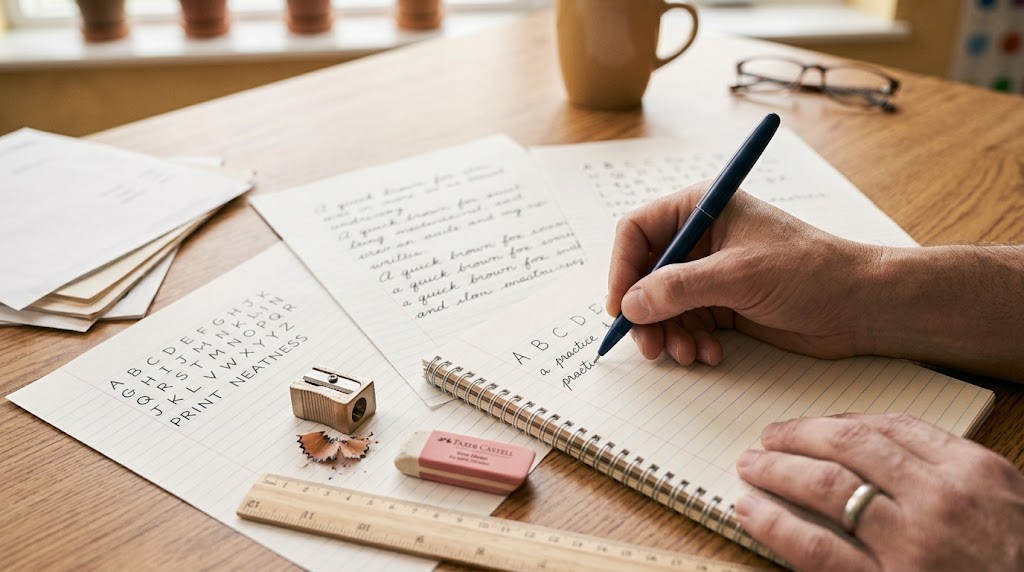
Short, regular practice beats long, occasional sessions, since motor patterns build up gradually rather than all at once. It also helps to slow down before trying to speed up; fluency should come from repetition, not from rushing before the movements are actually automatic. Consistent letter formation matters more than people expect, since inconsistency is one of the biggest legibility problems in both print and cursive. For beginners or anyone relearning handwriting from scratch, multisensory practice, things like sand trays, finger tracing, or writing in the air, can reinforce the motor pattern before it’s committed to paper. And it’s worth easing off unnecessary pressure generally, since tense, cramped handwriting slows a person down in more ways than just the physical writing itself.
When Handwriting Difficulties Need Extra Support
If handwriting consistently causes fatigue, frustration, or noticeably slower output compared to peers, it’s worth looking past style preference altogether. Ongoing trouble forming letters, unusual tiredness during writing tasks, or handwriting that isn’t improving much despite regular practice can point toward something like dysgraphia or a broader motor coordination difficulty. Organizations like Understood offer clear, practical explanations of what these difficulties actually look like day to day, without turning it into a medical textbook.
In situations like this, a proper handwriting or occupational therapy assessment can pin down specific factors, speed, motor planning, visual-motor coordination, and that makes it much easier to figure out the right kind of support, whether that ends up being continued print practice, assistive technology, or targeted occupational therapy. Groups like the American Occupational Therapy Association are a reasonable starting point if you’re trying to understand what OT support for handwriting actually involves in practice.
If you’re also wondering about typical timing rather than difficulty specifically, our piece on what age children generally learn to write fluently gives a clearer sense of normal ranges, which can help you judge whether something’s actually worth raising with a teacher.
Frequently Asked Questions
What is the difference between cursive and print handwriting?
Print keeps each letter separate, with the pen lifting after every one. Cursive joins letters into a continuous stroke, which is where its speed advantage comes from once a writer has practiced it enough.
Is cursive or print handwriting better?
Neither one wins outright. Print is generally easier to read and easier to learn, while cursive can be faster and more comfortable for writers who’ve had enough practice with it. Which one’s “better” really depends on the situation.
Which is faster, cursive or print?
Cursive can be faster, but only for writers whose letter connections have become second nature. Someone who hasn’t kept up with cursive is often slower than a confident print writer.
Is print handwriting easier to read?
Usually, since each letter stands separately with a consistent shape. That said, messy print can still be hard to read, and fluent cursive can be perfectly legible.
Should children learn cursive or print first?
Most children learn print first, since it lines up with early reading and requires less motor coordination. Cursive is typically introduced once basic letter formation is already solid.
Can you mix cursive and print handwriting? Yes. A hybrid style, print capitals with more cursive-leaning lowercase letters being a common version, is extremely normal among adults and isn’t a sign of doing handwriting incorrectly.
Is cursive better for your brain than print? There’s genuine research interest in how handwriting movement supports memory and learning, but that applies to handwriting broadly, not specifically to cursive outperforming print. No solid research shows cursive is meaningfully better for brain development or memory than print.
Is cursive handwriting still taught in schools?
It depends on the school and the region. Some still teach it as part of their handwriting curriculum; others focus mainly on print and typing.
Which handwriting is best for exams? Whatever you can write quickly while keeping it clearly legible. Speed doesn’t help if the person grading your answer can’t actually read it.
Why do some people prefer print over cursive?
Mostly reliability. Print tends to stay legible even when written quickly or under pressure, and it doesn’t demand the extra coordination cursive requires.
Should I use cursive or print in a memory book for my grandchild?
Go with whichever represents your natural handwriting while staying readable for the child later on. A lot of people write the main message in print and add a personal cursive signature underneath.
Is handwriting cursive or print better overall?
Neither one wins outright. Print is generally easier to read and easier to learn, while cursive can be faster and more comfortable for writers who’ve had enough practice with it.
Final Thoughts
There isn’t a single correct answer buried in the handwriting cursive or print debate, and that’s genuinely fine. Print is the safer default when clarity matters most, especially for beginners, forms, or anything meant for someone else to read at a glance. Cursive earns its place when speed and personal flow matter more, but only for writers who’ve put in the time to master it rather than just recognize it.
For most people, the real answer sits somewhere in between: print where clarity counts, something looser and more personal everywhere else. What actually matters isn’t the style someone picked. It’s whether the handwriting is legible, consistent, and comfortable enough that the person using it doesn’t have to think about it.