
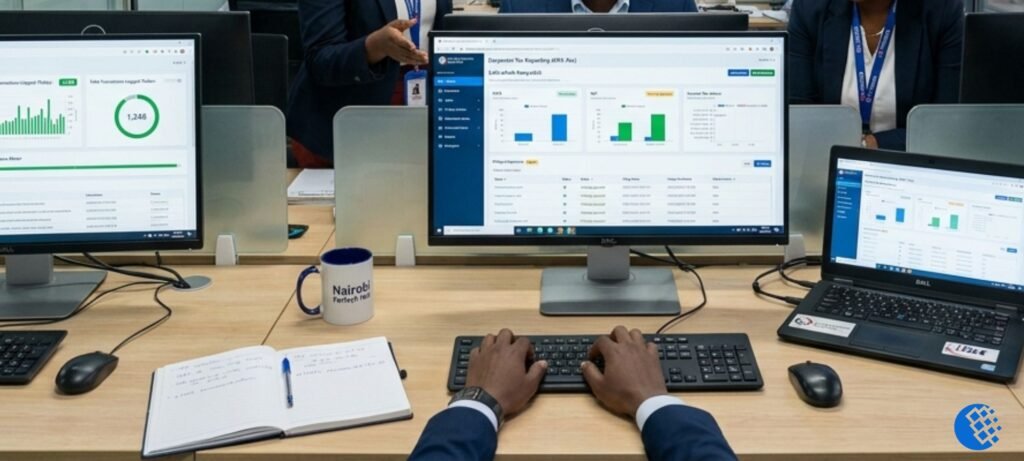
The financial landscape in Kenya has undergone a radical transformation by 2026. This shift is primarily fueled by the Kenya Revenue Authority’s (KRA) aggressive move toward real-time tax monitoring. For businesses, the choice of common account audit software used in kenya is now a matter of regulatory survival.
In a market where eTIMS integration is mandatory, the right tools determine how quickly you can reconcile your books. Whether you are a Nairobi startup or a massive enterprise, understanding the software hierarchy is essential. This guide explores the tools that are currently defining the industry standard.
Table of Contents
- The Digital Mandate for Kenyan Firms
- Top Tier Audit-Specific Software
- Accounting Systems with Audit Capabilities
- The Role of Data Analytics and AI
- Navigating eTIMS Compliance
- Best Practices for Tech Integration
- Market Comparison: Audit vs. Accounting
- Final Thought: The Future of Auditing
- Frequently Asked Questions
The Digital Mandate for Kenyan Firms

Manual ledger verification is effectively a thing of the past in the Kenyan market. By 2026, ICPAK has established strict guidelines for digital audit documentation. This ensures that every entry is verifiable and transparent.
For professional audit standards and regulatory guidance, the Institute of Certified Public Accountants of Kenya plays a key role in defining digital audit documentation and compliance expectations across the country.
Automated systems have drastically reduced the margin for human error. They allow auditors to look at live transaction data rather than outdated paper records. This real-time visibility is what makes a business truly audit-ready.
For local firms, staying ahead means adopting tools that support instant data pulling. This proactive stance prevents the typical year-end rush and reduces the risk of penalties. Technology has become the backbone of financial integrity.
Top Tier Audit-Specific Software
Specialized auditing requires robust platforms that can handle complex risk assessments. In Kenya, a few names have emerged as the industry leaders for professional firms.
CaseWare Africa
CaseWare is widely recognized as the most common account audit software used in kenya for high-end practices. It automates financial statements and ensures they are IFRS-compliant. It is built for teams managing complex corporate audits.
TeamMate+
The Office of the Auditor-General relies heavily on TeamMate+ to manage public sector audits. It helps track the entire audit lifecycle in one secure environment. This is critical for institutional transparency and large-scale projects.
DataSnipper
This tool has gained massive popularity in 2026. It uses AI to extract data from invoices and bank statements directly into Excel. It significantly cuts down on manual vouching work, allowing auditors to focus on high-level analysis.
Accounting Systems with Audit Capabilities
Not every SME in Kenya needs a full-blown audit suite. Most rely on accounting software that offers dedicated “auditor” roles and clear trails.
QuickBooks Online
QuickBooks remains a top choice for small to mid-sized businesses. It is easy to use and widely supported by local accountants. Its cloud features allow for remote auditing, which has become standard practice.
Zoho Books
Zoho has surged in popularity because of its native eTIMS integration. It is specifically tailored for the Kenyan tax environment. This makes it an incredibly cost-effective solution for startups looking to remain compliant from day one.
Xero
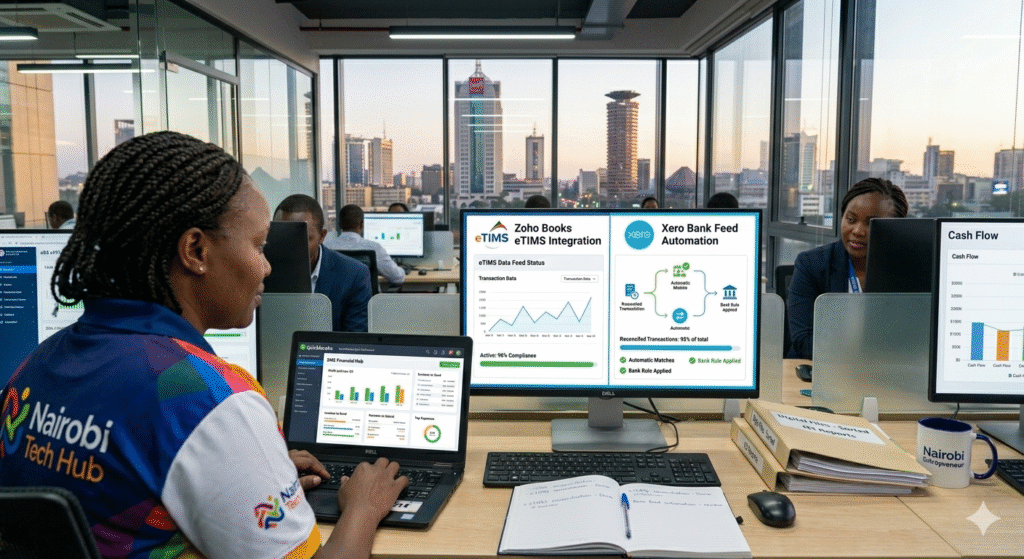
Favored by the tech-savvy crowd, Xero offers exceptional cloud connectivity. Its automated bank feeds help auditors verify cash flow without manually checking thousands of lines. It bridges the gap between daily bookkeeping and annual reviews.
The Role of Data Analytics and AI
Auditing in 2026 is no longer about checking a small sample of transactions. It is about analyzing 100% of the data to find anomalies. This is where AI layers become invaluable for local firms.
Many financial organizations are now utilizing AI Visibility Tools for Fintech Companies to monitor patterns. These tools flag potential fraud or tax errors before they even reach the auditor’s desk.
This technology provides an extra layer of security. It ensures that every transaction is accounted for and that the digital trail is ironclad. It changes the role of the auditor from a data-gatherer to a strategic advisor.
Navigating eTIMS Compliance
The introduction of the electronic Tax Invoice Management System (eTIMS) has fundamentally changed the game. Every audit now starts with a cross-check between company books and the KRA’s portal records.
The official framework for eTIMS compliance is governed by the Kenya Revenue Authority, which ensures all businesses align their tax reporting with real-time digital requirements. Their guidelines form the backbone of modern audit readiness in Kenya.
If your software doesn’t “talk” to eTIMS, it is functionally obsolete in the current market. Auditors now verify the portal data first. If the internal records don’t match the government records, it triggers an immediate red flag.
This is why choosing compliant software is the best defense against audits. It ensures that your sales and VAT data are transmitted accurately as they happen. This synchronization is the new benchmark for financial health.
Best Practices for Tech Integration
Strategic integration is key to a smooth audit process. Following Tips for Tech Beaconsoft methods can help firms pick systems that work in harmony.
Your software should ideally link to your bank, your sales portal, and the KRA. This creates a “single source of truth” for the auditor. It reduces friction and ensures data remains consistent across all platforms.
Market Comparison: Audit vs. Accounting
| Feature | Audit-Specific (CaseWare/TeamMate) | Accounting (QuickBooks/Zoho) |
| Primary User | External/Internal Auditors | Business Owners/Bookkeepers |
| Key Function | Risk Analysis & Compliance | Invoicing & Day-to-Day |
| Data Scope | Entire Fiscal Year Analysis | Real-time Transaction Entry |
| Compliance | IFRS/IPSAS Standards | KRA eTIMS Transmission |
| Audit Speed | Very High (Automated) | Moderate (Manual Review) |
Final Thought: The Future of Auditing
As we move deeper into 2026, the common account audit software used in kenya is no longer just a luxury. It is a fundamental requirement for any business that wants to grow without legal hiccups. The focus has shifted from mere bookkeeping to “Real-time Compliance.”
Whether you opt for a heavy-duty tool like CaseWare or a versatile cloud system like Zoho, the key is the human insight behind it. Technology provides the speed and the data, but the professional judgment of the auditor ensures the integrity of the story.
As the KRA continues to digitize its operations, staying ahead with the right digital tools is the only way to operate with absolute peace of mind. Investing in these systems today is an investment in the long-term stability of your enterprise.
Frequently Asked Questions
What is the most popular audit software for firms in Kenya?
CaseWare Africa and TeamMate+ are the industry leaders for professional audit practices and government bodies due to their advanced compliance features.
Does my software have to be eTIMS compliant?
Yes. In 2026, any accounting or audit tool used in Kenya should ideally have eTIMS integration to ensure that tax data is transmitted to the KRA in real-time.
Is Excel still used for auditing in Kenya?
While many practitioners still use Excel for basic analysis, it is increasingly being supplemented by tools like DataSnipper to improve accuracy and speed.
Can small businesses use cloud accounting for audits?
Absolutely. Platforms like QuickBooks and Xero are designed to give auditors easy access to digital records, making the entire review process faster and more efficient.