In the high-stakes world of 2026 academics, simply finishing your math isn’t enough. The real skill—the one that actually secures the “A”—is knowing how to evaluate homework and practice workbook answers like a seasoned expert. Let’s be honest: anyone can mindlessly copy a number from a website. But in a Common Core world, if you can’t explain the “why” behind your work, that final answer is basically worthless.
When you sit down to check your own work, you’re flipping a switch from “student mode” into “detective mode.” You aren’t just looking for red marks; you are hunting for logic gaps and making sure your PEMDAS game hasn’t slipped. This guide provides a framework to turn a boring grading session into a massive brain level-up.
Table of Contents
- The Detective’s Strategy: Evaluating Your Own Logic
- Accuracy Factors: What Makes an Answer “Correct”?
- Top-Tier Verified Digital Platforms for 2026
- Deep Dive: Evaluating Algebraic Expressions
- Pro-Level Habits for Workbook Mastery
- The Method Check: Why “How” Matters More Than “What”
- Why Self-Correction is Your Secret Weapon
- The Future of AI in Homework Evaluation
- FAQs
The Detective’s Strategy: Evaluating Your Own Logic
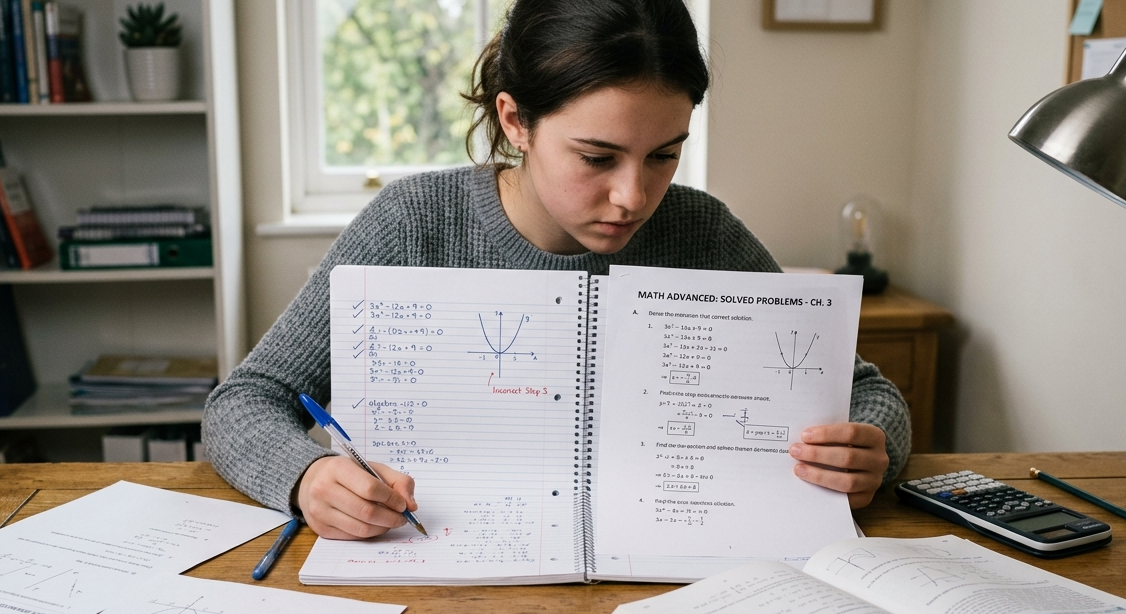
To truly evaluate homework and practice workbook answers, you have to stop looking at that final number first. It’s a hard habit to break, but it is necessary for growth. Start at the very top: the setup. Did you read the word problem right? Did you miss a small but vital word like “not,” “twice,” or “decreased”?
In high school geometry or algebra, the “path” you took to the answer is often worth more than the destination. By comparing your scratchpad notes against a verified key, you can see if your substitution was solid or if you started hallucinating numbers halfway through. Trace your work line-by-line rather than erasing immediately. Finding where the logic “went sideways” is where the actual learning happens.
Accuracy Factors: What Makes an Answer “Correct”?
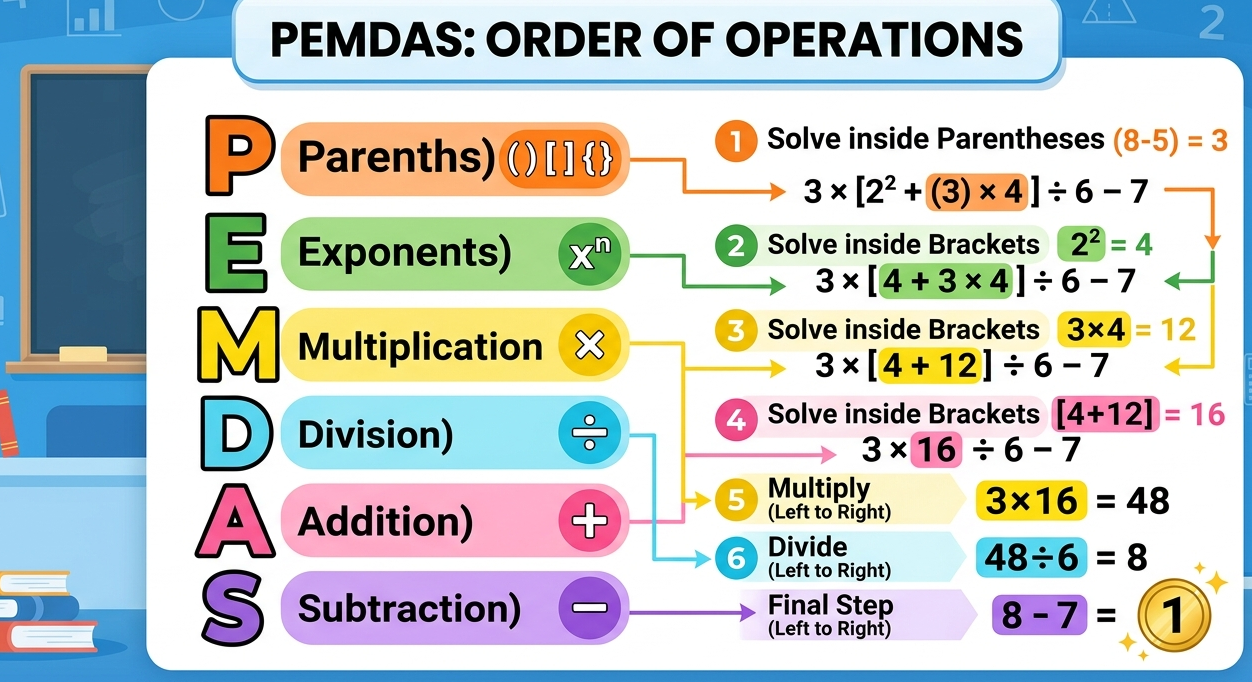
If you want to keep your standards high, focus on these three things every time you check a page:
- Operation Hierarchy: Did you follow PEMDAS/BODMAS to the letter?. One tiny missed bracket or a misplaced exponent can blow up a multi-step equation..
- The Chain of Reasoning: Especially in geometry, your work needs to show congruence reasoning about triangles. You aren’t just saying two shapes are the same; you’re proving it using SSS, SAS, or ASA postulates.
- The 90% Rule: Aim for at least 90% accuracy on your own before you even look at a key. If you’re consistently hitting 60% or 70%, stop what you’re doing. You don’t need more “practice”—you need to go back and re-read the core lesson before you waste another hour making the same mistakes.
Top-Tier Verified Digital Platforms for 2026
If your teacher didn’t provide a key, don’t panic. These high-authority spots are the best way to check your work:
- Quizlet Explanations: This remains a top resource for expert-verified, step-by-step solutions for major publishers like McGraw Hill. It doesn’t just give you the answer; it explains the “how.”
- Brainly: This is great for specific problems that feel like they were pulled from a secret vault. The community verification system helps filter out bad advice, often used for Common Core alignment.
- Official Publisher Portals: Go straight to the source. Look for “Chapter Resource Masters” on official sites to find the exact documents teachers use to grade you.
- Scribd: This is a massive repository for finding PDFs of specialized practice workbooks that might be out of print or hard to find on official sites.
Deep Dive: Evaluating Algebraic Expressions
Let’s look at a classic problem that trips up even good students: evaluate $3ab – 2bc$ when $a = -4, b = 6,$ and $c = -9$. This is where “sign errors” go to die.
- Phase 1 (The Setup): Write it out using parentheses: $3(-4)(6) – 2(6)(-9)$. If you didn’t use parentheses, you probably thought it was a subtraction problem.
- Phase 2 (The Calculation): Multiply the first chunk to get $-72$. Multiply the second to get $-108$.
- Phase 3 (The Reveal): Now you have $(-72) – (-108)$. Since subtracting a negative is just adding, you get $36$.
If your key says 36, you’ve mastered the logic. If you got -180, you missed that double negative. Now you know exactly what to look for on your next test.
Pro-Level Habits for Workbook Mastery
- Reverse Engineering: If you solved for $x$, plug it back into the original question. If the numbers don’t balance perfectly, your answer is wrong.
- The Clean Slate Rule: If you get stuck, don’t keep staring at your old scribbles. Move to a clean sheet of paper. Your brain tends to repeat the same “loop” mistakes if you keep looking at your previous work.
- Symbolic Pride: Just as every symbol on USN Challenge Coin Ideas carries deep meaning, your math symbols carry logical weight. Sloppy handwriting is a leading cause of avoidable errors in workbook practice.
The Method Check: Why “How” Matters More Than “What”
In 2026, most standardized tests aren’t just looking for the final result. They want to see “process points.” When you evaluate homework and practice workbook answers, you must verify that you used the specific method your curriculum requires. If the lesson was about the “Box Method” for multiplication, but you used long multiplication, you haven’t actually mastered the target skill. Evaluation is about aligning your performance with the learning objectives.
FAQs
Q: Is it “cheating” to use AI to check my math?
A: Not if you use it for verification. If you’re just copying the AI’s output, you’ll fail the exam. But if you use it to find exactly which line your logic broke, it’s a brilliant tutoring tool. Just ensure the AI is using the same method your teacher taught.
Q: How often should I stop and check my work?
A: Every 5 problems. Do not wait until the end of a 50-problem set. If you’re doing something wrong, you want to catch it early before you’ve repeated the mistake dozens of times.
Q: What if my answer is different but I think I’m right?
A: It’s rare, but textbooks have typos. If you’ve tried it three different ways and always get the same result that differs from the key, consult a friend or a teacher. Proving a textbook wrong is a major academic milestone.
check your grade now => Easygrader