
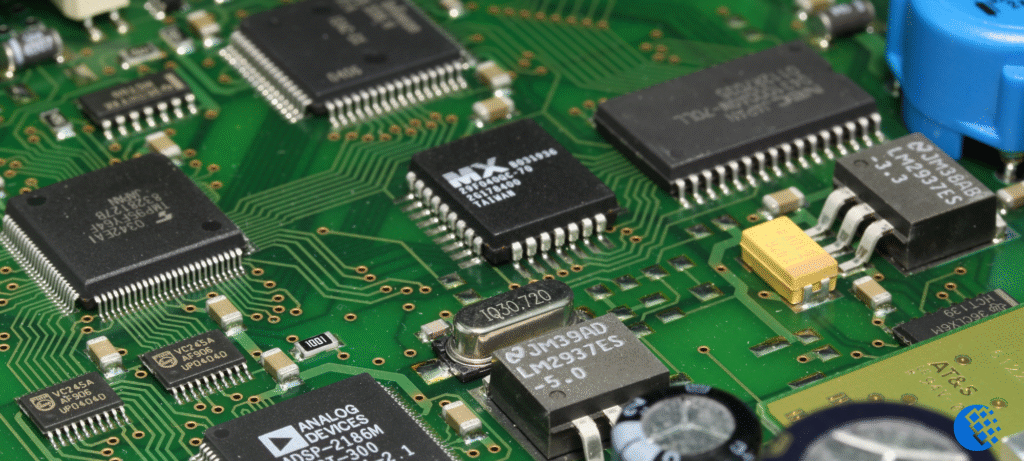
Selecting the right High Density Interconnect (HDI) PCB manufacturer has become more important as electronic products continue to shrink while demanding higher performance and greater reliability. Whether you are developing industrial controls, medical equipment, automotive electronics, telecommunications hardware, or advanced consumer devices, the manufacturer you choose will directly influence product quality, production yield, and long term manufacturing costs.
Many articles discussing HDI printed circuit boards spend most of their time explaining microvias and layer structures. While understanding these concepts is helpful, engineers and procurement teams often face a different challenge. They need to determine whether a supplier can consistently manufacture complex HDI designs without introducing delays, quality issues, or unexpected engineering changes.
Choosing an experienced HDI PCB manufacturer requires evaluating manufacturing capability, engineering support, quality systems, inspection methods, and production consistency rather than simply comparing prices or advertised specifications.
This guide explains the practical factors that should be evaluated before selecting a manufacturing partner for your next HDI PCB project.
Why Supplier Selection Matters More Than Specifications
Many PCB manufacturers advertise similar capabilities on their websites.
You may find identical claims about laser drilling, controlled impedance, multilayer fabrication, and fine trace manufacturing. These specifications are useful, but they reveal very little about how consistently a manufacturer delivers production quality.
A capable supplier should demonstrate repeatable manufacturing processes rather than relying on marketing statements.
For example, a prototype that performs well in engineering validation does not automatically guarantee smooth transition into volume production. Manufacturing consistency becomes increasingly important as production quantities increase and component density rises.
The right supplier should be able to support every stage of the manufacturing process, including:
- Design review
- Design for Manufacturability analysis
- Material selection
- Prototype fabrication
- Engineering validation
- Pilot production
- Volume manufacturing
- Continuous quality monitoring
When these stages are managed effectively, engineering teams spend less time resolving production issues and more time improving product performance.
Evaluate Manufacturing Experience with HDI Designs
Not every PCB manufacturer that offers multilayer fabrication has extensive experience producing HDI boards.
Ask suppliers about actual manufacturing experience rather than general capability statements.
Useful discussion topics include:
- Sequential lamination experience
- Build up structures
- Filled microvia processes
- Fine line imaging
- High layer count production
- Controlled impedance fabrication
- Registration control
- Cross section analysis
Manufacturers with established HDI production processes are usually better prepared to identify potential fabrication issues during design review.
This early engineering feedback often prevents expensive design revisions later in the project.
Review Build Up Structures and Sequential Lamination Capability
Modern HDI boards commonly use build up technology to increase routing density without dramatically increasing board size.
Depending on the application, designs may include structures such as:
- 1 plus N plus 1
- 2 plus N plus 2
- Stacked build up layers
- Staggered build up layers
Each additional lamination cycle increases manufacturing complexity.
A qualified supplier should explain:
- How many sequential lamination cycles are routinely manufactured
- Registration control between build up layers
- Material compatibility
- Process validation
- Manufacturing repeatability
Rather than asking only whether a supplier can manufacture a particular stackup, ask how frequently that configuration is produced.
Routine production experience generally provides greater confidence than occasional capability.
Understand Microvia Filling and Copper Plating Quality
Microvias are one of the defining characteristics of HDI PCB technology.
Their reliability depends not only on laser drilling accuracy but also on copper deposition and filling quality.
When evaluating manufacturers, ask about:
- Copper filling process
- Void prevention
- Plating consistency
- Cross section inspection
- Process monitoring
- Reliability testing
Poorly filled microvias can introduce reliability problems that may not appear until products have been deployed in the field.
Manufacturers should be able to explain how they inspect filled vias and maintain consistent plating quality across production batches.
Registration Accuracy Is Critical
Registration becomes increasingly important as conductor spacing decreases.
Misalignment during lamination or imaging can affect:
- Via placement
- Pad alignment
- Fine traces
- Controlled impedance structures
- Component assembly
Ask suppliers how registration is verified throughout production.
Useful inspection methods include:
- Automated Optical Inspection
- X ray inspection
- Cross section analysis
- Statistical process monitoring
Reliable registration control becomes especially important for multilayer HDI boards containing multiple lamination cycles.
Controlled Impedance Manufacturing Should Be Verified
Many modern electronic products rely on controlled impedance routing for signal integrity.
Examples include:
- High speed processors
- Memory interfaces
- Networking equipment
- RF products
- Automotive electronics
Instead of asking whether impedance control is available, ask how it is verified.
A capable manufacturer should explain:
- Stackup calculation
- Material selection
- Trace width control
- Test coupon measurement
- Process adjustments
- Production documentation
Verification procedures often reveal more about manufacturing maturity than advertised impedance tolerances.
Supplier Evaluation Checklist
Before requesting quotations, engineers and procurement teams should evaluate suppliers using practical manufacturing criteria rather than price alone.
| Evaluation Area | Questions to Ask |
| HDI Experience | How many HDI projects are manufactured each month? |
| Sequential Lamination | Which build up structures are routinely produced? |
| Microvia Quality | How are filled vias inspected and verified? |
| Registration | What inspection methods verify layer alignment? |
| Impedance Control | How is impedance measured during production? |
| Engineering Support | Is DFM feedback provided before fabrication? |
| Quality Systems | Which quality management standards are maintained? |
| Production Scaling | Can prototypes transition smoothly into volume manufacturing? |
A structured evaluation process often identifies capable suppliers long before pricing becomes the deciding factor.
Assess Material Availability and Supply Chain Stability
Even the most capable manufacturer cannot maintain consistent delivery if critical materials are unavailable. During supplier evaluation, it is important to understand how the company manages its material supply chain and responds to shortages.
Ask questions such as:
- Which laminate manufacturers are regularly stocked?
- Are alternative approved materials available?
- How are material substitutions reviewed?
- What happens if a specified laminate becomes unavailable?
- How are controlled impedance materials qualified?
Experienced manufacturers typically work with several qualified material suppliers while maintaining documented material traceability. This reduces the likelihood of unexpected delays during both prototype and production builds.
For projects with long production lifecycles, material continuity should be considered alongside price and lead time.
Prototype to Production Consistency
One of the biggest challenges in electronics manufacturing is successfully moving from prototype quantities to volume production.
A prototype may perform perfectly during engineering validation but encounter yield issues once production scales. Variations in material handling, process control, or inspection can affect consistency if manufacturing procedures are not well established.
When evaluating an HDI supplier, ask about:
- Prototype engineering review
- Manufacturing process validation
- First article verification
- Process documentation
- Change control
- Production yield monitoring
- Continuous improvement procedures
Manufacturers with documented production control processes are generally better equipped to deliver consistent results throughout the product lifecycle.
Quality Management Systems and Industry Standards
Quality certifications provide useful evidence that a manufacturer follows documented management systems, but they should be interpreted correctly.
Many reputable PCB manufacturers operate under ISO 9001, which establishes requirements for quality management systems across manufacturing processes.
Companies serving medical device customers often maintain ISO 13485, demonstrating additional quality management requirements specific to medical device manufacturing.
Another term that is frequently misunderstood is IPC Class 3.
IPC Class 3 is not a company certification. Instead, it is a project specific manufacturing requirement used for products where high reliability is essential, such as aerospace, defence, industrial controls, and medical electronics. Whether a PCB is manufactured to IPC Class 3 depends on the specific project requirements rather than a permanent company designation.
Understanding these distinctions helps procurement teams compare manufacturers more accurately.
Inspection and Verification Capabilities
Inspection plays an important role in reducing manufacturing defects before boards reach assembly.
Instead of asking whether inspection equipment exists, ask how it is integrated into the production process.
Typical inspection methods include:
- Automated Optical Inspection
- X ray inspection
- Cross section analysis
- Flying probe electrical testing
- Fixture based electrical testing
- Solder mask inspection
- Dimensional verification
The inspection plan should match the complexity of the HDI design. More advanced structures generally require additional verification throughout fabrication rather than relying solely on final inspection.
Understanding Plated Through Hole Capability
Many PCB capability lists mention aspect ratio, but the terminology is often used incorrectly.
The correct technical description is:
Maximum plated through hole aspect ratio of up to 30:1.
This specification applies to mechanically drilled plated through holes and should not be confused with laser drilled microvias, which follow different design and manufacturing considerations.
When reviewing supplier capabilities, ask how plated through hole quality is verified through drilling, desmear, copper plating, and cross section inspection.
Reliable hole quality is essential for long term electrical and mechanical performance, particularly in multilayer HDI designs.
Common Mistakes When Evaluating HDI PCB Manufacturers
Many sourcing decisions focus heavily on unit price while overlooking manufacturing capability.
Some of the most common evaluation mistakes include:
- Comparing quotations without reviewing engineering support
- Assuming every supplier offering HDI fabrication has the same level of experience
- Ignoring prototype to production transition planning
- Failing to review inspection and quality control procedures
- Selecting suppliers without confirming material availability
- Overlooking process documentation and change management
- Evaluating advertised capabilities instead of demonstrated manufacturing performance
Avoiding these mistakes often reduces production delays and engineering changes later in the project.
Procurement Checklist Before Selecting a Manufacturer
Before awarding production, confirm that the supplier can clearly answer the following questions.
| Evaluation Point | Verification |
| Sequential lamination capability | Documented manufacturing experience |
| Build up structures | Routinely manufactured configurations |
| Filled microvias | Process control and inspection method |
| Registration accuracy | AOI, X ray, and cross section verification |
| Controlled impedance | Test coupon measurement process |
| Material availability | Approved laminate suppliers |
| Quality management | ISO 9001 and ISO 13485 where applicable |
| Production consistency | Prototype to volume manufacturing process |
| Engineering support | Design for Manufacturability review before production |
Using a structured procurement checklist helps engineering and purchasing teams compare suppliers using measurable criteria instead of marketing claims.
Final Thoughts
Choosing an HDI PCB manufacturer involves much more than comparing fabrication capabilities or requesting the lowest quotation. The most reliable suppliers demonstrate consistent engineering support, proven manufacturing processes, documented quality systems, and the ability to transition smoothly from prototype builds to production quantities.
Manufacturing experience with sequential lamination, microvia filling, controlled impedance, inspection, registration control, and material management often has a greater impact on project success than individual capability claims listed on a website.
For organizations looking for an experienced manufacturing partner, Fast Turn PCB provides HDI PCB fabrication services supported by engineering review, advanced manufacturing processes, and quality management systems. As with any manufacturing project, achievable lead times should always be confirmed after design review, material availability, board complexity, production quantity, and testing requirements have been evaluated.
Taking the time to assess technical capability, manufacturing consistency, and supplier communication before placing an order can significantly reduce production risks and help ensure reliable results throughout the product lifecycle.