Parents worry. Will my child fall behind in their studies? Will they miss out on building confidence? Can a screen really teach values as a new school does?
These questions keep you up at night when considering enrolling your ward in online primary schools. The fear is real. You want your child to succeed, but not at the cost of who they will become as a person.
Here’s what most people miss. Character isn’t something that happens by accident in a classroom. It’s built through specific experiences, thoughtful guidance, and the right environment. Online learning, when done properly, creates unique opportunities for character development that traditional settings sometimes struggle to provide.
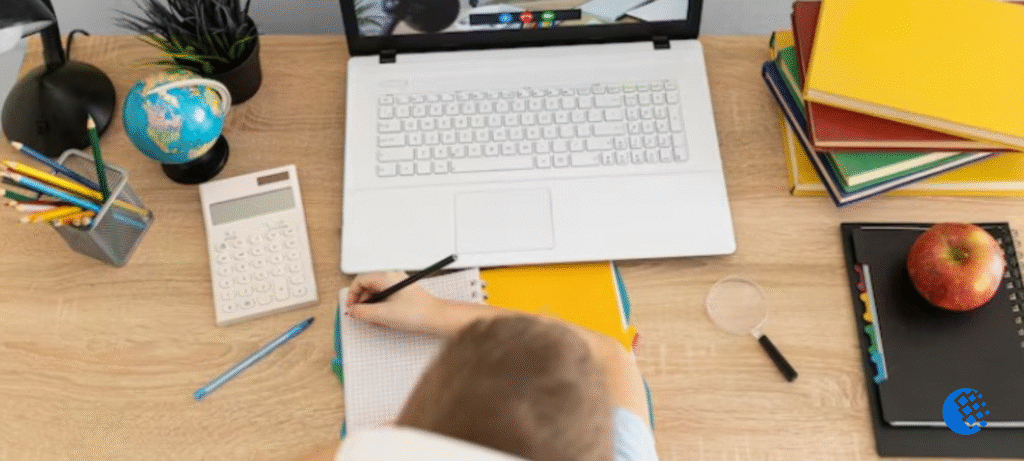
Think about independence. In a physical classroom, teachers often do the organising. They tell students when to move, where to sit, and what to pull out next. Online primary schools flip this. Students learn to log in on time. They manage their materials. They take ownership of their space and schedule.
This builds self-reliance faster than you’d expect. Your eight-year-old figures out how to unmute themselves, find their worksheet, and ask questions in the chat. Small tasks, perhaps, but they add up. By age 10, many online students show responsibility levels that surprise their parents.
Resilience Grows Differently Online, too.
When a child struggles with a concept in a crowded classroom, they might stay quiet. Fear of looking silly in front of 30 peers is powerful. Online environments with smaller class sizes change this dynamic. Students feel safer trying, failing, and trying again.
Teachers can provide feedback privately through chat. A child attempts an answer, gets it wrong, receives gentle correction, and keeps going. The emotional safety net is wider. They learn that mistakes are part of learning, not public embarrassment.
There’s also something about facing a challenge alone at your desk. You can’t rely on copying the kid next to you. You either work through it or ask for help. Both options build character. One teaches perseverance. The other teaches humility and communication.
Social skills develop through different channels. Yes, students aren’t in a physical playground. But they’re collaborating in breakout rooms. They’re participating in group projects through shared documents. They’re learning digital citizenship and how to communicate respectfully in online spaces.
These are the skills they’ll need as adults. The workplace is increasingly remote. Knowing how to build relationships through screens, work on virtual teams, and express yourself clearly in writing matters more each year.
Parents often ask about empathy. Can children really learn to care about others through a computer? The answer is yes, but it requires intention. Online schools that prioritise character focus on this deliberately.
Students might work on projects about global issues. They connect with peers from different countries. They see perspectives beyond their immediate surroundings. A child in London might collaborate with one in Dubai. Understanding blooms from exposure.
Teachers also model kindness in how they interact. The tone in messages matters. The patience shown when explaining something for the third time matters. Children absorb these patterns.
Confidence builds when learning matches pace.
Some children need more time with fractions. Others race ahead in reading. Traditional classrooms struggle to accommodate both in the same room. Online settings allow for personalised learning that meets each student exactly where they are.
When children aren’t constantly comparing themselves to the fastest students or feel held back by the slowest, they develop healthier self-esteem. They measure progress against their own previous performance. This internal benchmark is far healthier than external competition.
There’s also the matter of voice. Does your child feel heard? In large classrooms, quieter students often disappear. Their ideas stay in their heads. Online platforms give multiple ways to participate. Type in the chat. Raise a virtual hand. Record a video response later.
Different communication methods suit different personalities. The result is that more children find their voice and learn to contribute meaningfully.
Family involvement shifts, too. You see what your child is learning in real time. You’re not guessing based on a folder of papers brought home Friday. You can watch lessons unfold. This transparency means you can reinforce values at home that align with school teachings.
Character education works best when consistent across environments. If school teaches respect and responsibility, but home doesn’t follow through, the lessons fade. Online learning naturally creates more parent-teacher partnership because you’re both more aware of daily happenings.
Some families worry their child will become isolated or lack discipline. The opposite often happens. Structure matters more online, not less. Students need routines. They need boundaries around screen time and work time. These structures, when implemented well, teach self-discipline.
Your child learns that showing up matters. That preparation matters. That following through on commitments matters. These aren’t abstract concepts discussed in an assembly. They’re lived experiences repeated daily.
Time management becomes visible. A student can see their schedule. They can plan their breaks. They begin to understand that choices have consequences. Waste time during the lesson? You’ll struggle with homework later. This cause-and-effect learning shapes character powerfully.
The flexibility of online primary schools also allows for character building outside academics. A child passionate about music can practice more. An athlete can train without missing school. They learn to balance multiple priorities, to work hard at what they love, and to still meet their educational responsibilities.
This teaches them that life isn’t one-dimensional. You can be a student and an artist. A learner and an athlete. Identity forms around multiple strengths, not just academic performance.
Where does this leave you?
Character and academics aren’t separate goals. They’re intertwined. The best online primary schools understand this. They structure their programs to develop both simultaneously.
Your child’s future depends on more than test scores. It depends on who they become. How they handle setbacks. How they treat others. How they manage themselves when no one is watching.
These qualities form in the daily experiences of learning. Online environments, when designed thoughtfully around character development, provide rich soil for growth.
The Bottom Line
The question isn’t whether online learning can build character. It’s whether the specific school prioritises it. Look for programs that mention values explicitly. That trains teachers in social-emotional learning. That creates opportunities for connection, challenge, and growth beyond the curriculum.
Your child deserves an education that shapes their mind and their heart. Online primary schools meeting this standard exist. Finding one might be the most important decision you make for their development.