

Data is a nightmare once it starts scaling. It grows way faster than most teams can track, and the moment things get messy—think duplicate records, old info, or broken reports—the whole business feels the drag.
That’s why companies outsource data management services. It’s rarely because they don’t have smart people on staff; it’s because managing massive data sets requires a specific kind of setup and 24/7 attention that most businesses just aren’t built to maintain.
This guide hits the essentials: what these services do, why they’re worth it, and how to avoid picking a partner that’ll just give you more headaches.
Table of Contents
- What Are Outsource Data Management Services?
- Types of Data Outsourcing
- Why Companies Outsource
- Hybrid Infrastructure
- Data Quality Importance
- Risks
- How to Choose a Partner
- FAQ
- Conclusion
What Are Outsource Data Management Services?
Basically, you’re handing off the “grind” of your data work to an outside team. They take over the daily tasks—entry, cleaning, storage, and security.
The goal? You get clean, usable data without having to build a massive IT department from scratch. This isn’t just hiring a freelancer for a quick fix. It’s a professional partnership with actual security standards and specialized tools. Think of it like renting a fully-staffed data department that scales up or down based on what you need.
The Different Types of Data Outsourcing
Not every business needs the same thing. Usually, data management outsourcing services fall into a few key buckets:
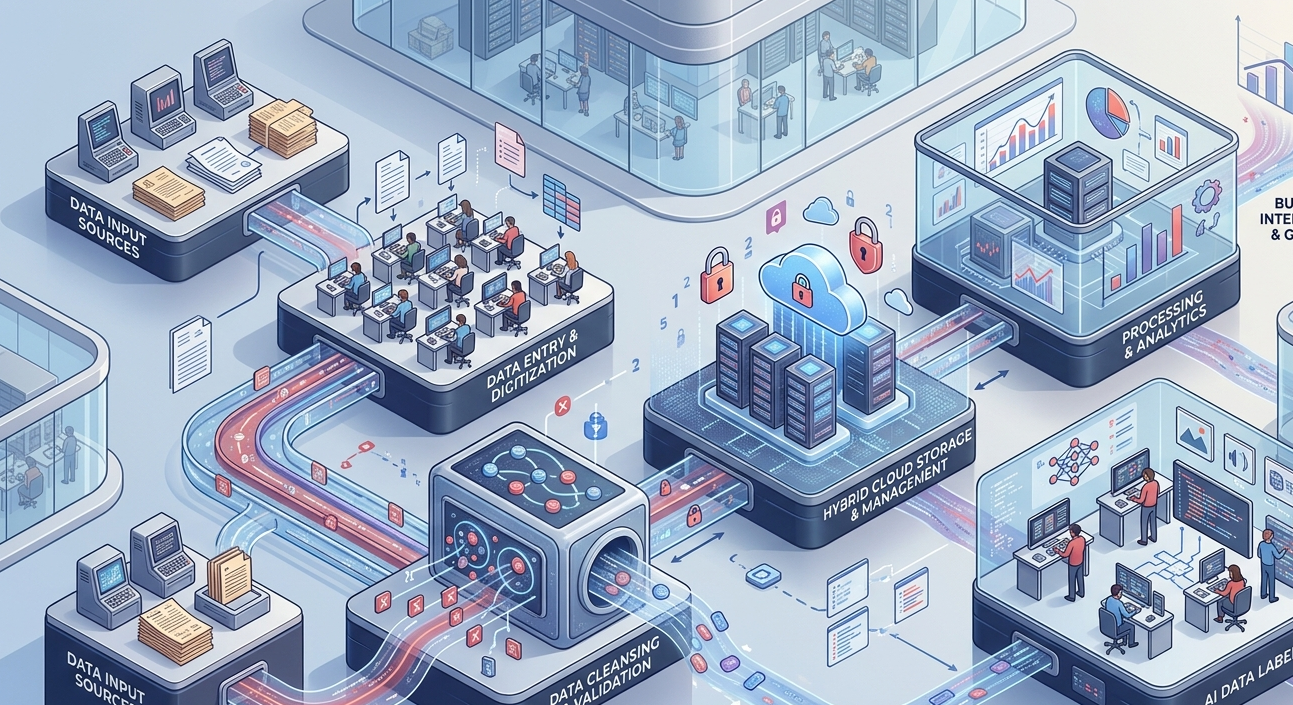
- Data Entry and Digitization: Turning old paper files or messy PDFs into actual digital systems you can use.
- Data Cleansing: The “cleanup crew.” They find duplicates, fix errors, and update stale records so your database stays reliable.
- Processing and Analytics: Taking raw numbers and turning them into reports that actually help you make a call on a project.
- Governance and Security: Setting up the rules for who can see what and staying on the right side of privacy laws.
- AI Labeling: Tagging data so machine learning models can learn from it—one of the biggest growth areas this year.
The best partners don’t just give you a “one-size-fits-all” plan; they build a workflow that fits the software you’re already using.
Why Companies Actually Do It
It usually boils down to three things: money, speed, and accuracy.
Internal teams get burned out. Data spikes out of nowhere. Hiring a new full-time pro every time you grow is slow and expensive. Outsourcing data management services cuts that overhead instantly. You don’t have to worry about recruiting, training, or paying for enterprise software licenses. You just pay for results.
Accuracy is the other big win. Professional data teams live for validation. They catch the small errors that an exhausted employee might miss. When your error rate drops, your strategy gets sharper. Plus, if you have a busy season, an outsourced team can scale up in days, whereas hiring internally takes months.
Outsourcing data management services reduces operational overhead and improves efficiency.
Infrastructure: The “Hybrid” Move
For bigger companies, it’s about more than just files. Data center outsourcing and hybrid infrastructure managed services let you mix your on-premise servers with cloud platforms.
You aren’t just outsourcing the task; you’re outsourcing the environment where the data lives. The provider handles the security patches, keeps things running, and plans for disaster recovery while your team focuses on growth. The hybrid model is the new standard because it keeps sensitive stuff local while using the cloud for the heavy lifting.
Hybrid Infrastructure & Data Outsourcing
Many companies also rely on tools like Asset Liability Management Software to balance financial data, risk exposure, and reporting while working with outsourced systems.
Why Quality Matters (A Lot)
Bad data costs a fortune. When records are wrong, you waste money on failed marketing and bad inventory calls. Outsourcing data quality management services is designed to stop that.
This isn’t a one-time “clean up.” It’s an ongoing process. A good provider builds a system that catches issues before they pile up. If you’re making big decisions based on customer info, the quality of that data isn’t optional—it’s the whole point.
Risks: The Part Most People Skip
There are always downsides.
Privacy is the obvious one. You’re handing over the keys. You need a partner with SOC 2 or HIPAA certifications and clear contracts that state you own the data.
Vendor Lock-in is another risk. If you build your entire system inside a provider’s custom software, it’s hard to leave. Always ask about an “exit strategy.” And finally, communication gaps happen—especially with teams in different time zones. Be explicit about how and when you expect updates.
How to Pick a Partner
Don’t just go with the cheapest bid. Check these first:
- Real Certifications: Ask for their SOC 2 Type II or ISO docs. Don’t take “we’re secure” as an answer.
- Industry Proof: If you’re in healthcare, find someone who already manages healthcare data.
- The Tech Fit: Will their tools actually work with yours?
- Transparent Pricing: You need to know what triggers an extra charge before you sign.
Always start with a pilot project. Run a week’s worth of work through their system first. It’s the only way to see if they’re actually as good as their sales pitch.
Quick FAQ
What are outsource data management services?
It’s when an outside team takes over your data entry, cleaning, and storage. You own the data; they just do the work.
Why outsource?
To save on hiring costs, get cleaner data, and scale faster than an internal team could handle.
Is it safe?
Yes, if you pick a partner with the right security badges and a solid contract. Always verify their compliance yourself.
What is outsourcing data quality management?
It’s an ongoing service that makes sure your data stays accurate over time, rather than just doing a one-time fix.
Final Thoughts
Outsourcing isn’t a shortcut; it’s a strategic move. For most companies, trying to be a “data management company” on top of what they actually do is just a distraction.
The right partner brings the tools and the talent you’d spend years trying to build. Just do the legwork: run a pilot, verify their security, and make sure the contract is clear. According to the latest trends for 2026, the businesses that thrive are the ones that stop trying to do everything themselves and start focusing on what actually drives their revenue.