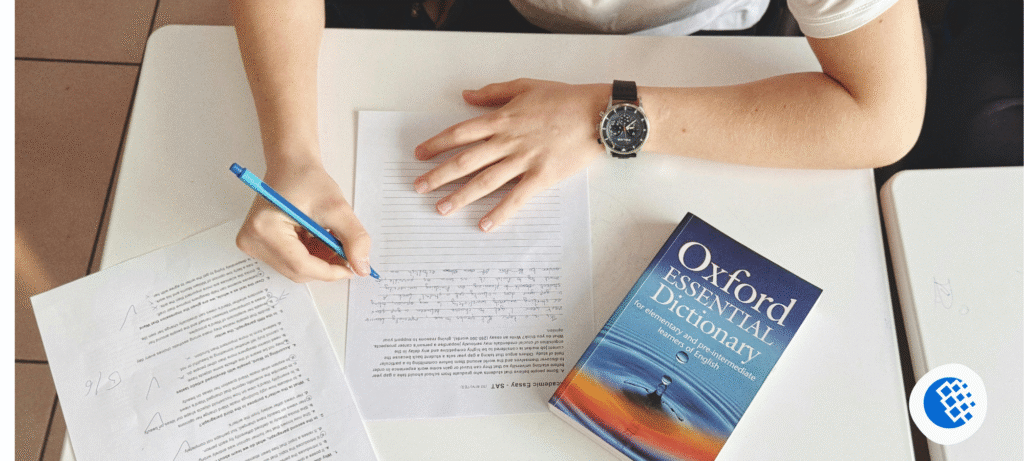

Designing a Special Education Science Curriculum is far more complex than just making a standard lesson “easier.” It is an intentional, creative redesign of how students experience scientific inquiry. The goal is to ensure that learners with varying cognitive, physical, or emotional needs move from being passive observers to active, confident participants in the world of discovery.
Science often feels abstract, dealing with concepts like invisible forces or microscopic cells. For many students with disabilities, these abstractions can be overwhelming barriers. A high-quality Special Education Science Curriculum removes these hurdles by prioritizing sensory engagement, repetition, and real-world application. It doesn’t lower the academic bar; it simply builds a much better ramp to help students reach it.
The Core Philosophy: Accessibility Over Simplicity
At its heart, this curriculum is built on Universal Design for Learning (UDL). This means teachers don’t just “fix” a lesson after it’s written; they design it from the start to be flexible for everyone.
Adapting vs. Simplifying
There is a massive difference between simplifying and adapting. Simplifying often removes the “why” of a lesson, while adapting changes the “how”. For instance, instead of just reading about heat energy, a student might feel the vibration of a tuning fork or watch food coloring swirl faster in hot water than in cold water. The scientific truth stays the same—only the way the student experiences it changes.
Key Domains within the Curriculum
To provide a complete education, adapted programs cover the same major branches of science found in general classrooms but use different delivery methods.
1. Life Science: Exploring the Living World
This is often the best starting point because it relates to a student’s daily life.
- Biological Cycles: Using tactile models to feel the change from a caterpillar to a butterfly.
- Human Body: Using life-sized “body maps” where students physically place organs like the heart or lungs.
- Habitats: Sorting animals into sensory bins filled with sand (desert), water (ocean), or leaves (forest).
2. Physical Science: Energy and Matter
Physical science can feel “magical” for students with sensory needs.
- States of Matter: Moving past textbook diagrams to watch ice melt or steam rise from a kettle.
- Force and Motion: Using toy cars and ramps to feel the difference between “fast” and “slow”.
- Simple Machines: Identifying pulleys and levers in the classroom, like window blinds or door handles.
3. Earth and Space Science
This domain helps students understand their place in the larger universe.
- Weather: Using daily charts with visual icons to track sun, rain, and temperature.
- Geology: Sorting rocks by their weight, texture, and color.
- Astronomy: Simulating day and night using flashlights and globes in a darkened room.
Instructional Strategies That Work
A successful Special Education Science Curriculum relies on “delivery vehicles” that make information stick.
The Power of Task Analysis
In science, big experiments can be scary. Task analysis breaks a complex task into tiny, achievable steps. Instead of saying “do the experiment,” the curriculum guides the student to gather materials, put on goggles, and then observe the change.
Multisensory Integration
Research proves that students with developmental disabilities remember more when they use multiple senses. When teaching about “Sound,” a student should see a vibrating string, hear the noise, and feel the hum on their skin.
Visual Scaffolding
In these classrooms, pictures are often more important than text.
- Graphic Organizers: To show cause and effect clearly.
- Choice Boards: Allowing students to point to pictures to show what they know.
- Interactive Word Walls: Pairing 3D objects with written scientific terms.
Assessment and Tracking Progress
Standard tests rarely show what a student with special needs actually knows. An effective Special Education Science Curriculum uses alternative tools.
- Portfolio-Based Assessment: Collecting photos, video clips, and sorted card sets over time to show growth.
- Demonstration of Mastery: If a student can light a bulb using a battery and wire, they understand electricity, even if they can’t write the definition of a “circuit”.
- IEP Alignment: Science lessons can help meet non-science goals, like practicing fine motor skills while using a scoop or working on communication by requesting “more water”.
Inclusion in Secondary Science Labs
In middle and high school, science becomes lab-heavy. Inclusion here requires co-planning between general and special education teachers.
| Challenge | Adapted Strategy |
| Lab Safety | Color-coded tools and simple “Stop/Go” visual signs. |
| Complex Words | “Cheat sheets” using symbols for terms like Photosynthesis. |
| Data Collection | Using apps that turn numbers into instant, colorful graphs. |
| Lab Reports | Allowing video reports or photo collages instead of long essays. |
Building a Year-Long Science Plan
Consistency is everything. A good year-long plan often follows a “Spiral” pattern, where concepts are revisited and built upon.
- Quarter 1: Foundations. Focusing on the five senses and the “Ask, Look, Try” method.
- Quarter 2: Physical World. Exploring matter and simple machines through play.
- Quarter 3: Living Systems. Studying animals, plants, and the human body.
- Quarter 4: Earth and Beyond. Weather safety, recycling, and the patterns of the moon.
Related=> Building a Strong Foundation in Higher-Level Mathematics
Common Questions (People Also Ask)
What is a special education science curriculum?
It is a specialized way of teaching science that uses modified materials, visual aids, and hands-on activities to make concepts accessible for students with disabilities.
Can students in special education meet state standards?
Yes. Through “Extended Standards,” students can master the same core ideas as their peers but express that knowledge in different ways.
Why is repetition so important?
Repetition helps move information into long-term memory. Seeing a concept in a book, a video, and an experiment helps it finally “click”.
Final Thoughts: The Impact of Discovery
A Special Education Science Curriculum does more than just teach facts; it creates a sense of agency. When a student successfully predicts how a ball will roll or a plant will grow, they learn that their observations matter. Inclusion in science is an act of empowerment, ensuring that the wonder of discovery belongs to every student.
You can find us here: Easygrader