
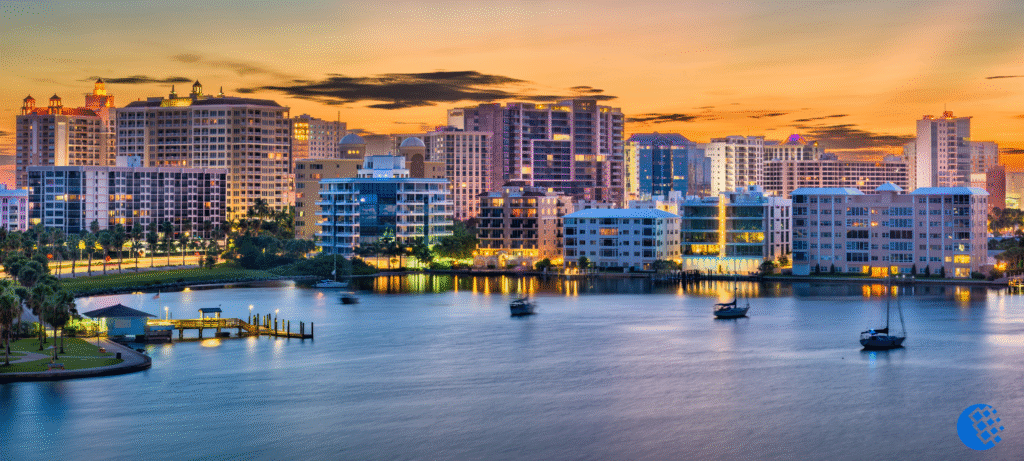
Florida is an incredible place to call home, thanks to its year-round sunshine, lack of state income tax, and endless outdoor activities. But let’s be real—popular hotspots like Miami, Orlando, and Tampa have gotten incredibly pricey lately. The good news? You can still find plenty of affordable places to live in Florida if you are willing to look slightly off the beaten path.
True affordability happens when you balance housing prices with the local job market, everyday insurance costs, and overall quality of life. Whether you are working remotely, raising a family, or looking to stretch your retirement savings further, this guide breaks down the best cheap Florida cities, including real costs, local culture, and honest pros and cons.
What Are the Most Affordable Places to Live in Florida in 2026?
The most affordable places to live in Florida include Ocala, Lakeland, Titusville, Gainesville, Jacksonville, Daytona Beach, Palm Coast, Winter Haven, Dade City, and Melbourne. These cities offer lower housing costs, better value, and excellent access to Florida’s beaches, jobs, healthcare, and outdoor activities.
Why Trust This Guide?
This guide compares Florida cities based on housing affordability, insurance costs, employment opportunities, lifestyle quality, healthcare access, and everyday expenses. Instead of only looking at home prices, we considered the real monthly cost of living for residents to give you a practical, honest look at each destination.
Quick Comparison: Top 10 Most Affordable Places to Live in Florida
| City | Home Price Estimate | Rent Estimate | Best For | Main Lifestyle Advantage |
| Ocala | $220k – $235k | $1,200 – $1,500 | Retirees & Nature Lovers | Quiet country living and lower insurance rates |
| Lakeland | $230k – $250k | $1,400 – $1,800 | Families & Commuters | Easy access to both Tampa and Orlando |
| Titusville | $240k | $1,300 – $1,700 | Space & Coast Fans | Rocket launch views and budget beach access |
| Gainesville | $250k | $1,400 – $1,900 | Students & Professionals | Energetic university town with great healthcare jobs |
| Jacksonville | $260k+ | $1,500 – $2,000 | Job Seekers & Families | Huge job market with highly diverse suburbs |
| Daytona Beach | Mid-$240ks | $1,300 – $1,700 | Pure Beach Lovers | Classic Atlantic coast lifestyle on a budget |
| Palm Coast | $275k | $1,400 – $1,800 | Relaxed Retirement | Peaceful neighborhoods and uncrowded beaches |
| Winter Haven | Mid-$240ks | $1,300 – $1,700 | Growing Families | Beautiful chain of lakes and a tight-knit community |
| Dade City | $260k | $1,200 – $1,600 | Old-School Florida Fans | Historic charm, rolling hills, and a rural feel |
| Melbourne | Upper $200ks | $1,500 – $1,900 | Tech & Aerospace Pros | High-paying engineering jobs right by the ocean |
What Should You Consider Before Moving to Florida?
Not every budget-friendly city is a perfect match. Focusing strictly on cheap rent or low home prices can backfire if you don’t plan for the unique expenses that come with living in the Sunshine State:
- Homeowners Insurance Costs: Coastal towns that face direct ocean storms are seeing insurance premiums skyrocket. Inland Florida locations usually have much friendlier rates because they don’t face the same immediate risk of hurricane storm surges.
- Hurricane Risk and Flood Zones: Before you buy a home or sign a lease, always look up the local FEMA flood maps. If your neighborhood sits in a high-risk flood zone, you will have to pay for mandatory flood insurance.
- Property Taxes: Florida doesn’t collect a state income tax, but local governments rely on property taxes. Check the county property appraiser’s website to get a realistic idea of your annual tax bill.
- Employment Opportunities: If you aren’t retired or working a remote job, make sure your target destination has a solid job market in steady fields like healthcare, education, or technology.
1. Ocala — Best Overall Affordable City
If you want plenty of sunshine without the staggering price tags of Miami or Fort Lauderdale, Ocala, located in Marion County in Central Florida, is one of the most affordable cities near Orlando and Gainesville. This inland region serves as a massive haven for anyone seeking low-cost housing.
Real Costs & Lifestyle
Ocala stands out with average home prices sitting between $220,000 and $235,000, and rent ranging from $1,200 to $1,500. Because it is safely inland, you will generally find much lower home insurance rates compared to the coast.
- Average Monthly Cost Example: Housing: $1,200 – $1,600 rent/mortgage | Utilities: $150 – $250 | Groceries: Well below major metros | Transportation: Car highly recommended.
- The Vibe: Known as the “Horse Capital of the World,” Ocala’s scenery is full of beautiful horse farms and massive moss-draped oak trees. If you love the outdoors, the nearby Ocala National Forest offers clear freshwater springs, hiking, and kayaking.
- Pros: Highly affordable housing; beautiful freshwater springs; lower risk from coastal storm surges.
- Cons: Very limited public transportation; local jobs are mostly in logistics, retail, and agriculture.
2. Lakeland — Ideal for Commuters and Families
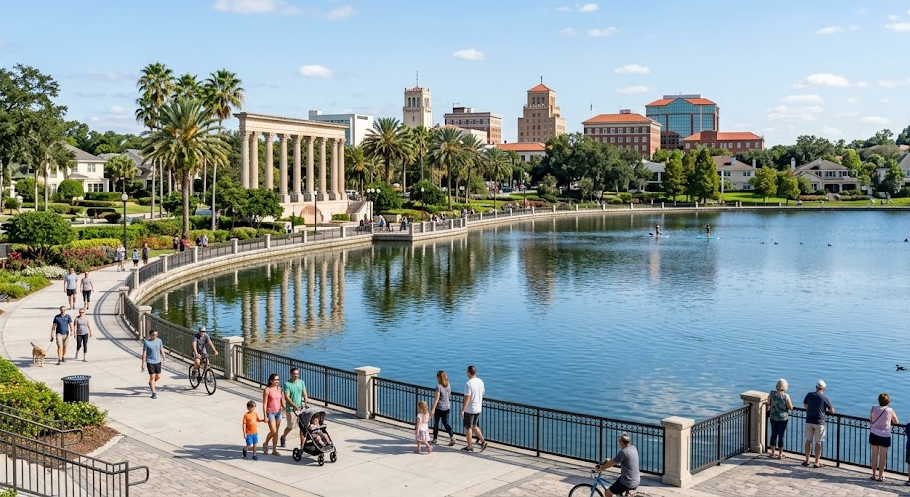
Right along the Interstate 4 corridor in Polk County, Lakeland strikes a perfect balance between big-city convenience and small-town charm. It gets its name from the 38 beautiful lakes found right inside the city limits.
Real Costs & Lifestyle
While home prices in nearby Tampa and Orlando have gone through the roof, Lakeland keeps its median home values resting comfortably between $230,000 and $250,000, with typical rent around $1,400 to $1,800.
- Average Monthly Cost Example: Housing: $1,400 – $1,800 rent | Utilities: $160 – $260 | Groceries: Average Florida pricing | Transportation: High reliance on cars; highway commuting costs apply.
- The Vibe: Spend your weekends exploring a walkable downtown packed with local coffee shops, craft breweries, and busy morning farmers markets. You can drive into downtown Tampa or head to Orlando’s theme parks in about 45 to 60 minutes.
- Pros: Fantastic central location between two major cities; great lake views; thriving local arts scene.
- Cons: Interstate traffic can be brutal during rush hours; summers feel exceptionally hot and humid without a coastal breeze.
3. Titusville — Affordable Coastal Access
If you can’t imagine living away from the ocean but still need to stay on a budget, Titusville, located on the Indian River Lagoon along Florida’s Space Coast, offers an affordable gateway to coastal living.
Real Costs & Lifestyle
Titusville has a surprisingly low cost of living, with median home prices hovering around $240,000 and rent averaging $1,300 to $1,700.
- Average Monthly Cost Example: Housing: $1,300 – $1,700 rent | Utilities: $140 – $230 | Groceries: Standard coastal pricing | Transportation: Car needed, but local driving distances are short.
- The Vibe: Residents get front-row seats to regular rocket launches taking off from the Kennedy Space Center right across the water. It sits right next to the Canaveral National Seashore, giving you easy access to miles of untouched, completely wild sandy beaches.
- Pros: Low-cost coastal real estate; incredible rocket launch views; surrounded by protected wildlife refuges.
- Cons: The local job market is fairly quiet outside of space and defense contractors; shopping and dining choices are on the basic side.
4. Gainesville — Education and Healthcare Hub
Gainesville is so much more than just a standard college town. Located in Alachua County, this North-Central Florida city serves as a major medical and professional hub for the entire region.
Real Costs & Lifestyle
With a steady influx of doctors, researchers, professors, and students, Gainesville keeps a highly stable and affordable real estate market. The median home price sits right near $250,000, with rent between $1,400 and $1,900.
- Average Monthly Cost Example: Housing: $1,400 – $1,900 rent/student apartments | Utilities: $150 – $240 | Groceries: Highly competitive | Transportation: Great biking infrastructure and local bus options.
- The Vibe: As the home of the University of Florida, the town is filled with major SEC sports, great museums, and a highly creative local music and arts scene. When you want to escape the city, the surrounding area is packed with beautiful sinkholes and state parks.
- Pros: Top-tier medical centers and steady employment; diverse local culture; beautiful parks.
- Cons: Traffic gets incredibly heavy around campus on home football game weekends; property taxes can be a bit high.
5. Jacksonville — Big-City Economy, Low-Cost Living
Jacksonville proves that you don’t have to move to a tiny town just to find affordable housing in Florida. As the largest city by land area in Duval County and the continental U.S., it offers plenty of space and opportunity.
Real Costs & Lifestyle
The city’s massive footprint means it is packed with affordable suburbs and revitalized urban neighborhoods. The median home price ranges from $260,000 to $266,000, and average rent is $1,500 to $2,000, making it way more accessible than South Florida choices like Miami.
- Average Monthly Cost Example: Housing: $1,500 – $2,000 rent | Utilities: $170 – $270 | Groceries: Standard metro pricing with plenty of budget grocery chains | Transportation: High car dependency.
- The Vibe: Jacksonville gives you a full metropolitan experience, complete with an NFL team (the Jacksonville Jaguars), a massive riverfront downtown, and a booming corporate job market. You get miles of public Atlantic coast beaches alongside the beautiful St. Johns River.
- Pros: Large, thriving job market; extensive park system and easy beach access; lower cost of living than other major Florida cities.
- Cons: The massive geographic layout means you will spend a lot of time driving; urban sprawl is significant.
6. Daytona Beach — The Iconic Affordable Beach Town
Located on the Atlantic coast in Volusia County, Daytona Beach is a highly practical and budget-friendly option for people who want a classic beach lifestyle without the crazy price tags.
Real Costs & Lifestyle
Daytona Beach offers some of the most competitive ocean-adjacent real estate values anywhere in the state, with median home values in the mid-$240,000s and rent between $1,300 and $1,700.
- Average Monthly Cost Example: Housing: $1,300 – $1,700 rent | Utilities: $150 – $250 | Groceries: Very reasonable; local dining deals are easy to find | Transportation: Car required.
- The Vibe: Life here is completely tied to the Atlantic Ocean. Residents love the 23 miles of hard-packed white sand beaches. The local economy gets a steady boost from tourism and motorsports, anchored by the famous Daytona International Speedway.
- Pros: Highly accessible coastal property prices; active beach culture; plenty of local dining.
- Cons: Massive tourist crowds move in during major bike weeks and race events; some older neighborhoods require careful vetting.
7. Palm Coast — Peaceful Coastal Master-Planned Living
If you love the idea of the Atlantic coast but want something a bit quieter and less commercial than Daytona Beach, look just a short drive north to Palm Coast in Flagler County.
Real Costs & Lifestyle
Palm Coast features a beautifully organized layout full of saltwater canals, golf courses, and quiet cul-de-sacs. The median home price sits right around $275,000, with rent between $1,400 and $1,800.
- Average Monthly Cost Example: Housing: $1,400 – $1,800 rent | Utilities: $140 – $230 | Groceries: Standard suburban pricing | Transportation: High car dependency.
- The Vibe: Palm Coast is all about peace, quiet, and outdoor fitness. The town is tied together by more than 125 miles of dedicated walking, running, and biking trails. The local beaches are peaceful, uncrowded, and famous for their unique, orange-tinted coquina sand.
- Pros: Beautifully clean, master-planned neighborhoods; low crime rates; endless walking trails.
- Cons: Very few large corporate employers locally; strict HOA guidelines are very common.
8. Winter Haven — Lakes and Family Entertainment
Located right in the heart of Central Florida’s Polk County, Winter Haven is a warm, welcoming community known for its incredible water geography and family-friendly vibe near Orlando.
Real Costs & Lifestyle
Winter Haven is a top-tier choice for young families looking to keep costs low. Median home prices consistently land in the mid-$240,000s, and rent stays around $1,300 to $1,700.
- Average Monthly Cost Example: Housing: $1,300 – $1,700 rent | Utilities: $160 – $250 | Groceries: Very reasonable | Transportation: Car absolutely required.
- The Vibe: The coolest feature of Winter Haven is its famous Chain of Lakes—a network of over 50 individual lakes linked together by a historic system of canals. The city is also famously home to LEGOLAND Florida Resort, which provides a steady stream of local jobs and family entertainment.
- Pros: Incredible chain of lakes lifestyle; family-focused community; highly reasonable cost of living.
- Cons: Inland summer heat can feel incredibly intense without an ocean breeze; high car dependency.
9. Dade City — Historic Small-Town Florida Living
For anyone who wants to skip the tourist traps and generic strip malls of modern Florida, Dade City, located in Pasco County just north of the busy Tampa Bay metro area, offers a beautiful step back in time.
Real Costs & Lifestyle
Dade City has an incredibly enticing real estate market, with median home prices around $260,000 and rental rates between $1,200 and $1,600.
- Average Monthly Cost Example: Housing: $1,200 – $1,600 rent | Utilities: $150 – $230 | Groceries: Affordable with plenty of local farm stands | Transportation: Low local traffic, but car required for highway travel.
- The Vibe: Dade City is famous for its rolling hills, antique shops, and gorgeous 1920s architecture, anchored by its historic brick courthouse. It feels completely peaceful and rural, yet you can still easily drive into Tampa for work or entertainment.
- Pros: Beautiful historic character and charm; quiet, rolling country landscapes; great housing values.
- Cons: Limited local high-paying corporate jobs; you will have to drive to neighboring towns for major hospital networks.
10. Melbourne — High-Tech Jobs and Space Coast Beaches
Rounding out our list is Melbourne, a beachside city in Brevard County that manages to combine a booming, high-paying local economy with an accessible cost of living.
Real Costs & Lifestyle
While Melbourne sits on the slightly higher end of our budget list, its housing prices remain very reasonable for the Space Coast, with median values landing in the upper $200,000s and rent between $1,500 and $1,900.
- Average Monthly Cost Example: Housing: $1,500 – $1,900 rent | Utilities: $150 – $260 | Groceries: Standard coastal pricing | Transportation: Car needed, though major employment centers are close.
- The Vibe: On one side, you have a historic downtown filled with local restaurants and miles of beautiful Atlantic beaches. On the professional side, it is a massive hub for aerospace and defense engineering, powered by major companies like Northrop Grumman, L3Harris, and Embraer.
- Pros: Robust local tech and defense job market; beautiful beaches; highly rated schools.
- Cons: The local housing market moves incredibly fast; being right on the coast means higher home insurance premiums.
Cheapest Places to Live in Florida on $3,000 a Month
For retirees, fixed-income households, or remote workers trying to keep expenses tight, living comfortably on a budget of $3,000 a month is entirely doable in budget-friendly Florida towns. Cities like Ocala, Winter Haven, Dade City, and Titusville are great places to target.
Because housing costs represent the largest chunk of any monthly budget, these areas keep the dream alive by offering rent and mortgage estimates well below the state average. Combined with lower property insurance costs found inland, your money goes significantly further here compared to South Florida metros like Miami or Naples.
Best Affordable Places in Florida by Lifestyle
To make your relocation search easier, we can categorize these destinations by what they do best:
Best for Retirees
- Ocala: Low insurance costs, beautiful horse country, and a slow, relaxing pace.
- Palm Coast: Clean, quiet master-planned suburban neighborhoods with endless nature paths.
- Winter Haven: Great for spending quiet days out on freshwater fishing boats.
Best for Families
- Lakeland: Excellent public parks, community festivals, and a quick drive to jobs in Tampa or Orlando.
- Jacksonville: Major job market with excellent school networks and diverse suburban neighborhoods.
- Gainesville: Great neighborhood structures backed by strong educational and medical infrastructure.
Best Affordable Beach Towns
- Titusville: Unbelievably raw ocean access via the pristine Canaveral National Seashore.
- Daytona Beach: Wide beach coastlines mixed with highly accessible real estate.
- Melbourne: Perfect ocean access paired with a booming, high-wage local job market.
Official Housing & Demographic Data: For the most accurate, high-level data on Florida’s housing units, median home values, and local demographics, you can view the official U.S. Census Bureau’s Florida profile.
Frequently Asked Questions (FAQs)
What is the cheapest city to live in Florida?
When balancing home prices, monthly rent, utilities, and insurance costs, Ocala regularly ranks as the most affordable city in Florida. Its central inland location protects residents from the high insurance rates and real estate spikes commonly found along the major coastlines.
Where can you live cheaply in Florida near the beach?
Titusville and Daytona Beach are your best options on the Atlantic side. They make it completely possible to buy a home or rent an apartment close to the ocean for a small fraction of what you would pay in South Florida beach towns like Miami or Sarasota.
Is Florida affordable in 2026?
Yes, but location is everything. While major coastal metropolitan hubs have seen significant price increases, inland Central Florida regions and northern parts of the state remain highly affordable and offer excellent lifestyle value for your dollar.
What Florida city has the lowest housing costs?
Ocala and Winter Haven consistently display the lowest overall housing costs for both buyers and renters. Their steady real estate inventory prevents the intense price competition seen closer to the state’s theme parks or coastal boardwalks.
Where do retirees live cheaply in Florida?
Many retirees live cheaply in inland hubs like Ocala and Winter Haven, or quieter coastal settings like Palm Coast. These cities offer excellent senior activities, access to healthcare, and lower homeowners insurance premiums.
Conclusion
Moving to the Sunshine State doesn’t mean you have to exhaust your life savings. As you weigh these options, it helps to consider what you are leaving behind. For many, moving to Florida is about escaping the high-pressure, high-cost environments often found in northern regions, such as the lifestyle shift explored in The Long Island Utopia. Choosing a more affordable Florida city allows you to trade that financial stress for a higher quality of life, allowing your savings to go much further.