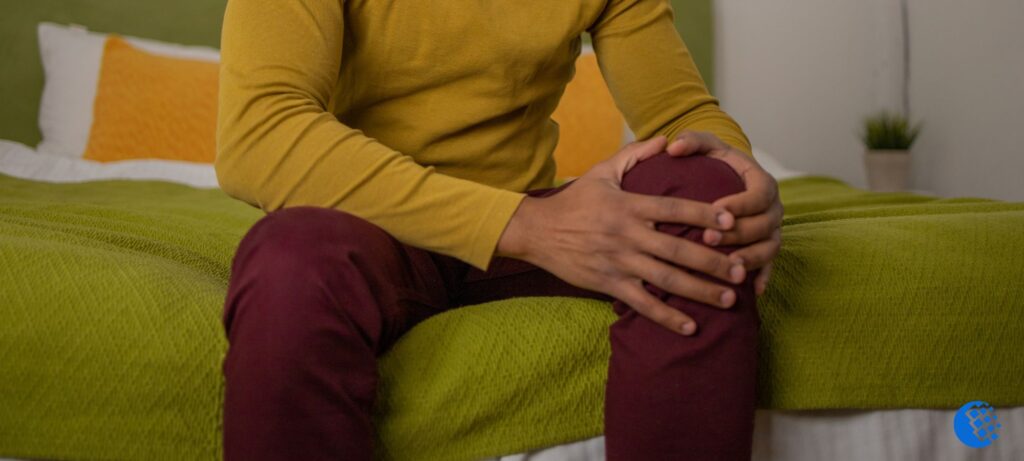
Knee pain while bending is a common complaint that can affect people of almost any age. You may notice it while sitting down, climbing stairs, squatting, exercising, getting out of a chair, or simply bending your leg in bed. Sometimes the discomfort is mild and temporary. In other cases, persistent pain can indicate irritation, injury, or changes within the knee joint.
The knee is one of the most complex and frequently used joints in the body. Every time you walk, run, sit, stand, or climb stairs, several structures inside and around the knee work together. When one of these structures becomes irritated or damaged, bending the knee can become uncomfortable.
Understanding why your knee hurts when you bend it is the first step toward choosing appropriate care and preventing the problem from becoming worse.
Why Can Bending the Knee Cause Pain?
The knee joint connects the thigh bone (femur), shin bone (tibia), and kneecap (patella). Cartilage, menisci, ligaments, tendons, muscles, and fluid-filled bursae help the joint move smoothly and absorb pressure.
When you bend your knee, pressure inside the joint changes. The kneecap moves along a groove in the thigh bone, while the muscles, tendons, cartilage, and ligaments work together to control movement.
Pain may occur when one or more of these structures are inflamed, irritated, overloaded, injured, or affected by gradual wear.
The location and type of pain can provide useful clues about its possible cause.
Common Reasons Your Knee Hurts When You Bend It
1. Patellofemoral Pain Syndrome
Patellofemoral pain syndrome is a common cause of pain around or behind the kneecap. It is sometimes called runner’s knee, although you do not need to be a runner to develop it.
Pain may become more noticeable during:
- Squatting
- Running
- Climbing or descending stairs
- Sitting with bent knees for long periods
- Getting up after prolonged sitting
Muscle imbalance, repeated stress, training changes, and problems with kneecap movement can contribute to this condition.
2. Osteoarthritis of the Knee
Knee osteoarthritis occurs when the cartilage that helps cushion the joint gradually changes and wears down.
It is more common with increasing age, although previous injuries, body weight, genetics, and repetitive joint stress may influence the risk.
Common symptoms include:
- Knee pain during movement
- Stiffness, particularly after resting
- Reduced range of motion
- Swelling
- Grinding or crackling sensations
- Difficulty bending the knee fully
People with osteoarthritis may find everyday activities such as climbing stairs, getting out of a chair, or squatting increasingly uncomfortable.
3. Meniscus Injury
The menisci are C-shaped pieces of cartilage inside the knee that act as shock absorbers between the thigh and shin bones.
A meniscus can become injured during sudden twisting movements, particularly during sports. Degenerative meniscus tears can also occur gradually as people age.
Symptoms can include pain while bending or twisting the knee, swelling, stiffness, clicking, catching, or a feeling that the knee is temporarily locked.
A knee that repeatedly locks or cannot fully straighten should be medically evaluated.
4. Tendon Irritation
Tendons connect muscles to bones. Repeated jumping, running, sudden increases in physical activity, or excessive strain can irritate tendons around the knee.
Patellar tendinopathy, for example, affects the tendon connecting the kneecap to the shin bone.
Pain is often felt below the kneecap and may become worse when jumping, running, climbing stairs, or performing deep knee bends.
5. Bursitis
Small fluid-filled sacs called bursae reduce friction between tissues around joints. When one of the bursae around the knee becomes inflamed, the condition is called knee bursitis.
It may result from repetitive pressure, prolonged kneeling, overuse, or injury.
Depending on which bursa is affected, symptoms may include tenderness, swelling, warmth, and discomfort when bending the knee.
6. Ligament Injuries
Ligaments help stabilize the knee. Injuries to structures such as the anterior cruciate ligament (ACL) or medial collateral ligament (MCL) can occur during sports, falls, sudden direction changes, or direct impacts.
A significant ligament injury may cause immediate pain, swelling, instability, or a feeling that the knee is giving way.
These injuries should not simply be treated as routine muscle soreness, particularly when symptoms follow trauma.
7. Muscle Tightness or Overuse
Not every painful knee is caused by damage inside the joint.
Tight quadriceps, hamstrings, calves, or surrounding soft tissues can influence knee mechanics. Sudden increases in walking, running, gym training, or sports may also temporarily overload the tissues surrounding the knee.
Mild overuse-related discomfort often improves with appropriate rest and gradual return to activity.
What Does the Location of Knee Pain Tell You?
Where the pain occurs can sometimes help narrow down the possibilities.
Pain in front of the knee: May be associated with the kneecap, patellar tendon, or patellofemoral joint.
Pain inside the knee: Can occur with medial meniscus problems, ligament injuries, or osteoarthritis.
Pain outside the knee: May be related to soft-tissue irritation, including structures around the lateral side of the knee.
Pain behind the knee: Can have several causes, including muscle or tendon problems and fluid accumulation.
Location alone cannot provide a diagnosis. Persistent or significant symptoms require proper clinical assessment.
How Can You Manage Mild Knee Pain at Home?
If your pain is mild, developed gradually, and is not associated with significant injury, simple measures may help.
Temporarily reduce activities that aggravate the knee, especially deep squatting, jumping, or repetitive stair climbing. Low-impact movement may be more comfortable while symptoms settle.
Cold packs can sometimes help after activity when swelling or irritation is present. Avoid placing ice directly against the skin.
Once comfortable, gentle strengthening and mobility exercises may help support the muscles surrounding the knee. Exercise selection should depend on the cause of the pain rather than following the same routine for every knee problem.
Can Knee Pain Relief Oil Help?
Some people use a knee pain relief oil as part of their self-care routine, particularly for temporary muscular stiffness or discomfort around the joint.
Applying and gently massaging an appropriate Pain relief oil may provide a soothing sensation and make the surrounding muscles feel more comfortable. However, topical oils should not be considered a treatment for structural problems such as ligament tears, fractures, severe osteoarthritis, or significant meniscus injuries.
Products from wellness brands such as Reset may be considered as part of a broader comfort or massage routine when appropriate, but persistent knee pain still needs its underlying cause identified.
Avoid vigorous massage if the knee is significantly swollen, acutely injured, unusually warm, or extremely painful.
When Should You See a Doctor?
Seek medical evaluation if knee pain is severe, persists despite basic self-care, keeps returning, or interferes with normal activities.
Prompt assessment is particularly important if:
- You cannot put weight on the affected leg
- The knee becomes significantly swollen
- The knee locks or repeatedly gives way
- Pain started after a significant fall or injury
- You cannot fully bend or straighten your knee
- The joint appears deformed
- The knee is red or unusually warm, particularly if accompanied by fever
These symptoms can require more than routine home management.
How Can You Reduce the Risk of Future Knee Pain?
Healthy knee function depends partly on the strength and mobility of the entire lower body.
Regular strengthening of the quadriceps, hamstrings, glutes, and calf muscles can improve support around the knee. Gradually increasing exercise intensity rather than suddenly increasing training volume can also reduce unnecessary stress.
Other useful habits include maintaining comfortable mobility, wearing appropriate footwear for your activity, warming up before demanding exercise, and allowing sufficient recovery between intense training sessions.
If a particular movement repeatedly causes pain, forcing yourself through it is rarely a good strategy. Modify the activity and determine why the movement is uncomfortable.
Frequently Asked Questions
Why does my knee hurt when I bend it but not when I walk?
Different movements place different levels of pressure on knee structures. Deep bending can increase stress around the kneecap and other parts of the joint, making certain problems more noticeable than ordinary walking.
Why does my knee hurt when I squat?
Squatting requires substantial knee flexion and increases load through the joint. Patellofemoral pain, tendon irritation, meniscus problems, osteoarthritis, or overuse may contribute.
Is knee pain while bending always arthritis?
No. Arthritis is only one possible cause. Tendon problems, meniscus injuries, bursitis, muscle tightness, patellofemoral pain, and ligament injuries can also cause pain during bending.
Can a Pain relief oil cure knee pain?
A Pain relief oil may provide temporary comfort for some types of muscular aches or stiffness, but it does not correct every underlying cause of knee pain. Persistent symptoms should be properly assessed.
Should I exercise if my knee hurts?
It depends on the cause and severity of the pain. Gentle movement may be appropriate for some conditions, while acute injuries may require activity modification. Stop exercises that produce sharp or worsening pain.
Why does my knee make a cracking sound when I bend it?
Knees can make clicking, popping, or cracking sounds for several reasons, and painless sounds are not always a sign of disease. If the sound occurs with pain, swelling, locking, or instability, medical assessment is advisable.
How long should knee pain last before I see a doctor?
Minor overuse discomfort may improve after reducing aggravating activities. If pain persists, repeatedly returns, worsens, or affects everyday movement, it is better to seek professional assessment rather than relying indefinitely on home remedies.
Final Thoughts
Knee pain when bending can arise from something as simple as temporary overuse or from conditions involving cartilage, tendons, ligaments, bursae, or other structures within the joint.
Pay attention to when the pain occurs, exactly where you feel it, whether swelling is present, and which activities make it worse. These details can help identify the underlying problem.
For mild muscular discomfort, rest, appropriate movement, and supportive measures such as gentle massage with a knee pain relief oil may offer temporary comfort. A Pain relief oil or wellness product from Reset should still be viewed as supportive care rather than a substitute for diagnosis or treatment when symptoms are persistent or severe.
The goal is not simply to make the pain disappear temporarily. It is to understand why the knee hurts, address the underlying cause, and protect comfortable movement over the long term.