

Women today carry a lot. Work deadlines, caregiving, relationships, financial pressure, social expectations, and the constant feeling that everyone needs something at the exact same time can wear a person down fast. Even women who appear organized and successful from the outside often feel mentally exhausted behind closed doors. That pressure tends to build slowly, which is part of what makes it hard to notice until daily life starts feeling heavier than it should.
More women have started paying closer attention to wellness, not because it is trendy, but because running on empty eventually catches up with the body and mind. Small routines and healthier boundaries can make everyday life feel more manageable. The goal is not perfection. It is creating a life that feels sustainable instead of overwhelming.
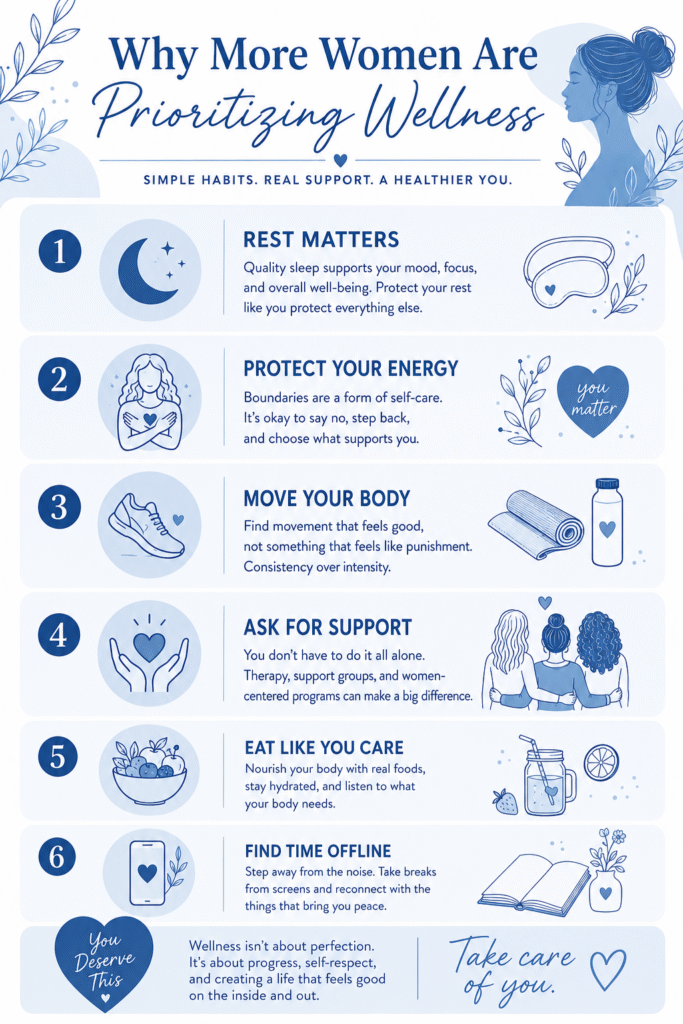
Rest Matters
Many women treat sleep like a luxury instead of a necessity. That mindset can create a cycle where exhaustion becomes normal, even when the body is clearly asking for a break. Long workdays followed by late-night scrolling, unfinished chores, and stress can leave very little room for real recovery.
Rest is not laziness. It helps with emotional regulation, concentration, energy levels, and patience. Women who start protecting their sleep often notice they feel less reactive during stressful moments. That can look like going to bed earlier a few nights a week, limiting screen time before bed, or saying no to obligations that stretch the schedule too thin.
The idea that women must constantly push through exhaustion has not done anyone many favors. Slowing down before reaching a breaking point may help life feel more balanced overall.
Protect Your Energy
One reason wellness conversations resonate with women is because emotional exhaustion can build in ways that are easy to dismiss. Many women become so focused on taking care of others that they stop paying attention to their own stress levels. Overcommitting becomes normal. Answering texts at midnight becomes normal. Feeling guilty for resting becomes normal too.
That is why conversations around avoiding burnout continue to grow. Women are beginning to recognize that protecting their time and energy is not selfish. It is necessary. Boundaries matter in friendships, romantic relationships, family dynamics, and work environments.
Protecting energy may look different for everyone. For one woman, it might mean declining extra projects at work. For another, it could mean taking social breaks on weekends instead of filling every hour with plans. Wellness does not always require dramatic changes. Sometimes it starts with being honest about what feels unsustainable.
Move Your Body
Exercise conversations often focus too heavily on appearance, which can make wellness feel discouraging instead of supportive. Many women are shifting away from punishment-based fitness routines and looking for movement that feels realistic and enjoyable.
Walking, yoga, dance classes, swimming, strength training, hiking, or stretching at home can all support physical and mental wellness. Consistency usually matters more than intensity. A woman does not need to spend two hours in the gym every day to care for herself.
Movement can also create structure during stressful periods. Even short walks after dinner or quick workouts between meetings may help clear the mind and reduce tension. The key is finding something that fits real life instead of chasing unrealistic expectations from social media.
Women already deal with enough pressure. Fitness should not become another source of shame.
Ask For Support
A growing number of women have become more open about therapy, recovery programs, support groups, and mental health conversations. That shift matters because many women spent years believing they had to hold everything together on their own.
Sometimes support means talking with trusted friends. Sometimes it means counseling. Sometimes it means stepping away from an unhealthy environment altogether. There are also women who decide they need more structured help during difficult periods in life. Discussions around women’s rehab in San Antonio, Boston or D.C. continue because some women prefer environments designed specifically around female experiences and stressors.
There is no single version of wellness that works for every woman. Different seasons of life require different kinds of support. What matters is recognizing when something no longer feels manageable alone.
Trying to appear strong at all times can leave women isolated. Reaching out for help often takes far more courage than pretending everything is fine.
Eat Like You Care
Women hear conflicting nutrition advice constantly. One week carbs are the enemy. The next week everyone is afraid of seed oils. It becomes exhausting trying to keep up with every wellness trend online.
In reality, many women feel better when they focus less on restriction and more on consistency. Eating enough protein, drinking water, incorporating fruits and vegetables, and preparing meals ahead of busy days can help support energy levels throughout the week.
Food also affects mood more than many people realize. Skipping meals and relying heavily on caffeine may leave women feeling jittery, irritable, or drained later in the day. Wellness does not require eating perfectly all the time. Most women simply benefit from slowing down enough to pay attention to how certain habits make them feel physically and mentally.
That approach tends to feel a lot more realistic than chasing internet perfection.
Find Time Offline
Women today absorb an enormous amount of information every day. News alerts, social media updates, emails, texts, podcasts, and endless online opinions create mental clutter that rarely stops. Even relaxing can become performative online.
Taking breaks from constant digital input may help create more mental breathing room. That does not mean disappearing from the internet forever. It simply means creating moments where the brain is not processing notifications every few seconds.
Reading, cooking, gardening, journaling, walking outside, or spending time with friends without staring at a phone can help slow things down. Many women find that even short breaks from screens improve focus and reduce stress levels.
Life already moves fast enough. Constant online noise tends to make it louder.
Final Thoughts
Women are paying closer attention to wellness because exhaustion has become far too common. Better sleep, stronger boundaries, supportive relationships, movement, and realistic routines may help life feel more manageable over time. Wellness is not about doing everything perfectly. It is about creating habits that support women instead of draining them further.