

The tech industry has built a reputation around long hours, constant connectivity, and pressure to produce at a relentless pace. For many workers, the lifestyle can feel rewarding at first. Fast promotions, competitive salaries, and the excitement of building something new often create an atmosphere where exhaustion gets treated like proof of ambition. Over time, though, that pressure can wear people down in ways they never expected.
Mental and emotional fatigue do not always stay contained to the workplace. Some people begin leaning harder on alcohol, prescription medications, or other unhealthy coping habits simply to get through the day or finally shut their brain off at night. While every situation looks different, conversations around burnout and substance misuse have become harder to ignore inside the tech world. The good news is that many workers are beginning to recognize the warning signs earlier and take practical steps toward recovery before things spiral further.
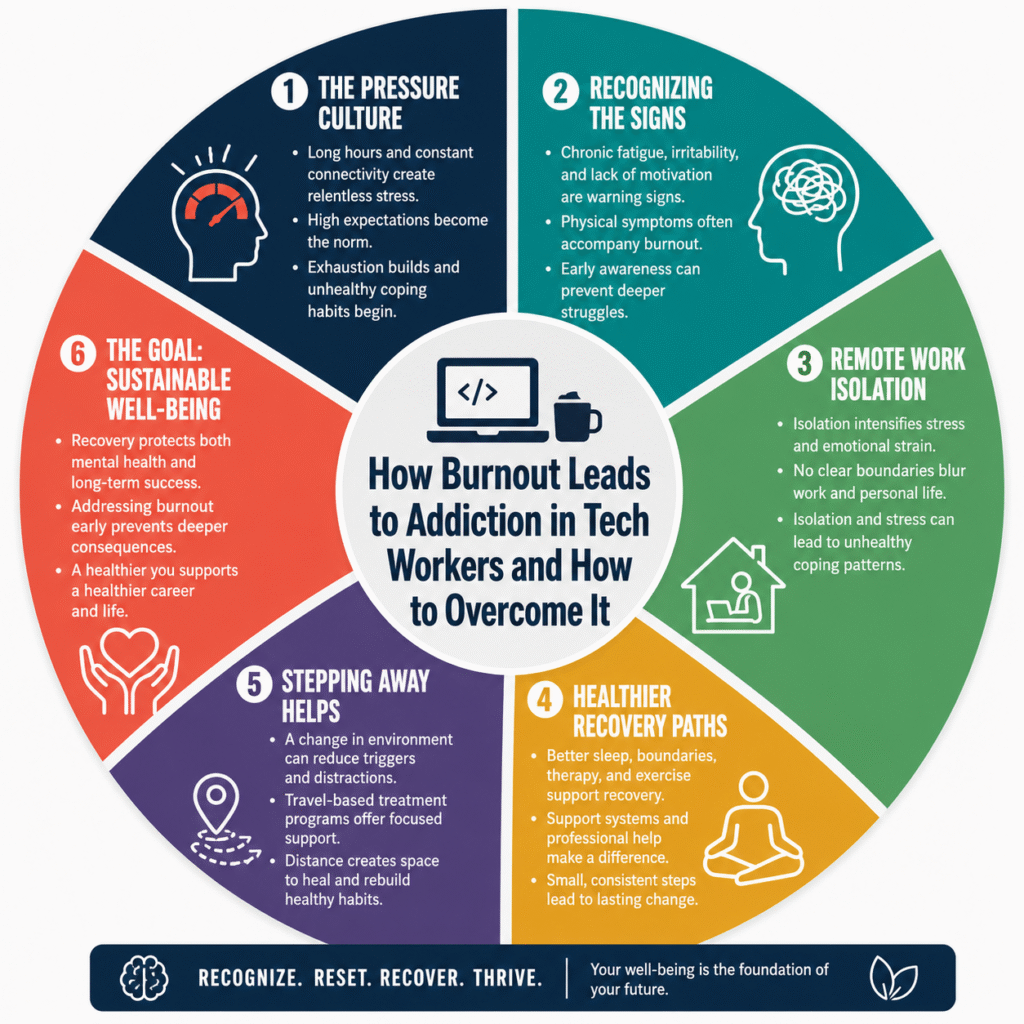
The Pressure Culture
Tech workers often operate in environments where there is no real off switch. Notifications continue after dinner. Slack messages arrive at midnight. Deadlines shift without warning. Teams get smaller while workloads grow larger. Even remote jobs, which once sounded like freedom, can blur the line between personal time and work time until every room in the house starts feeling like an office.
People in highly demanding fields sometimes normalize unhealthy behavior because everyone around them appears to be doing the same thing. Pulling all nighters, surviving on caffeine, and skipping vacations can become badges of honor instead of warning signs. Over time, the body and mind push back.
Sleep problems, irritability, emotional numbness, and chronic stress can slowly build into something much heavier. Some workers may start using substances socially at first, only to realize later that those habits became tied to stress relief, sleep, or emotional escape. That pattern can be difficult to recognize while someone is still functioning professionally on the surface.
Recognizing The Signs
One of the hardest parts of burnout is that it rarely arrives all at once. Many people continue performing at a high level while privately feeling exhausted, detached, or emotionally overwhelmed. Someone may still hit deadlines and attend meetings while struggling heavily outside work hours.
The conversation around avoiding burnout has grown because more workers are noticing the same behavioral patterns repeating themselves across the industry. Constant fatigue, lack of motivation, increased isolation, and dependence on unhealthy routines can all signal that stress has reached an unhealthy level.
Physical symptoms may also start appearing. Headaches, digestive problems, muscle tension, panic attacks, and insomnia often accompany chronic stress. Some people become emotionally reactive while others shut down completely. Neither response should be dismissed as laziness or weakness.
Friends and family members may notice changes before the individual does. Short tempers, canceled plans, emotional distance, or excessive drinking during the week can all point toward someone struggling beneath the surface. Early intervention matters because burnout rarely improves by simply “pushing through it.”
Remote Work Isolation
Remote work solved some workplace problems, but it also introduced new ones. Many tech workers now spend most of their day alone in front of screens with limited social interaction outside work chats and video calls. That isolation can intensify stress and make unhealthy coping behaviors easier to hide.
Without normal routines, some people drift into irregular sleep schedules, poor eating habits, or excessive work hours. When there is no commute and no physical separation between work and home, stress follows people everywhere. The brain never fully powers down.
Isolation can also make emotional struggles feel more severe. In a traditional office, coworkers might notice when someone seems overwhelmed or disengaged. Remote workers often suffer privately for much longer because nobody sees what is happening behind the screen.
This environment can create a dangerous cycle. Burnout increases stress, stress encourages unhealthy coping habits, and isolation keeps people from seeking support. Breaking that cycle usually requires intentional changes instead of waiting for motivation to magically return.
Healthier Recovery Paths
Burnout recovery is rarely about one dramatic life change. Most people improve through smaller, consistent decisions that rebuild stability over time. Better sleep habits, clearer work boundaries, therapy, exercise, and stronger personal routines can all help reduce emotional overload.
Many workers also benefit from stepping away from hypercompetitive environments long enough to reset mentally. That could mean taking medical leave, reducing workload, changing companies, or seeking structured support programs that focus on both mental health and substance use recovery.
Tech workers sometimes resist getting help because they fear judgment or career damage. In reality, untreated burnout tends to create far bigger professional consequences later. Chronic exhaustion affects concentration, decision making, communication, and overall health. Addressing the problem earlier often protects both personal well being and long term career stability.
Support systems matter as well. Friends, family members, therapists, recovery groups, and trusted coworkers can help people feel less isolated during difficult periods. Recovery usually becomes more sustainable when someone feels supported instead of ashamed.
Stepping Away Helps
The environment plays a larger role in recovery than many people realize. Staying in the same stressful setting while trying to recover can make progress harder. Some people find that temporarily leaving their normal surroundings gives them enough mental distance to finally focus on healing.
That is one reason travel based treatment and recovery programs continue attracting attention among professionals. For some individuals, a change in location creates fewer distractions and less access to unhealthy routines connected to stress.
In some situations, traveling to rehabs in Charleston WV, Portland OR or another city that’s away from your stress triggers, could be worth it because physical distance can help people focus fully on rebuilding healthier habits and routines without the constant pressure of work following them everywhere.
Recovery does not look identical for everyone. Some people benefit from therapy and lifestyle changes alone, while others may need more structured treatment and extended support. The important thing is recognizing when stress has crossed into something more serious and responding before it causes deeper damage. Burnout in tech is often discussed like a productivity issue, but its effects can reach far beyond missed deadlines or low motivation. Chronic stress can reshape daily habits, relationships, and emotional health in ways that become difficult to manage alone. Recognizing the warning signs early and taking meaningful action can make recovery far more realistic before the damage