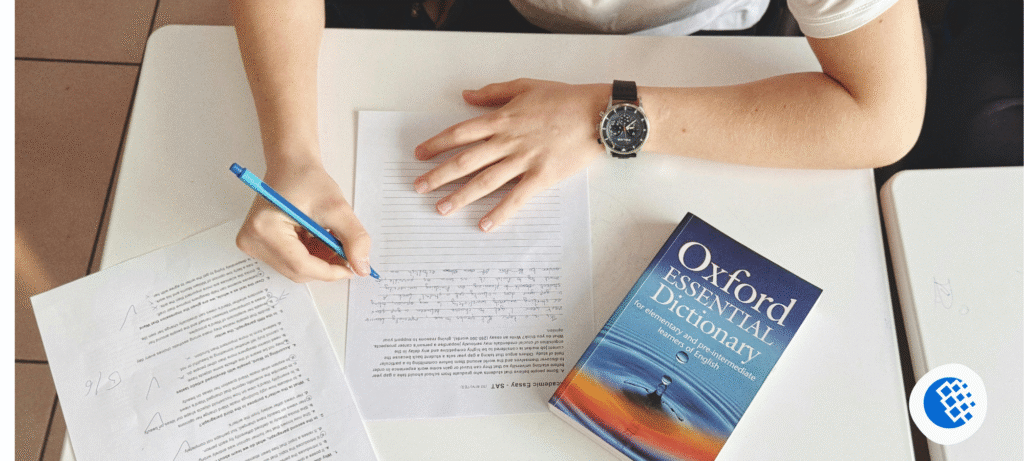
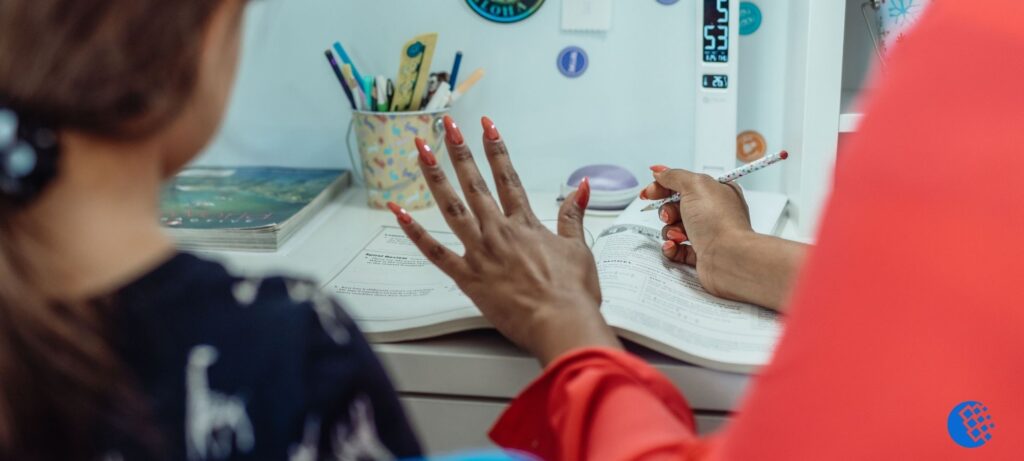
So, what is unschooling vs homeschooling? Unschooling is a child led form of home education, one where a kid’s own interests and questions drive most of what and how they learn. Homeschooling’s the broader term, the legal and practical umbrella for any education happening outside a traditional school, everything from a fully structured curriculum to a loose, interest driven routine. Unschooling sits inside that larger category, really, one specific philosophy rather than something entirely separate, and in most places it’s not even treated as its own legal category at all.
The biggest practical difference, when it comes down to it, is who’s actually driving the day to day learning. Homeschooling usually starts with what a parent decides a child should study. Unschooling starts somewhere else entirely, with what the child wants or needs to explore, and the parent steps in as a guide rather than a planner handing out assignments.
Trying to decide between the two? Or maybe just trying to figure out why some families toss both words around almost interchangeably? This guide walks through every part of that comparison, structure, curriculum, parenting role, assessment, legality, socialization, college outcomes, deschooling, and how to actually choose the right fit for your own child.
What Is Unschooling vs Homeschooling at a Glance
| Factor | Homeschooling | Unschooling |
|---|---|---|
| Basic approach | Parent directed or flexible | Child led |
| Curriculum | May use a formal curriculum | No fixed curriculum required |
| Daily schedule | Can be structured | Usually flexible |
| Parent’s role | Teacher, planner, facilitator | Facilitator, mentor, resource provider |
| Textbooks | Common but optional | Usually optional |
| Grades and tests | May be used | Generally avoided |
| Learning source | Curriculum plus real life | Interests, questions, and real life |
| Grade level structure | Often followed | Usually not followed |
| Flexibility | Moderate to high | Very high |
| Main strength | Predictability and academic tracking | Autonomy and intrinsic motivation |
This table answers the surface level question quickly. The sections below explain why these differences exist and what they actually look like in a real household.
What Is Homeschooling?
Homeschooling is education that happens outside a traditional school building, usually led in some way by a parent or guardian. Worth understanding upfront, it’s not one single method. It’s an umbrella term, really, covering several pretty different styles.
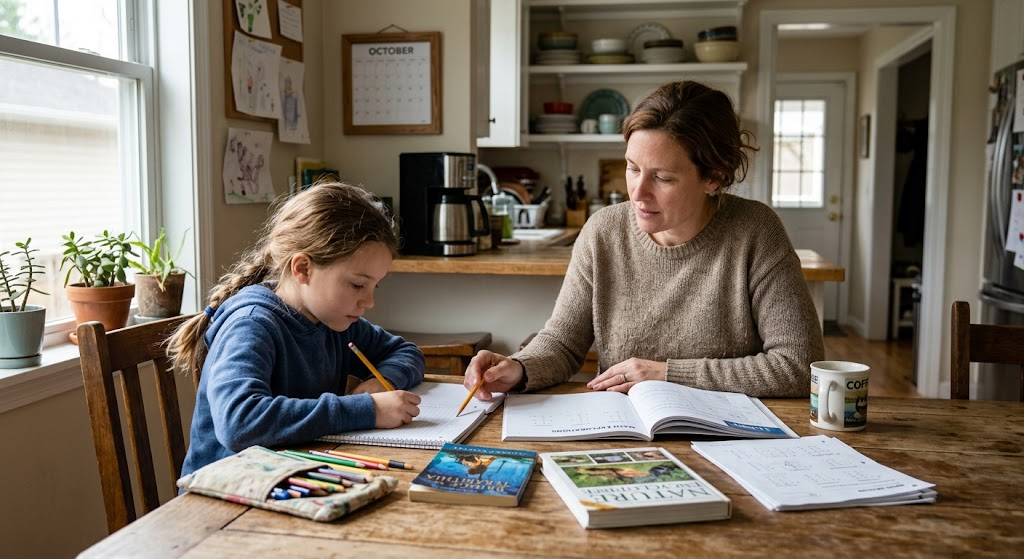
Traditional homeschooling mirrors a school day, textbooks, a set schedule, the whole structure. Curriculum based homeschooling follows a purchased or online program instead. Eclectic homeschooling mixes curricula and resources by subject, picking and choosing what actually fits. Project based homeschooling centers learning around hands on projects rather than lessons. Online or virtual homeschooling runs through a digital school platform. And relaxed homeschooling keeps things loosely structured while still holding onto academic goals underneath it all.
Because of this range, it is a mistake to define homeschooling as automatically rigid or “school at home.” A family running an eclectic or relaxed homeschool may look almost identical to an unschooling family on any given Tuesday. The difference is usually in intent and long term planning rather than in how strict the morning looks.
What Is Unschooling?
Unschooling is a specific educational philosophy within home education that puts a child’s curiosity at the center of learning. The term was popularized by teacher and author John Holt in the 1970s, who argued that children learn best through lived experience rather than through tests, grades, and fixed lesson plans.
In practice, unschooling relies on:
Child led learning, where a kid’s interests shape what actually gets explored. Self directed learning, where the child takes on more and more ownership of their own questions and projects. Learning through everyday life, cooking turning into a math lesson, gardening turning into biology, that sort of thing. And a parent acting as a facilitator rather than an instructor standing at the front of a room.
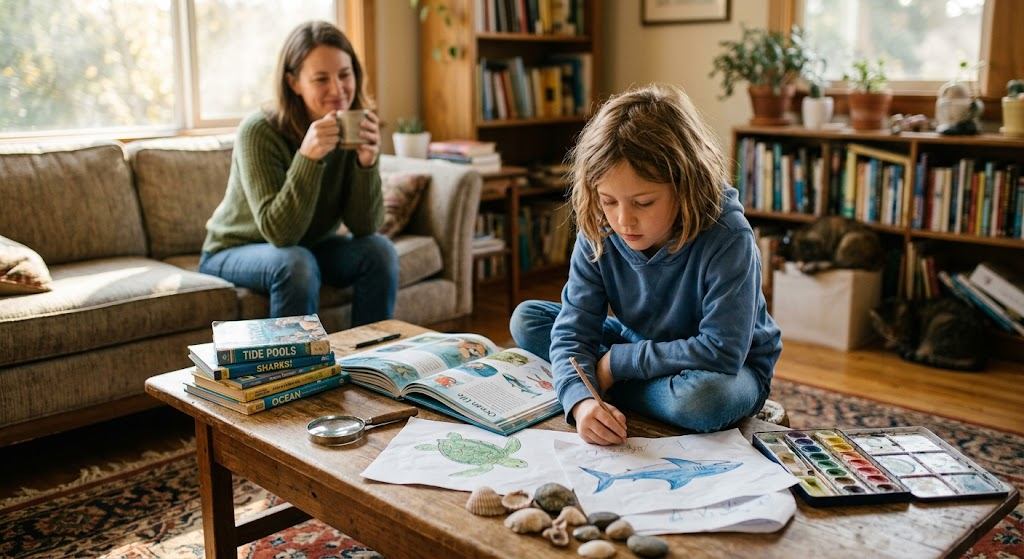
That last point matters more than it sounds, and it’s exactly where a lot of shorter articles fall short. Unschooling parents aren’t doing nothing, not even close. A parent might still provide books, answer questions, arrange classes, track down tutors, plan museum trips, buy materials, help a child dig deep into a topic they’re curious about. What the parent isn’t doing is assigning lessons or grading work the way a traditional teacher would.
What Is Deschooling?
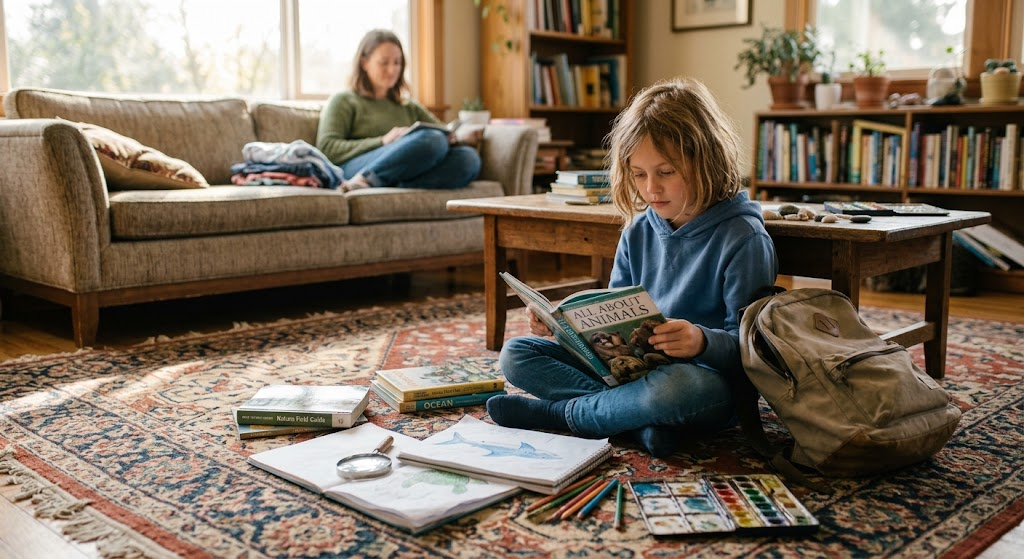
Deschooling’s a term that comes up a lot around unschooling. Most comparison articles skip it entirely though, which leaves a real gap for parents transitioning out of traditional school. What it actually refers to is an adjustment period. One a child, and often the parent too, goes through after leaving a conventional school setting, before things settle into an unschooling or relaxed homeschooling rhythm. Families typically pull back from anything that looks like a school schedule during this stretch. Time to rediscover natural curiosity, without the added pressure. Some experienced unschooling families work off a rough guideline here, about one month of deschooling for every year spent in a traditional classroom. That number moves around a lot though, depending on the family, depending on the child.
What Is the Difference Between Homeschooling and Unschooling?
Now that both terms are defined clearly, here is where the differences show up in daily life.
Curriculum
Homeschooling may follow a set curriculum, textbooks, worksheets, a defined sequence of subjects. Unschooling generally skips that requirement. But no curriculum doesn’t mean no learning, not even close. Unschooled kids often build real knowledge through documentaries, reading, hobbies, travel, hands on projects, all the things a workbook usually tries to replace.
Can an unschooler still use a curriculum for one subject, math say? Yes, actually, quite a few do. Many unschooling families bring in structured resources exactly where a child wants or needs more formal support, while leaving everything else fully interest driven.
Do Unschoolers Follow Grade Levels?
This is a genuinely useful question, one most competing articles never really address head on. Traditional homeschooling usually keeps some connection to grade level expectations, especially if a family wants the option of putting a child back into public or private school down the road. Unschooling, generally, doesn’t organize learning by grade level at all. A child might read well above what’s considered typical for their age while showing almost no interest in formal arithmetic until much later, and unschooling families tend to treat that unevenness as normal rather than some kind of warning sign. The idea that every child needs to learn long division at the same age as their peers gets treated here as a byproduct of how curriculum publishers happen to organize material, not as a fact about how children actually learn.
Who Decides What the Child Learns
In homeschooling, the parent or educator typically decides a significant chunk of the content and pacing. In unschooling, the child’s interests carry a lot more weight in that decision. The parent responds to those interests rather than setting an agenda in advance.
Is There Only One Right Answer?
Traditional homeschooling, much like a classroom, often points toward one single correct answer found in the back of a textbook or a teacher’s guide. Unschooling sits more comfortably with open ended questions, ones with several valid answers, or ones that lead to more questions instead of some clean conclusion. Subtle difference, but a real one, and it shapes how each approach handles subjects like history, ethics, or science, where a single “correct” answer isn’t always the most honest one anyway.
Daily Schedule
A structured homeschool day might look like reading at 8:30, math at 9:15, a break, then science, writing, history through the early afternoon.
An unschooling day, though, might start with a kid getting curious about sharks after watching a documentary. That curiosity alone could lead into reading about ocean ecosystems, drawing sharks, calculating shark sizes and speeds, researching marine biology, none of it tied to a single scheduled subject block. Learning and daily life aren’t treated as separate categories here, not the way they usually are in a structured homeschool routine, where “school time” and “free time” tend to stay firmly apart.
Both days can produce real, measurable learning. They just get there differently.
Unschooling vs Homeschooling Curriculum
This is one of the most searched parts of this topic, so understanding what is unschooling vs homeschooling from a curriculum standpoint deserves its own section.
A traditional homeschool curriculum usually comes with lesson plans, textbooks, worksheets, assignments, some form of progress tracking built in. Families often go with a boxed curriculum, an online program, or a mix of resources organized by subject and grade level.
An unschool curriculum works differently, not fixed in advance at all. Resources show up based on whatever the child’s currently curious about, library books, documentaries, community classes, field trips, video games, hobbies, real life problem solving, any of it. Some unschooling families keep a loose record of what topics got covered, partly for their own peace of mind, partly to satisfy state reporting requirements where those apply.
Neither approach, honestly, is inherently better at teaching foundational skills like reading or math. The outcome comes down to the individual child, the family’s consistency, and whatever resources are actually available to them.
Parent’s Role in Homeschooling vs Unschooling
| Responsibility | Homeschooling | Unschooling |
|---|---|---|
| Planning lessons | High to moderate | Low to moderate |
| Selecting curriculum | Common | Usually minimal |
| Finding resources | High | High |
| Tracking progress | Often formal | Often informal |
| Teaching directly | Common | Sometimes |
| Following the child’s interests | Helpful | Central |
| Creating opportunities | Important | Extremely important |
Unschooling requires active parenting. It simply changes what active looks like. Instead of writing lesson plans, an unschooling parent is constantly watching for teachable moments, sourcing materials, and opening doors to new experiences.
If you are already homeschooling and want to build stronger academic routines at home regardless of which style you lean toward, our guide on how to build a strong academic foundation from home covers practical habits that work across both approaches.
Homeschooling vs Unschooling and Assessment
Homeschooling families often use quizzes, tests, worksheets, and formal progress reports, especially if they plan to submit records to a school district or prepare a child for standardized testing later on.
Unschooling families typically lean on projects, portfolios, conversations, and observation instead of formal tests. This does not mean unschoolers never evaluate learning. It means the evaluation tends to be less standardized and more focused on demonstrated skill and understanding over time.

How Unschooling Parents Actually Track Learning
There’s no worksheet to grade, so unschooling parents lean heavily on ongoing conversation instead, just to understand what a child actually knows. A severe storm rolling through the area might turn into a conversation about weather radar and cloud types. A family member catching the flu could lead naturally into hydration, the digestive system, how the body fights off infection. None of it’s scheduled in advance. It still functions as real assessment though, because the parent is present enough in daily life to notice what the child already understands and where the gaps sit.
This conversational style of tracking progress is one of the more misunderstood parts of unschooling, honestly. It’s often the first thing that catches parents off guard, the ones who assume unschooling means no oversight whatsoever. If tracking progress without a formal classroom setting feels overwhelming, our article on grading homeschool work without a class breaks down simple ways to measure a child’s growth outside a traditional grading system.
Is Unschooling Legal?
Yes, unschooling’s legal in the United States, though it helps to understand exactly how the law actually treats it. It’s not written in anywhere as its own separate category. Legally speaking, directing your own child’s education at home, unschooling included, means you fall under whatever homeschooling or home education statute already exists in your state. “Unschooling” describes a teaching philosophy here, not some distinct legal status of its own.
That said, specific rules still vary a lot state to state. Some states keep requirements minimal. Others ask for notification, periodic assessments, subject coverage, portfolio reviews, and those requirements land on unschooling families exactly the way they’d land on any other homeschooling family.
These rules shift and vary by jurisdiction, so it’s worth checking directly with your state’s department of education, or a homeschool legal organization like the Home School Legal Defense Association, before locking in your approach. Especially if you’re planning to lean heavily toward unschooling with little formal documentation to back it up.
Unschooling and Socialization
A common worry about both homeschooling and unschooling is socialization. In practice, socialization is not automatically determined by which method a family uses. Homeschooling families often build in co-ops, sports teams, clubs, and organized field trips. Unschooling families tend to rely more on informal community connections through libraries, hobby groups, volunteering, and neighborhood activities.
Both paths can produce well socialized kids or isolated ones. The outcome depends far more on the family’s effort to seek out community than on the label attached to their education style. Researchers at organizations such as the National Home Education Research Institute have studied homeschooled populations broadly, including self directed learners, and generally find socialization outcomes are tied more to the individual family’s community involvement than to the specific method used.
What About College After Unschooling?
Can unschoolers go to college? Yes. Plenty do, actually. Traditional transcripts and grades often get skipped in unschooling, so families prepare differently. A portfolio of projects and reading. Standardized tests, the SAT or ACT, where required. Dual enrollment at a community college. Sometimes a narrative transcript, one that translates all that learning into traditional subject terms.
Admissions requirements vary a lot by institution though, so researching target schools early matters, especially during the high school years, just to understand what documentation they’re actually expecting from homeschooled or unschooled applicants. Better to stay realistic here than promise some guaranteed smooth path forward. Some selective colleges want more documentation than others do, and early research saves a lot of stress once that final year of high school actually arrives.
Unschooling vs Homeschooling Pros and Cons
Homeschooling Pros
Clear academic goals and easier progress tracking Predictable daily routine Easier alignment with college preparation and standardized testing Works well for children who thrive with structure
Homeschooling Cons
Can feel rigid or turn into stressful “school at home” Requires significant planning time from parents Curriculum costs can add up May be less flexible if the schedule gets packed
Unschooling Pros
Strong learner autonomy and intrinsic motivation High flexibility around a family’s lifestyle Interest driven exploration often builds deep curiosity Less test related anxiety
Unschooling Cons
Requires highly involved, resourceful parents Progress can be harder to document formally Some children genuinely need more external structure Parents sometimes worry about gaps in foundational academic skills, though outcomes depend heavily on the individual child and family
Weighing what is unschooling vs homeschooling in terms of pros and cons usually comes down to which tradeoffs a specific family and child can live with day to day, not which approach is objectively superior.
Why Do Some Families Stop Unschooling?
Searches like “why I stopped unschooling” and “unschooling ruined my life” show up often enough that they deserve an honest answer instead of being ignored.
Families shift away from unschooling for a range of reasons. A child might start asking for more structure on their own. High school planning can get more complicated as college goals come into focus. Some parents become concerned about documentation requirements in their state. In other cases, a specific subject, often math or a foreign language, seems to need more systematic instruction than pure interest led exploration was providing.
Moving from unschooling toward a more structured homeschool approach is not a failure. It is simply families adjusting their position along a spectrum that runs from fully structured to fully child led, based on what their child needs at that stage of life.
Can You Combine Homeschooling and Unschooling?
Yes, and many families do exactly this through what is often called eclectic or interest led homeschooling. A common hybrid setup looks something like this: math follows a structured curriculum because the parent wants consistent skill building, reading comes from child selected books, science happens through projects and documentaries, history is covered through books and family discussions, and writing grows out of whatever the child is currently interested in.
You do not have to choose one philosophy at one hundred percent. Plenty of successful home education setups borrow structure where it helps and freedom where it works better.
Which Is Better: Homeschooling or Unschooling?
There is no universal winner here, and any article claiming otherwise is oversimplifying a very personal decision.
Choose structured homeschooling if your child does well with routines, clear expectations, and predictable academic milestones. Choose unschooling if your child is highly curious, self motivated, and tends to push back against imposed schedules. Choose a hybrid approach if neither extreme feels right, which is genuinely the most common outcome for long term homeschooling families.
Frequently Asked Questions
What is unschooling vs homeschooling?
Unschooling is a child led method of home education driven by a child’s interests, while homeschooling is the broader umbrella term for any education happening outside a traditional school, which can be structured, flexible, or a mix of both.
What is the difference between homeschooling and unschooling?
Homeschooling can follow a set curriculum led by a parent, while unschooling relies on the child’s curiosity to guide learning, with the parent acting as a facilitator rather than an instructor.
Is unschooling the same as homeschooling?
Not exactly. Unschooling is a specific philosophy within the wider category of homeschooling. All unschooling is technically a form of homeschooling in the eyes of the law, but not all homeschooling is unschooling in practice.
Is unschooling legal?
Yes. Unschooling is not a separate legal category, so it falls under your state’s homeschooling or home education laws. Requirements for notification, assessments, or record keeping still depend on where you live.
What is deschooling?
Deschooling is the transition period, often several weeks to several months, that a child and parent go through after leaving traditional school before settling into an unschooling or relaxed homeschooling rhythm.
Do unschoolers use a curriculum?
Not typically, though many families bring in structured resources for specific subjects like math when a child wants or needs that kind of support.
Do unschoolers follow grade levels?
Usually not. Unschooling tends to let a child’s abilities develop unevenly across subjects rather than forcing every skill to match a specific age or grade.
Can unschoolers go to college?
Yes. Many unschoolers apply through standardized test scores, portfolios, dual enrollment credits, or narrative transcripts that translate their learning into traditional academic terms.
What does an unschooling day look like?
It varies widely, but it often starts with a child’s current interest, such as a documentary or a hobby, and branches into reading, math, writing, or research connected to that interest.
What are the pros and cons of unschooling?
Pros include strong autonomy, flexibility, and intrinsic motivation. Cons include the need for highly involved parents, less formal documentation, and occasional concerns about gaps in structured academic skills.
Why do some families stop unschooling?
Common reasons include a child wanting more structure, upcoming college planning, changing state requirements, or a subject that seems to need more systematic instruction.
Can you combine homeschooling and unschooling?
Yes. Many families use a hybrid or eclectic approach, applying structure to certain subjects while leaving others fully child led.
Final Thoughts
Homeschooling and unschooling are not two completely separate worlds. Homeschooling is the broader legal and practical category, and unschooling is one flexible, child led approach that fits inside it, with no distinct legal status of its own. So when someone asks what is unschooling vs homeschooling, the honest answer is that the real difference lives in daily practice, not in the law: who drives the learning, how much structure the family uses day to day, how progress gets tracked through conversation or testing, and whether grade levels matter at all.
If your child thrives with schedules and clear academic goals, structured homeschooling may be the better starting point. If your child is highly curious and self motivated, unschooling might be worth exploring, ideally after a period of deschooling if they are coming out of a traditional classroom. And if neither extreme feels like a perfect fit, a hybrid approach that blends structure with child led exploration is a completely valid path that plenty of families land on eventually.