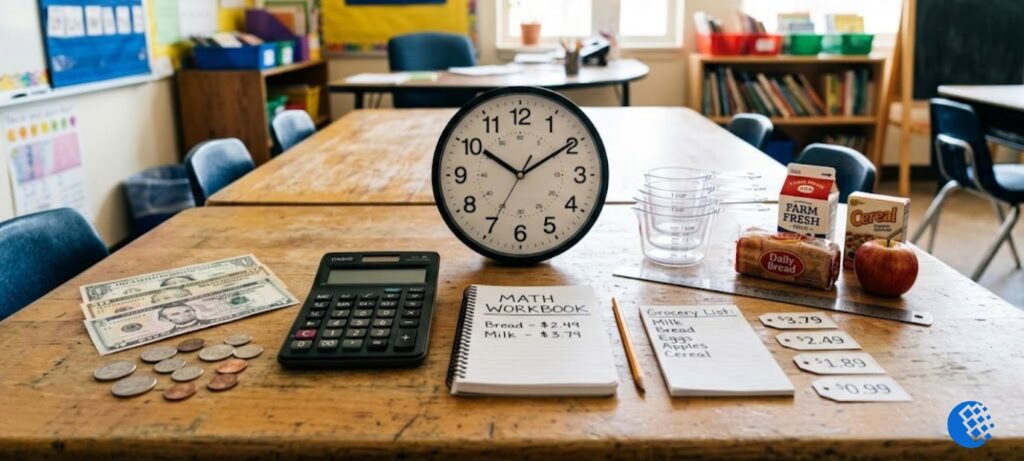
A functional math curriculum special education programs are built around connects mathematical skills to the situations students are likely to encounter at home, in the community, and at work. Instead of memorizing abstract equations, students practice counting change, reading a bus schedule, or figuring out how much a grocery list will cost. For students whose transition plans emphasize independent living or employment, this kind of practical math often becomes a particularly important instructional priority.
This guide covers what a functional math curriculum special education classrooms actually need, how it differs from traditional math instruction, how to evaluate one before committing to it, and how to tie the whole thing back to IEP goals without losing the hands on feel that makes it work.
What Is a Functional Math Curriculum Special Education Programs Rely On?
At its core, a functional math curriculum special education teachers use focuses on math skills that show up in daily life: money, time, measurement, shopping, transportation, and eventually work. It’s sometimes called life skills math, practical math, everyday math, or transition math, depending on the school or the resource. The terminology shifts from district to district, but the intent stays the same: build skills students will actually use once they leave the classroom.
Traditional math tends to move in a straight line, from numbers to operations to word problems to more abstract concepts. Functional math may place less emphasis on that abstract sequence when a student’s educational goals prioritize practical application. It starts from a real situation, such as buying a snack, catching a bus, or following a recipe, and works backward to whatever math skill makes that situation possible.
Functional Math vs. Traditional Math
| Traditional Math | Functional Math |
|---|---|
| Abstract equations | Real world situations |
| Worksheets | Practical, hands on tasks |
| Memorization | Application |
| Standard grade level sequence | Individualized progression |
| Classroom only practice | Practiced across settings (school, store, community) |
Functional Math, Life Skills Math, and Consumer Math: What’s the Difference?
These terms overlap so much that people use them interchangeably, but there’s a slight difference in emphasis.
| Term | Main Focus |
|---|---|
| Functional Math | Practical math used in everyday situations |
| Life Skills Math | Math connected to independent living more broadly |
| Consumer Math | Money, purchasing, and financial decisions specifically |
| Workplace Math | Math needed for employment tasks |
| Academic Math | Grade level math concepts on a traditional track |
None of these are strict, official categories. They’re descriptive labels, and different educators draw the lines slightly differently. What matters more than the label is whether the skill being taught actually shows up in a student’s daily life.
What Are Functional Math Skills?
Functional math skills are math abilities applied directly to everyday tasks, not practiced in isolation on some worksheet. Counting money, telling time, measuring ingredients, comparing prices, reading a schedule, that’s the territory. The goal is independence. A student who can calculate change at a register, or figure out how long a bus ride will take, is applying math in a way that matters right now, not just on a test somewhere down the line.
Academic math runs differently, following a set sequence toward increasingly abstract concepts like algebra or geometry. Functional math skills get chosen based on what a student will realistically need day to day instead, which is exactly why a functional math skills curriculum special education program looks nothing like a standard grade level textbook. One good sign the skill sequence is genuinely well organized: a functional math curriculum special education teachers can actually hand off to a paraprofessional or a substitute without a long explanation attached.
What Skills Should a Functional Math Curriculum Cover?
A curriculum focused only on money skills is incomplete, because students may also need instruction in time, measurement, community, workplace, and everyday problem solving. This is exactly where a broader functional math curriculum special education plan earns its value: it treats these areas as connected rather than separate units. A more complete skill set looks something like this.
Number sense and counting. Recognizing numbers, matching quantities, counting objects, and understanding more or less, the foundation everything else sits on. Depending on the student’s goals, functional math can also involve basic addition, subtraction, multiplication, division, and estimation when those skills support an everyday task.
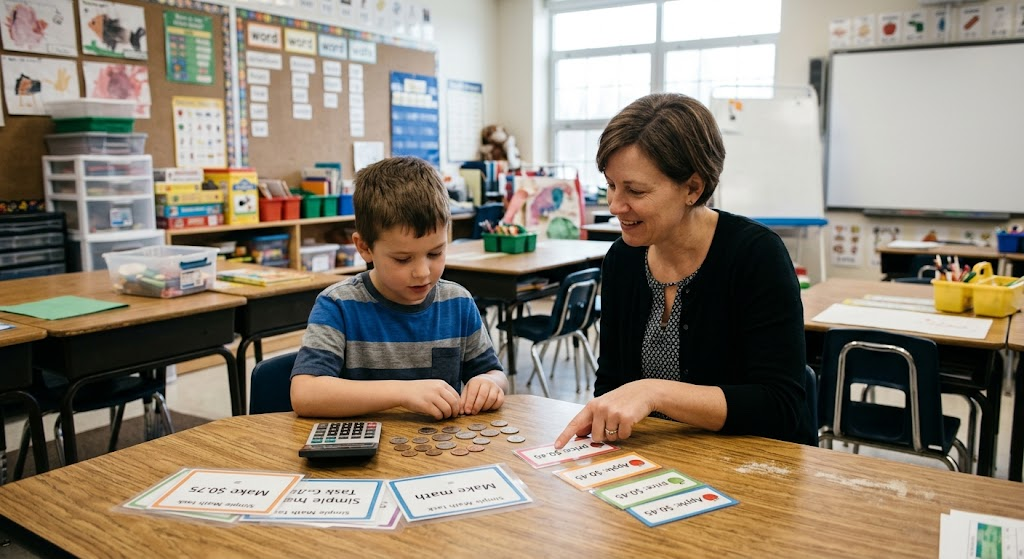
Money and financial skills. Identifying coins and bills, counting money, making change, comparing prices, and eventually budgeting. A common teaching approach here is the “next dollar up” strategy, rounding up to the next whole dollar instead of counting exact change, which tends to be far easier to manage at an actual register. Paying with the largest bill available works as a similar alternative for students who find dollar up confusing.
Try a simple example: an item costs $8, another costs $5. The student hands over a $20 bill. How much change should come back? That’s the same math a cash register runs, just framed around something the student will actually do.
Budgeting also extends into managing recurring expenses, such as understanding utility bills, rent, and other monthly costs, tracking due dates, and comparing an expected cost against what was actually charged.

Time and scheduling. Reading an analog clock, a digital clock, understanding AM and PM, figuring out elapsed time, and using a calendar. A practical scenario beats a worksheet here: if a bus arrives at 7:40 and class starts at 8:15, how much time does the student actually have?
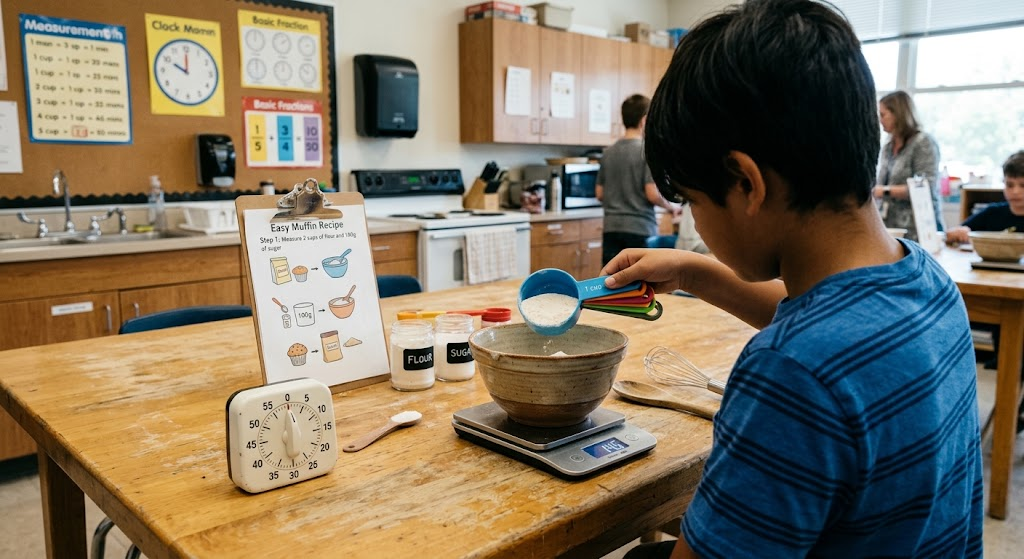
Measurement, data, and cooking math. Measuring ingredients for a recipe. Reading a thermometer. Weighing something on a scale. Comparing quantities, converting between common units, a “30 day review” being the same thing as “a review in one month,” that kind of translation matters more than it sounds. Basic data interpretation lives here too: reading a simple chart, comparing quantities side by side, making sense of a basic graph, tracking spending over a few weeks, interpreting a schedule or table. Cooking activities end up doubling as measurement and data lessons half the time, without ever feeling like a lesson at all.
Shopping and consumer math. Comparing prices. Reading a receipt. Calculating a tip, understanding sales tax and discounts, choosing between pickup, delivery, or shipping based on what actually makes sense for cost and urgency.
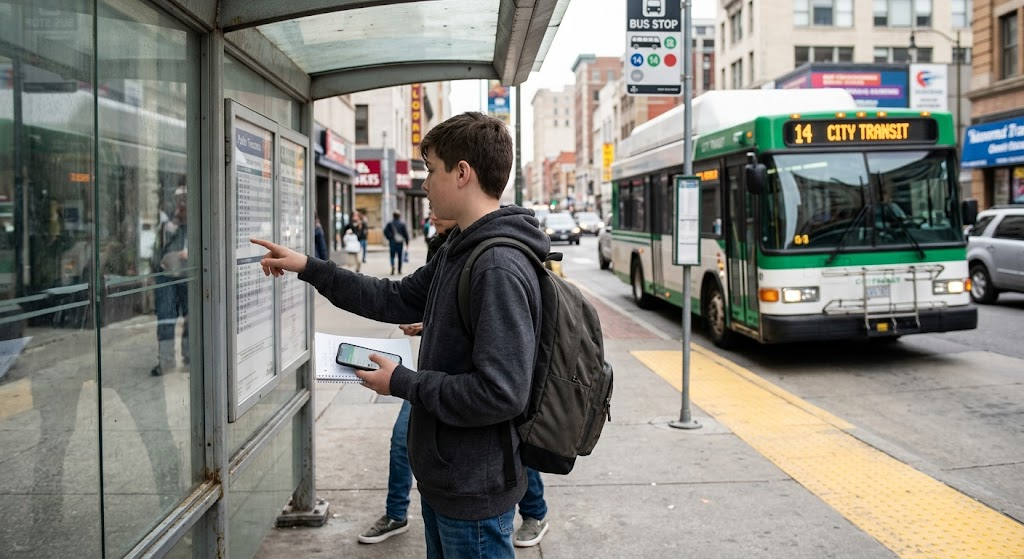
Community and transportation math. This is the part a lot of curricula skip entirely, and it’s a significant gap. Reading bus or train schedules, estimating travel time, handling fares, tracking appointment times, using parking meters, and navigating pharmacy or library transactions all fall here. A bus that leaves at 3:20 p.m. and arrives at 3:47 p.m., how long is the ride? That’s community math in action.
Workplace and vocational math. Clocking in and out, calculating hours worked, understanding a pay rate, estimating weekly income, counting inventory, measuring materials for a task, and comparing how long different jobs take. Not every student’s transition plan will call for all of these, so it’s worth framing this section around individual goals rather than treating it as universal.
Digital and online money skills. This is where a lot of older curricula fall behind. Using a debit card in store and online, withdrawing cash from an ATM, sending or receiving money through apps like Venmo or Zelle, reading a digital receipt, comparing online prices, and recognizing when it’s safe (or not safe) to share financial information, like setting up direct deposit at a new job versus a friend asking to borrow a debit card. This shouldn’t turn into a full internet safety unit, but it belongs in any current functional math program.
How Functional Math Supports Independent Living
Functional math ties into independent living more than people realize, mostly because so many everyday tasks quietly depend on it. Managing personal spending. Shopping independently. Planning out a day or a week, cooking a meal, understanding a bill, comparing prices before buying something, using public transportation, making everyday decisions about money or time, all of it draws on the same skills covered above. Teach these in isolation, though, and confidence rarely follows. That’s really why practicing across multiple settings matters as much as it does.
Functional Math and Transition Planning
For older students, instruction usually gets selected with post school goals in mind, not some fixed grade level standard. Those goals tend to fall into a handful of broad categories: independent living, employment, community participation, further education and training. A student whose transition plan points toward employment might spend more time on workplace math. Focused on independent living instead? Probably more time on budgeting, cooking math, transportation. The right mix comes down to the individual student’s IEP and transition goals, not some single required sequence everyone follows the same way.
Functional Math by Age and Skill Level
Skill level and age don’t always move together, but a rough framework still helps with planning. Age alone shouldn’t determine what a student is taught. Current skills, support needs, and transition priorities matter more than a grade number.
Beginning skills: number recognition, matching numbers to quantities, counting objects, identifying coins, and basic time concepts like “before” and “after.”
Intermediate skills: counting money for simple purchases, telling time to the nearest five minutes, basic addition and subtraction with money, and reading simple schedules.
Advanced skills: budgeting for a week or month, making change without a calculator, comparison shopping, understanding discounts and sales tax, and applying math to a first paycheck.
Transition age skills: employment math, banking, more complex budgeting, transportation planning, and the digital and community math skills described above.
How to Choose a Functional Math Curriculum for Special Education
Picking the right materials matters as much as the content itself. A strong functional math curriculum special education teachers choose should give enough flexibility to adjust instruction without losing a clear progression of skills. Before committing to a program, it’s worth running through a short checklist.
Is it age appropriate, or does it look like it was designed for a much younger student? Does it use realistic situations instead of cartoon graphics and generic word problems? Does it go beyond money to cover time, measurement, and community skills? Can it be differentiated across a wide range of skill levels in one classroom? Does it make IEP alignment straightforward? Does it include assessment and data collection tools, not just activities? Can students practice the same skill in more than one setting?
A functional math curriculum for special education built around a full year of instruction, rather than a handful of disconnected worksheets, tends to save teachers a lot of the trial and error that comes with piecing materials together from a dozen different sources.
How Functional Math Supports IEP Goals
This is where a functional math curriculum special education teams rely on earns its keep on paper, not just in the classroom. Goals need to be measurable, and money or time skills are usually far easier to measure than abstract math concepts.
A useful goal generally has four parts: the condition, the behavior, the criterion, and the measurement period. A few examples of what that looks like in practice:
| Skill Area | Example Measurable Goal |
|---|---|
| Money | Given a visual price list, calculate the total cost of three items with 80% accuracy across four sessions |
| Time | Determine elapsed time between two events correctly in 4 of 5 trials |
| Shopping | Select items that stay within a stated budget with 90% accuracy |
| Budgeting | Create a simple weekly spending plan across three categories with minimal support |
| Measurement | Measure ingredients using the correct tool with 80% accuracy across three trials |
That structure lines up with what most IEP teams look for under IDEA’s requirements for individualized programs, which call for goals specific enough to actually track progress over time. Goals should still be individualized. What fits one student’s plan won’t automatically transfer to the next, even when the broad skill area is the same.
Teaching Strategies That Make Functional Math Work
A curriculum on paper only goes so far. A few strategies show up again and again in classrooms where functional math actually sticks.
Use real materials, not just worksheets. Actual menus, grocery ads, real coins, measuring cups, and price tags do more for a student than a laminated worksheet ever will.
Lean on visual supports. Picture cues, step by step task analysis cards, number lines, and visual schedules cut down on the guesswork for students who struggle with multi step instructions.
Break tasks down with task analysis. Large tasks, like completing a purchase from start to finish, become more manageable once they’re broken into smaller, ordered steps a student can follow one at a time.
Fade prompts over time. Start with whatever support a student needs, then gradually pull that support back as independence builds, rather than keeping the same level of help indefinitely.
Practice in more than one setting. A skill learned only inside a classroom often doesn’t transfer anywhere else. Moving practice from the classroom to the cafeteria, then to a school store, then into the community, is what actually builds independence. This is usually called generalization, and it’s one of the more important ideas in this whole area of teaching.
Supports and Accommodations That Make Functional Math More Accessible
Some students need extra scaffolding to access the same content, and that’s a normal, expected part of instruction rather than a sign the curriculum isn’t working. Common supports include visual schedules, calculators, number lines, picture cues, enlarged print, simplified directions, manipulatives, step by step task analysis cards, and assistive technology where appropriate.
Calculator use deserves a specific note here. In functional math, a calculator isn’t automatically a shortcut to avoid. When the goal is applying a skill, such as budgeting or checking a total, a calculator can let a student focus on the practical decision rather than the computation itself. Whether to use one should depend on what the specific goal is measuring, not a blanket rule for the whole class. This is one of the smaller decisions a functional math curriculum special education team makes, but it can change how a goal is measured.
Functional Math Activities for Special Education
A handful of activities cover most of the ground.
Grocery store activity. Hand the student $20, have them pick three items and stay within budget.
Restaurant activity. Read a menu, add up the total, calculate a tip.
Clock activity. Work out start and end times for a made up schedule.
Recipe activity. Measure ingredients for something simple, like trail mix or a sandwich.
Budget activity. Plan out a small weekly spending amount across a few categories.
Receipt activity. Check whether a printed receipt actually adds up correctly.
Bus schedule activity. Calculate how long a trip takes and whether a student would arrive on time.
Paycheck activity. Estimate weekly income based on hours worked and a stated pay rate.
None of these need fancy materials. A lot of teachers build them out of things already sitting in a classroom supply closet.
Example of a Year Long Functional Math Sequence
There’s no single correct order, and this shouldn’t be read as a universal sequence. It’s one example planning framework that teachers can adjust based on student needs, IEP goals, transition priorities, and what opportunities are actually available in their community.
First quarter: number sense and coin or bill identification. Second quarter: money operations and simple shopping. Third quarter: time skills and measurement. Fourth quarter: budgeting, community math, and workplace math.
The right sequence for a given classroom depends heavily on where students are starting from and what their IEP goals already point toward.
How to Assess Functional Math Skills
Assessment here looks less like a test and more like structured observation. Baseline testing, task analysis, and tracking accuracy over repeated trials all play a role, and the goal generally isn’t just a correct answer. It’s a correct answer with less and less help over time.
The prompting hierarchy, independent, verbal prompt, visual prompt, modeling, and physical assistance, is one of the more useful frameworks for tracking that shift. Organizations like Understood.org offer accessible explanations of progress monitoring for students with learning and thinking differences, which can be a helpful reference for teachers newer to this kind of data collection.
Generalization matters here too. A student can solve a shopping problem perfectly on a worksheet and still struggle with the same task inside an actual store, so it’s worth checking a skill across more than one context, including a worksheet, a simulated activity, the classroom, and the community, before calling it mastered.
Free Functional Math Curriculum PDFs, Worksheets, and Resources
A lot of searches around this topic are really searches for free materials, so it’s worth being upfront about what each resource type actually offers.
A worksheet gives practice on one isolated skill. A task card gives repeated, targeted practice on a narrow skill. An assessment measures a student’s current performance level. An activity applies a skill in a realistic context. A curriculum is an organized sequence that combines instruction, guided practice, independent practice, and assessment across an entire year. Teachers may also encounter these materials under terms such as life skills math curriculum, practical math curriculum, or everyday math resources, which generally describe the same category of program.
A free PDF found online can be a genuinely useful supplement, especially for reinforcing one specific skill. It’s rarely a substitute for a full functional math curriculum special education programs actually need, with a built in progression, differentiated levels, and data collection tools, so it’s worth treating free worksheets as one piece of the plan rather than the whole plan.
Common Mistakes When Teaching Functional Math
A few patterns show up often enough to call out directly.
Relying only on worksheets instead of real world practice. Using materials that don’t match the student’s age. Ignoring what the student is actually interested in. Grading only on correct answers, not on independence. Never practicing outside the classroom. Skipping prompt level tracking, so progress data is thin. Assuming every student needs the exact same sequence of skills.
Most of these come from time pressure more than anything else. Worksheets are simply faster to prep than a trip to a grocery store. But the trade off is real, and it usually shows up later as skills that don’t transfer.
Frequently Asked Questions
What is a functional math curriculum special education teachers should use?
It’s a program that teaches practical, real world math, such as money, time, measurement, and community skills, instead of following a traditional academic sequence. The goal is independence, not test scores.
What is functional math in special education?
It’s math instruction focused on real life applications, such as money, time, measurement, shopping, and community skills, rather than abstract classroom math. The goal is independence, not test scores.
What are examples of functional math skills?
Counting money, making change, telling time, reading a bus schedule, measuring ingredients, comparing prices, and calculating a tip are all common examples.
What should a functional math curriculum include?
Money management, time and scheduling, measurement and data, community and transportation math, and increasingly, digital payment skills, ideally organized into skill levels with visual supports and IEP aligned goals.
What’s the difference between functional math and traditional math?
Traditional math follows a set academic sequence toward abstract concepts. Functional math starts from real situations and teaches whatever math is needed to handle them.
What’s the difference between functional math and life skills math?
The terms are largely used interchangeably. Where a distinction exists, life skills math sometimes refers more broadly to independent living skills, while functional math leans specifically on the math component of those skills.
What math skills should students with significant disabilities learn?
It depends heavily on the individual student’s goals, but money, time, measurement, and community or workplace math tend to come up most often across IEPs and transition plans.
What are examples of functional math IEP goals?
Measurable, individualized goals tied to real tasks, such as calculating the total cost of items from a visual price list at a set accuracy level across several sessions.
How do you teach money skills in special education?
Through hands on practice with real coins, bills, and receipts, paired with strategies like the next dollar up method and gradually reduced prompting as accuracy improves.
How do you assess functional math skills?
Through baseline testing, tracking accuracy across repeated trials, and monitoring prompt level, moving from physical assistance toward independence over time, and checking whether the skill generalizes outside the original teaching setting.
Where can I find free functional math worksheets or a PDF curriculum?
Several education blogs and stores offer free or paid PDFs. These tend to work best as a supplement to a full curriculum rather than a standalone program, since a single worksheet doesn’t provide the sequencing or assessment tools a complete program does.
Final Thoughts
A functional math curriculum special education classrooms rely on isn’t about lowering expectations. It’s about aiming them at the right target. Money, time, measurement, community, and workplace math skills open doors that a traditional academic sequence often doesn’t reach for students working toward independent living or employment. The right mix of real materials, visual supports, honest progress tracking, and practice across more than one setting tends to matter far more than any single worksheet or program name.