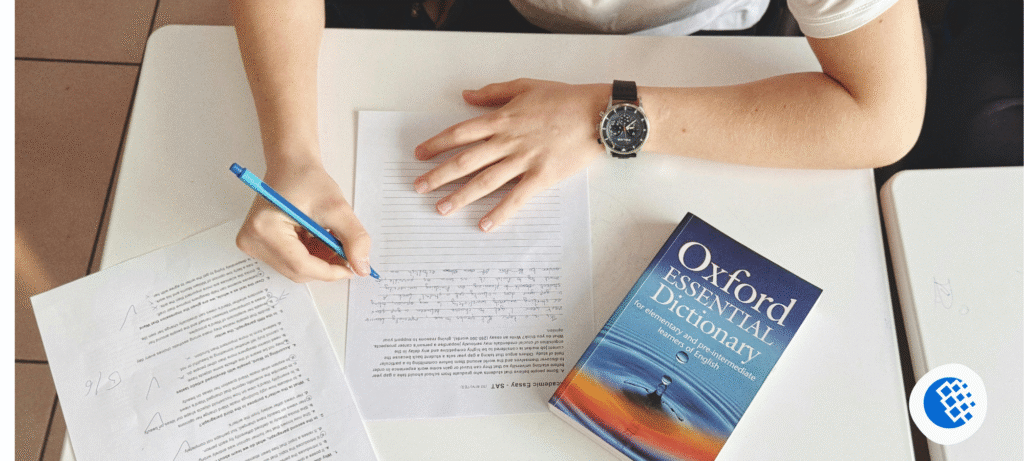
Many students search what is best time for study because they want to know whether morning, afternoon, or night study gives better results, and you’ll get five different answers. One person swears by 5 a.m. Another can’t focus until the whole house goes quiet at midnight. Both of them might be right, honestly. There’s no magic hour stamped “correct” for everyone. It comes down to your energy, your sleep, and what you’re actually trying to study that day.
Quick answer: for most students, late morning to early afternoon, somewhere around 9 a.m. to 2 p.m., is when the brain is usually sharpest for learning new stuff, since alertness is naturally higher after a full night’s sleep. But that’s just a starting point. Plenty of people think better at night, and forcing yourself into a schedule that fights your own body clock rarely ends well.
What Is the Best Time for Study, Really?
Here’s the honest answer: whenever you can concentrate without fighting your own body. For most people, that means dodging the post-lunch slump and the total wipeout of very late nights. Past that, it’s personal, and it depends on a few things.
Your sleep schedule matters more than any “ideal hour” you’ve read about somewhere. Age plays a part too. Teenagers naturally drift toward later chronotypes, which is basically why so many teens hate 7 a.m. classes. Add in your school or work hours, and even how loud your house gets at different times, and you’ve got a pretty unique situation. A parent squeezing in study time after the kids finally sleep is dealing with a completely different world than a college freshman with a free afternoon.
Here’s a rough guide. Not a rulebook, just a starting point:
| Study Goal | Time That Usually Works |
|---|---|
| Learning something brand new | Morning, fresh mind |
| Solving tough problems | Late morning to early afternoon |
| Reviewing and revising | Late afternoon or evening |
| Memorizing facts or vocabulary | Right before sleep |
| Practice tests | Afternoon |
Take it as a starting point, not gospel. Your routine is the real deciding factor here, not a chart on a blog.
What Does Science Say About the Best Time to Study?
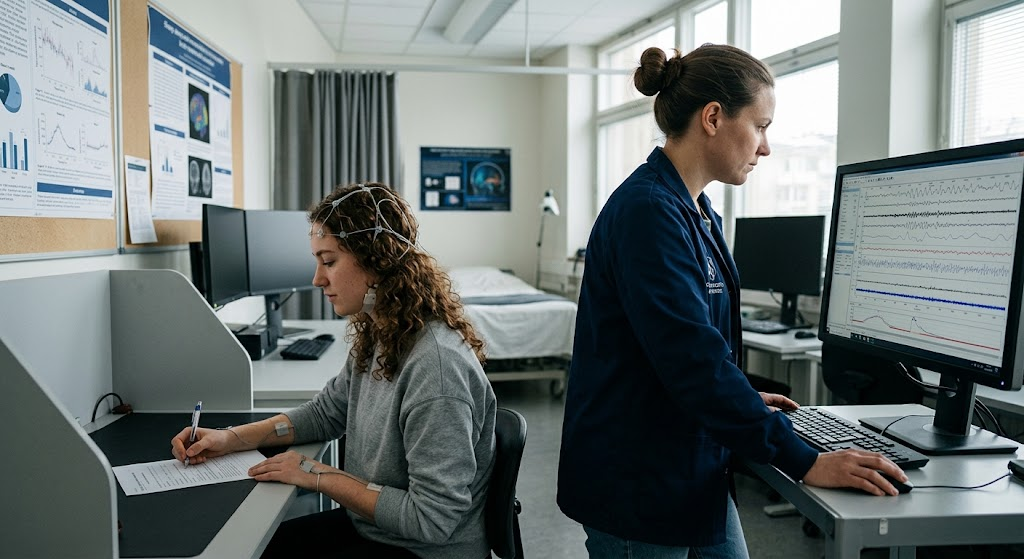
When students ask what is best time for study according to science, the answer is not one fixed hour but a combination of brain alertness, sleep quality, and personal learning patterns. Your brain runs on a circadian rhythm, basically an internal clock deciding when you feel sharp and when you feel like mush. For most adults, alertness climbs through the morning, dips after lunch (the classic afternoon slump everyone complains about), climbs back up in the late afternoon, then fades at night.
Chronotype matters too. Some people are wired as morning types, some as night owls, and most of us sit somewhere in between. Teenagers tend to shift later during puberty, which explains a lot about why early school start times get so much pushback from parents and researchers alike.
And sleep is where a lot of learning actually gets locked in. Your brain sorts through what you studied that day while you’re asleep, filing the useful bits into longer-term storage. That’s a big reason all-night cramming backfires. You skip the exact process your brain needs to hold onto what you just learned.
A widely cited study out of the University of Nevada, Reno found students did better academically in late morning and evening classes than in very early morning ones. Worth sitting with that for a second, because it pushes back on the whole “wake up at 5 a.m. or you’re wasting your potential” advice floating around online. It just doesn’t hold up for everyone.
Curious how this fits into a bigger routine? Our guide on building a daily student schedule walks through how a lot of students structure their whole day around energy levels, not just a single study block.
Is Morning the Best Time to Study?
For a lot of people, yeah. After a full night’s sleep, your brain has cleared out a chunk of yesterday’s mental clutter. Since memory consolidation happens overnight, you often wake up with more room to take in new stuff. Mornings are quieter too, before the phone starts buzzing with plans and notifications.

Morning works especially well when you’re learning a topic for the first time. Same goes for harder subjects like math or science that need real concentration, or anything involving actual problem-solving instead of just skimming notes.
Try waking around 6 a.m. and hitting your toughest subject first, while your energy’s at its peak, then sliding into lighter review once that early sharpness fades. But if you’re genuinely not a morning person, don’t force it. You’ll just end up groggy, staring at the same paragraph for twenty minutes, and that helps no one.
What Is the Best Time for Study in the Morning?
For students who prefer early hours, morning can be one of the most productive study periods. After proper sleep, the brain is usually fresh and distractions are lower compared with later parts of the day.
A study session between 5 AM and 8 AM can work well for:
- Learning new concepts
- Difficult subjects like mathematics and science
- Problem-solving tasks
- Planning daily study goals
However, waking up early does not automatically make someone a better student. If a student sleeps late and forces a 5 AM study session, the lack of sleep can reduce concentration and memory.
Is Afternoon a Good Time to Study Too?
People overlook afternoons, but they’re actually pretty solid for certain tasks. Right after lunch you hit a dip (that’s biology, not laziness), but energy usually climbs back by mid-afternoon. This window suits work that doesn’t require learning brand-new concepts.
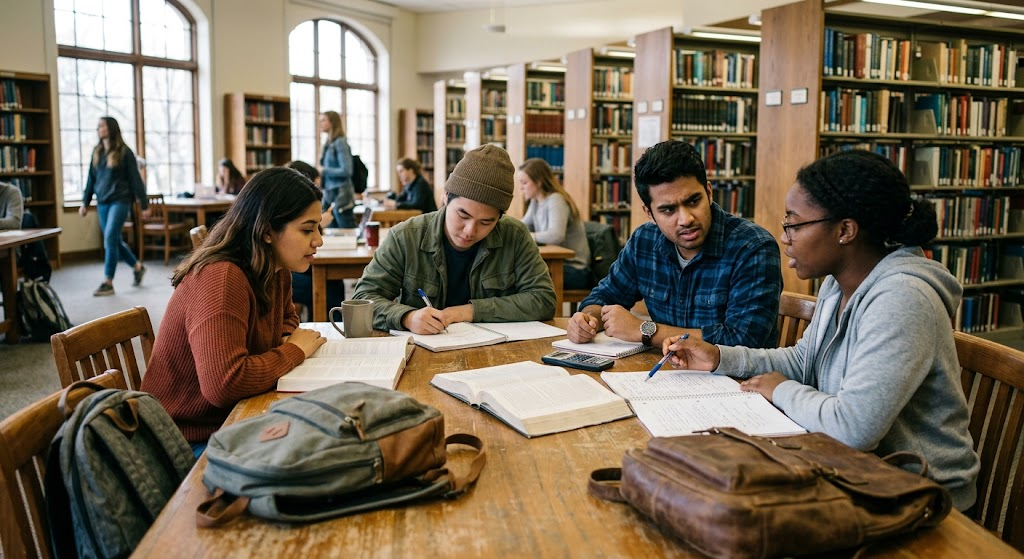
Think practice questions, problem sets, mock tests, homework that applies what you already learned that morning. It’s also a decent time for group study, since most people are more socially switched-on by then than they are at 7 a.m.
If your energy tanks hard right after eating, push your study block to 2 or 3 p.m. instead of jumping in at 1. Small shift, but it actually helps.
What Is the Best Time for Study in the Afternoon?
Afternoon study can be useful for students who need time to practice and apply what they learned earlier.
The afternoon is usually better for:
- Solving practice questions
- Completing assignments
- Taking mock tests
- Reviewing difficult topics
Avoid studying immediately after a heavy meal because the natural drop in energy can make concentration harder. A short break before studying can improve focus.
Is Night the Best Time to Study?
Night study has real perks too, and writing it off ignores how a lot of students actually get things done. The house goes quiet. Phones stop buzzing so much. There’s a stillness at night that’s genuinely hard to find during daylight hours.
Night sessions work best for revising stuff you already learned, doing light reading, or creative work that likes a slower pace. What doesn’t work as well: brand-new, dense material that needs a fresh brain.
The catch is sleep debt. Staying up until 2 or 3 a.m. to cram feels productive in the moment, but it usually costs you the next day. Since sleep is literally when your brain files away what you studied, you end up working against yourself. Keep sacrificing rest for late-night study and you’re trading short-term progress for long-term burnout. Not a great trade.
What Is the Best Time for Study at Night?
Night study works well for many students because the environment is usually quieter and there are fewer interruptions.
The best night study tasks include:
- Revising notes
- Memorizing formulas
- Reading theory subjects
- Reviewing flashcards
However, studying very late every night can damage sleep quality. A tired brain usually remembers less, even if the study session feels productive.
Morning vs Night Study: A Side-by-Side Look
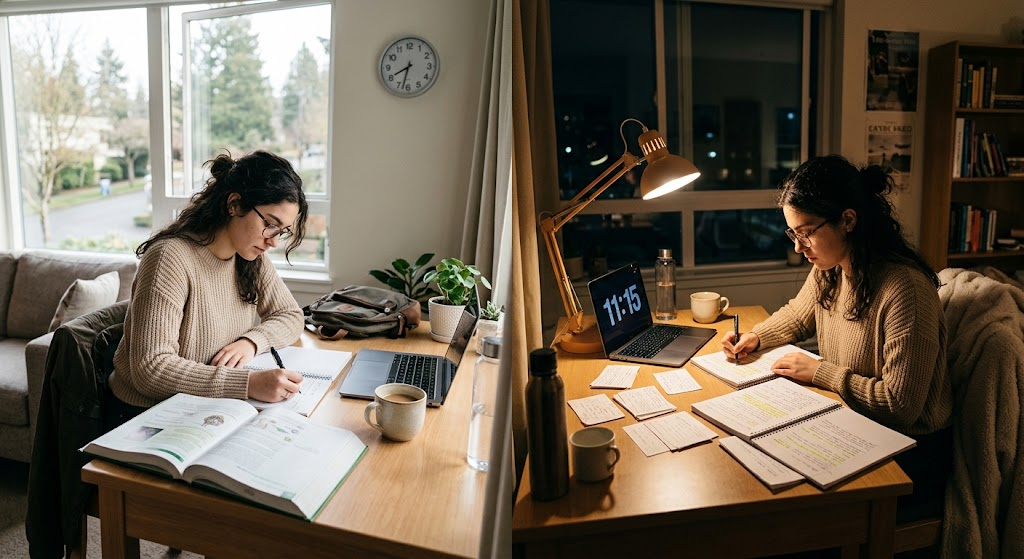
| Factor | Morning Study | Night Study |
|---|---|---|
| Mental freshness | High, right after sleep | Lower, but can stay sharp |
| Distractions | Fewer notifications, quiet house | Very quiet, minimal interruptions |
| Best suited for | New concepts, hard subjects | Revision, light reading |
| Sleep impact | Usually neutral or positive | Can turn negative if overdone |
| Who it fits | Early risers | Night owls |
Neither one wins outright. It’s not “which is best,” it’s “which one actually fits your life.”
What Is the Best Time Table for Study?
A lot of people just want a timetable to copy, so here’s one you can tweak:
| Time | Activity |
|---|---|
| 6 AM – 8 AM | Difficult subjects |
| 9 AM – 12 PM | Learning new concepts |
| 2 PM – 5 PM | Practice questions |
| 7 PM – 9 PM | Revision |
| Before sleep | Flashcards or quick review |
Don’t copy this exactly if it doesn’t fit your day. If your hardest classes are already in the morning, flip the schedule and study difficult subjects at night instead. What matters is the pattern: hard work when you’re sharp, lighter stuff when you’re winding down. The exact hours are flexible.
What Is the Best Time to Study for Exams?
Exam prep works way better as a layered process than one giant panic session. In the weeks before a big exam, mornings suit learning new chapters, afternoons suit practicing questions, and evenings suit lighter revision of whatever you covered earlier that day.
Roughly like this:
- 30 days out: Mornings for learning new material, afternoons for light practice.
- 7 days out: Shift to practice questions and mock tests, evenings for weak spots.
- Night before: Skip the all-nighter. A calm review followed by real sleep beats cramming until 3 a.m., almost every time.
- Exam morning: Quick review of formulas or key facts. Nothing new.
As the exam creeps closer, resist the all-nighter urge. Cramming past midnight rarely helps and often hurts, since a tired brain struggles to pull up information under pressure. Students who built solid habits earlier in the term, like the ones covered in this breakdown of practical study techniques, usually walk into exams a lot calmer, simply because the groundwork’s already done.
What Is the Best Time to Study for a Test?
For a smaller test, spaced repetition beats last-minute cramming almost every time. Review a few days ahead, then again the day before, and focus on whatever’s still shaky instead of rereading everything from scratch.
Weekly quiz coming up? Short daily reviews, ten or fifteen minutes, usually beat one long cram session the night before. Test’s first thing in the morning? A quick review of key formulas before you leave helps. Trying to learn something totally new in those last few minutes just adds stress without much payoff.
Best Time to Study and Memorize
Memory-heavy stuff, vocabulary lists, dates, formulas, sticks better when you’re relaxed and not fighting distractions. Active recall (testing yourself instead of just rereading) and spaced repetition (spacing reviews out over time) both beat passive rereading, no matter the hour.
A lot of people find reviewing flashcards right before bed genuinely helps, since sleep plays a direct role in locking that stuff into long-term memory. The Sleep Foundation has written a fair bit about how memory consolidation happens during rest, which is basically why a short review before sleep, followed by actual sleep, beats an all-nighter.
Quick example: a student prepping for board exams might learn new concepts in the morning when focus is highest, then run through flashcards for definitions and formulas in the evening before bed. Learn early, review late. That split works better than trying to cram both into one session.
Best Study Time Based on Student Type
Not everyone runs on the same clock, so it helps to figure out which type you actually are.
Early birds usually do their best thinking in the first couple hours after waking. If that’s you, load your hardest subjects into the morning and save lighter tasks for later in the day.
Night owls tend to hit their stride once the day settles down. Forcing an early study block on a natural night owl mostly just creates frustration and wasted time. Lean into the evening, but keep an eye on your total sleep.
College students usually have more flexible, chunky blocks of free time scattered between classes, so it matters less exactly when you study and more that you protect a consistent block each day, even if it shifts around from semester to semester.
High schoolers are stuck with a fixed school day plus homework, so realistically, squeezing focused study into the hour or two right after school (before energy tanks) and saving lighter review for evening tends to work best.
Funny thing though, a lot of students notice their first sixty minutes after waking are their sharpest stretch of the whole day, even people who’d swear they’re night owls. Worth testing before you assume you only work at night.
What Is the Best Time for Study for Students?
The ideal study time changes depending on a student’s daily routine and responsibilities.
High School Students
High school students often benefit from studying after school when they still remember classroom lessons. Evening revision can also help prepare for the next day.
College Students
College students usually have more flexibility. Morning sessions are useful for difficult subjects, while free periods between classes can be used for revision.
Exam Preparation Students
Students preparing for competitive exams often prefer early morning sessions because they can complete focused study before daily distractions begin.
How to Find Your Own Best Study Time
The real way to figure this out isn’t copying someone else’s schedule off a blog. Track yourself for a week. Write down when you feel sharpest, when your mind starts wandering, and how much you actually remember afterward. A pattern usually shows up after a few days on its own.
Watch for a few signs: are you rereading the same paragraph three times before it sinks in? Checking your phone every five minutes? Actually tired, or just bored? Answer those honestly and you’ll learn more about your best study time than any general advice online could tell you.
Does Sleep Affect the Best Time to Study?
Sleep plays an important role in learning and memory. Studying for extra hours is not always useful if those hours come at the cost of proper rest.
During sleep, the brain processes and stores information learned during the day. This is why students who sleep properly often perform better than students who rely on all-night study sessions.
A good study routine should include both focused learning time and enough sleep.
Common Study Time Mistakes
A few habits quietly wreck a lot of students’ progress, no matter what time they study:
- Studying only when an exam’s a few days out
- Pulling regular all-nighters instead of building a real routine
- Copying a friend’s schedule that doesn’t match your own energy
- Pushing through when you’re genuinely exhausted instead of resting and studying later
Fix even one or two of these and it usually beats switching your study time from morning to night and back again ten times over.
Does Study Technique Matter More Than Study Time?
Choosing the right study time helps, but your study method also affects your results.
Pomodoro Technique
The Pomodoro Technique involves studying for 25 minutes followed by a short break. This helps students maintain focus for longer periods.
Active Recall
Active recall means testing yourself instead of only rereading notes. It helps improve memory and understanding.
Spaced Repetition
Spaced repetition involves reviewing information over multiple days instead of trying to memorize everything in one session.
FAQ: What Is Best Time for Study?
What is best time for study?
Depends on your energy and sleep pattern, but mornings often suit learning new material, evenings tend to work well for review. No single universal answer here.
Which time is best for study, morning or night?
Both work. Morning suits new, difficult topics; night suits revision and lighter reading. Comes down to your natural rhythm.
What is the best time to study for exams?
Spread learning, practice, and revision across the weeks before the exam instead of relying on one long session, and prioritize sleep the night before over cramming.
Is studying at 4 a.m. actually effective?
Only if you’re getting enough sleep overall. Waking up earlier doesn’t automatically improve learning, and a sleep-deprived brain retains less no matter what time it is.
Is morning study better than night study?
Not universally. Morning suits new, hard material since your brain’s fresher. Night suits revision since it’s quieter. Neither wins for everyone.
What time is best for memorizing? Right before sleep, for most people, since your brain consolidates memory overnight. Pair it with active recall and it works even better.
Is studying before sleep good?
Yes, especially for memorization and light review. Just don’t try to learn something totally new right before bed since it hasn’t had time to settle in.
What is the best study schedule for a student in college?
College schedules vary too much for one fixed timetable to actually work. Better bet: pick a consistent daily block, even a short one, and protect it, instead of chasing some “ideal” schedule that changes every semester.
How many hours should a student study each day?
Quality beats quantity. Focused sessions with real breaks usually beat long stretches of distracted studying.
Final Takeaway
So, the answer to what is best time for study depends on when your concentration, memory, and energy levels are naturally highest. that works for every student on the planet, and anyone claiming otherwise is oversimplifying it. What actually matters is knowing your own energy pattern, matching the task to the time you focus best, and protecting your sleep instead of trading it away for one more hour of cramming. Once you’ve got that figured out, the clock stops being the problem.