

Modern digital marketing is pretty simple at its core: you just need to share helpful, interesting stuff that makes people want to hang around. Instead of annoying people with endless, pushy sales pitches, smart companies focus on teaching, entertaining, or fixing real, everyday problems for their readers. That is how you build genuine trust online today.
But here is the real issue: people spend time all over the place online. Frankly, sticking to just one channel or format is a bad idea. When you mix things up and play around with different types of content marketing, you can easily connect with people no matter where they are browsing or how close they are to buying something.
What Is Content Marketing?
Think of content marketing as the absolute friendliest way to grow a business. It is an online strategy where you build and share genuinely useful digital materials to catch the eye of a very specific audience. Traditional ads love to pop up out of nowhere and interrupt whatever you are doing to shout a sales pitch. This approach does the exact opposite—it works like a magnet by answers the exact questions your audience is already typing into search bars.
At the end of the day, this strategy helps you build massive online authority. When your website consistently drops great information, search engines take note and start sending you steady organic traffic. Even better, your human readers notice too. Over time, a simple click turns into a trusted relationship. That means your customers stick around longer, and you don’t have to burn through cash on traditional ads.
Why Different Types of Content Marketing Matter
The simple truth is that people don’t read or watch things the same way. A busy business owner might only have time to scan a quick, colorful infographic while riding the train to work. On the flip side, a tech-heavy engineer will probably demand a massive, 20-page deep-dive report before they trust a new software system enough to buy it.
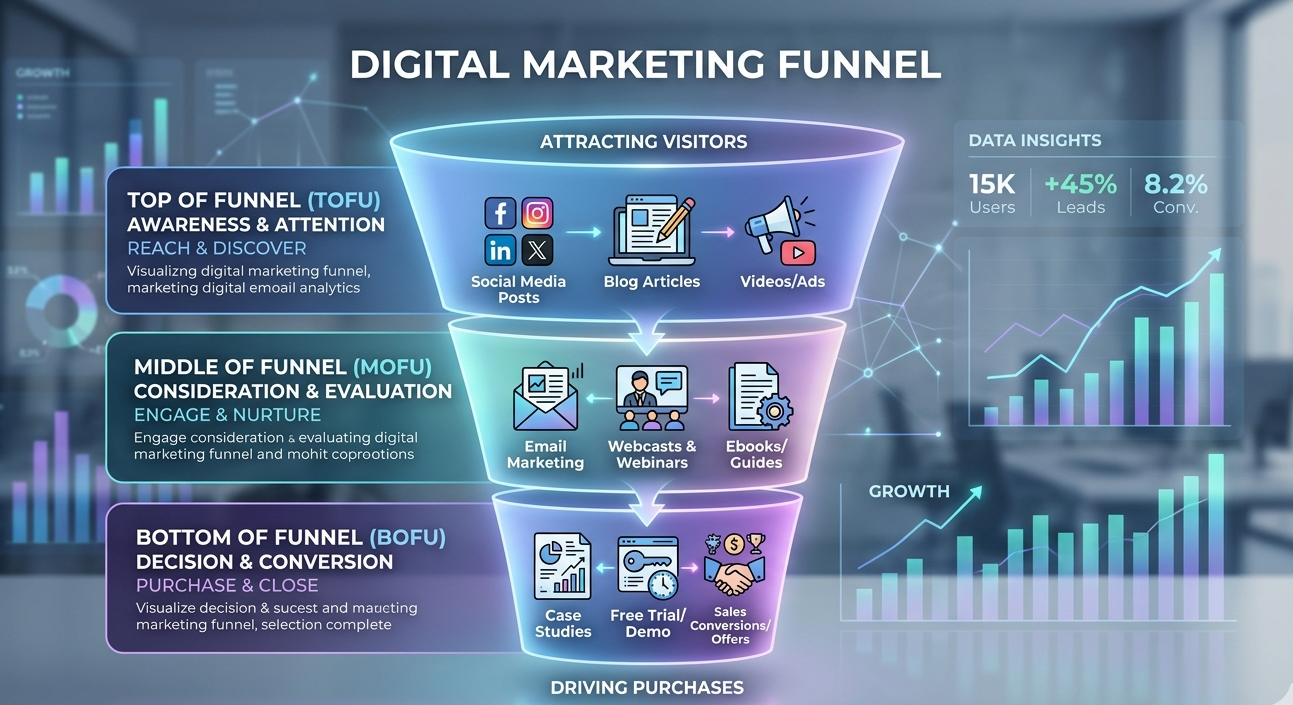
When you use different types of content marketing, you can tailor your message to what your audience needs at that exact moment in their buying journey:
- Top of the Funnel (TOFU): This stage is all about getting your name out there and boosting your online visibility. Using easy-to-digest setups like short social media posts, simple images, or quick videos introduces your brand to new folks without any pressure.
- Middle of the Funnel (MOFU): Here, you are focused on gathering leads and helping people weigh their options. At this point, prospects know they have a problem and are hunting for the right fix. Deep blog articles, practical ebooks, and interactive tools show them why you are the best choice.
- Bottom of the Funnel (BOFU): This is the finish line where you turn those prospects into actual buyers. Things like real-world case studies, detailed product configurations, and honest comparison charts give buyers the final, solid proof they need to pull out their credit card safely.
The 15 Main Types of Content Marketing
1. Blog Content Marketing
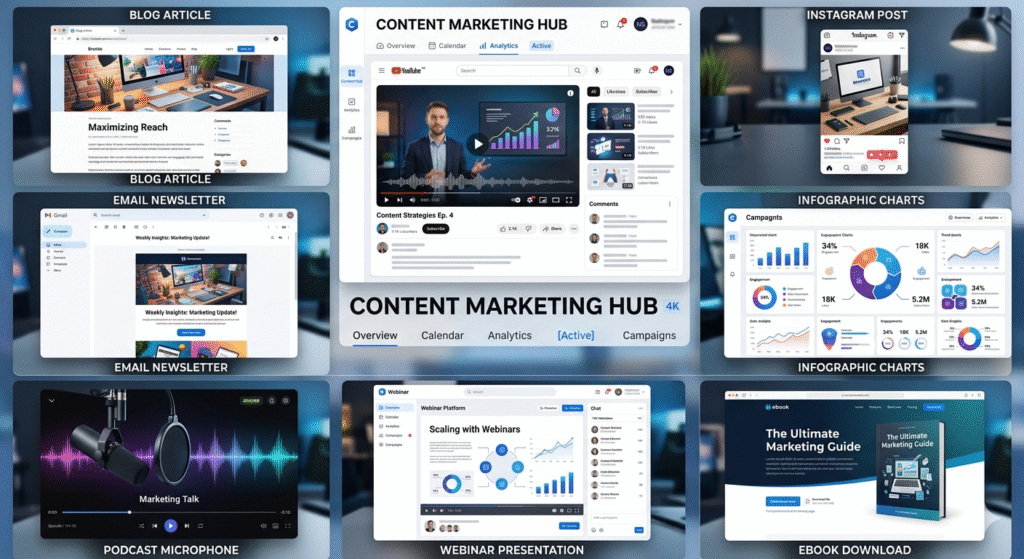
Starting a blog is still the single best way to grow your search engine footprint. When you write high-quality articles that target specific, everyday search queries, you capture a massive mix of casual researchers and ready-to-buy visitors. A great blog post works for you long-term; it sits on your site and keeps bringing in fresh leads for years after you hit publish.
2. Video Content Marketing
Videos are incredible for grabbing attention before someone scrolls away. This strategy works across so many channels, whether you are uploading deep-dive tutorials on YouTube or quick, fun clips on TikTok and Instagram Reels. It is the perfect format if you need to show exactly how a complicated product works or if you just want to put a human face on your company.
3. Social Media Content Marketing
Social media is where you build a real, living community around your brand. By creating short posts, swipeable carousel graphics, and helpful text threads on places like LinkedIn, Facebook, or Instagram, you get to talk with your audience instead of just talking at them. It meets your customers exactly where they already spend their free time.
4. Email Content Marketing
Email marketing gives you a direct line to an audience that actually asked to hear from you. Unlike social media platforms, you completely own your email list, so you never have to worry about sudden algorithm changes breaking your reach. Regular newsletters are perfect for sharing business updates, teaching your subscribers, and turning one-time buyers into loyal regulars.
5. Infographics
Infographics take heavy data, complicated stats, or confusing step-by-step processes and turn them into beautiful, easy-to-read visuals. People absolutely love sharing these on social media, which makes them fantastic tools for picking up natural backlinks from other websites that want to quote your data.
[Complex Data / Statistics]
          │
          ▼ (Simplified by Designer)
┌─────────────────────────────────┐
│     Visual Infographic Img      │ -> High Shareability -> Earns Backlinks
└─────────────────────────────────┘
6. Podcasts
Podcasts are perfect because they fit right into your listener’s busy daily routine. People can tune into your show while they are driving to work, cooking dinner, or working out at the gym. It gives your business a genuine voice and builds a deeply loyal fan base over time.
7. Webinars
Webinars are online presentations or workshops where you teach your audience about a specific topic. They are great for turning interested prospects into buyers because people can ask questions live, see your software in action, and talk directly with the experts on your team.
8. Case Studies
Think of case studies as real-life proof that your product actually works. They outline exactly what problem your customer was facing, what you did to help them, and the clear data to prove it worked. For B2B buyers who need to justify their spending, a solid case study is often the final piece of proof they look for.
9. User-Generated Content (UGC)
User-generated content is anything your actual customers create, like unboxing videos, honest online reviews, or photos of them using your product on social media. Because this content doesn’t come from your marketing department, people trust it completely. It provides incredible, authentic social proof.
10. Ebooks
Ebooks are downloadable guides that go into much more detail than a standard blog post. They are usually beautifully styled PDFs that businesses give away for free. They work incredibly well as “lead magnets”—meaning you give away the valuable guide in exchange for someone’s email address.
11. White Papers
White papers are highly detailed, academic-style reports filled with deep research, industry statistics, and technical breakdowns. They are designed to answer complex business problems with hard facts, which is why large enterprise companies rely on them heavily during their buying process.
12. Interactive Content
Interactive content gets your audience involved instead of just making them read. Think of things like personality quizzes, custom assessments, or ROI calculators. Because users get a personalized answer based on what they type in, engagement sky-rockets, and your marketing team gets great insights into your audience.
13. Landing Pages
A landing page is a single web page built for one specific campaign with just one goal in mind—like getting someone to sign up for a software trial or register for an event. By stripping away normal website navigation bars, you keep the visitor completely focused on taking action.
14. Online Courses
Creating free or paid educational courses shows everyone that you really know your stuff. When you teach people valuable frameworks or technical skills, you build immense goodwill. Plus, it gives you a natural way to show how your product makes those exact tasks simpler to complete.
15. Community Content
Community content is all about setting up spaces where your customers can talk to each other, like a private Discord server, a forum, or a LinkedIn group. This shifts the conversation from you talking to a consumer to your customers building connections with one another, creating massive brand loyalty.
Core Content Categorizations
What Are the 3 Types of Content Marketing?
If you want to keep your planning simple, look at your content creation through these three basic buckets based on what your audience needs psychologically:
- Educational Content: This is where you teach your audience how to solve a problem or learn a new skill without trying to sneak in a pushy sales pitch.
- Entertaining Content: Content that connects on a human level using relatable humor, storytelling, or shared workplace experiences to build positive feelings around your brand.
- Conversion Content: Material that clearly displays your features, pricing packages, and real results so that interested leads feel confident buying from you.
What Are the 4 Types of Content Marketing?
You can also sort your production workflow based on the actual type of media you are creating:
- Written Content: Standard blogs, articles, ebooks, white papers, and written help guides.
- Visual Content: Infographics, charts, social images, and custom illustrations.
- Audio Content: Standalone podcasts, audiobooks, and recorded business panel discussions.
- Interactive Content: Live web tools, calculators, quizzes, and configurable software setups.
What Are the 5 Main Types of Content Marketing?
When you are building a digital footprint from scratch, it helps to focus your energy on these five core channels for the best results:
- Blogs: Your main tool for winning consistent, long-term search engine traffic.
- Videos: Perfect for grabbing quick attention and explaining things visually.
- Social Media: Great for daily chitchat, building community, and getting discovered.
- Email: Your way to nurture leads directly without worrying about website algorithms.
- Podcasts: Excellent for building deep narrative authority and earning loyal listeners.
Types of Content Marketing With Examples
| Content Type | Real-World Content Example | Core Marketing Goal | Primary Funnel Stage |
| Blog Post | A 2,500-word step-by-step troubleshooting guide for local network setups. | Drive organic search traffic | Top of Funnel (TOFU) |
| Video | A 60-second vertical video showing a quick workspace optimization tip. | Boost brand awareness | Top of Funnel (TOFU) |
| Interactive | An automated system like a Product Configurator that customizes order specifications. | Engage users and capture details | Middle of Funnel (MOFU) |
| A weekly curated industry newsletter detailing regulatory compliance updates. | Maximize subscriber retention | Middle of Funnel (MOFU) | |
| Case Study | A written breakdown showing how a firm grew its operational revenue by 42%. | Close sales and build trust | Bottom of Funnel (BOFU) |
Which Content Type Performs Best?
There is no magical, one-size-fits-all content type. The right format depends entirely on the specific goals you are trying to reach:
- For Organic Traffic & Long-Term SEO: Deep-dive Blog Content wins every single time. Written text lets search engines index your website for thousands of relevant search terms, giving you a steady stream of visitors.
- For Fast Engagement & Virality: Video Content rules the modern social media landscape. Short videos capture short attention spans much faster than text, making them perfect for introducing your brand to huge groups of people.
- For Collecting Leads: Ebooks and Interactive Tools see the highest conversion rates. They offer an obvious, valuable exchange that makes people happy to share their contact info.
- For Winning B2B Sales: Case Studies and White Papers are absolutely essential. Professional buyers rely on hard numbers and proven tracking records to ensure they aren’t making a risky investment.
For instance, if a business wants to showcase its career development paths and training quality, setting up a clear page for Digital Marketing Intern Learning Outcomes Objectives helps pull in ambitious talent by showing exactly what skills they will walk away with.
How to Choose the Right Content Marketing Strategy
- Pin Down Your Business Goals: Be completely clear about what you need right now. If you want instant eyeballs, spend time on social video. If you want to drop your customer acquisition costs over the next year, double down on SEO blogging.
- Look At Where Your Audience Hangs Out: Don’t just guess. Find out if your ideal buyers spend their work hours browsing professional articles on LinkedIn or watching quick technical tutorials on their phones.
- Be Honest About Your Resources: Only commit to what you can realistically keep up with. A single writer can run a brilliant blog and an email newsletter. However, putting together high-end video shows or podcasts requires specialized editing setups, tools, and extra time.
- Publish, Track, and Tweak: Pick two or three formats and execute them incredibly well. Keep an eye on how you are doing by using free tools like Google Search Central to look at your traffic numbers, and check out sites like the Content Marketing Institute to stay updated on shifting industry trends.
Future Trends in Content Marketing
With the digital world getting more crowded by the day, a few big shifts are changing how people engage with brands:
- The Shift to Interactive Tools: Regular text is great, but users love getting involved. Adding tools where people can calculate their own metrics or play with different product variations right on the page keeps them on your site longer.
- Private Community Spaces: Because public social media feeds feel so loud and cluttered, people are moving to private, curated digital groups. Brands that run high-value spaces for their fans are building incredible customer relationships.
- Customized User Journeys: Smart website setups can now change what content a visitor sees based on what they read in the past. This makes sure every user gets the exact format they need for their current buying stage.
Common Mistakes to Avoid
- Creating Content Without a Real Plan: Pumping out random posts without linking them back to a business goal or a specific funnel stage wastes your budget and leaves you with zero conversions.
- Forgetting All About SEO: Writing an incredible article but completely ignoring how everyday humans actually search for things means your hard work will sit buried on page four of search results. Balance your creativity with keyword optimization.
- Putting All Your Eggs in One Basket: If you only publish content on a social media site you don’t own, a single algorithm tweak can destroy your visibility overnight. Always prioritize channels you control, like your own blog and email newsletter.
- Tracking the Wrong Numbers: Judging your success based purely on superficial vanity metrics like “likes” or quick “views” won’t help your bottom line. Focus on deep metrics, like how far down the page people read, your newsletter sign-up numbers, and actual sales generated.
FAQs
What are the types of content marketing?
Content marketing includes a huge range of formats designed to pull in and keep an audience. The most popular formats businesses use include web blog posts, video campaigns, social media updates, email newsletters, visual infographics, podcasts, white papers, and interactive online tools.
What are the 3 types of content marketing?
From a strategic point of view, you can split content marketing into educational content (teaching your readers), entertaining content (building a genuine emotional bond), and conversion content (showing off your product’s value to finalize a sale).
What are the 5 main types of content marketing?
The five core pillars most marketing teams focus on are blogging (to gain organic search rankings), videos (to grab fast user attention), social media (to talk with your community), email (to nurture leads directly), and podcasts (to build strong audio authority).
Which content marketing type is most effective?
The best type depends entirely on your target metrics. Blogs are perfect if you want to drive steady, long-term search engine traffic. Videos are excellent for winning quick attention on social media, while case studies are the absolute best tools for closing sales.
What are examples of content marketing?
Great examples include a software company publishing an easy, step-by-step tutorial on their blog, a business sharing a downloadable PDF case study that proves how they helped a past client, or a brand sending a helpful weekly tips newsletter straight to a customer’s inbox.