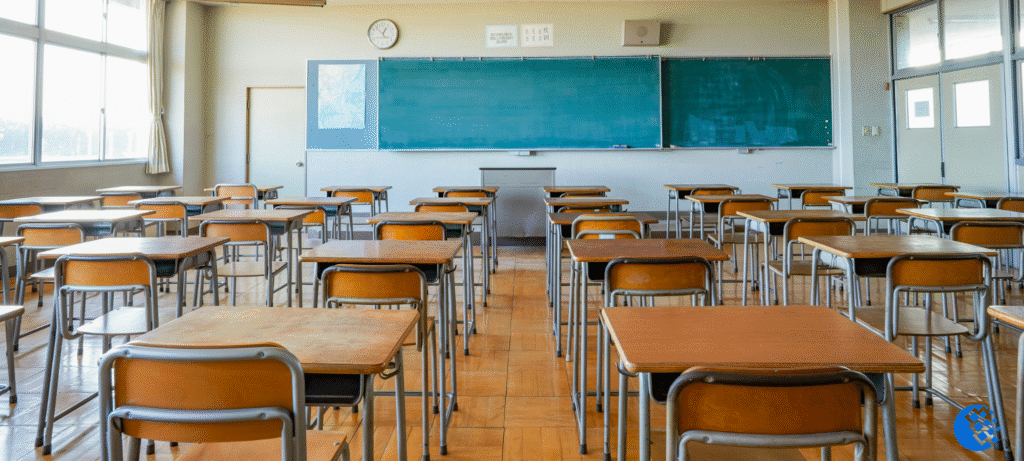
A few years back I visited two primary schools only a few miles apart. Both followed more or less the same curriculum, yet the classrooms felt like they belonged to different eras. In one room, kids sat in rows quietly copying notes while the teacher worked through a fractions lesson step by step. In the other, a group was arguing over whether their popsicle-stick bridge could hold a stack of coins, paper and pencils scattered everywhere. Neither classroom looked wrong, exactly. They just reflected two very different ideas about how children actually learn. That’s the traditional vs progressive education debate in a nutshell, and it’s a lot messier in real classrooms than the tidy comparison charts online tend to suggest.
Quick Answer
Traditional education is a teacher-centered model built on lectures, textbooks, memorization, and standardized testing. Progressive education is a student-centered approach built on inquiry, collaboration, experiential learning, and critical thinking. Traditional prioritizes structured content delivery; progressive prioritizes active participation and real-world application. Neither wins outright. It depends on the kid, the subject, and what a school is actually trying to achieve.
Traditional vs Progressive Education at a Glance
| Traditional Education | Progressive Education |
|---|---|
| Teacher-centered | Student-centered |
| Lecture-based | Inquiry-based |
| Standardized tests | Portfolio assessment |
| Fixed curriculum | Flexible curriculum |
| Memorization | Critical thinking |
Key Takeaways
- Traditional education leans on direct instruction, a fixed curriculum, and standardized testing.
- Progressive education, shaped heavily by John Dewey, centers the student and leans on experiential and inquiry-based learning.
- Assessment splits sharply — one side favors exams, the other favors portfolios and ongoing feedback.
- Most modern schools, including a lot of International Baccalaureate programs, blend the two rather than picking one.
- Research keeps circling back to the same point: outcomes depend more on execution than on the label a school uses.
What Is Traditional Education?
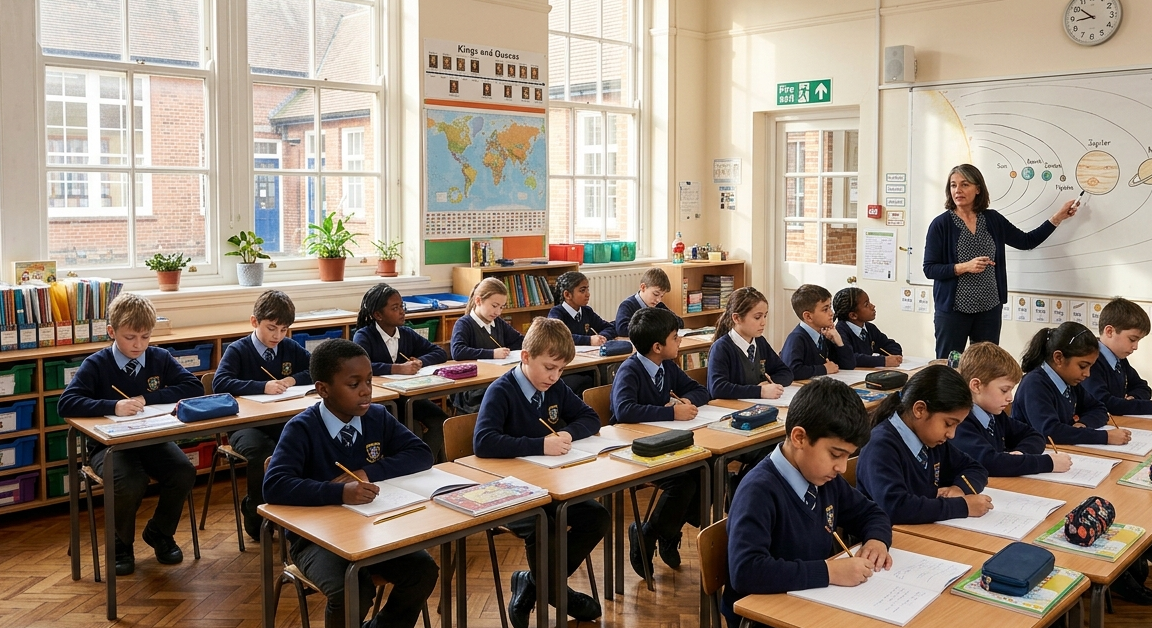
Ask most adults to picture “school,” and they’ll probably describe traditional education without even trying. Desks in rows. Homework most nights. A teacher explaining the lesson from the front of the room, and exams at the end of each term to check whether it stuck. That image has shaped classrooms for generations, and it exists for a reason — it comes straight out of industrial-era schooling, when the goal was producing a literate, disciplined workforce at scale. Bells between periods. One adult managing thirty-something kids at once. None of that happened by accident.
Philosophically, it lines up with essentialism — the idea that there’s a core body of knowledge every student needs, whether or not it happens to interest them. A fair bit of behaviorist thinking crept into classroom management here too. Right answer, reward. Wrong answer, correction. Repeat until it sticks. Teachers who work this way tend to build a very specific set of skills over time, and if you want a fuller picture of what that actually looks like day to day, it’s worth reading the Teaching Competencies of Teachers.
There’s real value in this model. Structure helps kids who need routine. It moves through large amounts of content efficiently. And it prepares students well for the standardized exams that still gate university admission almost everywhere, whether we love that fact or not.
Where it falls short is just as predictable. Sitting passively through a lesson doesn’t automatically build critical thinking. Kids who learn differently can slip through the cracks for years before anyone notices. A curriculum locked into place leaves very little room for curiosity that doesn’t happen to show up on a test.
What Is Progressive Education?
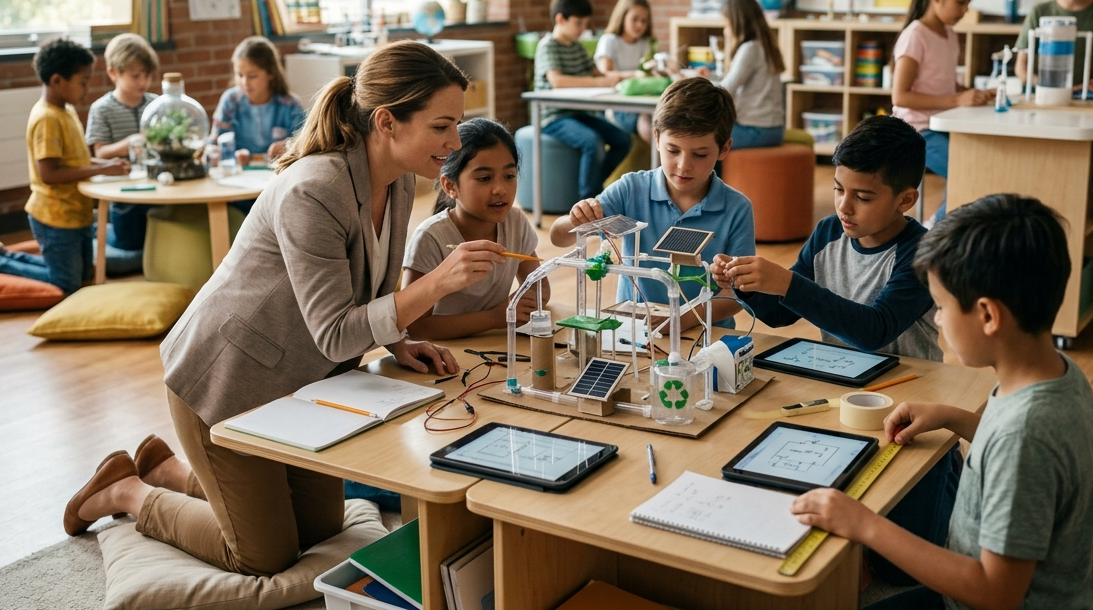
Walk into a progressive classroom and the first thing you’ll probably notice is who’s talking. Not the teacher — the students. Instead of starting from “what’s next on the syllabus,” progressive education starts from “what does this particular kid need in order to actually get this.” Underneath it sits constructivism, the idea that learners build their own understanding through experience rather than simply receiving information handed to them.
The roots go back to the late 1800s and early 1900s, and most of the credit lands on John Dewey, who argued school should function more like real life — that children learn by doing, not by memorizing facts they’ll never touch again outside a classroom. His influence runs through nearly every progressive method still in use: project-based learning, inquiry-based learning, experiential education. If a modern classroom has kids building something, debating something, or investigating something instead of copying notes off a board, Dewey’s fingerprints are probably somewhere in the background.
He wasn’t working alone. Maria Montessori built an entire approach around self-directed learning inside carefully prepared environments. Jean Piaget mapped out stages of cognitive development that still inform how teachers pace lessons for different ages. Lev Vygotsky pushed the idea that learning is fundamentally social — something done in collaboration with others, not alone at a desk. Jerome Bruner took the constructivist thread further still. Paulo Freire brought a sharper, more questioning edge through his writing on dialogue and student agency. And Howard Gardner’s theory of multiple intelligences gave teachers language for something they’d probably already noticed: “smart” doesn’t look the same in every kid. Readers curious about the philosophical side of all this — what knowledge even is, and how we know we know something — might get something out of What Is Theory of Knowledge.
One thing both camps quietly agree on: Bloom’s Taxonomy, the framework built by Benjamin Bloom, which pushes students from simply remembering facts toward analyzing, evaluating, and eventually creating. Traditional or progressive, plenty of teachers still reach for it.
Progressive classrooms tend to run on flexible curricula, group work, and projects instead of worksheets, with teachers acting more like guides than lecturers standing at the front. Engagement tends to run higher. Students build genuine collaborative and problem-solving skills. And the curriculum can bend toward whatever’s actually relevant to a student’s life, rather than whatever’s next in the textbook.
None of that comes free, though. It’s hard to standardize. It’s hard to assess consistently across an entire cohort. And it demands a lot more from teachers in terms of planning and improvising on the fly, lesson by lesson.
Traditional vs Progressive Education: Comparison Table
| Feature | Traditional Education | Progressive Education |
|---|---|---|
| Teaching Style | Direct instruction, lecture-based | Facilitated, inquiry-based |
| Teacher Role | Authority and content deliverer | Guide and collaborator |
| Student Role | Passive receiver | Active participant |
| Curriculum | Fixed, standardized | Flexible, interest-driven |
| Assessment | Standardized testing, summative | Portfolios, projects, formative |
| Discipline | Rule-based, structured | Self-directed, responsibility-based |
| Technology | Supplementary tool | Often integrated into projects |
| Creativity | Secondary to content mastery | Central to the learning process |
| Classroom Environment | Rows, formal seating | Flexible seating, learning stations |
| Learning Outcomes | Strong on content recall | Strong on critical thinking, adaptability |
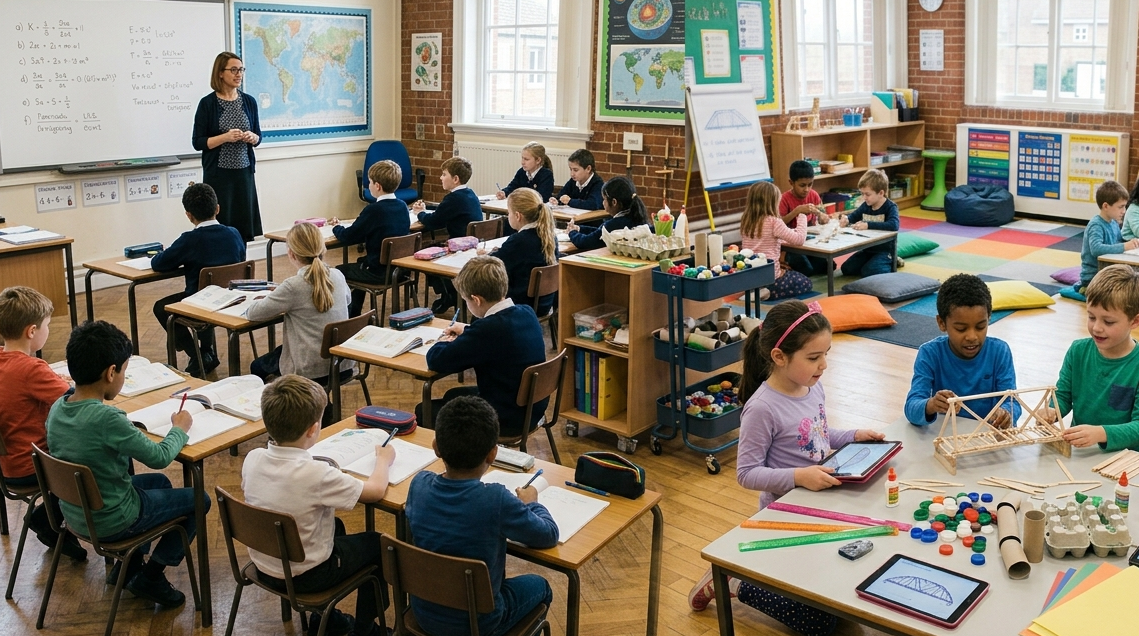
Looking at that table, it’s tempting to assume progressive automatically wins — it just looks more flexible, more modern. Classroom reality is messier than that. A kid learning multiplication for the first time usually benefits from some direct instruction before being turned loose on a group project. That’s exactly why a lot of experienced teachers end up combining both approaches rather than treating them as rival camps fighting for the same territory.
Historical Trends in Teaching Methods: Progressive vs Traditional Education
The historical trends in teaching methods, progressive vs traditional education, basically track whatever society happened to need at the time. Industrial-era schools needed workers who’d follow instructions and show up on time, so a structured, essentialist model made sense for that era. Dewey and the progressive movement pushed back hard by the early 1900s, arguing that a factory-line approach to schooling didn’t serve curious minds — or the future citizens of a democracy, for that matter.
From there it’s mostly been back-and-forth. Standardized testing expanded through the mid-20th century as governments wanted hard numbers for accountability. Technology started reshaping classrooms in the 1990s. And somewhere in that stretch, project-based and collaborative models became a lot more practical to run at scale — you no longer needed thirty identical worksheets when kids could pursue their own angle on a shared topic. These days, in a lot of well-resourced schools, hybrid teaching is just the default. Nobody’s really picking a side anymore, at least not the schools that are paying attention to outcomes.
Teacher-Centered vs Student-Centered Learning
This is where things get genuinely interesting, because it’s less about content and more about who holds the reins in the room. Teacher-centered learning keeps the instructor at the front, setting pace and deciding what gets covered. Student-centered learning hands more of that control to the learner, and the teacher shifts into something closer to a coach. Neither wins by default. A six-year-old learning to read usually needs someone showing them exactly how it works, step by step. A graduate seminar, on the other hand, falls apart pretty fast without student-driven discussion carrying the room.
Difference Between Traditional and Progressive Curriculum
A traditional curriculum runs in a fixed sequence: Algebra I before Algebra II, a set reading list, a defined scope for every grade, with textbooks dictating the order topics show up in. Not much room to wander off script here.
A progressive curriculum bends toward whatever students are actually curious about. A unit on ecosystems might grow out of a real argument the class had about local recycling policy, instead of starting on page one of a chapter nobody chose. Projects replace a lot of the worksheet work, and assessment tends to follow the same logic — less about hitting a fixed checklist, more about tracking growth over time. Reality is messier than that makes it sound, though. Even progressive schools need some agreed-upon benchmarks to know whether kids are actually learning anything at all.
Assessment Methods and Student Evaluation
One side of this debate leans on standardized testing and summative assessment — final exams, unit tests, a single letter grade trying to summarize an entire semester. The other leans harder on formative assessment: ongoing feedback, portfolios, reflection journals, project rubrics that track how a student’s thinking developed instead of freezing it at one moment in time. Most schools, honestly, use a mix of both. The proportions just shift depending on the subject and the grade level.
Traditional vs Progressive Education Examples
Mathematics. One classroom drills times tables and works through textbook problems in order. Down the hall, another has kids building a budget for a mock small business, working out percentages as they go instead of on a worksheet.
Science. Memorizing the periodic table is one path. Running an actual experiment — testing which household materials insulate heat best, then drawing your own conclusions from what happens — is the other.
English. Assign one novel to the whole class and a standard five-paragraph essay, and that’s traditional. Let students pick from a themed reading list and present what they found as a podcast instead of a paper, and that’s progressive.
History. Memorizing dates and treaty names versus debating a historical decision from the point of view of someone who actually lived through it — same subject, completely different memory of the class years later.
Kindergarten. Worksheets and repetition teach letters one way. Sensory play and self-directed stations around the room, closer to Montessori roots, teach them another.
Higher education. Big lecture halls are still mostly traditional territory, especially in intro courses. Seminar-style, project-based formats show up more in upper-level work, and increasingly in International Baccalaureate programs that carry these habits into university.
Similarities Between Traditional and Progressive Education
For all the arguing, both models are chasing the same thing underneath — real learning outcomes, genuine academic achievement. Both need skilled teachers to work at all. Both need clear goals and some kind of accountability, even if they measure it differently. And both fail students badly when they’re executed poorly. A bad traditional classroom does just as much damage as a badly-run progressive one. Neither label guarantees quality on its own.
Can Schools Combine Both Approaches?
More and more, yes. Many experienced teachers describe the whole traditional-versus-progressive framing as something of a false choice. Direct instruction works well for introducing something genuinely unfamiliar; inquiry-based activities help students apply and retain what they’ve already learned. The real challenge isn’t picking a side — it’s knowing which approach fits a given lesson.
Blended models pair traditional structure — direct instruction for foundational skills like phonics or basic arithmetic — with progressive flexibility for the deeper stuff, like inquiry-based science units or project-based history work. Quite a few high-performing school systems, including several IB programs, front-load direct instruction while kids are still building the basics, then shift toward inquiry-driven work once those foundations can actually hold weight.
Progressive Education vs Traditional Education: Which Is Better?
There’s no clean winner here, and any article that tells you otherwise is oversimplifying to make a tidier point. Traditional education vs progressive education gets framed as a simple either-or choice a lot, but in reality most schools combine elements of both. It comes down to a student’s age, their learning style, the subject, and what a school is actually trying to achieve. Younger kids and foundational skills tend to need more structure — nobody wants a six-year-old “discovering” phonics on their own schedule. Older students wrestling with complicated, open-ended problems tend to do better with student-centered, inquiry-based approaches. For a lot of educators, the real skill isn’t picking a philosophy and defending it forever. It’s knowing which one to reach for, and when.
| Learning Goal | Traditional | Progressive |
|---|---|---|
| Memorization | Strong | Moderate |
| Critical Thinking | Moderate | Strong |
| Collaboration | Low | High |
| Creativity | Moderate | High |
| Exam Preparation | Excellent | Moderate |
| Real-World Skills | Moderate | Excellent |
What Educational Research Says
Large-scale research keeps landing on the same, slightly unsatisfying conclusion: no single teaching philosophy guarantees better outcomes. Comparative work from UNESCO and the OECD points to teacher quality and implementation as the real drivers of results, not whether a classroom is strictly traditional or strictly progressive. John Hattie’s Visible Learning research, which pulls together thousands of studies on what actually moves student achievement, backs this up — things like clear feedback and instructional clarity matter more than the label on the classroom door. A well-run traditional classroom can outperform a poorly-run progressive one. The reverse is just as true.
Pros and Cons Table
| Advantages | Disadvantages | |
|---|---|---|
| Traditional Education | Structured, efficient content delivery, strong exam prep, consistent standards | Less room for creativity, risk of passive learning, one-size-fits-all pacing |
| Progressive Education | Builds critical thinking, adapts to individual needs, higher engagement | Harder to standardize, assessment can get inconsistent, more demanding for teachers |
Common Misconceptions
Progressive doesn’t mean chaotic. Montessori classrooms run on very deliberate routines — they’re just not rigid the way a traditional classroom is. Traditional education isn’t some outdated relic either, whatever the newer methods might imply. Plenty of high-performing school systems still lean on direct instruction for foundational skills, particularly in early literacy and numeracy, and it genuinely works for that. Groups like the OECD have made this point repeatedly in their comparative reports: the method matters less than most people assume, and quality of execution matters more.
A couple of specific myths worth clearing up. Progressive education does not mean students do whatever they want, whenever they want. It also doesn’t mean schools never give exams — plenty do, just alongside portfolios and projects. And traditional education isn’t automatically hostile to creativity; a well-taught traditional lesson still leaves room for original thinking, it just doesn’t build the whole lesson around it.
Frequently Asked Questions
What is progressive education?
A student-centered approach built around hands-on learning, critical thinking, and a curriculum shaped by student interest — heavily influenced by John Dewey’s idea that school should function like real life.
What is traditional education?
A teacher-centered model built on direct instruction, a fixed curriculum, and standardized testing, aimed at delivering consistent content and measurable outcomes across large groups of students.
Who was John Dewey?
An American philosopher and educator whose early-1900s work laid the groundwork for progressive education, arguing learning works best when it’s experiential, democratic, and tied to real problems rather than abstract facts.
Is progressive education better than traditional education?
Not universally. Progressive tends to build stronger critical thinking and engagement; traditional offers more structure and stronger standardized test prep. Which one fits depends on the student and the subject in front of you.
What is the difference between traditional and progressive curriculum?
Traditional curriculum is fixed and sequential, following the same scope for every student at a given grade. Progressive curriculum bends around student interest and real-world, interdisciplinary themes instead of a set order.
Can traditional and progressive education be combined?
Yes, and a lot of schools already do this. Direct instruction handles foundational skills, while project-based or inquiry-based work handles deeper application — increasingly common in IB and other hybrid programs.
Is progressive education replacing traditional education?
No. Most schools now use a blended approach that combines traditional direct instruction with progressive teaching methods. Rather than one replacing the other, the two are increasingly used side by side.
Which approach is better for exams?
Traditional education, generally. Its structure mirrors the content and format that most standardized exams are actually built around.
Which approach is better for creativity?
Progressive education tends to win here, since project-based and inquiry-based methods give students room to explore an idea instead of matching it to a fixed answer key.
Why do schools still use traditional education?
It’s efficient at scale, easier to standardize across huge student populations, and lines up closely with how most standardized testing systems are built.
Is progressive education effective?
It can be, especially for critical thinking and engagement, though results vary a lot depending on teacher training and how well the method is actually carried out in practice.
Final Thoughts
Neither traditional nor progressive education has this fully figured out, and probably neither ever will. The traditional model gives kids structure and a clear path through content, which matters a lot early on. The progressive model gives them room to question things and connect ideas to the world outside school, which starts to matter more as they get older and the problems get messier. Most experienced educators stopped treating traditional vs progressive education as a philosophy to pick once and defend forever a long time ago. It’s a toolkit now, and the real skill is knowing which tool fits the kid standing in front of you.
If you want to go further into the research side of this, the Education Endowment Foundation publishes some of the clearest comparative work out there on which teaching methods actually move the needle for real students in real classrooms. Their findings tend to land in the same place this article does: it depends on the classroom.