
The search for wellness can feel like a lot. You see a lot of advice, from complex diet plans to meditation apps that need your full attention. Many of these ideas are abstract and ask for mental effort you may not have. This often leaves people looking for something more hands-on, a practice with a physical side that doesn’t need a screen.
This search has led many to try sound-based therapies. These methods work with the idea that certain sound waves can create real effects in the body. The practice of using tuning forks on body is one such method. It uses carefully tuned forks to apply vibrations directly to or near the body to target tense areas. Instead of just listening, this is a felt experience, based on the physical ideas of resonance and entrainment.
Quick answer: Sound therapy with tuning forks uses special instruments to send specific sound waves into the body’s energy field. The vibration is thought to help the nervous system relax and let go of tension. It works on the idea that the body, like an instrument, can be tuned to a healthier frequency.
What’s inside
· How Does Vibrational Sound Work?
· What Is the Difference Between Weighted and Unweighted Forks?
· What Should You Feel During a Session?
· Key Questions to Ask a Practitioner
· Can You Use Tuning Forks on Yourself?
· Frequently Asked Questions About Sound Therapy
Why a Calm Nervous System Matters
This matters because long-term stress keeps your body on high alert, and that takes a toll over time. Sound-based methods aim to give a physical signal to the nervous system. This signal encourages it to shift from a state of defense to one of repair and rest. This isn’t about treating a disease. It’s about dealing with the background stress of modern life that can throw your body off balance.
Many people live in a constant state of “fight-or-flight.” This state is meant for short-term survival, not for everyday life. When it becomes your default setting, the body’s energy is always being used to handle threats. This leaves less energy for important jobs like digestion, immune support, and cell repair. The goal of practices like sound therapy is to help turn on the “rest-and-digest” state, where the body can do its essential maintenance.
The main idea behind this is entrainment. This is a concept from physics where the rhythm of one object can cause another to match it. Think of how a room full of pendulum clocks will eventually start to swing together. In sound therapy, a carefully tuned fork gives off a steady, pure vibration. The theory is that the body’s systems, when knocked out of sync by stress, can match this clear signal and find their way back to a more balanced state.
❝ A simple way to notice this shift is to check your breathing. Before a session, see if your breath is shallow and high in your chest. After the session, see if it has naturally become deeper, moving lower into your belly. This is often the first and most reliable sign that your nervous system is moving from stress to relaxation.
In the end, the goal is to help your body get better at balancing itself. It’s not about an external tool “fixing” you. It’s about giving your body a clear, steady signal that reminds your own systems how to find balance. This process helps create coherence, a state where the heart, mind, and emotions are working together smoothly. This helps you feel better and handle stress.
What Separates a Quality Tool from a Toy?
The quality of a tuning fork depends on its material, its type, and how accurately it’s tuned. Not all forks are made for use on the body. Many are designed for tuning musical instruments and work very differently. The biggest difference is between weighted and unweighted forks, which are used for different things.
Most therapeutic tuning forks are made from special aluminum alloys, not steel. Steel forks, which are common for music, have a bright, clear tone, but the vibration fades quickly. Aluminum is lighter and holds a strong vibration for much longer. This makes it better for this kind of work, where the goal is a long, felt sensation.
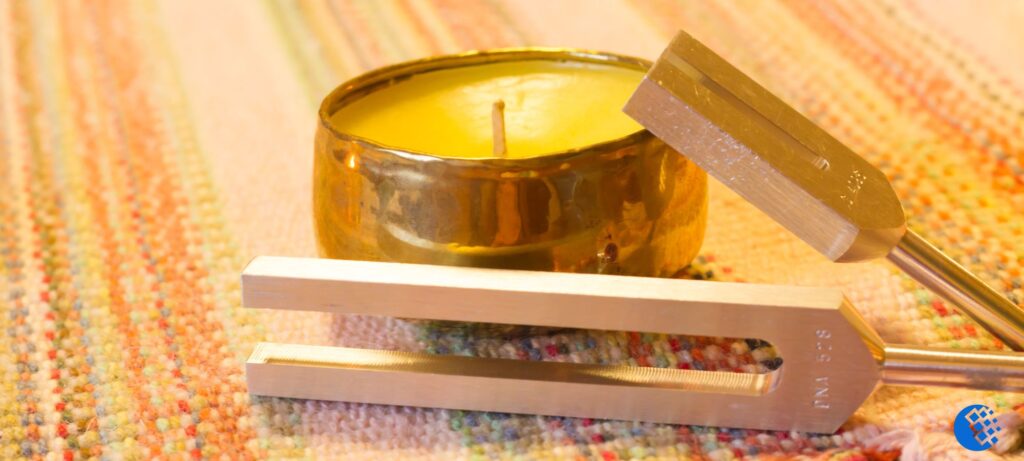
The choice between weighted and unweighted forks depends on what you want to use it for. Weighted forks have small, round weights at the end of each prong. This design creates a stronger vibration and a deeper, quieter tone. Unweighted forks look like the classic ‘U’ shape and make a clearer, louder sound with a less intense physical vibration.
| Feature | Weighted Forks | Unweighted Forks |
| Primary Sensation | Strong, focused vibration | Audible, ringing sound |
| Sound Volume | Quieter, lower pitch | Louder, higher pitch |
| Common Use | Applied directly on the body | Used in the space around the body |
| Target | Bones, joints, muscle tissue | Energetic field, clearing a space |
❝ The goal is not always to hear the sound. With weighted forks, the key is the vibration sent into the body. You can test this by tapping a weighted fork and placing its stem on your elbow. You will feel the vibration travel up your arm long after you can’t hear the sound anymore. This felt sense is the main way it works. Beyond therapeutic applications, tuning fork tests have also been studied for diagnostic purposes; for instance, a U.S. review found they had sensitivity ranging from 75% to 100% for ruling out fractures, though this was not sufficient to rely on a negative test alone, according to PMC (NIH/NLM).
When looking at forks or a practitioner’s tools, you can ask a few specific questions to check their quality.
1. What material are these made from? The answer should be a specific aluminum alloy. If they are steel, ask why that choice was made for working on the body.
2. Are these tuned to a specific note? While there isn’t one single standard, being precise matters. A maker should be able to state the frequency (like 128 Hz) and how much it might vary.
3. How do you recommend making them ring? A quality fork should be tapped gently on a firm but soft object, like a rubber block or even your knee. Hitting it on a hard surface can damage it and create buzzing sounds you don’t want.
These details separate tools designed for serious use from those that are just toys.
What Should You Feel During a Session?
The experience is different for everyone, but most people report a mix of physical feelings and other, lighter sensations. The most common feeling is a deep, buzzing vibration, especially when a weighted fork is placed on the body over a bone or joint. This is a simple physical feeling, like a massage tool, but it feels more focused and goes deeper.
Besides the direct vibration, you might notice other things. Many people feel warmth spreading from the spot where the fork is placed. Others describe a tingling feeling or a sense of energy moving through a “stuck” area. These are often signs that blood is flowing better and the nervous system is starting to relax. The goal isn’t to create a certain feeling, but to give your body a clear signal that helps it balance itself.
A practitioner isn’t just using a tool; they are listening to how the fork’s sound changes. As the fork moves through the energy field around your body, its sound can change. It might sound clear and bright in one area, then become dull or staticky in another. This change in sound is seen as a sign of stuck energy or tension. The practitioner will often hold the fork in that spot until the tone becomes clear and steady. This is a sign that the energy in that area has matched the clear vibration.
❝ It is also important to know that you might feel very little at first. A lack of feeling doesn’t mean it isn’t working. Sometimes, the biggest shifts happen in areas that feel numb. The vibration is still entering the body, encouraging it to restore awareness to that part of itself. In a different context, NIH-backed evidence from PMC (NIH/NLM) indicates tuning fork testing can be a simple, low-cost screening tool for certain neuropathy assessments, though its accuracy depends on the condition being tested.
Sometimes, letting go of old stress can make you feel emotional. You might feel a sudden wave of sadness, relief, or even laughter. This is a normal part of the process as the body lets go of stored stress. A professional will create a safe, non-judgmental space for this to happen. The final goal is a feeling of lightness, clarity, and deep calm, as if your internal system has been reset to a calmer, more balanced state.
Frequently Asked Questions About Sound Therapy
Do tuning forks really work for healing the body? The goal is less about “healing” a specific condition and more about calming the nervous system. The vibrations are thought to help shift your body from a stressed state to a relaxed “rest-and-digest” state. This is when your body’s natural healing processes work best. The tool helps create the right conditions for your body to balance itself.
Can you perform tuning fork therapy on yourself? Yes, using them on yourself is a common way to relax and feel grounded. Using a weighted fork on your chest bone, knees, or the bottoms of your feet can be very calming. A session with a practitioner is different, though. They are trained to use the forks to find and work on areas of stuck energy around your body that you likely cannot sense on your own.
What is the significance of the 128 Hz frequency? The 128 Hz fork is a basic tool in many sound therapy practices. Its low frequency creates a strong vibration you can feel, which is easily sent into the body’s tissues. This specific frequency is thought to help the body release something called nitric oxide. This molecule helps relax blood vessels and calm the nervous system, which leads to a feeling of physical and mental release.
Can using tuning forks help with weight loss? No, tuning forks are not a direct tool for weight loss and should not be used for that purpose. Their main job is to help balance the nervous system and reduce stress. While long-term stress can lead to weight gain, dealing with the stress is an indirect benefit. It is not a substitute for proper nutrition and exercise.
Are there any situations where tuning forks should be avoided? Yes, you should be careful in certain cases. Weighted forks should not be used directly over broken bones, fractures, or recent surgery sites. It is also a good idea to avoid using them near pacemakers or other implanted medical devices. Practitioners usually avoid using forks on the body during pregnancy without special training and the client’s permission.
Finding Your Own Resonance
The main idea behind using tuning forks is not about a tool performing a magical fix. It is about giving your body a clear, stable signal it can use as a reference point. The main job is to help your nervous system shift from high alert to a state of rest and balance. By providing a steady frequency, the forks create an environment where your body’s own ability to find balance can take over. The best effects come not from the sound itself, but from how the body responds to it.
Your path forward depends on your goals. For daily stress relief, using a quality, properly tuned fork on yourself can be a powerful practice. However, for working on specific areas of tension or stuck energy, a trained practitioner has a clear advantage. They can understand what the fork’s changing sounds mean in ways that are hard to notice on your own, guiding the process with more skill.
Ultimately, the goal is to become more sensitive to your own internal state. The tuning fork is a guide that helps you learn what balance feels like and what tension feels like. The real measure of success is a greater awareness of your own body. This allows you to notice when you are out of balance and take steps to return to center, with or without a tool in hand.
Conclusion
Tuning fork therapy offers a unique, hands-on approach to wellness, focusing on the body’s natural ability to find balance through vibrational signals. While not a medical treatment for specific diseases, it serves as a gentle method to encourage the nervous system to shift from stress to a state of rest and repair. By understanding the quality of the tools and the nature of the experience, individuals can explore this practice to foster greater internal coherence and a deeper connection to their own well-being.