If you’re wondering how to study for quiz bowl, the best approach is to learn the format first, pick one or two specialty categories, and practice daily with real tossup and bonus questions instead of random trivia. Review every missed clue right after each practice round, use tools like Protobowl and QuizDB for repetition, and slowly expand into new subjects once your specialty feels solid. Consistency beats cramming, every single time.
Table of Contents
- What Is Quiz Bowl?
- How to Study for Quiz Bowl (Step-by-Step)
- Quiz Bowl Study Schedule
- Best Quiz Bowl Study Resources
- How to Study for Quiz Bowl Literature
- How to Study for Science Quiz Bowl
- How to Study for Middle School Quiz Bowl
- Quiz Bowl Categories Ranked
- How Top Quiz Bowl Players Improve
- Common Quiz Bowl Mistakes
- Expert Tips Nobody Tells Beginners
- Checklists
- FAQ
- Final Thoughts
Introduction
Your first quiz bowl tournament is going to feel unfair. Not because the questions are badly written, but because the kid two seats down keeps buzzing in halfway through a sentence you haven’t even finished reading. That’s not luck. That’s pattern recognition built from months of exposure to how these questions are actually written.
Here’s the part nobody tells beginners early enough: quiz bowl isn’t a memorization contest. It rewards people who understand how clues are structured, in what order information usually appears, and which topics show up again and again across different tournaments. Once that clicks, buzzing gets a lot less mysterious.
If you’ve been Googling how to study for quiz bowl, you’ve probably already noticed the same three or four resource lists floating around Reddit and old forum threads. None of them walk you through an actual system. This guide does — categories, schedules, resource comparisons, and the mistakes that quietly slow most beginners down. If you’re building broader study habits alongside quiz bowl prep, our guide on Easiest AP Classes to Self Study covers a similar self-directed approach that carries over well.
The rest of this guide breaks everything down by category, experience level, and time commitment, so pick the section that actually matches where you’re starting from.
What Is Quiz Bowl?
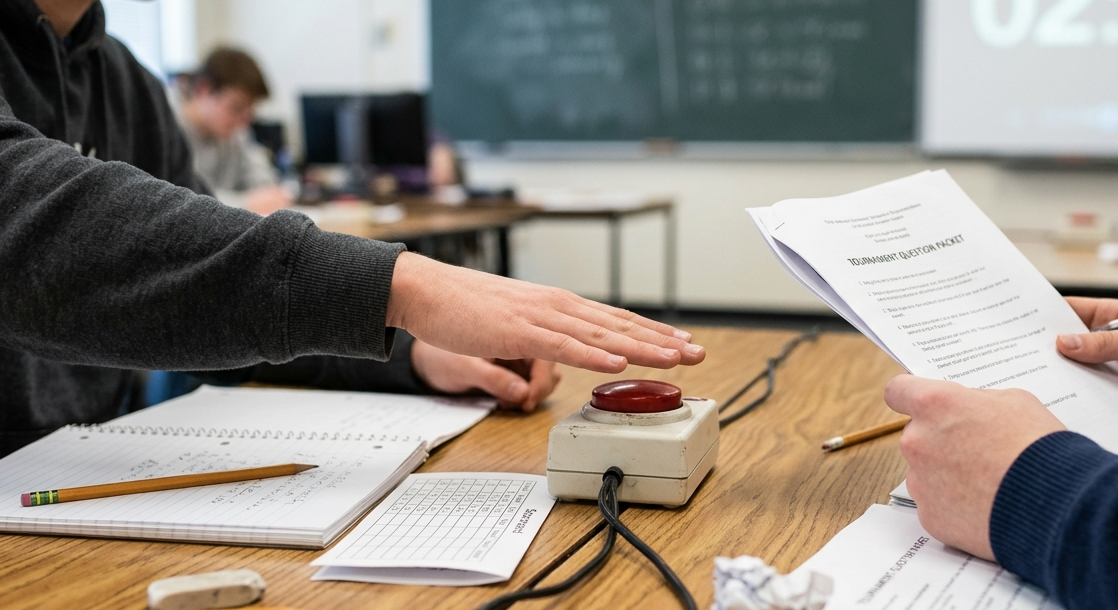
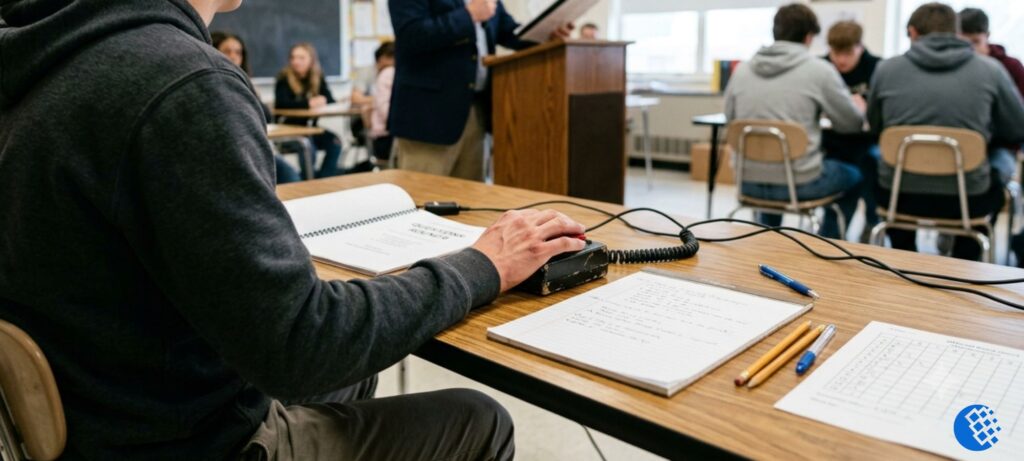
Quiz bowl is an academic competition where two teams answer questions across subjects like literature, science, history, and fine arts. Questions come in two formats — tossups, which any player can buzz in on individually, and bonuses, which the team answers together after winning a tossup. Related formats include scholastic bowl and academic bowl, which follow similar rules with regional variations.
A tossup question is read out loud, usually starting with an obscure clue and ending with an easy giveaway. Whoever buzzes in first, correctly, wins points and unlocks a bonus round for their team. Bonus questions are worth more points individually but come without the race-to-buzz pressure, since only the team that won the tossup gets to answer them.
Different leagues use slightly different formats. NAQT-style questions tend to follow a strict pyramidal clue structure, meaning the hardest, most specific clue comes first and the question gets progressively easier. Scholastic bowl and academic bowl formats sometimes trim this down for younger or less experienced players, but the core idea — early clues reward deep knowledge, later clues reward general knowledge — stays consistent across nearly every version of the game.
Understanding this structure matters more than most beginners realize. It’s the entire reason experienced players can buzz in on a science tossup after hearing just one sentence. They’re not guessing. They recognize the clue.
How to Study for Quiz Bowl (Step-by-Step)
Studying for quiz bowl works best as a system, not a scramble: learn the format, choose a specialty, build daily practice habits with real tossup questions, review every mistake immediately, and expand into new categories once your core subjects feel stable. Random trivia memorization without this structure tends to plateau fast.
Step 1: Understand the format before anything else. Read a handful of real packets before you touch a single flashcard. You need to see how a tossup is built — the lead-in clue, the middle clues, the giveaway — before memorizing facts will actually help you.
Step 2: Pick one specialty, maybe two. Trying to cover every category equally as a beginner spreads you too thin. Pick something you already have some interest in, whether that’s literature, science, or history, and go deep there first.
Step 3: Build general knowledge on the side. Specializing doesn’t mean ignoring everything else. Keep a rotating awareness of other categories through lighter review, since bonus rounds often touch multiple subjects.
Step 4: Practice daily, even briefly. Fifteen focused minutes a day beats a three-hour cram session once a week. Recognition-based skills like clue reading need frequent, spaced exposure to actually stick.
Step 5: Review every missed question immediately. This is the step most beginners skip. Right after a practice round, go back through what you missed and figure out exactly which clue you should’ve caught.
Step 6: Learn clues, not just facts. Knowing that Marie Curie won two Nobel Prizes is useful. Knowing how a question typically clues her — radioactivity research, polonium, the element named after her home country — is what actually gets you buzzing early.
Step 7: Play timed practice rounds regularly. Protobowl and similar tools simulate real buzzer pressure. Reading packets alone doesn’t train reaction speed the same way.
Step 8: Expand once your specialty feels solid. After a specialty category starts feeling manageable, start layering in a second or third subject using the same review process.
Quiz Bowl Study Schedule
A realistic quiz bowl study schedule breaks down into three tiers — a 30-minute daily minimum for casual players, an hour a day for competitive players, and a heavier weekend block for tournament prep. The 30-day plan below moves from foundational categories toward mixed practice and full simulation rounds.
| Plan | Time | Focus |
|---|---|---|
| Light (casual) | 30 min/day | Flashcards + short Protobowl session |
| Competitive | 60 min/day | Packet reading, category drills, review |
| Weekend | 2–3 hours | Mixed practice rounds, missed-clue review |
| Pre-tournament | Daily, 2 weeks out | Timed simulations, weak-category focus |
30-Day Study Plan
- Week 1 — Foundations. History and science basics. Focus on recognizing question structure more than memorizing facts.
- Week 2 — Expansion. Add literature, arts, and mythology. Keep reviewing week one categories briefly each day.
- Week 3 — Mixed practice. Full mixed packets instead of single-category drills. This is where clue recognition across subjects starts connecting.
- Week 4 — Simulation. Timed practice matches under real conditions, plus a full review of every category you’ve touched so far.
This pacing assumes daily consistency, not marathon weekend sessions. If your schedule doesn’t allow for daily practice, stretch this to 45 or 60 days rather than skipping steps.
Best Quiz Bowl Study Resources
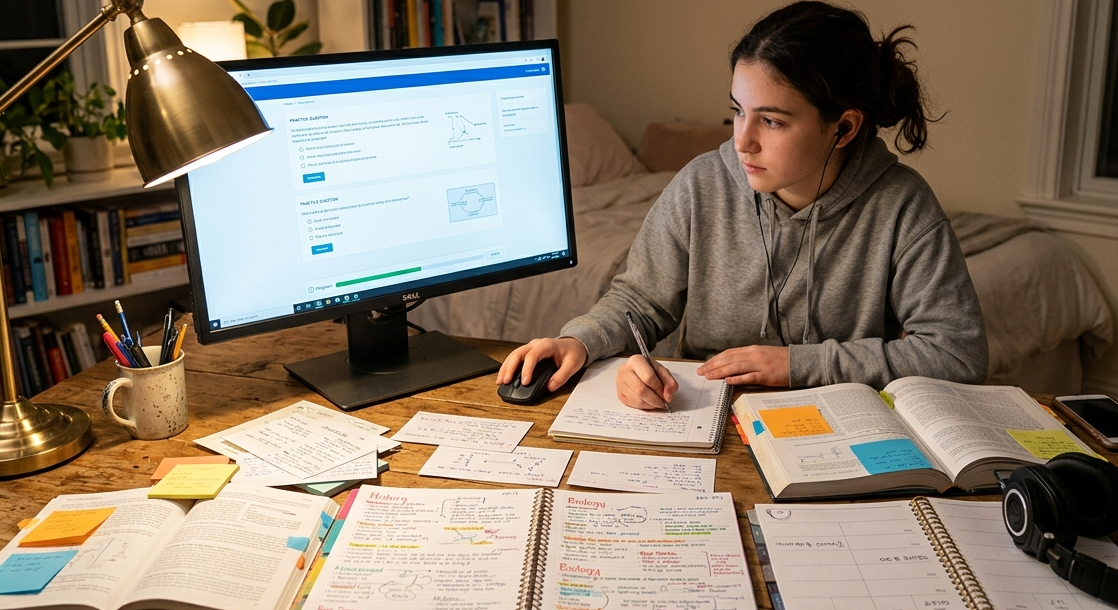
The strongest free quiz bowl resources are Protobowl for live buzzer practice, QuizDB and QBReader for searching real tournament questions by category, and NAQT for official rules and sample packets. Anki and Brainscape work well for spaced-repetition flashcards once you’ve identified your weak categories.
| Resource | Best For | Why It Helps |
|---|---|---|
| Protobowl | Live buzzer practice | Simulates real tournament pressure and timing |
| QuizDB | Searching past questions by topic | Lets you drill a specific category deeply |
| QBReader | Reading full packets | Good for slow, structured clue analysis |
| NAQT | Official rules, sample packets | Authoritative source for question structure |
| Anki | Spaced repetition flashcards | Locks in facts you keep missing |
| Brainscape | Pre-made flashcard decks | Useful if you don’t want to build your own |
None of these tools replace the review step. Even the best resource is only as useful as the habit of going back through your mistakes afterward. If flashcard-building itself feels inefficient, our piece on 3 Secret Study Tips That Actually Work covers a few techniques that pair well with spaced repetition for exactly this kind of fact-heavy prep.
How to Study for Quiz Bowl Literature
Studying quiz bowl literature means learning recurring authors, major novels, and how their clues are typically structured — plot points, character names, symbolic details, and publication context. Reading original excerpts beats memorizing plot summaries, since clues often reference specific scenes or lines.
Literature tossups lean heavily on a rotating cast of frequently clued authors — Shakespeare, Toni Morrison, Gabriel García Márquez, Virginia Woolf, and a handful of others show up constantly across tournaments. Learning their major works matters, but learning how those works get clued matters more.
Poetry and plays deserve separate attention from novels, since their clue style differs. Poetry tossups often lean on specific imagery or meter, while plays get clued through character relationships and staging details. Skimming a Wikipedia summary won’t prepare you for either.
Common literature mistakes: relying only on summaries instead of primary text, ignoring poetry in favor of novels, and never reviewing which authors keep reappearing across old packets. Fix this by keeping a running list of every author you encounter in practice, sorted by how often they show up.
How to Study for Science Quiz Bowl
Science quiz bowl prep works best split by subject — biology, chemistry, physics, earth science, and astronomy — with extra attention on frequently clued scientists and discoveries. Formulas matter less than recognizing how a scientist’s contribution is typically described in a tossup.
Biology tossups often circle back to cellular processes, genetics, and well-known experiments. Chemistry leans on elements, reactions, and specific chemists. Physics tends to focus on foundational laws and the physicists behind them, while astronomy and earth science questions often blend into each other around planetary science and geological processes.
The trap most students fall into here is treating science quiz bowl like a chemistry class. It isn’t. You’re not solving equations under pressure — you’re recognizing the specific vocabulary a tossup uses to describe a concept or scientist before the giveaway line makes it obvious to everyone else.
How to Study for Middle School Quiz Bowl
Middle school quiz bowl prep should start simpler than high school prep — shorter daily sessions, broader general knowledge instead of deep specialization, and heavy use of easier practice sets before jumping into full tournament-level packets. Confidence matters as much as content at this stage.
Beginners at this level don’t need QuizDB deep-dives right away. Start with shorter packets designed for middle school or novice divisions, and keep daily practice to 15–20 minutes so it doesn’t feel like homework on top of homework.
Specialization can wait. At this stage, broad exposure across history, science, literature, and current events builds the pattern recognition that specialization will later sharpen. State-level middle school competitions also tend to reuse similar clue styles year over year, so reviewing recent regional packets pays off more than chasing advanced national-level material too early.
Quiz Bowl Categories Ranked
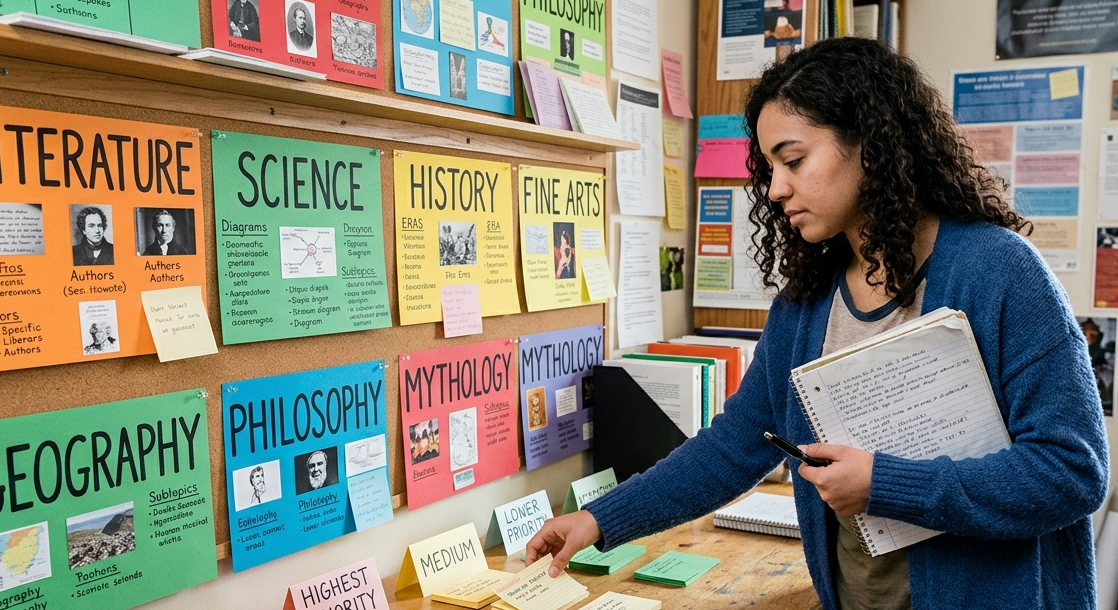
Literature, science, and history dominate most quiz bowl packets by frequency, making them the highest-priority categories for new players. Geography and mythology appear less often but are easier to pick up quickly, making them efficient secondary picks.
| Category | Difficulty | Frequency |
|---|---|---|
| Literature | High | Very High |
| Science | High | High |
| History | Medium | Very High |
| Fine Arts | Medium | Medium |
| Geography | Easy | Medium |
| Mythology | Easy | Medium |
| Religion | Medium | Low |
| Current Events | Easy | Low–Medium |
| Social Science | Medium | Low |
| Philosophy | High | Low |
This table reflects general patterns across common tournament formats, not a fixed rule for every league. Some regional competitions weight categories differently, so cross-check against the specific format your team competes in.
How Top Quiz Bowl Players Improve
Experienced players tend to converge on a similar set of habits, even without coordinating with each other. They specialize before expanding, rather than trying to cover everything at once. They read original works instead of relying purely on summaries. They keep some kind of running notebook or tracking system for clues they’ve missed, and they treat that review process as seriously as new material.
Spaced repetition shows up constantly in how strong players describe their routines, mostly because quiz bowl rewards long-term retention over short-term cramming. Playing regular practice matches, not just reading packets silently, also comes up again and again — buzzer timing is a skill you build through repetition, not theory.
None of this is secret information. It’s just consistency applied over months instead of days.
Common Quiz Bowl Mistakes
- Memorizing random trivia instead of studying clue patterns. Facts without context don’t transfer to actual buzzing speed.
- Ignoring literature because it feels harder than science or history. It’s one of the highest-frequency categories, so avoiding it caps your score potential early.
- Never reviewing missed tossups. Skipping this step means repeating the same gaps every single practice round.
- Reading only summaries instead of original works or full packets. Summaries miss the specific phrasing that actual clues use.
- Relying entirely on YouTube videos. They’re a fine supplement, but they rarely replace direct practice with real questions.
- Trying to learn everything before specializing in anything. Breadth without depth leaves you buzzing late across every category instead of early in a few.
Expert Tips Nobody Tells Beginners
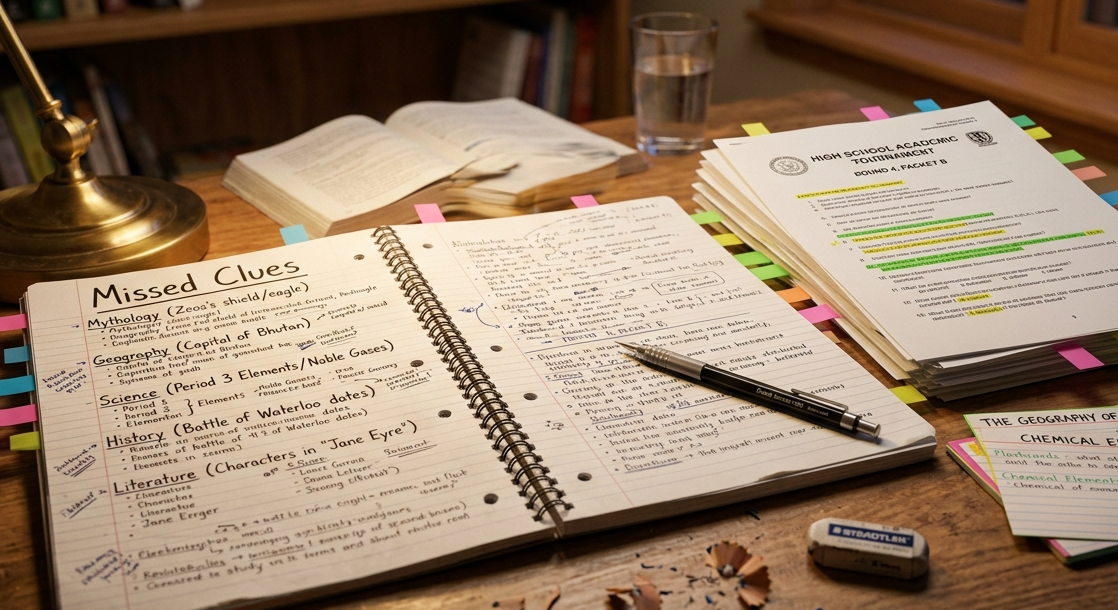
Reviewing missed tossups immediately after a practice round works better than rereading notes days later, mostly because the clue is still fresh enough that your brain can connect what you missed to what you should’ve recognized. Waiting even a day weakens that connection significantly.
Specializing in one or two categories before expanding isn’t just a beginner shortcut — most competitive players keep doing this permanently, rotating deep focus between subjects rather than trying to master everything simultaneously.
Successful teams often go back through old tournament packets after the fact, not just before, to spot recurring clue patterns they missed live. That post-tournament review tends to matter more than any single pre-tournament cram session.
Checklists
Daily Study Checklist
- 10–15 minutes of flashcard or spaced-repetition review
- One short Protobowl session
- Review of anything missed from the previous day
Weekly Review Checklist
- Full read-through of one new packet
- Category rotation check — are you neglecting anything?
- Update your running list of missed clues
Tournament-Day Checklist
- Light review only, no new material
- Confirm format rules (tossup/bonus structure, timing)
- Rest — cramming the morning of rarely helps
FAQ
How do you study for quiz bowl?
Start by learning the tossup and bonus format, pick one or two specialty categories, and practice daily with real questions from sources like QuizDB or Protobowl. Review every missed clue right after each session.
How long should I study before a tournament?
Most players see noticeable improvement within a month of consistent daily practice. Competitive-level performance usually takes several months to a year of steady work.
Can I prepare for quiz bowl in one month?
Yes, to a beginner or novice level. One month is enough time to learn the format, build a specialty, and get comfortable with buzzer timing, though deep mastery takes longer.
What are tossup questions?
Tossups are individually answered questions read aloud, structured from a hard, specific lead-in clue to an easy giveaway. Any player can buzz in once they recognize the answer.
What are bonus questions?
Bonus questions follow a won tossup and are answered as a team, usually without the buzz-in race, and are worth more points per question.
What is the best quiz bowl website for practice?
Protobowl is widely used for live buzzer practice, while QuizDB and QBReader are strong choices for searching and reading real tournament packets by category.
How do I study literature for quiz bowl?
Focus on frequently clued authors, read original excerpts instead of summaries, and pay separate attention to poetry and plays, since their clue styles differ from novels.
How do I study science quiz bowl?
Break preparation down by subject — biology, chemistry, physics, earth science, astronomy — and focus on how scientists and discoveries are typically clued rather than memorizing raw formulas.
How do middle schoolers prepare for quiz bowl?
Start with shorter, easier packets, keep sessions to 15–20 minutes, and prioritize broad general knowledge over early specialization.
What are the highest-frequency quiz bowl categories?
Literature, science, and history appear most often across most tournament formats, making them strong priorities for new players.
How do I improve my buzzing speed?
Practice with timed tools like Protobowl regularly, and study clue structure so you can recognize answers earlier in the question instead of waiting for the giveaway.
Can one person carry a quiz bowl team?
A strong individual player helps significantly, but balanced teams that cover different specialty categories tend to perform more consistently across full matches.
Should I memorize facts or read full books for quiz bowl?
Both play a role, but reading original works generally builds stronger clue recognition than memorizing isolated facts or plot summaries alone.
How do top quiz bowl players actually study?
They specialize early, review missed questions consistently, read original source material, and use spaced repetition rather than last-minute cramming.
What’s the biggest mistake beginners make in quiz bowl?
Trying to cover every category equally instead of building depth in one or two specialties first, which usually results in buzzing late across the board.
Is quiz bowl the same as academic bowl or scholastic bowl?
They’re closely related formats with similar tossup-and-bonus structures, though specific rules and question styles can vary slightly by league or region.
How often should I practice for quiz bowl?
Short, daily sessions consistently outperform occasional long sessions, since clue recognition is a skill that benefits from frequent, spaced exposure.
Final Thoughts
Getting good at quiz bowl isn’t about cramming more facts than everyone else in the room. It’s about recognizing patterns fast enough to buzz in before the giveaway line makes the answer obvious to the whole table. If you take one thing away from this guide on how to study for quiz bowl, let it be this: that skill comes from consistent daily practice, honest review of what you missed, and a study system that actually mirrors how tournament questions get written.
For the official rules, sample packets, and question formats this whole system is built around, NAQT remains the most reliable source to check before your next tournament. Their guidelines are the closest thing quiz bowl has to an official rulebook, and worth revisiting periodically as your team’s format or division changes.
Start with one specialty, build a daily habit around it, and expand from there once it feels solid. If you want a deeper well of real practice questions to pull from as you go, QBReader offers a searchable archive of full tournament packets that pairs well with the category-by-category approach in this guide.