

A few weeks ago, a literacy coach friend of mine told me about a student named Leo, and it perfectly sums up why third grade makes so many teachers anxious. Leo was zooming through a book about pioneer families. He didn’t skip lines, his pacing was great, and he nailed every single multi-syllable word. On paper, his reading fluency looked incredible.
But when she closed the book and asked, “So, why did the family pack up and leave their farm?” Leo just stared back blankly.
The words were easy for him. The actual meaning? Completely lost.
This is the quiet crisis behind teaching comprehension strategies for 3rd grade. Around age eight or nine, the game completely changes. Schools stop focusing on basic phonics and start expecting kids to use reading as a tool to learn new subjects. If a child enters third grade treating a book like a speed race, they’ll fall behind fast. Handing them an endless stack of worksheets won’t fix it either. We have to show them how to have an active, ongoing conversation with the text in their heads.
The Big Break: Why Reading Changes So Much in Grade 3
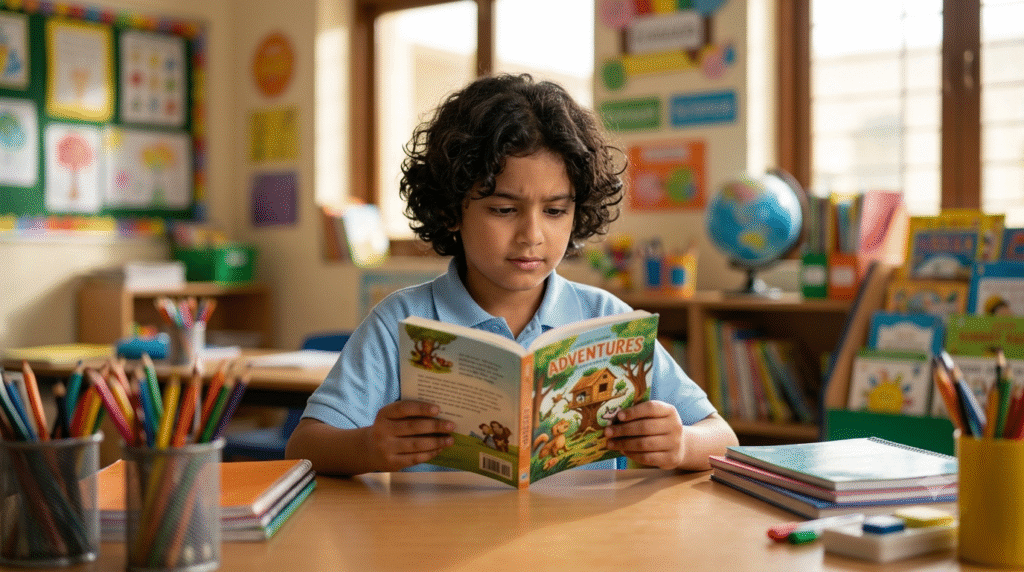
Think about how you read as an adult. You don’t just stare at black ink on a page. Your brain is constantly guessing what will happen next, visualizing the scenes, and asking questions when something feels off. That mental heavy-lifting is exactly what comprehension strategies for 3rd grade are all about.
The National Reading Panel reports that children who read smoothly but fail basic comprehension quizzes aren’t lacking tracking skills—they are just missing the right thinking habits. In kindergarten and first grade, reading is mostly about decoding sounds and building a basic vocabulary. In third grade, everything gets thrown off balance:
- Longer, Tricky Sentences: Paragraphs get denser and sentences wind across multiple clauses, which can wear out a kid’s working memory.
- Deeper Content: Instead of just simple stories, kids face complex nonfiction articles packed with technical vocabulary.
- Reading Between the Lines: Plots stop being totally literal. Instead of “the boy lost his dog,” a book might deal with heavier, unstated themes like loneliness or moving on.
If a child is still using all their brainpower just to sound out individual words, they have zero mental energy left to actually understand the plot. They close the book at the end of a chapter and remember absolutely nothing.
Why Do So Many Third Graders Hit a Reading Wall?
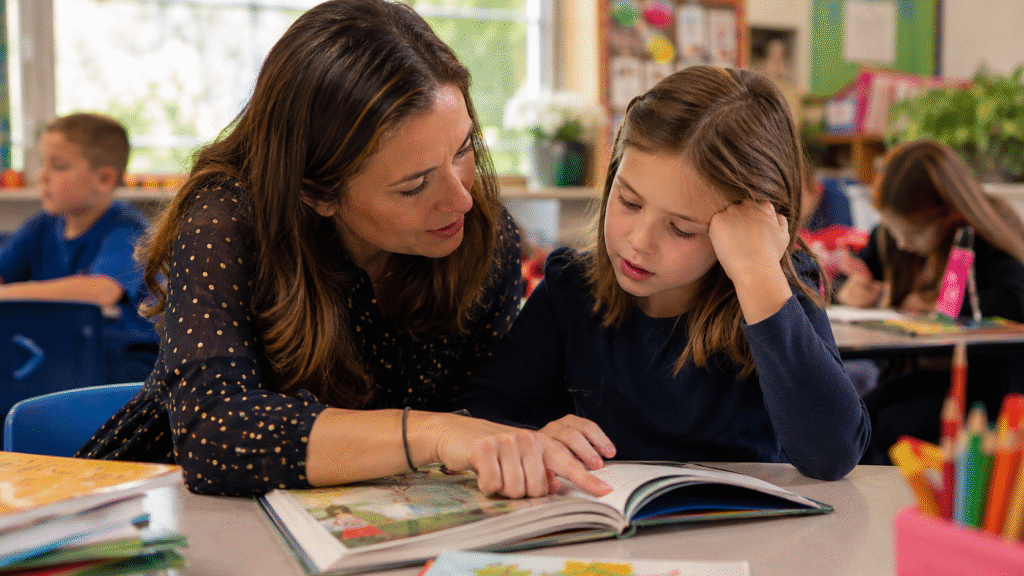
When a teacher or literacy coach sits down with a struggling student, they usually find that the breakdown is caused by one of three common blind spots:
1. The “Word Caller” Trap
These kids sound like absolute pros when reading out loud. They have excellent rhythm and clear expressions. But inside their minds, they are just calling out words one by one instead of following a story. They treat a chapter book like a long, random grocery list.
2. An Empty Background Knowledge Tank
Imagine trying to read a highly technical paper on quantum physics. Even if you can pronounce all the jargon, you won’t understand it without background context. It’s the same for a nine-year-old. If a history text talks about early settlements but a child has no concept of what life looked like before electricity, the information has nowhere to stick.
3. Cruising Right Past Confusion
Good readers naturally catch their own mistakes. If a sentence doesn’t make sense, they stop, re-read, or look for clues. Struggling readers do the exact opposite. They will plow straight through a word they don’t know, completely ignoring the fact that they lost track of the story three paragraphs ago.
The Best Reading Comprehension Strategies for 3rd Grade
So, how do we build these habits without turning reading time into a boring routine? True reading comprehension instruction isn’t about memorizing dictionary definitions; it’s about changing how a child talks to themselves while they read.
1. The “Think Aloud” Technique
If you want a child to monitor their own understanding, you have to show them what an expert reader’s brain sounds like in real time. When you’re reading a book together, pause completely and think out loud:
“Wait a second. The author just said it’s the middle of July but the character is packing a heavy winter coat. That’s strange. I wonder if they’re traveling somewhere cold, or if a huge storm is coming. Let me read the next paragraph to find out.”
This simple habit pulls back the curtain on the invisible work of reading. It proves to kids that reading isn’t a passive chore—it’s an active detective game.
2. Picture Walks and Group Charts
Before starting a new chapter, don’t just jump into paragraph one. Take a minute to flip through the pages. Look at the illustrations, read the subheadings, and check out any maps or captions. If it’s an informational text, look at the table of contents first.
Many elementary teachers find that making a simple, hand-drawn chart on the board works significantly better than buying commercial posters. Brainstorming a quick map together sets a clear goal before the book even opens:
Plaintext
               Our Reading Detective Map
  ┌──────────────────────┬──────────────────────┐
  │   Before Reading     │    During Reading    │
  │ • Check illustrations│ • Spot unknown words │
  │ • Scan the headings  │ • Build mental pictures│
  └──────────────────────┴──────────────────────┘
3. Hunting for Context Clues
When a child hits a massive word like gargantuan, don’t just give them the definition or tell them to grab a dictionary. Show them how to use the clues left behind by the writer. Cover the hard word with your finger and ask: “What basic word could we pop into this blank to make the sentence make sense?” This keeps their reading momentum going and builds true independence.
4. Making Logical Inferences
Writers almost never tell you every single detail directly. If a character walks through the front door shivering, soaking wet, holding an inside-out umbrella, the text doesn’t need to explicitly say, “It was pouring rain outside.”
Help your students use this simple formula to read between the lines:
What the book says+What I already know=An Inference
Whenever a child makes a claim about a character’s feelings or choices, always follow up with: “That’s a neat theory, but what exact text evidence showed you that?”
To help students structure these evidence-based answers cleanly, you can also introduce structured framework guides like What Is the RACE Strategy to teach them how to cite their proof perfectly.
5. Setting a “Word Budget” Summary
Summarizing is a massive hurdle for nine-year-olds. Ask a third grader what a book was about, and they will either give you a 20-minute, play-by-play recap of every single sentence, or they’ll just shrug and tell you the ending.
Try using a game called the Word Budget. Hand them an index card and say: “You have a strict 25-word budget to summarize this whole chapter. If you use 26 words, you’re over budget and have to edit something out.” This forces them to separate the primary main idea from minor, extra details.
MTSS Intervention Strategies for 3rd Grade Reading Comprehension
When a student falls noticeably behind grade-level reading goals, schools use a framework called MTSS (Multi-Tiered System of Supports). We can’t just give a struggling student a harder book and hope they catch up by magic. Instead, reading instruction needs to be broken down into specific tiers based on what the child needs.
Plaintext
       ┌─────────────────────────────────────────────────────────┐
       │ TIER 3: Intensive Support (Daily 1:1 Targeted Practice)  │
       ├─────────────────────────────────────────────────────────┤
       │ TIER 2: Strategic Intervention (Small-Group Focus Teams)│
       ├─────────────────────────────────────────────────────────┤
       │ TIER 1: Universal Core Classroom Instruction (All Kids) │
       └─────────────────────────────────────────────────────────┘
Tier 1: Universal Core Classroom Instruction
This is the baseline daily reading time for every single student in the class. It includes whole-group reading workshops, aloud text modeling, and open discussions built entirely on the principles of the Science of Reading.
Tier 2: Strategic Small-Group Support
When routine reading checks show that a few kids are struggling with a specific skill, they spend time in a Tier 2 intervention group. These small teams meet for about 20 minutes, three or four times a week.
- How to set it up: Skip the generic worksheets. Instead, hand them simple, highly visual graphic organizers (like a basic cause-and-effect flowchart) paired with easy sentence frames: “Because the main character decided to ____, the direct result was ____.”
Tier 3: Intensive Individualized Interventions
For kids facing major reading roadblocks, Tier 3 offers daily, one-on-one or two-on-one targeted practice. Here, a literacy coach or reading specialist breaks every assignment down into tiny steps, blending targeted fluency work with sentence-by-sentence check-ins to make sure the student doesn’t lose the thread of the text.
Comprehension Strategies Lesson Plans for 3rd Grade
A very common mistake in early literacy is bouncing from one strategy to another every single day. True comprehension mastery takes time, focus, and a week-long routine using the gradual release model: I Do (Teacher Models), We Do (Guided Practice), You Do (Independent Mastery).
Here is what a highly effective, five-day lesson plan focusing on text-based inferences looks like in a real, functioning classroom:
1. Monday: Explicit Teacher Strategy Walkthrough (I Do)
Focus: Active Modeling
1.Monday: Explicit Teacher Strategy Walkthrough (I Do):Focus: Active Modeling.
Introduce the concept of inferencing using a fresh classroom anchor chart. Read a short mentor story out loud to the class, stopping at a tricky paragraph to model your own internal thinking: “The book says the boy’s hands are shaking and his stomach is in knots right before the school play. The author didn’t say he was scared, but I can infer it from those physical body clues.”
2. Tuesday: Guided Team Practice (We Do)
Focus: Partner Collaboration
2.Tuesday: Guided Team Practice (We Do):Focus: Partner Collaboration.
Hand student pairs a short printout of a brand-new narrative text. Have them work together to highlight explicit clues in yellow and write down their own thoughts or background knowledge directly in the margins. Walk around the room to help pairs connect these elements together.
3. Wednesday: Interactive Differentiated Focus Work
Focus: Tailored Small Groups
3.Wednesday: Interactive Differentiated Focus Work:Focus: Tailored Small Groups.
Run targeted small-group reading sessions based on how the kids did on Tuesday. While advanced readers analyze deeper themes on their own, pull your struggling readers to your table to practice making simple inferences using basic graphic organizers and sentence starters.
4. Thursday: Solo Student Execution (You Do)
Focus: Independent Application
4.Thursday: Solo Student Execution (You Do):Focus: Independent Application.
Students tackle a brand-new, independent-level passage entirely on their own. They must fill out a simple inference matrix and write a short, cohesive paragraph explaining their answers with zero help from teachers or peers.
5. Friday: Quick Exit Tickets & Next Steps
Focus: Formative Assessment
5.Friday: Quick Exit Tickets & Next Steps:Focus: Formative Assessment.
Collect independent student work and check a quick exit ticket question to measure total mastery. Use this quick data to see who still needs help and plan out your small-group reading focus paths for the following week.
Classroom-Tested Activities That Turn Reading into a Game
If you want kids to actually look forward to reading time, throw out the dry question sheets and turn your literacy block into a dynamic group challenge. You can easily pair these ideas with classic interactive guides like 25 Children’s Team Building Games to get the whole room collaborating.
- The Reading Detective Agency: Give your students cheap plastic magnifying glasses and a few sticky notes. Tell them they are secret agents hunting down hidden text evidence to solve a mystery question you’ve written up on the whiteboard.
- Story Cubes: Label large foam or wooden dice with narrative markers like Big Problem, Character Clue, Setting Change, or Unsuspected Twist. After reading a chapter together, roll the dice and have the class discuss whichever topic lands face up.
- Venn Diagram Floor Battles: When comparing two different informational texts (like two animal species or historical eras), lay down giant intersecting circles on the classroom floor using painter’s tape. Give kids fact strips and have them physically place them in the correct overlapping sections.
Watch Out For These Common Mistakes
- For Parents at Home: Don’t turn your nightly reading time into an intense interrogation session. If you stop and grill your child after every single sentence, you will quickly kill their love for books. Keep the conversations relaxed, friendly, and natural.
- For Teachers in the Classroom: Avoid using reading materials that are way too difficult. If a student is constantly tripping over words, their brain is completely maxed out on phonics and decoding letters. They simply cannot practice advanced comprehension skills on books that are far above their actual reading level.
Frequently Asked Questions (FAQ)
My child reads out loud beautifully but can’t answer questions afterward. Is that normal?
It’s incredibly common, and literacy experts call it “word calling.” It means the child is using all of their working memory on pronunciation and tracking lines, leaving no room to build mental pictures of the story. Try breaking down chapters into single paragraphs, stopping after each one to ask: “What did you just see in your head?”
What are the 7 core comprehension strategies recommended by literacy coaches?
The core strategies supported by the International Literacy Association include: monitoring comprehension, using graphic organizers, answering questions, generating internal questions, recognizing story structures, summarizing texts, and making inferences.
How long should a third grader read independently every single day?
Most literacy coaches recommend between 15 and 20 minutes of daily independent reading. However, the quality of their attention matters far more than the timer. A focused, 10-minute session followed by a quick, fun chat does much more for a kid’s comprehension skills than 30 minutes of distracted page-turning.
What is the single best way to help a struggling third-grade reader at home?
Model the behavior yourself. Read together, talk about your own favorite books, and let them hear you fix your own mistakes when you misread a recipe or a road sign. When kids see that reading is an active, ongoing thinking process rather than a race to the end of the page, they start approaching books with a completely different mindset.