
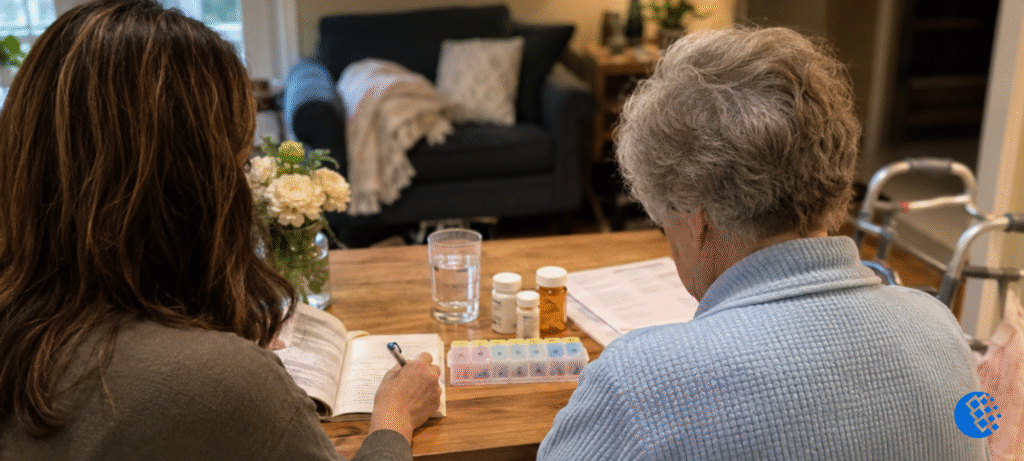
Most families treat hospital discharge as the finish line. Paperwork gets signed, a wheelchair rolls to the curb, and everyone exhales. The harder stretch starts at the front door. Nearly one in five older adults returns to the hospital within 30 days of leaving it, and researchers keep pointing to the same culprits: medication mix-ups, missed follow-up appointments, and nobody at home trained to spot the early warning signs of a setback.
Where Recoveries Go Wrong
A senior recovering from pneumonia or a hip replacement often leaves the hospital with new prescriptions, new dietary restrictions, and instructions written for clinicians rather than families. Add exhaustion from the hospital stay itself, and details slip. A skipped blood thinner or an unnoticed low-grade fever can undo weeks of treatment in a single weekend. The gap is rarely a lack of love or effort from relatives. It is a lack of structure during the most fragile stretch of recovery.
What a Real Discharge Plan Covers
This is where structured discharge planning services for post-hospital care earn their keep. A solid plan begins before the patient leaves the building and accounts for:
- Medication reconciliation, so old and new prescriptions do not conflict
- Follow-up appointments booked with transportation arranged in advance
- A home safety review for fall risks like loose rugs and dim hallways
- A named point of contact for the questions that surface at 9 p.m. on a Saturday
Written out like this, none of it looks complicated. The trouble is that hospitals discharge patients on tight timelines, and adult children juggling their own jobs and households are rarely positioned to catch what a nurse would catch.
The Case for a Trained Set of Eyes at Home
In-home caregivers close that gap. Alongside help with bathing, meals, and mobility, an experienced caregiver notices the small changes that matter: swelling in the ankles, confusion that was not there yesterday, an appetite that suddenly disappears. Caught early, those signals usually mean a phone call to a doctor rather than a ride in an ambulance.
Some home care providers have pushed the model further by pairing hand-selected caregivers with monitoring technology that flags shifts in health conditions and daily behavior. That combination of human attention and early detection has been shown to reduce avoidable hospital trips, particularly for seniors managing chronic conditions after a discharge. The caregiver handles the daily support while the technology catches the patterns no single visit would reveal.
Questions Worth Asking Before Discharge Day
Families can start small. Who reconciles the medications? Who drives to the follow-up visit? Who checks the house for fall hazards, and who answers the phone if something feels off in the middle of the night? If the honest answer to any of these is “nobody yet,” that is the cue to bring in help before the discharge papers are signed, not after the first setback lands everyone back in the emergency room. Recovery at home works well for most seniors. It just has to be planned with the same care the hospital gave the treatment itself.