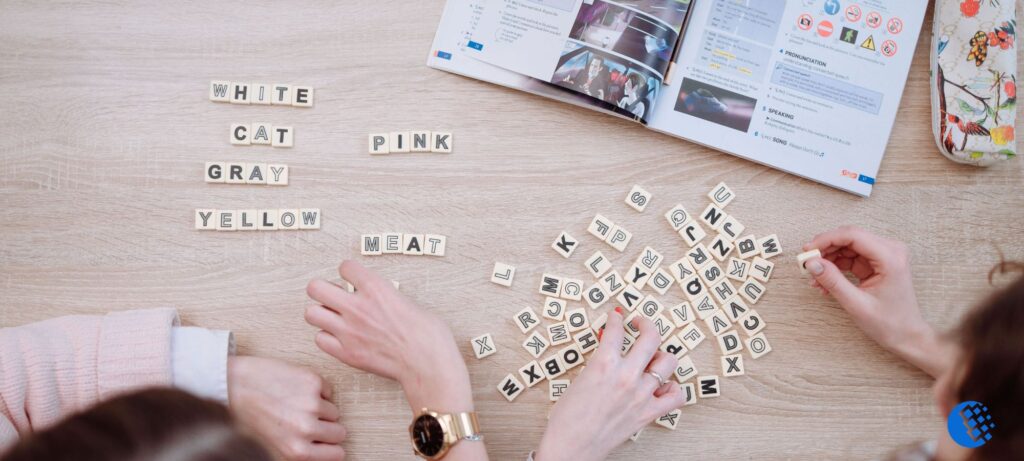
Choosing a homeschool German language curriculum feels harder than it should be, mostly because most parents assume they need to speak German themselves before they can teach it. They do not. With the right audio support, a matched curriculum, and a realistic practice routine, a parent can guide German learning without being fluent. This guide covers the best options by age, what is free versus worth paying for, a closer look at Rosetta Stone specifically, and how to document a real high school credit at home.
Best Homeschool German Language Curriculum at a Glance
| Curriculum | Best For | Age Range | Format | Free or Paid |
|---|---|---|---|---|
| Homeschool Languages | Elementary, hands on learning | 4 to 10 | Physical kit | Paid |
| MUZZY BBC | Younger, screen based learners | Pre-K to 8 | Video and games | Paid |
| Rosetta Stone | Independent, immersion focused learners | 10 and up | Online, self paced | Paid |
| Deutsche Welle | Budget minded, motivated learners | Teens and up | Online | Free |
| SchoolhouseTeachers.com | Structured, self paced study | Middle to high school | Self paced | Paid |
| Well-Trained Mind Academy | Live instruction and interaction | Middle to high school | Live online | Paid |
| Grenzenlos Deutsch | Advanced, self directed students | Teens and up | Self paced | Free |
How to Choose a German Homeschool Curriculum
Picking a homeschool German language curriculum comes down to a handful of honest questions rather than the flashiest product at a homeschool convention.
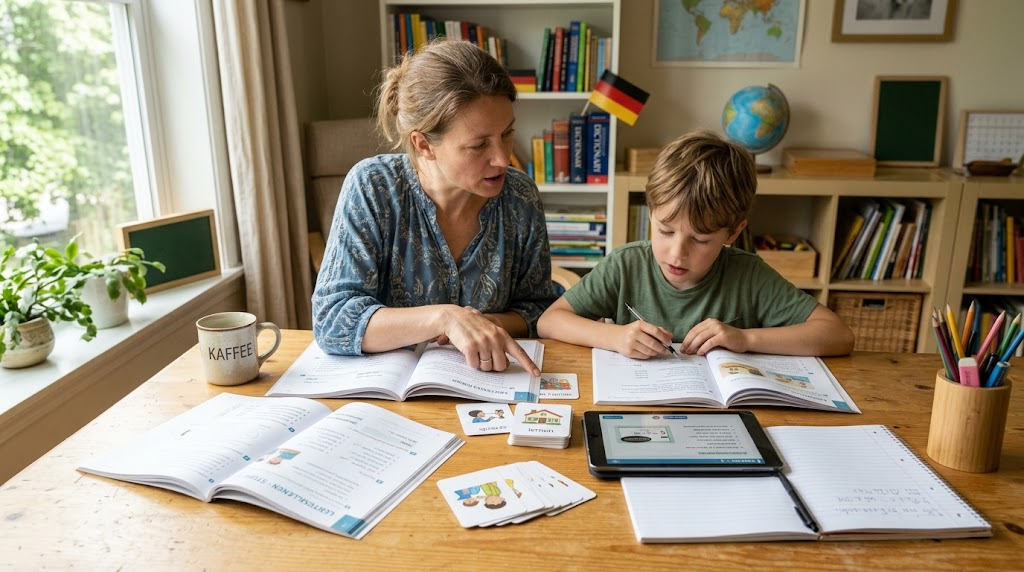
Age. Young children need games, songs, and repetition. Grammar drills at age six mostly kill interest. Middle schoolers can start handling real grammar and short conversations, and high schoolers generally need a course that produces transcript ready documentation, not just vocabulary exposure.
Learning style. A child who learns best by ear will do better with audio heavy programs. A visual or reading focused child may prefer text based courses. Many families end up combining formats rather than picking one.
Parent’s German ability. If you do not speak German, look for curricula built around audio and self contained lessons, so pronunciation comes from a recording rather than from you.
Budget. Free options exist at every level, but they usually require more parent coordination and record keeping than a paid, structured course.
Goals. Conversational fluency, a high school credit, and AP exam preparation are three different targets, and the right curriculum depends on which one matters most this year. Progress tracking tools such as Progress Learning can help keep a running record of lessons completed, which becomes useful later when building a transcript.
What Makes a Good German Homeschool Curriculum?
Regardless of brand, a well rounded program should touch on listening, speaking, reading, writing, pronunciation, vocabulary, grammar, cultural content, review or repetition, some form of assessment too. A curriculum covering only vocabulary flashcards? That’s a supplement, not a full course, no matter how it gets marketed.
Best German Curriculum for Elementary Homeschoolers (Ages 4 to 10)
Elementary age homeschool German language curriculum options work best when they feel like play.
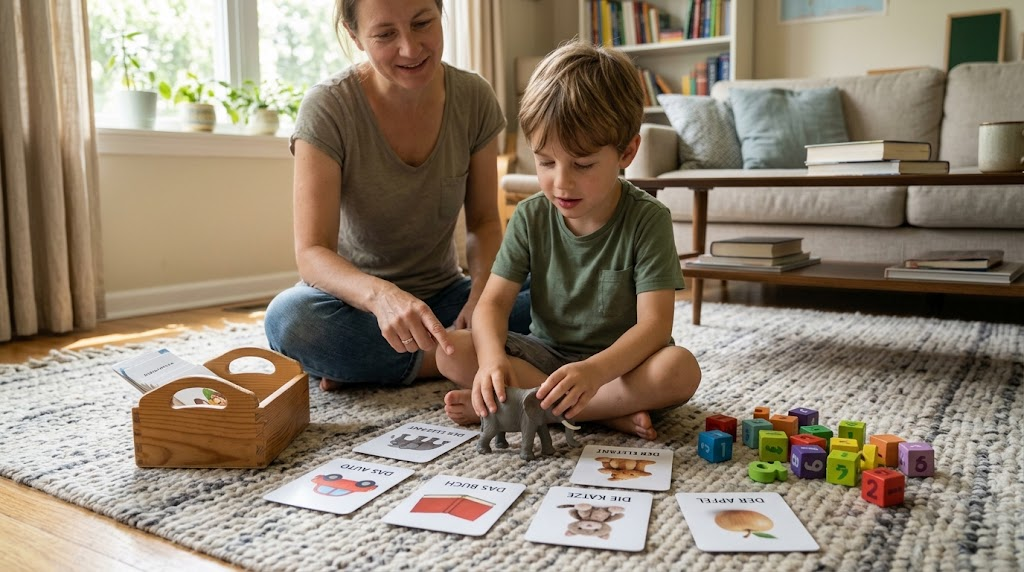
Homeschool Languages Level 1 runs about 125 to 179 dollars. Inside the kit, generally, flashcards covering food, locations, clothing, emotions, colors, actions. A puppet for role play. Mini books for reading practice. Game boards, bingo, matching cards, that sort of thing. And a parent guide with lesson scripts and pronunciation audio built in, so there’s no separate lesson planning required on top of it.
Best for hands on learners and parents with no German background. Not ideal for families who prefer an entirely screen free approach, since some components use audio support.
MUZZY BBC runs roughly 200 dollars a year and delivers movies, songs, and games digitally for pre-K through grade 8, building toward more than 1,200 words and phrases. Best for screen comfortable, song and story driven learners. Not ideal for families avoiding subscription based tools.
Time commitment for elementary. Most families find 15 to 20 minutes per session, three or four days a week, sustainable at this age. Consistency matters more than length here, and progress varies a lot depending on prior exposure and how often lessons actually happen, so treat any timeline as a loose guide rather than a promise.
Best German Curriculum for Middle School
By middle school, a homeschool German language curriculum starts needing more structure and some real grammar.
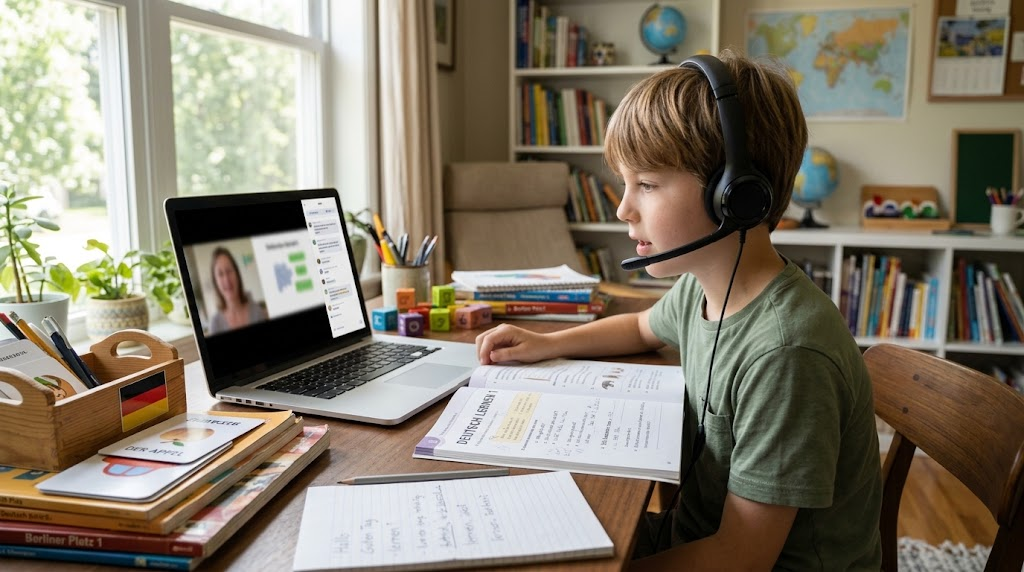
Well-Trained Mind Academy runs live, full year online German classes using standard texts such as Klasse!, generally including a set number of live sessions per week, teacher feedback on assignments, and periodic progress updates sent to parents. Best for kids who need outside accountability and real teacher interaction. Not ideal for families who want full schedule flexibility, since class times are fixed.
SchoolhouseTeachers.com offers a self paced, 36 week German 1 course covering reading, writing, listening, and speaking, included in a broader membership. Best for independent learners and budget conscious families. Not ideal for students who need live interaction to stay motivated.
Time commitment for middle school. A common pattern is 20 to 30 minutes per session, four or five days a week, combining a structured curriculum with a lighter free resource on the remaining days.
Best German Homeschool Curriculum for High School
This is where the stakes rise, since coursework now needs to hold up on a transcript.
A one year German I course could reasonably cover greetings and introductions, pronunciation basics, numbers and time, family and school vocabulary, food and daily routines, present tense verbs, modal verbs, basic case usage, short reading passages, listening practice, simple speaking exercises, some cultural content too, wrapped up with periodic assessments along the way.
German II typically builds on that. Past tense, more complex sentence structure, expanded vocabulary, short authentic texts, longer conversations, short written paragraphs.
German III and AP German. AP German Language and Culture is an exam and course framework maintained by the College Board, generally aimed at students working around the B1 proficiency level. A homeschooler can prepare independently, or through a provider that explicitly builds toward the exam, worth confirming that directly with the provider rather than assuming it’s covered. College credit or placement policies for AP scores vary by institution too, so checking with any college your child’s considering is the safer approach here.
Time commitment for high school. Many families aim for 30 to 45 minutes a day, or two to three live class sessions plus independent practice, four or five days a week.
Transcript considerations. Homeschool credit policies vary by state, umbrella school, and eventual college, so there’s no single universal rule to lean on. Keeping clear documentation, a course description, textbook used, skills covered, assignments, a final grade, makes it a lot easier to explain and defend a German credit later. Even though documentation alone still doesn’t guarantee how a specific institution ends up treating it.
Rosetta Stone German: Is It Right for Your Homeschool?
Rosetta Stone comes up constantly in homeschool German searches, so it earns its own closer look here rather than just a passing mention.
What it generally includes: a core lesson, followed by several shorter modules covering pronunciation, vocabulary, reading, listening, speaking. Native speaker audio runs throughout, plus a progress dashboard showing lesson completion. Some plans include downloadable workbooks, or optional live tutoring add ons. Exact features and pricing shift over time though, so worth checking the current plan details directly on Rosetta Stone’s site before buying in.
Strengths: strong immersion style listening and speaking practice, minimal prep required from the parent, a structure that suits independent learners well.
Limitations: lighter on explicit grammar explanation compared to a textbook based course, and the interface tends to suit older kids better than younger ones.
Best for: independent learners around age 10 and up, families where nobody speaks German, students who respond better to immersion than grammar drills.
Not ideal for: younger elementary children, or students who need explicit grammar rules spelled out rather than absorbed through repetition alone.
How to supplement it: pair Rosetta Stone with a simple grammar workbook, add occasional conversation practice with a tutor, that combination tends to round out its gaps.
On high school credit specifically, Rosetta Stone or any similar program can support a documented course. Purchasing a curriculum doesn’t automatically guarantee a specific school or college will accept it as credit though. That decision still comes down to your documentation, and the policies of whoever’s reviewing the transcript.
Best Free Homeschool German Curriculum
A homeschool German language curriculum does not need to be expensive, though a free resource is not always a complete curriculum on its own. It also helps to know upfront that German is often considered one of the more approachable languages for English speakers, which is part of why so many free structured resources exist for it; our separate breakdown on whether German is easy to learn for an English speaker covers that in more depth.
Free core curriculum: Deutsche Welle’s structured courses and Grenzenlos Deutsch, an open source, grammar forward program that language learning communities such as Reddit’s r/German frequently mention among useful free resources for older, self directed students.
Free supplemental resources: the Goethe-Institut’s learning materials, German children’s shows, and YouTube channels such as Easy German for real world listening practice.
Free daily practice tools: Duolingo for vocabulary habit building, and Mango Languages, which is often available at no cost through a local library card.
German Proficiency Levels A1 to C2 Explained
Most German curricula eventually reference the CEFR scale.
| CEFR Level | General Ability |
|---|---|
| A1 | Beginner |
| A2 | Elementary |
| B1 | Intermediate |
| B2 | Upper intermediate |
| C1 | Advanced |
| C2 | Highly proficient |
A CEFR level and a course number such as German 1 are not the same thing. Providers vary widely in pacing, so a rough progression is more honest than a fixed formula matching a course name to a specific level.
How to Teach German at Home Without Speaking German
This is one of the most common concerns for parents starting a homeschool German language curriculum, and it is a manageable one.
- Choose an audio led curriculum so pronunciation comes from native speaker recordings.
- Let those recordings do the pronunciation modeling rather than guessing yourself.
- Learn alongside your child instead of trying to stay a step ahead.
- Use flashcards and visual vocabulary aids to reinforce what the audio covers. General strategies for how to memorize vocabulary apply well here even outside a German specific app.
- Add a native speaker conversation partner or tutor once basic vocabulary is in place.
- Avoid correcting pronunciation you are not confident about yourself.
- Track progress loosely against CEFR style skills rather than a rigid internal scale.
How to Earn High School Credit for German and Track Progress
Many homeschool families use roughly 120 to 150 hours as a planning benchmark for one credit, though this is a planning benchmark and not a universal legal or college requirement, so checking your own state or program’s guidance matters.
Keeping records doesn’t need to be complicated. A simple log, date, lesson completed, time spent, a note or two on skills practiced, covers most of what’s needed. Add a periodic writing sample. Once your child’s speaking regularly, an occasional short recording too. For a full high school credit, hold onto a course description, the curriculum or textbook used, a skills breakdown across reading, writing, listening, speaking, some record of assignments or assessments, and a final grade.
Homeschool German Curriculum vs Online German Classes
| Curriculum | Online Class |
|---|---|
| Self paced | Scheduled |
| Parent managed | Teacher led |
| Usually lower cost | Usually higher cost |
| Flexible timing | More built in accountability |
| Less built in live speaking | More conversation practice |
A self paced curriculum tends to suit independent students and tighter budgets, while a live class suits students who need outside structure or families who want less day to day involvement.
How Much Does Homeschool German Cost?
| Type | Typical Cost | Best For |
|---|---|---|
| Free resources | 0 dollars | Budget minded, self directed families |
| Apps | Low, often free or a small monthly fee | Daily practice habits |
| Physical curriculum kit | Moderate, one time purchase | Elementary learners |
| Self paced online course | Moderate, often membership based | Independent students |
| Live online course | Higher, often a yearly fee | Students needing structure |
| Tutor plus curriculum | Variable, hourly plus course cost | Speaking focused families |
Pricing changes by provider, enrollment period, and location, so it is worth checking each program’s current page before budgeting a full year.
How to Build a Hybrid German Homeschool
Combining a core curriculum with lighter free resources is common and works well for most families. A workable weekly rhythm looks something like a core curriculum lesson early in the week, a vocabulary app session using tools similar to the ones covered in our look at language learning apps, a grammar and reading day, a listening focused day, and a conversation session with a tutor or partner, with a German movie, song, or story left for the weekend.
How to Add German Speaking Practice at Home
Speaking is usually the hardest skill to cover without outside help. Options include a live tutor through a platform like iTalki or Preply, an online German class with a conversation component, a language exchange partner, connecting with a German speaking family or local community group, immersive media, read aloud practice, and shadowing audio recordings by repeating along with a native speaker.
Common Experiences Homeschool Parents Report
Patterns that show up often in homeschool discussions, without attaching them to specific individuals, include younger children responding well to songs and games rather than formal grammar, apps working better as a daily supplement than as a full curriculum, speaking practice being the piece most families end up adding later rather than planning for upfront, and documentation feeling much easier when parents start keeping records from the first lesson instead of trying to reconstruct a year of work afterward.
Common Mistakes Homeschool Parents Make With German
- Treating an app like Duolingo as a full curriculum instead of a supplement.
- Skipping speaking practice because it feels uncomfortable for a non German speaking parent.
- Starting a program above the child’s current reading level.
- Waiting until junior year to start documenting coursework for a transcript.
For families exploring different homeschooling formats generally, it can help to compare structured versus more flexible approaches before deciding how tightly to structure the German portion of the day.
Next Steps
- Pick one age appropriate core curriculum from the sections above.
- Add one free resource, such as Duolingo or Deutsche Welle, as a daily supplement.
- Set a realistic practice schedule based on the pacing guidance for your child’s age.
- Start a simple tracking log from lesson one, not partway through the year.
- Reassess after eight to twelve weeks and adjust the format if your child is disengaged.
FAQs
What is the best homeschool German language curriculum for beginners?
For younger kids, a hands on kit such as Homeschool Languages is a low stress starting point. For older beginners, Deutsche Welle’s free A1 course covers similar ground without the cost.
Do I need to speak German to homeschool it?
No. Audio based and self guided curricula are built specifically for parents with no German background, since your role is mostly keeping the routine consistent.
Is Rosetta Stone good for homeschool German?
It works well for independent learners around age 10 and up who benefit from immersion style listening and speaking practice, though it is worth pairing with a grammar resource and some conversation practice for a more complete course.
What is the best German homeschool curriculum for high school?
Well-Trained Mind Academy suits families wanting live instruction, while SchoolhouseTeachers.com works well for self paced, budget conscious high schoolers who still need a documentable course.
What is the best free German homeschool curriculum?
Deutsche Welle and Grenzenlos Deutsch are the strongest free options for structured learning, with Duolingo and Mango Languages useful as daily supplements.
Can I give high school credit for German learned at home?
Yes, though policies vary by state and program. Keeping a course description, textbook list, assignments, and a final grade makes documenting the credit far easier.
How many years of German should a homeschool student take?
Most colleges look for two to three years of a foreign language, so many families plan German I through III across middle and high school.
How much time should my child spend on German each day?
Roughly 15 to 20 minutes for elementary, 20 to 30 minutes for middle school, and 30 to 45 minutes for high school, though actual progress depends heavily on consistency and prior exposure.
Is Duolingo enough on its own?
Not usually past the elementary years. It works well as a daily habit builder but is thin on grammar and speaking practice, so pairing it with a structured curriculum tends to work better.
Final Thoughts
A homeschool German language curriculum works best when it matches where your child actually is, not where a catalog description assumes they are. As a rough decision guide, elementary students generally do best with a play based, visual curriculum, middle schoolers benefit from a structured course paired with some conversation practice, high schoolers need a transcript oriented curriculum with speaking practice and clear documentation, budget conscious families can lean on a free core resource with a paid supplement added only where needed, and non German speaking parents should prioritize audio led programs paired with an outside tutor. Parents newer to homeschooling overall may benefit from general guidance on becoming a homeschool teacher before committing to a full year plan.
For official reference material, Deutsche Welle’s Learn German platform, the Goethe-Institut resource library, and the College Board’s AP German Language and Culture page are all worth checking directly for current course details and policies before enrolling.