
A surprising number of first-time homeschool parents assume they need some kind of teaching license before they’re allowed to educate their own children. By the time they’ve spent an evening searching Google, they’re usually more confused than when they started — one site says certification matters, another says it doesn’t, and the state’s own website reads like it was written by a lawyer in a hurry. The reality is simpler than all that noise suggests. In most states, parents can legally homeschool without becoming licensed teachers, and figuring out how to become a homeschool teacher mostly comes down to knowing your state’s paperwork, picking a teaching style that fits your kid, and staying reasonably organized as the year goes on. People hoping to teach other families’ children, on the other hand, are really on a different path — closer to freelancing than parenting.
This guide covers both.
What Is a Homeschool Teacher, Exactly?
Honestly, the term gets thrown around loosely, and that’s half of what makes this confusing for people just starting out.
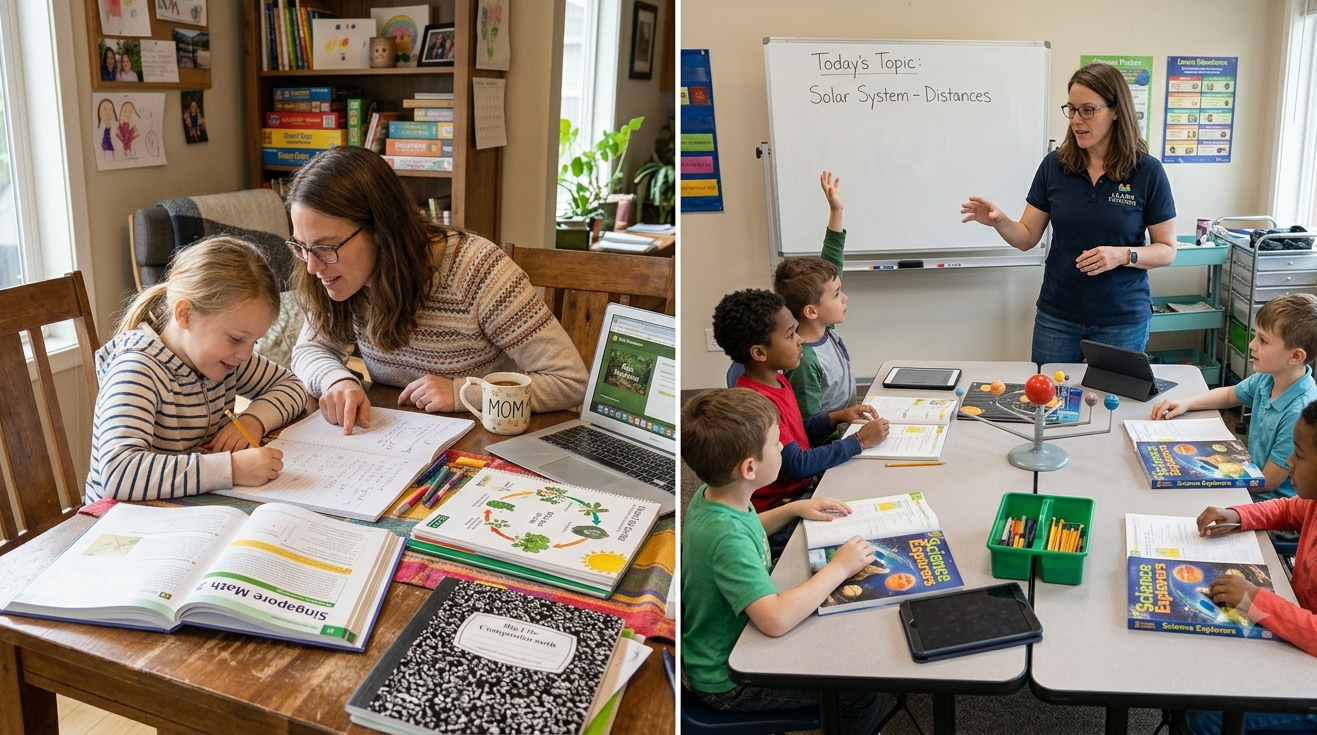
There’s the parent who’s decided to take their own kid’s education into their own hands — no classroom, no lesson plans handed down from a district office, no certification required in most places. Just you, your child, and whatever curriculum ends up sticking. Then there’s the hired homeschool teacher, sometimes called a learning coach, who gets paid to teach other people’s kids, either one-on-one or in a small co-op setting. That person functions more like a private tutor than a parent, and families bring them in specifically for subject expertise or structure they don’t have time to build themselves.
Both get called “homeschool teacher.” The steps to get there aren’t the same, though, so it’s worth being clear early on which one you’re actually asking about.
Can Anyone Become a Homeschool Teacher?
If you’ve never taught before, this is probably the question sitting in the back of your mind. Most parents assume they need a teaching degree. They don’t — not in any US state, not for their own children.
What actually varies is how much paperwork your state wants. Some ask for almost nothing beyond a simple notice that you’re homeschooling. Others expect a bit more — proof of a high school diploma, or an approved curriculum outline before you even start. Where people genuinely get tripped up is with the related phrase how to become a certified homeschool teacher. Certification isn’t a legal requirement for parents anywhere in the country. It only becomes relevant once you’re trying to get hired as a homeschool teacher — some families specifically look for tutors with a teaching credential, and it can open doors an uncertified tutor won’t get through. So it’s optional. Just not meaningless.
Getting Started: What the First Few Months Actually Look Like
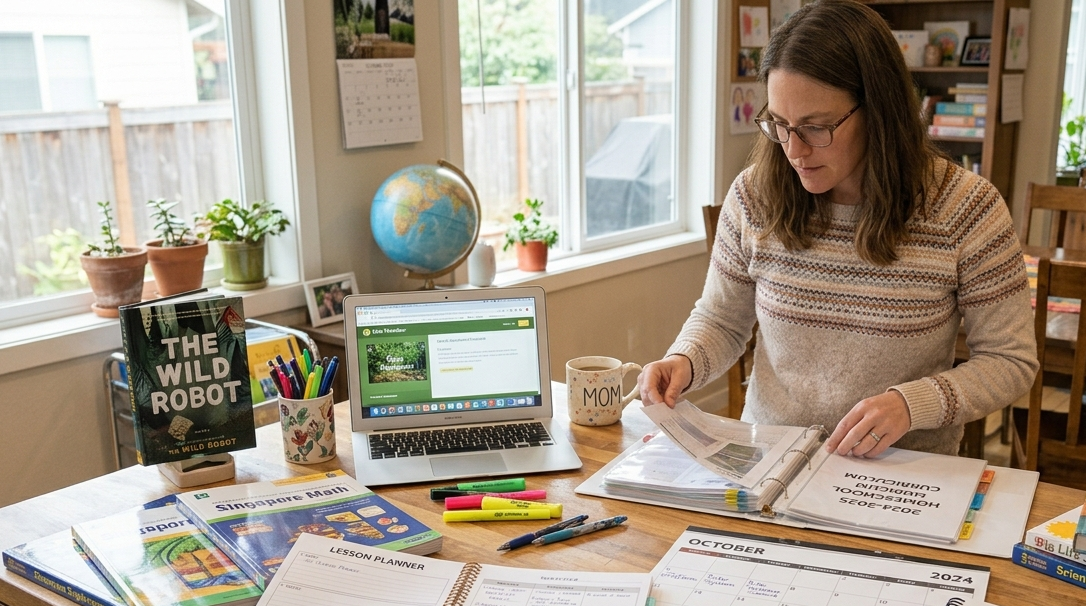
Most people think buying curriculum is the first move. It really isn’t. Before spending a dollar, figure out what your state actually requires — some states ask for almost nothing, others want annual evaluations, portfolios, or notarized letters of intent. Skipping this step is exactly how families end up out of compliance without realizing it until someone asks a question they can’t answer. HSLDA (the Home School Legal Defense Association) tracks these rules state by state and is worth a look if your own state’s website reads like legal soup.
Once the legal side is sorted, curriculum comes next, and this is where a lot of families overspend before they’ve even figured out what works. Full boxed curriculums, online programs, library-based “living books” approaches — there’s no single right answer, and it’s genuinely fine to try one thing for a semester and swap if your kid hates it. If you want a sense of what the online options actually look like day-to-day, this breakdown of Online Homeschool Programs walks through several that suit different budgets and learning styles.
From there it’s mostly rhythm. Most states expect somewhere around 175 to 180 instructional days a year — roughly what public schools already run — but daily hours for younger kids tend to land around 3 to 4, since one-on-one instruction moves a lot faster than a classroom of 25 does. A dedicated room isn’t necessary either. A cleared-off corner of the dining table works fine as long as it’s consistent; kids do better with a defined “this is school time” spot than bouncing between the couch and the kitchen counter every morning.
Records are the part that gets skipped more than it should. Even in loosely regulated states, a simple log of attendance and progress protects you later — say, if a child transfers back into public school or applies somewhere that wants proof of prior learning. A lot of families end up leaning on some kind of digital tracking system for this instead of a paper folder, mostly because it’s a lot less painful to search back through months of records than to dig through a shoebox. If you’re on the fence about whether that kind of setup is worth building, this piece on the Benefits of Student Management System for Schools covers what these tools actually solve — and it applies outside a traditional school setting too.
Testing and check-ins vary by state; some mandate it at certain grades, others leave it entirely up to you. Even without a legal push, checking in periodically catches gaps before they snowball into something bigger. And on socialization — it comes up in nearly every conversation about homeschooling, usually from someone who’s never actually done it. In practice, families solve this fast through co-ops, park days, and local homeschool associations. Worth joining one just for the field trips, honestly.
If I had to prioritize just one thing for someone brand new to this, it’d be understanding state law before anything else. Curriculum can be swapped halfway through the year with zero consequence. Legal paperwork can’t.
Do You Need Certification?
For most parents teaching their own kids, no. A high school diploma is occasionally asked for, but a teaching credential essentially never is.
It’s a different story if you’re aiming to get hired. Private tutors don’t legally need certification either, but it helps with credibility and pricing. Some private school programs prefer it, and platforms that connect families with tutors will often let certified teachers charge more. If certification interests you and you’re leaning toward paid tutoring work, your state’s Department of Education office is the right place to check current pathways — those rules shift more often than most blog posts manage to keep up with.
Teaching Someone Else’s Child Is a Different Job Entirely
That’s really the honest way to put it. Homeschooling your own kid and getting hired to teach someone else’s aren’t the same skill set, even though both get filed under “homeschool teacher.”
Start by building actual experience — tutoring, substitute teaching, after-school program work, anything that shows you can manage a child’s learning without a school system doing the heavy lifting for you. From there, put together a portfolio around whatever you’re strongest in, whether that’s math, reading, science, or a language. Families hiring private homeschool teachers want specifics, not a vague “good with kids” pitch.
Pricing takes a while to get right. New private homeschool teachers almost always undercharge at first, then adjust once they realize how much prep work goes into even a single subject. Networking inside homeschool co-ops and registering with established platforms — Homeschool Connections is one example — tends to bring in steadier work than cold outreach ever does.
State Requirements
Rules genuinely differ enough between states that a one-size answer doesn’t hold up, so here are three of the most commonly searched.
How to Become a Homeschool Teacher in California
California parents typically file under a Private School Affidavit, which essentially registers your home as a small private school. No credential needed for this route — it’s mostly paperwork, filed once a year.
How to Become a Homeschool Teacher in Florida
Florida asks for a notice of intent filed with your local school district. From there, families keep a portfolio of work and go through an annual evaluation, either standardized testing or a review by a certified teacher.
How to Become a Homeschool Teacher in Georgia
Georgia requires a declaration of intent each year, along with attendance records and progress reports depending on grade level. Not overly burdensome, but it does need renewing annually rather than filed once and forgotten about.
Double-check with your specific state education department before the school year starts — it’s a ten-minute task and rules do shift.
What It Actually Takes
Patience, unsurprisingly, tops the list. But there’s more underneath that. You’re the teacher, principal, and record-keeper all at once now, so organization matters more than most new parents expect. Flexibility too — when a lesson plan just isn’t landing, being able to pivot mid-week without panic makes a real difference. Communication with your kid about what’s expected, and honestly, the ability to plan a week’s worth of material without burning out by Wednesday. That last one takes practice.
Teaching Methods Worth Knowing About
There’s no single “correct” approach, and a lot of families end up blending a few once they figure out what actually works for their kid.
Traditional methods — textbooks, workbooks, structured lessons — suit families who want something predictable. Charlotte Mason leans into nature study and short, focused lessons, using living books instead of textbooks. Montessori is more child-led and hands-on. Classical ties grammar, logic, and rhetoric stages to age and development. Unit studies pull one topic across multiple subjects at once, while unschooling drops formal structure almost entirely in favor of following the child’s interests. Project-based learning sits somewhere in between, building long-term projects that drive the curriculum instead of a textbook doing it.
Trying one for a semester before committing long-term saves a lot of frustration — and a lot of unused curriculum sitting on a shelf.
Curriculum Options People Actually Use
Time4Learning works well for families wanting something fully online and self-paced. The Good and the Beautiful leans literature-based with a Christian framework. Abeka feels more like a traditional classroom transplanted into the home. Sonlight is reading-heavy, built for families who want literature driving the curriculum rather than worksheets. And Khan Academy, free and widely used, works best as a math and science supplement rather than a full curriculum on its own.
The Trade-Offs Nobody Mentions Upfront
Flexibility is the obvious win — no rigid bell schedule, curriculum paced to your actual kid instead of a room of 25. A lot of parents also mention the closer bond that comes from those learning years together, which isn’t something you can really put a number on.
But it costs something too. It’s a real daily time commitment, socialization takes intentional effort rather than happening automatically in a hallway between classes, and the parent carries full responsibility when there’s a gap in learning — there’s no other teacher to catch it. State paperwork varies and needs tracking, which some families find genuinely tedious no matter how simple the state’s actual requirement is.
Where Beginners Usually Trip Up
Not following state laws is the single most avoidable issue, and the one with actual consequences attached. Right behind it: trying to recreate public school at home, six hours of desk work included — one-on-one instruction almost never needs that much seat time, and forcing it usually backfires.
Skipping records is easy to regret later, usually right when proof of learning is suddenly needed and nobody kept any. Ignoring socialization isn’t a legal problem, but it’s worth building in anyway rather than assuming it’ll sort itself out. And here’s one that surprises new parents every year — plenty of them spend hundreds of dollars on curriculum before even checking their state’s paperwork, only to replace half of it six months later because it never suited their kid to begin with. One curriculum used consistently beats three sitting unopened on a shelf, every time.
Burnout is real too, and it hits homeschool parents the same way it hits classroom teachers. Taking breaks isn’t optional just because there’s no summer vacation built into the calendar automatically.
Frequently Asked Questions
How do I become a homeschool teacher?
Check your state’s homeschooling laws first, choose a curriculum and teaching method that fits your child, set a realistic daily schedule, and keep basic attendance and progress records. If you’re aiming to teach other families’ kids rather than your own, build tutoring experience and a subject-specific portfolio instead.
Can anyone homeschool?
In nearly every US state, yes — homeschooling your own child doesn’t require a teaching degree or certification. Requirements range from a simple notification to more detailed annual reporting, depending on where you live.
Do I need a teaching degree?
Not to teach your own children. A degree becomes more relevant if you’re pursuing paid tutoring or private homeschool teaching work, where it can improve your credibility and pay rate.
Can I get paid as a homeschool teacher?
Yes — private homeschool teachers and tutors are hired by families regularly, particularly for specific subjects like math, science, or foreign languages. Pay varies based on experience, certification, and location.
Is homeschooling legal?
Homeschooling is legal in all 50 US states, though the specific rules — notification requirements, testing, portfolios — differ significantly from state to state.
Do homeschool teachers need certification?
Parents teaching their own children do not need certification in any US state. Certification is optional for private tutors but can make you more competitive and allow for higher rates.
Which state has the easiest homeschool laws?
States with minimal reporting requirements, often just a notice of intent with no testing or portfolio review, are generally considered the least restrictive — though this changes periodically as legislation is updated.
How much does a private homeschool teacher earn?
Rates vary widely based on subject, experience, certification, and region — informal tutoring tends to pay less than structured, credentialed private teaching work.
Final Thoughts
However you’re approaching this — teaching your own child at the kitchen table or building a career as a private homeschool teacher — the fundamentals don’t really change. Know your state’s rules, pick a method that actually fits your family or your students, and keep decent records as you go. Once those three pieces are in place, most of the anxiety around how to become a homeschool teacher tends to sort itself out through actually doing it, not through more research. Before you finalize anything, it’s still worth checking your state’s education department directly, since requirements do get updated more often than people expect.