
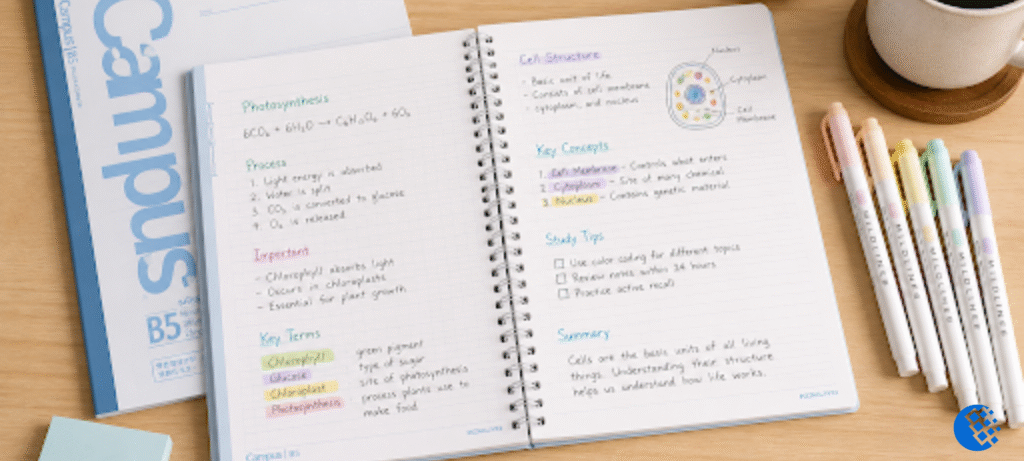
College students collect a huge amount of information every week: lecture slides, textbook chapters, assignment instructions, tutorial notes, research findings, and exam reminders. The problem is rarely a lack of material. More often, it is that everything starts to look equally important when revision time arrives.
A color-coded note-taking system can help solve that problem. Used well, color does not make notes prettier for the sake of it. It gives information a clear hierarchy, so you can quickly spot definitions, examples, formulas, and topics that need another review.
The goal is not to create perfect-looking pages. It is to create a repeatable system that makes studying easier when you are tired, busy, or facing an exam deadline.
Why More Highlighting Does Not Always Mean Better Notes
Traditional fluorescent highlighters are a familiar part of student life. They are useful for calling attention to a sentence or a heading, but problems appear when every page becomes covered in neon yellow, green, and orange.
When too much text is highlighted, very little actually stands out. A page can also start to feel visually crowded, especially during long study sessions. Some students simply prefer a calmer visual contrast that lets them separate categories without making every line compete for attention.
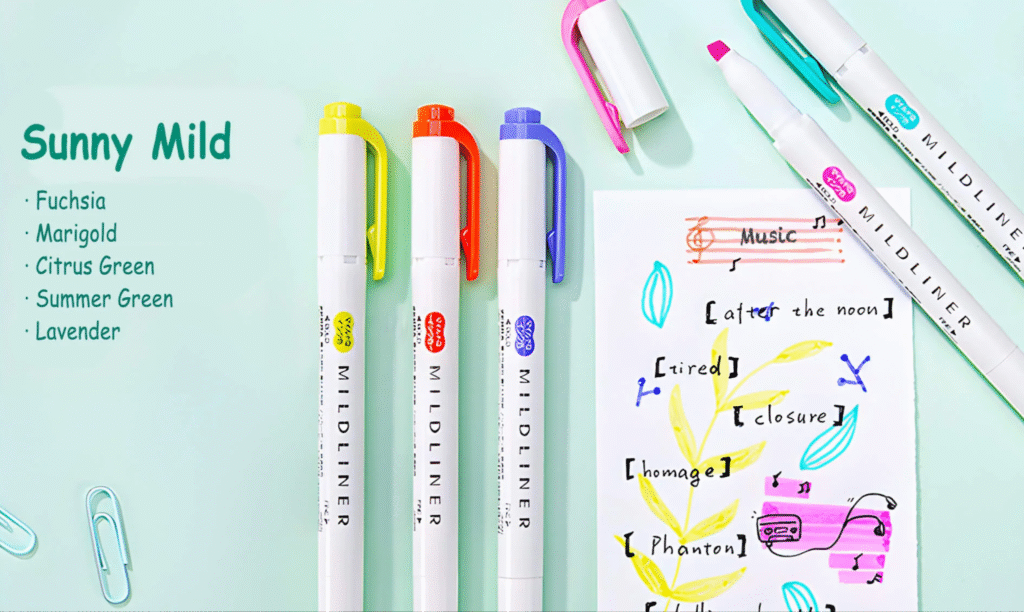
That is where softer colors can be useful. A soft-colored Zebra Mildliner highlighter can help students build a visible color system while keeping pages easier to scan. The important part is not the brand or the number of pens you own; it is giving each color one clear job and using it consistently.
Start With a Simple Four-Color System
A practical system should be easy to remember. Four categories are usually enough for most college subjects:
- Color one: core definitions and vocabulary
Use this for concepts you may need to explain in an exam, such as key theories, technical terms, or legal principles. - Color two: facts, formulas, and evidence
Use it for dates, equations, statistics, research findings, or quotations that support an argument. - Color three: examples and explanations
Highlight a lecturer’s example, a case study, or a short explanation that makes a difficult idea easier to understand. - Color four: action items for revision
Reserve this for material that needs more work: a confusing topic, a common mistake, a likely exam question, or something your professor emphasized.
The system works because each color answers a different question. Is this a definition? Is this evidence? Is this an example? Or is this something I need to revisit?
You do not need to use every color on every page. A chemistry page may contain more formulas and problem-solving notes, while a history page may rely more heavily on definitions, dates, and examples. The categories stay the same, but their use changes with the subject.
How to Use the Method During a Real Week of Study
The most effective note-taking systems fit into your existing routine. They should not turn every lecture into an art project.
During class: capture the information first
Focus on listening and writing. Use a normal pen or laptop notes to record the main ideas, and make quick symbols when a professor signals something important. You might add a small star beside a likely exam topic or a question mark beside a point you do not understand.
Avoid stopping to color-code every sentence while the lecture is moving. The first goal is to capture the information accurately.
After class: organize for 10 to 15 minutes
Soon after the lecture, review the page while the lesson is still fresh. Add your color categories, fill in missing context, and turn unclear sections into short questions.
For example, instead of only marking “cognitive dissonance” as a key term, write a small question in the margin: “What is a real-life example of this theory?” That gives you something active to answer during revision.
At the end of the week: review by category
Your colors should now help you choose what to study first. Start with the action-item color, then review definitions and facts. Finally, look at examples and try to explain how they connect to the main concept.
This is more useful than rereading the entire notebook from beginning to end. It gives your revision a clear order and makes gaps in understanding easier to notice.
Make the Page Layout Work With the System
Color is only one part of an organized note page. A consistent layout makes the method easier to repeat across several classes.
Try dividing each page into three simple areas:
- Main notes: lecture content, explanations, and diagrams.
- Side margin: questions, reminders, and terms that need clarification.
- Bottom section: a two- or three-sentence summary written in your own words.
A notebook with clear lines or a grid can make this structure easier to maintain. Many students prefer KOKUYO Campus notebooks because their smooth paper and practical page formats support clean writing, diagrams, and consistent spacing. A grid layout can be especially helpful when you need to align formulas, draw timelines, create small tables, or separate examples from main ideas.
Again, the notebook is not the study method by itself. It simply removes a little friction, making it easier to use the same structure every time you take notes.
Three Mistakes That Make Color-Coded Notes Less Useful
A good system can become distracting if it is overused. Watch for these common mistakes.
1. Highlighting whole paragraphs
If an entire paragraph is marked, your future self still has to reread the whole paragraph to find the point. Highlight only the essential phrase, the definition, or the piece of evidence worth recalling.
2. Using too many colors
Six or seven colors can look impressive, but they are difficult to remember under exam pressure. If you have to check a complicated legend every time you study, the system is doing too much.
Keep the main categories simple. Add a fifth color only if it solves a genuine need, such as distinguishing quotations from your own analysis in an essay-based course.
3. Changing the rules from one subject to another
Consistency matters more than finding the “perfect” color. If blue means a formula in one notebook and a question in another, you lose the speed that color coding is supposed to provide.
Use the same four roles across your subjects whenever possible. Your brain will start to recognize the pattern automatically.
Color Coding Should Support Active Recall
It is important to remember that highlighted notes are not the same as learned material. Color coding makes your notes easier to navigate, but learning still requires retrieval.
After reviewing a page, close the notebook and try to answer a question from memory. Explain a concept out loud, solve a practice problem without looking at the formula, or write down the main points of a reading in your own words.
Your colored notes then become a useful map: they tell you where the key information is and where you need more practice. They should guide active study rather than replace it.
Build a System You Will Actually Use
The best note-taking system is not the most elaborate one. It is the one you can use after a long day, keep consistent across a semester, and rely on when exams are close.
Choose a few clear color categories. Give every page a familiar structure. Mark only what you will genuinely need later. With a little consistency, your notes can become more than a record of what happened in class—they can become a practical revision tool that helps you study with more clarity and less wasted effort.