

Picking where you want to spend your medical school years is a massive crossroad. When you add the fact that you’re packing up your bags and moving to an entirely new country, it turns into an adventure that completely reshapes who you are. For tons of aspiring doctors, this path leads them straight to the sunny, tropical coast of South America where Caribbean vibes meet heavy medical books.
But let’s be real for a second: what is medical college campus life in guyana actually like on a random Tuesday afternoon?
Studying medicine down here is about a whole lot more than just locking yourself in a room, memorizing flashcards, and stressing over board exams. It is a unique, daily mix of finding your feet in a vibrant new culture, managing a heavy academic load, and making lifelong friends with people who came from all corners of the globe. If you are curious about what happens when the lecture halls empty out, here is an honest look at what you can expect from everyday life in this English-speaking paradise.
What Is Medical College Campus Life Like in Guyana?
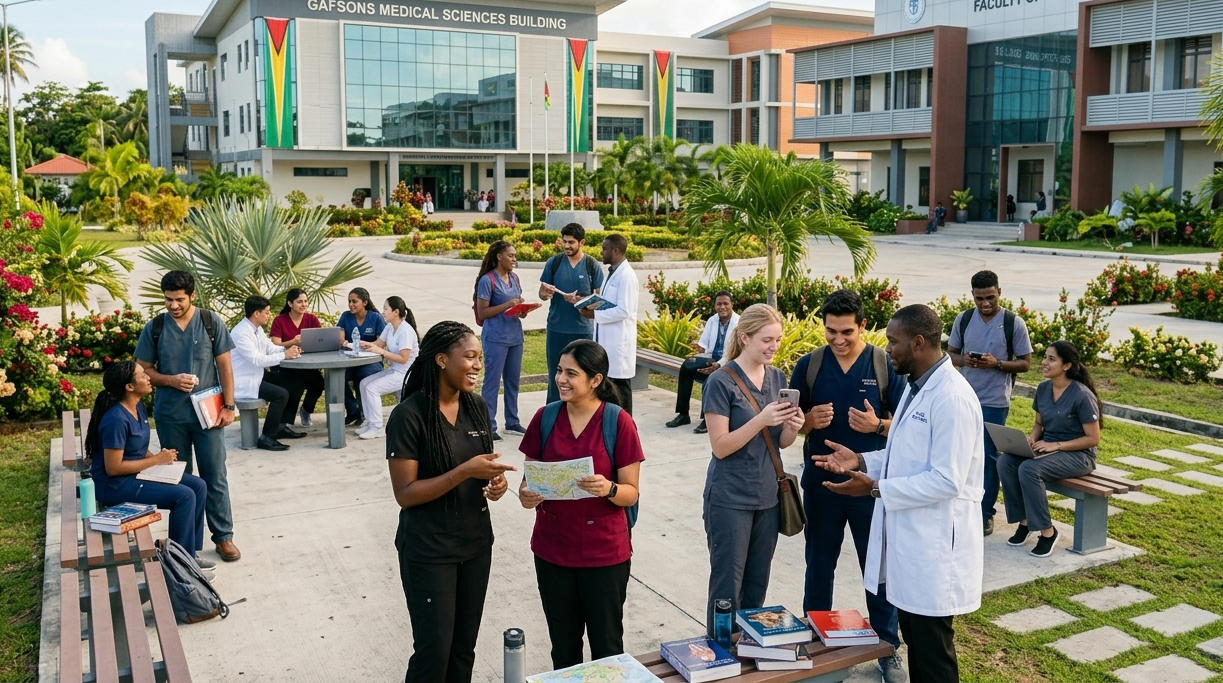
If you are looking at it from the outside, the first thing you need to realize about campus life in guyana medical colleges is how fast and energetic it feels. The setting bridges a pretty cool gap: you get a rigorous curriculum modeled after top North American standards, but it’s set against the warm, laid-back hospitality of the Caribbean.
From the day you land, you are immediately dropped into a highly focused study community. Because almost everyone around you left their home countries for the exact same goal, your campus quickly starts to feel like a supportive little village. You are all navigating the same crazy workload, which builds an incredibly tight bond within the student body. You quickly realize that studying medicine in guyana means you are never tackling the stress alone.
A Typical Day of a Medical Student in Guyana
To give you an idea of the daily rhythm, a standard day for a medical student life in guyana doesn’t kick off with a textbook—it starts with a rush of morning energy.
Morning Lectures and Lab Work
Most students wake up early to get things moving before the tropical afternoon heat peaks. After a quick breakfast in their rooms, they head out for classroom learning sessions that usually kick off around 8:00 AM. These early hours are when your brain is freshest, which is good because they are packed with foundational lectures on complex medical theories.
By mid-morning, the focus shifts to hands-on learning. This is when you will head over to the anatomy labs or medical laboratories to actually work through your assignments. Having solid faculty support makes a huge difference here; professors are usually right there over the lab tables, ready to break down tough concepts when you get stuck.
Afternoon Study and Group Discussions
After grabbing a quick lunch at the campus canteen or a local spot down the road, the afternoon is all about self-driven study. After finishing anatomy lab sessions, many students spend their evenings reviewing lecture notes in the library or meeting classmates for group study sessions.
┌────────────────────────────────────────────────────────┐
│             TYPICAL STUDENT DAILY FLOW                 │
├────────────────────────────────────────────────────────┤
│  08:00 AM – 12:00 PM : Morning Lectures & Anatomy Labs │
│  12:00 PM – 01:00 PM : Lunch Break & Socializing       │
│  01:00 PM – 04:00 PM : Case Studies & Simulation Labs  │
│  04:00 PM – 07:00 PM : Library Sessions & Group Study  │
│  07:00 PM onwards    : Dinner, Gym, or Unwinding      │
└────────────────────────────────────────────────────────┘
These routines quickly become an pillars of everyday life of medical students in guyana. It’s a classic balancing act where staying on top of your studies means using your spare hours wisely.
Campus Facilities Available at Medical Colleges in Guyana
The top medical universities in guyana have put a lot of work into building modern spaces that match up with international training rules. While the actual campuses here are often smaller and more intimate than giant Western state schools, they are highly efficient and designed entirely around medical education.
Modern Laboratories and Simulation Centers
The core of any guyana medical school campus life experience is the quality of its practical training tools. Known schools like Texila American University and Lincoln American University feature high-tech simulation labs equipped with lifelike medical mannequins. These spaces let you practice taking vitals, running diagnostics, and handling emergency room scenarios long before you ever step foot into an actual hospital wing.
Digital Libraries and Study Areas
The libraries are the real sanctuaries on campus. They offer quiet, air-conditioned rooms that stay open late, fully stocked with medical books and massive digital research databases. Reliable, high-speed Wi-Fi runs through these buildings, so you can stream global medical journals or watch step-by-step surgical procedures without things buffering.
Student Accommodation and Hostel Life
Where you open your eyes every morning can completely make or break your university experience. Luckily, most medical schools in the area offer dedicated accommodation for medical students in guyana that sits right on campus or a quick shuttle ride away.
On-Campus vs. Off-Campus Housing
Tons of first-year students go with university-managed hostel facilities because it takes the stress out of moving to a new country. These halls usually give you the option of private single rooms or shared rooms, which is an easy way to save some cash.
Once they get their bearings, older students frequently team up to rent apartments out in the nearby residential areas of Georgetown to get a bit more independence.
                    ┌──────────────────────────────┐
                    │  HOUSING AMENITIES CORES     │
                    └──────────────┬───────────────┘
          ┌──────────────────────┼──────────────────────┐
          ▼                      ▼                      ▼
┌──────────────────┐   ┌──────────────────┐   ┌──────────────────┐
│     SECURITY     │   │    UTILITIES     │   │      DINING      │
│ 24/7 Guards, Key │   │ High-Speed Wi-Fi,│   │ Campus Canteens, │
│ Card Access Gates│   │ Laundry Facilities│  │ Indian/Local Food│
└──────────────────┘   └──────────────────┘   └──────────────────┘
Dining Options and Meal Plans
Let’s face it: good food is a massive comfort when you are thousands of miles away from home. Because there is such a large international medical students in guyana community, campus canteens and neighborhood restaurants cater directly to global tastes. You can easily find authentic Indian dishes, local Caribbean food, and standard Western meals just a five-minute walk from your dorm room.
Clinical Exposure and Hospital Training
This is the part of the journey where studying in Guyana gives you a massive advantage compared to a lot of other international destinations. The country offers a level of hands-on clinical work that really prepares you for global licensing exams.
Hands-On Learning at Georgetown Public Hospital Corporation
When you start your clinical rotations, you won’t just be sitting in the back of a room quiet with a clipboard. At major regional hubs like the Georgetown Public Hospital Corporation, students get thrown right into the middle of the healthcare system.
                             ┌────────────────────────┐
                             │ CLINICAL ROTATION STACK │
                             └───────────┬────────────┘
                ┌────────────────────────┴────────────────────────┐
                ▼                                                 ▼
┌──────────────────────────────┐                  ┌──────────────────────────────┐
│     PATIENT INTERACTION      │                  │       HOSPITAL ROUNDS        │
│ Taking histories, conducting │                  │ Shadowing senior physicians, │
│ basic physical examinations. │                  │ analyzing real-life cases.   │
└──────────────────────────────┘                  └──────────────────────────────┘
Working right next to experienced doctor and healthcare professionals, you get real patient care experience, participate in busy hospital rounds, and see a massive variety of medical cases. This raw, real-world training builds genuine confidence before you ever start a formal medical internship.
Cultural Diversity and Student Community
Guyana is a beautiful mix of different worlds. Because it is an English-speaking nation with deep cultural ties to both the Caribbean islands and South America, it gives international students an unforgettable backdrop for their college years.
A Global Student Community
If you take a walk through the main courtyard at lunch, you will hear a whole mix of different accents. The student population is a diverse tapestry of people coming from India, across Africa, the Caribbean, and North America. This blend naturally breaks down stereotypes and teaches you how to communicate with patients from all walks of life.
Festivals and Campus Activities
Student clubs love throwing cultural nights and holiday parties to make sure everyone has a piece of home with them. Major celebrations like Diwali, Holi, Christmas, and Guyana’s colorful Independence Day are celebrated on campus with incredible food, traditional outfits, and loud music.
Structural Strategy: Mapping Future Education Paths
While keeping your head down and surviving your daily medical classes is your main priority, it’s always smart to think about how higher education setups measure performance on a bigger scale. For example, universities around the world use specific frameworks like Lead Scoring Criteria in Higher Education to manage their admissions, see how students are engaging, and track institutional goals. Keeping these backend metrics in mind is super helpful if you ever plan to transfer credits or apply for highly competitive residencies later on.
It’s also crucial to build a life outside of pure science books. Just like undergraduate students back in the States often aim for highly competitive Gymnastics Scholarships to fund their degrees while learning intense focus, medical students need to find their own personal outlets. Whether that means joining campus sports, stepping up in student government, or leading research projects, it all helps you build a stand-out global resume.
Cost of Living for Medical Students in Guyana
When you stack it up against the US, the UK, or Western Europe, the day-to-day cost of living in Guyana is incredibly friendly on a student budget.
| Expense Category | Monthly Estimated Cost (USD) | Smart Saving Advice |
| Hostel & Housing | $250 – $500 | Shared rooms or splitting an apartment with classmates cuts bills in half. |
| Food & Groceries | $150 – $250 | Hit the local open-air markets for fresh, seasonal fruits and vegetables. |
| Local Transportation | $40 – $80 | Use the free university shuttle buses or travel in groups using local minibuses. |
| Data & Mobile Plans | $20 – $40 | Use the campus Wi-Fi for downloading heavy lecture videos and streaming. |
If you keep an eye on your wallet, you can live very comfortably down here without drowning in massive debt during your foundational years of Caribbean medical education.
Safety and Student Support Services
Moving across oceans can feel a bit scary at first, which is exactly why student wellness and safety are huge priorities for the schools here.
- 24/7 Campus Security: Most medical schools run secure, gated campuses with around-the-clock guards, smart CCTV setups, and strict key-card gates so you can sleep easy.
- International Student Support Services: Dedicated offices are on hand to help you handle everything from student visa renewals and setting up local bank accounts to running fun orientation weeks.
- Mental Health & Counseling: Because medical school stress is no joke, schools provide confidential counseling services to help you deal with exam anxiety or bouts of homesickness.
Weekend Life and Recreational Activities
When you finally close your laptop on Friday afternoon, it is time to completely unplug. This is where living in Guyana completely blows the competition away. The country is world-famous for its massive, untouched eco-tourism and raw natural beauty.
                  ┌──────────────────────────────┐
                  │      WEEKEND ESCAPES         │
                  └──────────────┬───────────────┘
          ┌──────────────────────┼──────────────────────┐
          ▼                      ▼                      ▼
┌──────────────────┐   ┌──────────────────┐   ┌──────────────────┐
│  NATURAL WONDERS │   │  LOCAL CULTURE   │   │  SPORTS & LUNCH  │
│ Fly out to view  │   │ Explore vibrant  │   │ Unwind at beach  │
│ Kaieteur Falls   │   │ Georgetown cafes │   │ cricket matches  │
└──────────────────┘   └──────────────────┘   └──────────────────┘
Tons of students put together group weekend trips into the deep interior rainforests to see Kaieteur Falls, which is one of the most powerful single-drop waterfalls on earth. If you want to keep things local around Georgetown, you can hang out at bustling local street markets, visit the coastal sea walls, or watch an evening cricket match with your friends to clear your head before Monday rolls around.
Challenges International Students May Face
To be totally honest with you, it isn’t always a flawless tropical vacation. You are definitely going to run into a few adjustments along the way:
- Getting Used to Tropical Weather: The humidity and intense sunshine can feel like a lot at first if you are used to cold winters. Carrying water with you and pacing yourself is an absolute must.
- Dealing with Homesickness: Missing your family, your favorite home-cooked meals, and your old friends is a normal part of the first semester. Getting involved in campus activities helps you build a tight group of friends quickly.
- Strict Time Management: The absolute mountain of information you have to learn means you cannot afford to slack off. Figuring out how to balance weekend fun with mandatory study blocks takes real dedication.
Tips for Enjoying Medical College Campus Life in Guyana
- Jump in Early: Don’t just hide away in your dorm room. Join student clubs, sign up for local health camps, and show up to campus parties during your first month.
- Embrace the Local Scene: Take some time to learn about Guyana’s incredible history and diverse people. Being respectful and open-minded will help you connect with locals and make your hospital rotations much smoother.
- Find Your Study Crew: Get together with a group of driven friends who match your work ethic. Studying together makes tackling massive textbook chapters way easier and keeps you focused when exams get close.
Real Student Perspectives
Is Medical Student Life in Guyana Difficult?
Yes, it is definitely a challenge, but it’s no harder than going to medical school in any other country. The real difficulty comes from the heavy medical curriculum itself, not where the school is located. Students who build good study habits adjust to the lifestyle quickly.
Is Guyana Safe for International Medical Students?
Yes, it is. The main neighborhoods around the schools and the student housing complexes are very secure. Just like living in any city back home, you just need to use basic common sense—like not walking alone down dark streets late at night and keeping an eye on your phone and wallet.
Do Medical Colleges in Guyana Offer Hostel Facilities?
They sure do. The vast majority of established medical schools run fully furnished, comfortable housing options designed specifically for international students moving to the country.
Frequently Asked Questions
What is medical college campus life in Guyana like?
It’s a high-energy mix of focused medical studies and awesome multicultural experiences. You’ll spend your weekdays working hard in modern labs, and your weekends exploring unique Caribbean-style towns and massive outdoor spots.
Are hostels available for medical students in Guyana?
Yes. The universities provide secure, well-run hostels that come with high-speed internet, on-site laundry, and dining spaces serving fresh international and local food.
Can medical students work while studying in Guyana?
Generally speaking, no. Student visas usually don’t allow you to hold a local job. Plus, the sheer intensity of your medical classes means you won’t have the spare time to work anyway if you want to keep your grades up.
What facilities do medical colleges in Guyana provide?
They give you everything you need to succeed: advanced anatomy labs, digital study libraries, realistic simulation centers, student lounges, and gated housing.
- Texila American University Institutional Framework: Check out their official pages for deep dives into campus life rules, virtual housing tours, and international student guides.
- Georgetown Public Hospital Corporation Clinical Portals: Head here to look over clinical rotation programs, hospital specialties, and public health initiatives across Guyana.