
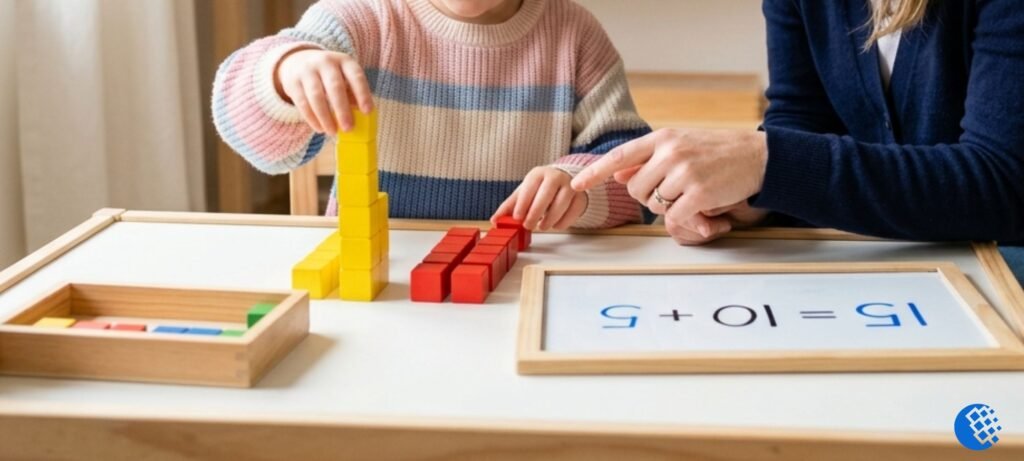
So, you’re looking at primary 1 mathematics questions and wondering where to start. It’s a bit of a shock, isn’t it? One day they’re just playing with blocks, and the next, they’re supposed to explain why 15 is “a ten and five ones.” It’s a big jump. Whether you are a parent trying to help with homework without losing your cool, or a teacher hunting for fresh practice ideas, the goal is the same: you want the kid to actually get it.
The secret to ranking well for these questions—and more importantly, helping a child learn—is realizing that math at this age is mostly about logic, not just memorizing numbers. If a kid can count to 100 but can’t tell you which number is bigger, 12 or 21, they’ve got a gap. We’re going to fill those gaps.
Table of Contents
- The Big Goal: What is Number Sense?
- Addition and Subtraction (The “Action” Phase)
- Shapes, Sizes, and the World Around Them
- Word Problems: The Final Boss
- Preparing for the Exams (Term by Term)
- First Term Examination Questions for Primary 1 Mathematics
- Mathematics Exam Questions for Primary 1 Second Term
- Mathematics Exam Questions for Primary 1 Third Term
- How to Actually Help Them (Without Doing it For Them)
- Common Questions (FAQ)
- Final Thoughts
The Big Goal: What is Number Sense?
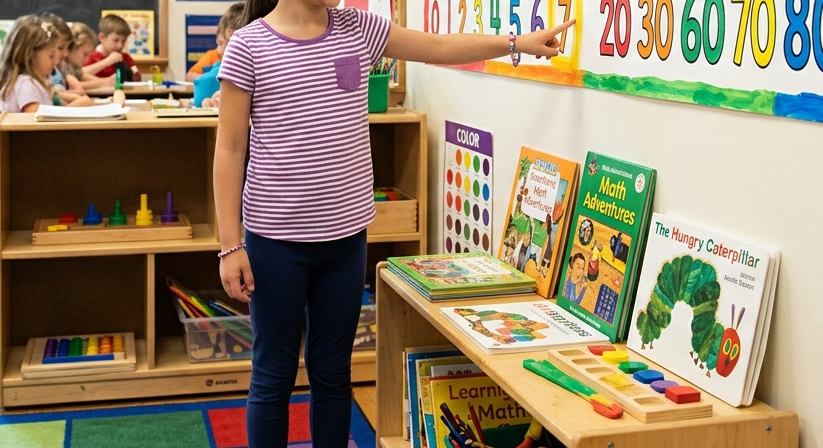
Before we even touch a plus sign, we have to talk about “number sense.” This is the foundation. If this is shaky, everything else falls down. In Primary 1, we expect them to master numbers up to 100. But “mastering” doesn’t just mean counting.
Try these on for size:
- What’s Missing?: 15, 16, __, 18, 19, __. (If they pause too long, go back to basics).
- The “Before and After” Game: What comes right after 69? What’s the neighbor before 33?
- Picking Favorites: Give them three numbers: 14, 18, and 12. Ask which is the greatest. Then ask which is the smallest.
This builds the “mental number line” they need for the harder stuff later.
Addition and Subtraction (The “Action” Phase)
Most mathematics questions for primary 1 eventually lead here. The curriculum usually starts small—sums under 20—and then stretches toward 100 by the end of the year.
Addition Isn’t Just Counting
We want them to stop using fingers eventually. That’s “fluency.”
- What is 10 + 3? (They should see the 10 and the 3 and just “know” it’s 13).
- If you have 7 apples and I give you 3 more, how many are in your basket?
- 10 + __ = 15. This is “missing addend” math, and it’s a huge part of P1 tests.
The Subtraction Struggle
Subtraction is weird for kids. “Taking away” feels like losing something. Try using real items like cereal or LEGOs to show that 15 – 5 just means a group of 5 went for a walk.
- You have 15 grapes. You eat 5. How many are left for me?
- What is 8 taken away from 20?
- 20 – __ = 12. (This one is tricky! It’s the start of algebra, really).
Shapes, Sizes, and the World Around Them
Math isn’t just digits on a page. It’s the shape of their cereal box.
- Shapes: How many sides does a square have? What about a triangle? (Hint: Most kids forget the corners).
- Comparing Sizes: Look at two different toys. Which is shorter? Which is taller?
- Ordinal Numbers: If the bear is first in line and the rabbit is third, who is in the middle? (This is a classic exam question).
Word Problems: The Final Boss
This is where the tears usually start. Word problems are hard because they require reading and logic.
- The Trick: Read it to them. Don’t make it a reading test. Ask them to “draw the story.”
- The Fish Tank Logic: “There are 13 fish in Tank A and B. Tank B has 5. How many in Tank A?” If they can draw 13 circles, cross out 5, and count the rest, they’ve won.
Preparing for the Exams (Term by Term)
Google loves structured data for terms, and so do teachers. Here’s what to expect.
First Term Examination Questions for Primary 1 Mathematics
Term 1 is the “settling in” phase.
- Write the number name for 12. (T-w-e-l-v-e).
- Count the stars in this box.
- 2 + 3 = __.
Mathematics Exam Questions for Primary 1 Second Term
Term 2 gets real. We start looking at numbers up to 50.
- Arrange these from smallest to largest: 25, 10, 42, 5.
- Add 12 and 5. (Two-digit addition without carrying).
- “I have 10 candies. I give 4 away. How many do I have?”
Mathematics Exam Questions for Primary 1 Third Term
The “big kid” term. Numbers up to 100, basic time, and even simple fractions.
- What is the number after 69?
- Time Check: If the big hand is on 12 and the small hand is on 3, what time is it?
- Half and Whole: If I cut an orange into two equal pieces, what is one piece called?
How to Actually Help Them (Without Doing it For Them)
If your student is hitting a wall, it’s usually not because they “aren’t good at math.” Usually, they are just distracted or overwhelmed.
First, look at where they are working. A messy desk leads to a messy brain. I’ve written a lot about Workspace Design for Productivity—check it out if you want to set up a “homework zone” that actually works.
Second, think about the future. P1 is just the start. If you want to see where this logic-based learning leads, looking into Academic Decathlon Competition Levels can give you an idea of how these simple “first, second, third” questions eventually turn into high-level academic strategy.
Common Questions (FAQ)
What is the “must-know” for P1 math?
Place value. If they don’t understand that 21 and 12 are different because of “tens and ones,” they will struggle with everything else.
How do I find practice papers?
You can find great Primary 1 Mathematics placement test PDF files on sites like Scribd. For daily worksheets, K5 Learning is a goldmine, and DoodleLearning has excellent interactive questions that feel like games.
Should I let them use a calculator?
In Primary 1? Absolutely not. They need to build the “mental muscle” of counting and grouping first.
Final Thoughts
Don’t rush the process. If your kid is stuck on subtraction for two weeks, let them stay there. Use LEGOs. Draw in the dirt. P1 math is the foundation for the rest of their lives. If you build a shaky foundation, the whole house falls down later.
Keep it visual, keep it short, and try to find math in the “real world”—like counting the number of red cars you see on the way to school. It’s a team effort, and you’ve got this.