
If you’re currently grinding through practice quizzes for a hunting license, you’ve probably stared at this exact question: “Which group is a primary supporter of hunter education?” Most people just guess. They pick the NRA because it’s a big name, or they assume it’s the government. But there is a specific answer that “safety nerds” and exam writers are looking for: the International Hunter Education Association-USA (IHEA-USA).
Now, I’ll be the first to admit that the name is a mouthful. And honestly, it’s a bit confusing because hunting safety in the States isn’t just one group—it’s a massive web of organizations. But if you want to understand who actually builds the foundation of the sport, you have to look at the IHEA-USA. They are the ones drawing the map, while everyone else is just driving the car.
Why Do We Even Have These Courses?
Let’s be real for a second. Why do we even bother with all this? Fifty years ago, you just went out in the woods with your dad and hoped for the best. But that led to some pretty messy situations.
As hunting grew, we realized that “tradition” wasn’t enough to keep everyone safe. We needed a system. We needed every person with a rifle to understand three core things:
- Safety: Obviously. How to not accidentally shoot yourself or a buddy.
- Laws: Because wildlife isn’t an infinite resource.
- Ethics: This is the big one. It’s about not being a jerk in the woods and respecting the animal.
The groups we’re about to talk about turned these simple ideas into a formal education system that actually saves lives.
The Big Answer: The IHEA-USA
So, why is the IHEA-USA the “primary” one?
Think of them as the “Director of the Play.” They aren’t the actors you see on stage, but they wrote the script. They create the National Hunter Education Standards. This is huge because it means if you learn to hunt in Florida, your certificate is still respected in Montana.
They also do the heavy lifting for instructors. There are something like 55,000 volunteers teaching these classes, and the IHEA-USA is the group that gives them the slides, the manuals, and the training to actually be good at teaching. Without them, every state would be doing its own thing, and the safety quality would be all over the place.
The Money: The U.S. Fish and Wildlife Service
Here is the part most people miss. Education isn’t free. Printing books and renting out community centers takes cash. So, where’s it coming from?
It’s actually a pretty cool system called the Pittman-Robertson Act. Basically, when you buy a box of ammo or a new bow, a small tax goes to the federal government—specifically the U.S. Fish and Wildlife Service. They then take that money and hand it back to the states to pay for these safety programs.
So, in a weird way, the biggest supporter of hunter education is actually you, the hunter. You’re paying for your own education every time you gear up.
The Local Level: State Wildlife Agencies
You probably know them as “Fish and Game” or the “DNR.” These are the boots on the ground.
While the IHEA-USA sets the rules, the state agencies are the ones who actually run the classes. They take the curriculum, take the federal money, and make it happen. They are the ones who sign your card at the end of the day. Without them, all the standards in the world wouldn’t matter because there’d be nobody to teach the classes.
What’s the NRA’s Role?
I get asked this all the time. Is the National Rifle Association (NRA) the primary supporter?
Well, yes and no. They were actually the pioneers. They started the first formal safety programs way back in the 1940s. Even today, they provide a ton of training materials and support for local clubs. But in the modern world, the IHEA-USA is the one that coordinates the official standards for the government. Think of the NRA as the “grandparent” of the program—they started it, they still help out, but they aren’t the ones running the day-to-day standards anymore.
Connecting the Dots: Education is a Ladder
It’s funny how these systems work. It actually reminds me of how students have to climb through academic decathlon competition levels. You don’t just jump into the national finals; you start local, get the basics down, and move up through the ranks.
Hunter education is no different. You start with the local state rules, follow the national standards, and eventually, you’re ready for the “big leagues” in the field. It’s all about building a solid base before you go out and perform.
The Ethics Side: More Than Just “Don’t Shoot”
One thing I love about the materials these groups put out is that they focus heavily on Ethics. It’s not just a “how-to” guide for firearms. It’s a “how-to” guide for being a decent human being.
The IHEA-USA and its partners push three big ideas:
- Respect the Land: Don’t leave trash. Don’t tear up the trails.
- Fair Chase: Don’t take shots that are unethical just to get a trophy.
- Community: Remember that hikers and birdwatchers are using the woods, too.
If you’re struggling to find a good place to focus on all this material, I’ve found that a clean, organized spot helps. I actually wrote a piece on Workspace Design for Productivity that might help you get in the right headspace for your safety exam.
Preparing for the Big Day
If you’re nervous about the test, don’t be. The groups we’ve talked about have spent decades making sure the info is easy to digest. Most people do the theory online now and then just show up for a “Field Day.”
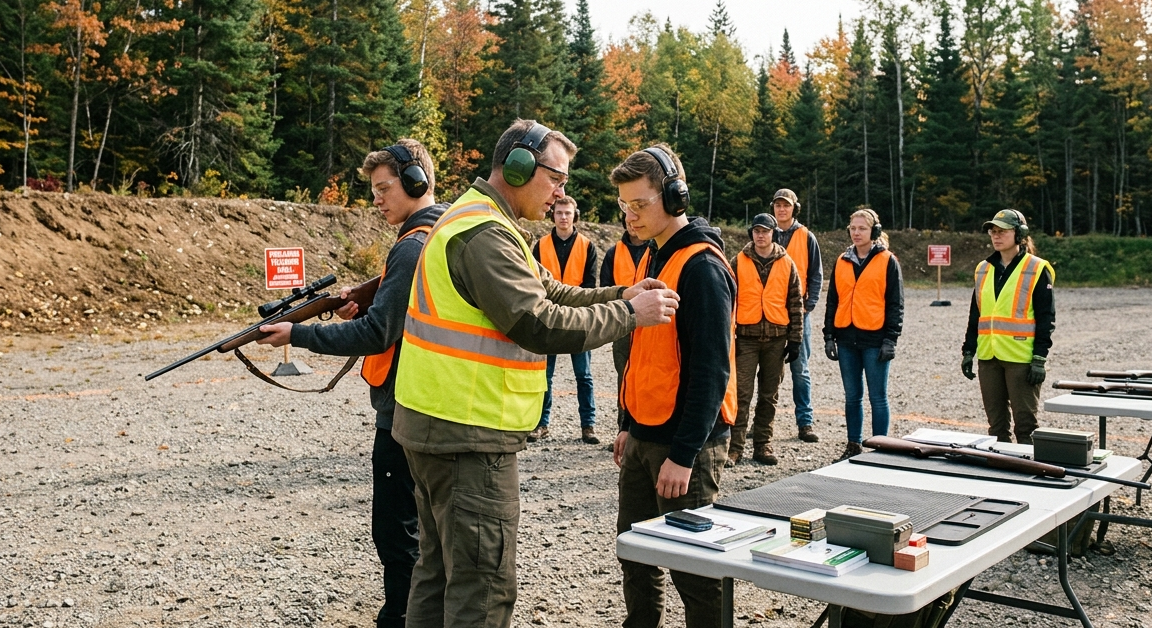
That Field Day is where it all clicks. You’ll be at a range funded by federal taxes, taught by a state-certified volunteer, using a curriculum designed by the IHEA-USA. It’s a team effort that works.
FAQ: Quick Hits
Who is the primary supporter of hunter education? The International Hunter Education Association-USA (IHEA-USA). Write it down.
Do I need this course to hunt? If you were born after a certain year (usually in the 60s or 70s, depending on the state), then yes. It’s the law.
Is it hard to pass? Not if you pay attention. The goal of these groups is to help you, not to fail you.
Where can I find a class? Check your state’s wildlife agency website. They usually have a list of upcoming dates.
Final Thoughts: It’s a Team Effort
The reason this question—”Which group is a primary supporter of hunter education?”—shows up so much is because it shows you understand that you’re part of a professional community. Hunting isn’t just about walking into the woods with a gun; it’s a regulated, ethical, and highly supported activity.
By the time you get your card, you’ll realize that the IHEA-USA and all their partners are really just looking out for you. They want to make sure you have a safe season and that there’s still wildlife around for your kids to hunt one day.
If you want to dig deeper into the official rules, go straight to the source at the IHEA-USA website or look at how your tax dollars are working at the U.S. Fish & Wildlife Service.